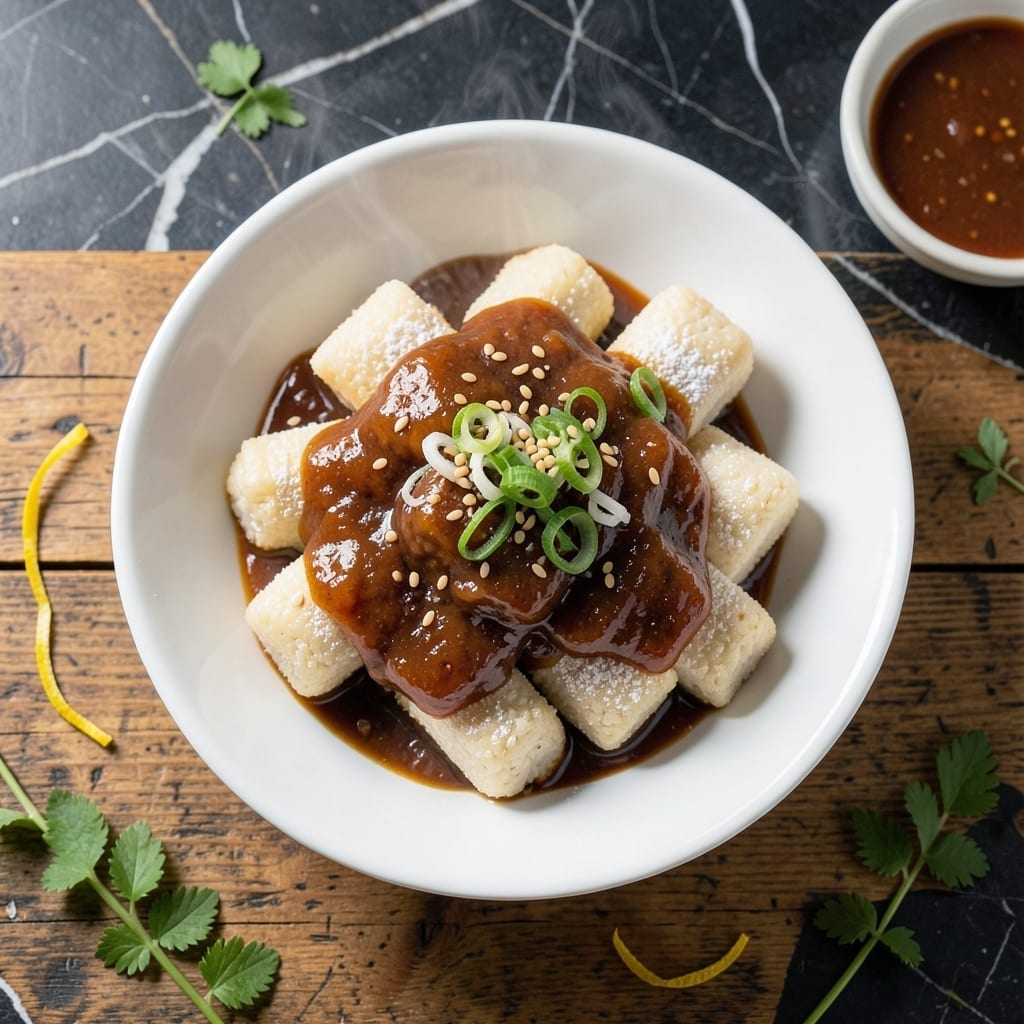
Making rice cakes from scratch transforms your kitchen into a Korean street food stall. The process begins with simple rice flour and water, creating chewy pillows that absorb flavors beautifully.
These homemade versions outshine store-bought with their fresh texture and pure ingredients. The sweet-spicy sauce clings perfectly to each piece, delivering authentic taste in every bite.
The sauce combines gochujang, soy, and sugar for that signature balance of heat and sweetness. Watch them disappear as soon as they hit the table.
This recipe demands patience but rewards with restaurant-quality results. The technique is straightforward once you understand the rice-to-water ratio.
Ingredients for Korean Rice Cake Recipe from Scratch
Simple pantry staples create authentic chewy rice cakes with vibrant sauce from scratch.
| Ingredient | Amount | Notes |
|---|---|---|
| Sweet Rice Flour 🌾 | 2 cups | Also called glutinous rice flour |
| Water 💧 | 1 ¼ cups | Warm, for dough activation |
| Kosher Salt 🧂 | ½ tsp | Diamond Crystal preferred |
| Gochujang 🌶️ | 3 tbsp | Korean red chili paste |
| Soy Sauce 🫒 | 2 tbsp | Low-sodium for balance |
| Brown Sugar 🍚 | 2 tbsp | Light or dark variety |
| Rice Vinegar 🍶 | 1 tbsp | Mild acidity for sauce |
| Sesame Oil 🫒 | 1 tsp | Toasted for aroma |
| Garlic Cloves 🧄 | 3 cloves | Minced for sauce depth |
| Fresh Ginger 🌿 | 1 tsp | Grated, for zing |
| Toasted Sesame Seeds 🌰 | 1 tbsp | For garnish and crunch |
| Green Onions 🧅 | 3 whole | Thinly sliced for topping |
| Neutral Oil 🫒 | 2 tbsp | For pan-frying rice cakes |
[recipe_ingredient_scaler]
The rice flour is non-negotiable—sweet rice flour or glutinous rice flour (despite the name, it contains no gluten) is essential for the proper chewy texture. Bob’s Red Mill or Asian markets typically carry it. Avoid regular rice flour, as it produces a crumbly result. The gochujang should be Korean-made (such as Sempio or Kochujang) for authentic heat and depth.
No gochujang? Sriracha mixed with miso paste can substitute in a pinch, though the flavor profile will differ. Brown sugar can be replaced with coconut sugar or maple syrup. For a gluten-free version, use tamari instead of soy sauce. The sesame oil must be toasted—un-toasted lacks the nutty aroma that defines the dish.
Dried rice cakes freeze beautifully for up to 3 months. Store the sauce separately in the fridge for 1 week. Reheat the rice cakes by steaming or pan-frying to restore their chewiness. Always garnish fresh for the best texture contrast.
Why You’ll Love This Recipe
- One Bowl Wonder: I mix the sweet rice flour, water, and salt right in the bowl—no fancy equipment, just a whisk and five minutes.
- Spicy-Sweet Magic: The gochujang and soy sauce combo gives that addictive kick balanced with a deep, savory warmth.
- Weeknight Hero: It’s my go-to when I need something fast but still crave that authentic Korean taste.
- Stretches Far: A batch costs pennies and feeds us for days—leftovers reheat beautifully with a quick pan-fry.
Step-by-Step Instructions for Korean Rice Cake From Scratch
Master the technique for creating the perfect chewy texture and vibrant sweet-spicy sauce.
Step 1: Prepare the Rice Cake Dough
In a large mixing bowl, combine the 2 cups Sweet Rice Flour with the 0.5 tsp Kosher Salt. Gradually add the 1.25 cups Water while stirring with a wooden spoon until a shaggy dough forms.
The water should be warm—this activates the glutinous properties of the flour. Continue mixing until the dough comes together into a smooth, slightly sticky ball. If it feels too dry, add water 1 teaspoon at a time. If too sticky, add a bit more Sweet Rice Flour.
Knead the dough in the bowl for 5 minutes until it becomes elastic and smooth. Cover with a damp towel and let it rest for 30 minutes at room temperature—this allows the flour to fully hydrate.
Step 2: Shape and Cook the Rice Cakes
Divide the rested dough into 4 equal portions and roll each into a 1-inch thick cylinder. Cut each cylinder into 1-inch pieces to form the rice cakes. You should have about 32 small, cylindrical pieces.
Heat the 2 tbsp Neutral Oil in a large skillet over medium heat. Add the rice cakes in batches, being careful not to overcrowd the pan. Pan-fry for 3-4 minutes per side until they develop a light golden crust.
Transfer the cooked rice cakes to a plate lined with paper towels to drain any excess oil. They should be firm on the outside but still chewy inside.
Step 3: Create the Sweet-Spicy Sauce
In a clean bowl, whisk together the 3 tbsp Gochujang, 2 tbsp Soy Sauce, 2 tbsp Brown Sugar, 1 tbsp Rice Vinegar, and 1 tsp Sesame Oil until smooth. The Brown Sugar should dissolve completely into the liquid.
Add the minced 3 cloves Garlic Cloves and grated 1 tsp Fresh Ginger to the sauce. These aromatics deepen the flavor profile and add a subtle zing that balances the heat from the Gochujang.
Pour the sauce into the same skillet used for the rice cakes (no need to clean it) and heat over medium-low heat for 2-3 minutes, stirring constantly, until it thickens slightly.
Step 4: Coat and Serve
Add the pan-fried rice cakes to the skillet with the sauce. Gently toss to coat every piece evenly. Cook for an additional 2-3 minutes, stirring occasionally, until the rice cakes absorb some of the sauce and become glossy.
The rice cakes should be fully coated with a thick, sticky layer of sauce. If the mixture seems too dry, add a splash of water and stir to loosen the sauce.
Transfer to a serving dish and sprinkle with the 1 tbsp Toasted Sesame Seeds and thinly sliced 3 whole Green Onions. Serve immediately while the rice cakes are still warm and at their most chewy.
Pro Tips For Making Korean Rice Cake Recipe From Scratch
- Steam the Dough: After kneading the sweet rice flour and water into a dough, steam it for 20-25 minutes—this gives the rice cakes that perfect chewy texture. I learned this the hard way after my first batch turned out gummy from under-steaming.
- Salt the Water: Use about 1 teaspoon of kosher salt per cup of water when boiling the rice cakes to add flavor throughout. Sounds simple, but it actually changes the outcome from bland to well-balanced.
- Skip the Cold Water: Always use warm water when mixing the sweet rice flour—cold water makes the dough stiff and harder to work with. My grandmother swore by this, and she was right.
- Toast the Flour: Lightly toast the sweet rice flour in a dry pan for 2-3 minutes before mixing. It adds a subtle nutty depth to the final rice cakes that’s worth the extra minute.
Dietary Considerations for This korean rice cake recipe from scratch
Vegan and Gluten-Free
This creation is naturally vegan—no animal products are used in either the rice cakes or the sauce. The sweet rice flour base ensures a chewy texture without eggs or dairy. I love that it’s plant-based by design rather than adaptation. 🌱
Gluten-Free Note
Despite the name, glutinous rice flour contains no gluten, making this dish 100% gluten-free. Always verify your soy sauce is labeled gluten-free, or use tamari as a substitute. New Seasons Market carries reliable brands.
Allergen Considerations
This recipe is free from the top eight allergens, assuming you use certified gluten-free soy sauce. The only potential concern is sesame oil and sesame seeds for those with sesame allergies. Simply omit these if needed.
Low-Sodium Option
To reduce sodium, use low-sodium soy sauce and cut the kosher salt in half. The gochujang provides plenty of flavor, so the dish won’t taste flat. I often do this when serving to my daughter, Lily.
Sugar Alternatives
Swap the brown sugar for coconut sugar or maple syrup for a refined sugar-free version. Use the same 2 tbsp measurement. The sauce will have a slightly deeper, caramel-like flavor that pairs beautifully with the heat. 💛
Nutrition Facts
Frequently Asked Questions
Can I use regular rice flour instead of sweet rice flour?
No, regular rice flour won’t work. Sweet rice flour (or glutinous rice flour) is essential for the chewy texture. Regular rice flour creates crumbly results. Stick to the right type for authentic taste.
How do I store leftover rice cakes?
Store in an airtight container in the fridge for up to 3 days. Reheat by steaming or pan-frying to restore chewiness. For longer storage, freeze for up to 3 months.
Can I make the sauce less spicy?
Yes! Reduce the gochujang to 1-2 tbsp and add extra brown sugar or honey. You can also mix in a little miso paste for depth without the heat.
Why did my rice cakes turn out hard?
Overcooking or using too much flour can cause this. Keep the heat at medium and avoid over-kneading the dough. Resting the dough for 30 minutes helps achieve the right texture.

Trained in classic French technique but raised on slow-cooked ribs and spicy rubs, she blends culinary skill with smoke and soul.
- Recipe for Boneless Pork Chops in Cast Iron Skillet: Sear and Baste to Juicy Perfection - October 3, 2026
- Recipe for Boneless Cross Rib Roast: Slow-Roasted Beef with Herb Crust - October 3, 2026
- Hamburgers in Sauce Recipe Crock Pot: Slow-Cooked Savory Delight - October 3, 2026