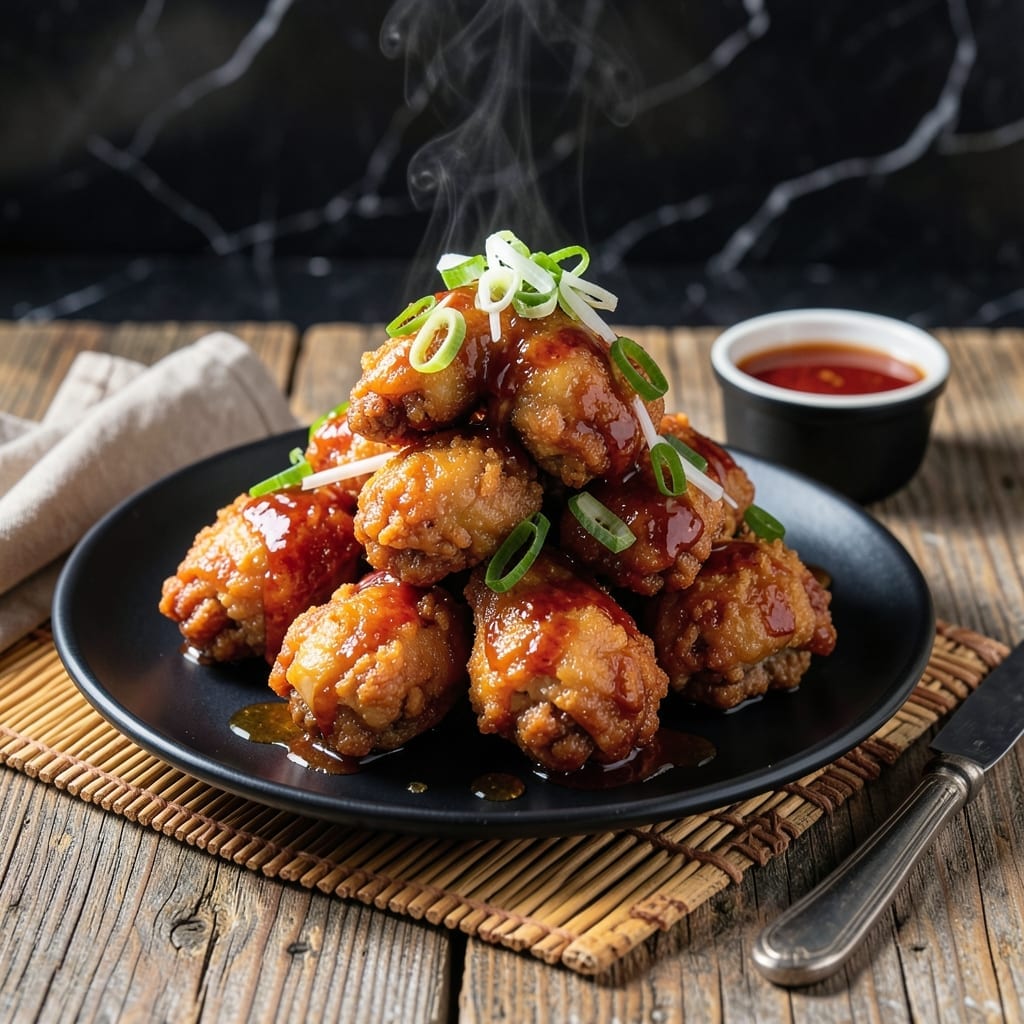
Double-frying is the secret to achieving that signature crispy Korean chicken texture that stays shatteringly crunchy even after coating in sauce. This method, perfected through years of home kitchen testing, delivers restaurant-quality results without specialized equipment.
The magic lies in the two-step frying process: first at a lower temperature to cook through, then at a higher heat to create that golden, crispy exterior. Each piece emerges from the oil with a delicate, lacy crust that holds up against the bold sweet and spicy glaze.
What sets this version apart is the balance of flavors in the sauce. The gochujang provides depth and heat while brown sugar and honey create a sticky, caramelized coating that clings to every crispy bite. The result is addictive in the best way.
Serve immediately for the best texture, with extra sauce on the side for dipping. This is the kind of dish that turns a regular weeknight into something special.
Ingredients for Korean Fried Chicken Recipe Sweet and Spicy
Crispy double-fried chicken meets bold sweet-spicy glaze with pantry staples and a few specialty items.
| Ingredient | Amount | Notes |
|---|---|---|
| Chicken Thighs 🍗 | 2 lb | Boneless, skinless, cut into bite-sized pieces |
| Cornstarch 🌾 | ¾ cup | For ultra-crispy coating |
| All-Purpose Flour 🌾 | ½ cup | Balances cornstarch texture |
| Baking Powder 🧂 | 1 tsp | Helps coating puff and crisp |
| Gochujang 🌶️ | ⅓ cup | Korean chili paste, essential for heat |
| Honey 🍯 | ¼ cup | For sticky sweetness |
| Brown Sugar 🫙 | ¼ cup | Packed, for caramelized glaze |
| Soy Sauce 🥫 | 3 tbsp | Low-sodium for balance |
| Rice Vinegar 🍶 | 1 tbsp | Adds tang to sauce |
| Garlic Cloves 🧄 | 4 cloves | Minced, for sauce depth |
| Fresh Ginger 🌿 | 1 tbsp | Grated, for zing |
| Sesame Oil 🫒 | 1 tsp | Toasted, for aroma |
| Vegetable Oil 🛢️ | 4 cups | For frying, neutral flavor |
| Sesame Seeds 🌰 | 2 tbsp | For garnish, toasted |
| Green Onions 🧅 | 3 whole | Thinly sliced, for freshness |
[recipe_ingredient_scaler]
The chicken thighs are non-negotiable here—boneless, skinless from Whole Foods or Costco give the best texture and value. Look for pieces with some fat marbling (avoid the super-lean ones). The cornstarch is what creates that signature shatter—Bob’s Red Mill is consistent. Don’t skip the baking powder; it’s the secret to that lacy, puffed crust that stays crispy even after saucing.
No gochujang? Sriracha mixed with a little miso paste in a pinch, but the flavor won’t be the same. Swap honey for maple syrup or agave if needed. Brown sugar can be coconut sugar, though the caramelization might differ slightly. For the oil, any neutral high-smoke-point oil works—peanut or canola are great. Skip the olive oil here; it’ll burn at frying temps.
Fry in batches and keep finished pieces warm on a rack (not paper towels) to maintain crispiness. Sauced chicken is best eaten immediately but keeps for 2 days in the fridge—reheat in a 400°F oven to revive the crunch. Freezing isn’t recommended; the texture suffers.
Why You’ll Love This Recipe
- One Bowl Wonder: I just dump the cornstarch, flour, and baking powder together—no whisking dry and wet separately, and the coating clings like a dream.
- Sweet Heat Obsession: The gochujang glaze hits that magic balance: sticky, slightly smoky, with a kick that lingers just enough to make you reach for another piece.
- Crowd Pleaser: I’ve served this at game nights and weeknight dinners—even the picky eaters end up licking their fingers.
- Budget Hero: Chicken thighs stay juicy and cost half what wings do, and the sauce stretches to cover every crispy bite without waste.
Step-by-Step Instructions for Korean Fried Chicken Sweet and Spicy
Master the double-fry technique for shatteringly crisp chicken with a glossy, fiery-sweet glaze.
Step 1: Coat the Chicken for Maximum Crunch
Pat the 2 lb Chicken Thighs completely dry with paper towels. This removes excess moisture so the coating adheres properly and creates that signature crunch. Cut into bite-sized pieces if not pre-cut.
In a large bowl, whisk together the 0.75 cup Cornstarch, 0.5 cup All-Purpose Flour, and 1 tsp Baking Powder until fully combined. The baking powder helps the coating puff slightly during frying, creating extra surface area for crispiness. Toss the chicken in this mixture until every piece is evenly coated.
Step 2: First Fry for Even Cooking
Heat the 4 cups Vegetable Oil in a deep, heavy-bottomed pot to 325°F. Use a thermometer for accuracy—oil that’s too cool will make the chicken greasy, while oil that’s too hot will burn the outside before the inside cooks.
Working in batches to avoid crowding, carefully lower the coated chicken into the oil. Fry for 6-8 minutes until the pieces are light golden brown and cooked through. The chicken should float and sizzle gently. Use a slotted spoon to transfer to a wire rack set over a baking sheet. Don’t stack the pieces or they’ll steam and lose crispness.
Step 3: Second Fry for Ultra-Crisp Texture
Increase the oil temperature to 375°F. This higher heat is what gives the chicken its final, shatteringly crisp exterior. Once the oil reaches temperature, return the chicken to the pot in batches and fry for 2-3 minutes until deep golden brown and extremely crispy.
This double-fry method is the secret to authentic Korean fried chicken. The first fry cooks the meat through, while the second fry at higher heat creates that irresistible crunch. Transfer the chicken back to the wire rack to drain excess oil.
Step 4: Prepare the Sweet and Spicy Gochujang Glaze
In a saucepan over medium heat, combine the 0.33 cup Gochujang, 0.25 cup Honey, 0.25 cup Brown Sugar, 3 tbsp Soy Sauce, 1 tbsp Rice Vinegar, 4 cloves Garlic Cloves (minced), 1 tbsp Fresh Ginger (grated), and 1 tsp Sesame Oil. Stir constantly as the mixture comes to a gentle simmer.
Cook for 3-4 minutes until the sauce thickens slightly and becomes glossy. The sugar should be fully dissolved and the sauce should coat the back of a spoon. Remove from heat and let cool for 2 minutes before tossing with the chicken.
Step 5: Coat and Garnish for Serving
Place the double-fried chicken in a large bowl. Pour the warm gochujang glaze over the chicken and toss gently but thoroughly until every piece is evenly coated. The sauce should cling to the crispy exterior, creating a sticky, glossy finish.
Transfer to a serving platter and immediately sprinkle with the 2 tbsp Sesame Seeds and 3 whole Green Onions (thinly sliced). Serve hot with extra sauce on the side for dipping. The contrast of crispy, spicy, sweet, and sticky in every bite is what makes this dish irresistible.
Pro Tips For Making Korean Fried Chicken Recipe Sweet And Spicy
- Double Fry for Crisp: Fry the chicken once at 325°F (160°C) for 6-7 minutes, then rest 5 minutes before frying again at 375°F (190°C) for 3-4 minutes. I learned this the hard way—skipping the second fry leaves you with soggy wings instead of that glass-like crunch.
- Pat the Thighs Dry: Use paper towels to thoroughly dry the chicken thighs before dredging—any moisture turns your cornstarch coating into a gummy mess. Sounds tedious, but it’s the thing that actually changes the outcome.
- Skip Crowded Frying: Cook in small batches so the oil temperature doesn’t drop below 325°F (160°C). After burning three batches, I finally figured out that overcrowding steams the chicken instead of frying it.
- Thin the Gochujang Sauce: Mix your gochujang with a splash of vinegar or honey before tossing—it clings better to the crispy coating instead of sitting in thick globs. My grandmother swore by this, and she was right.
Pro Cooking Tips for This Dish
Oil Temperature Precision
The double-fry only works if you nail the temperatures—use a candy thermometer clipped to the pot. First fry at 325°F cooks the chicken through without browning too fast. I learned this the hard way when my first batch came out greasy from oil that was too cool. 🌡️
Batch Frying Discipline
Never crowd the pot—overcrowding drops oil temp and steams the chicken instead of frying it. I fry in 3-4 batches for 2 lb of chicken. Use a slotted spoon to transfer pieces to a wire rack, not paper towels, to keep them crisp.
Coating Consistency
Let the coated chicken rest for 10 minutes before frying—this helps the cornstarch and flour adhere better. I sift my dry ingredients first to avoid lumps. The baking powder is non-negotiable; it creates those airy, lacy bits that make the texture so addictive.
Sauce Timing
Make the sauce while the chicken does its second fry. The residual heat will keep it warm and at the perfect consistency for coating. If it thickens too much, add 1-2 tsp water—the sauce should drizzle like warm honey, not sit like paste.
Crisp Preservation
Toss the chicken in sauce right before serving. If it sits too long, the coating softens. I keep sauced and unsauced pieces separate until the last minute. For extra crunch, sprinkle toasted sesame seeds just before eating. 💡
Nutrition Facts
Frequently Asked Questions
Can I use chicken breast instead of thighs?
Thighs are ideal for their juiciness, but you can use breasts. Cut them into small pieces and reduce first fry time to 5-6 minutes to prevent dryness. The double-fry method still works, but monitor closely.
Why does the recipe call for double frying?
The first fry cooks the meat through at 325°F. The second at 375°F creates the ultra-crispy exterior. This two-step process is key to authentic texture that stays crunchy even after saucing.
How do I adjust the spice level?
Reduce gochujang to 2 tbsp for mild heat, or add 1 tsp chili flakes for extra kick. Balance with extra 1 tbsp honey if needed. Taste the sauce before coating the chicken.
Can I bake instead of fry?
For an oven method, bake coated chicken at 400°F for 20-25 minutes, flipping halfway. The texture won’t be identical, but it’s a healthier alternative. Use a wire rack for air circulation.

Trained in classic French technique but raised on slow-cooked ribs and spicy rubs, she blends culinary skill with smoke and soul.
- Recipe for Boneless Pork Chops in Cast Iron Skillet: Sear and Baste to Juicy Perfection - October 3, 2026
- Recipe for Boneless Cross Rib Roast: Slow-Roasted Beef with Herb Crust - October 3, 2026
- Hamburgers in Sauce Recipe Crock Pot: Slow-Cooked Savory Delight - October 3, 2026