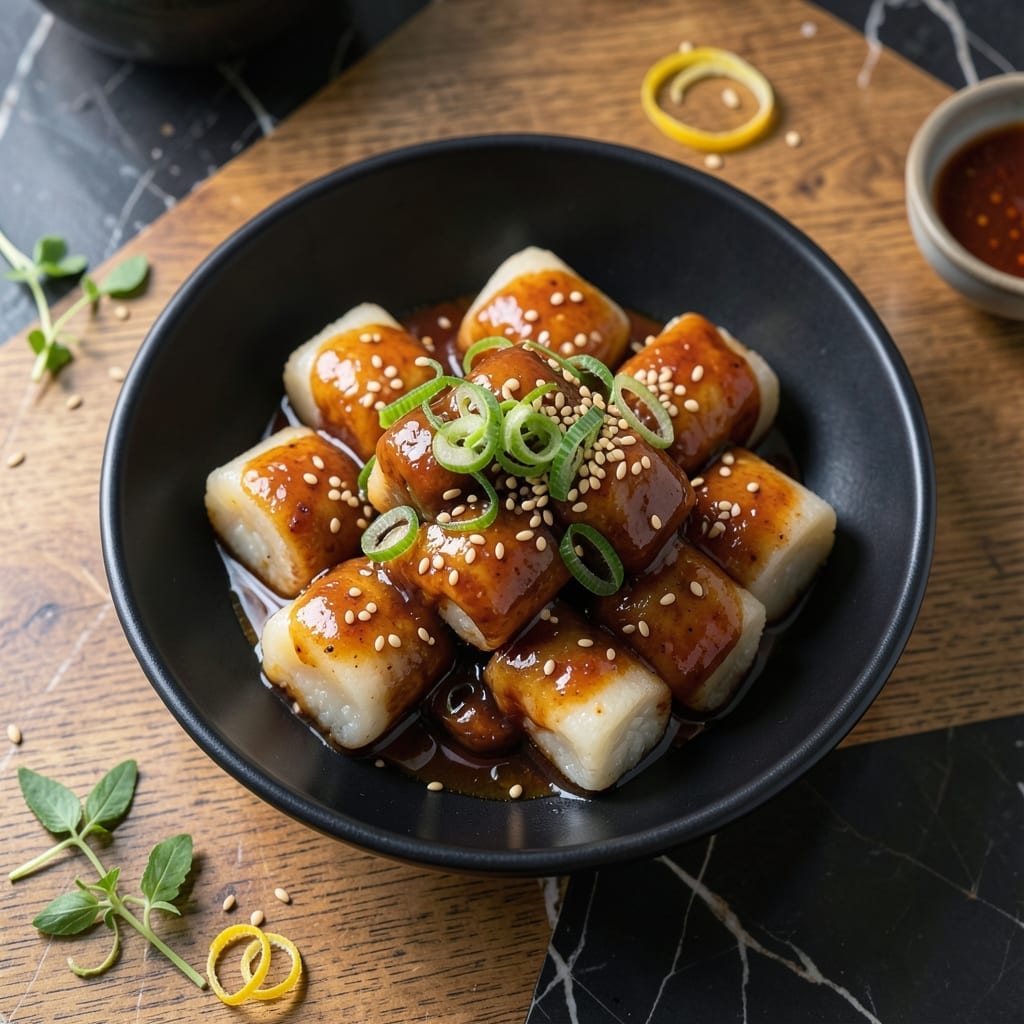
These chewy rice cakes absorb bold flavors like nothing else. I first tasted tteok stir-fry at a Korean friend’s dinner table and was hooked instantly.
This version combines the heat of gochujang with crisp vegetables for a dish that’s both comforting and exciting. The rice cakes soften slightly while maintaining their signature chew.
The sauce comes together quickly, coating every piece in a sweet-spicy glaze that’s balanced by the freshness of the veggies. It’s a complete meal that feels special without demanding hours in the kitchen.
Perfect for weeknights when you want restaurant-quality results with minimal effort. Here’s how to make it at home.
Ingredients for Korean Rice Cake Recipe Ideas
Chewy rice cakes and crisp veggies meet sweet-spicy sauce in this quick stir-fry.
| Ingredient | Amount | Notes |
|---|---|---|
| Korean Rice Cakes 🍙 | 1 lb | Cylindrical tteok preferred |
| Gochujang 🌶️ | 3 tbsp | Korean red pepper paste |
| Soy Sauce 🫒 | 2 tbsp | Low-sodium preferred |
| Honey 🍯 | 1 tbsp | Or maple syrup for vegan |
| Rice Vinegar 🍚 | 1 tbsp | Or apple cider vinegar |
| Sesame Oil 🫒 | 1 tbsp | Toasted for best flavor |
| Garlic Cloves 🧄 | 4 cloves | Minced for sauce |
| Fresh Ginger 🌿 | 1 tbsp | Grated fine |
| Bell Peppers 🌶️ | 2 whole | Thinly sliced, any color |
| Carrots 🥕 | 2 whole | Julienned for texture |
| Zucchini 🥒 | 1 whole | Sliced into half-moons |
| Green Onions 🧅 | 4 whole | Sliced for garnish |
| Sesame Seeds 🌾 | 1 tbsp | Toasted for garnish |
| Vegetable Oil 🫒 | 2 tbsp | For stir-frying |
[recipe_ingredient_scaler]
The rice cakes are non-negotiable here. Look for cylindrical tteok (often labeled as rice cake sticks) at Korean markets or H Mart. Fresh ones are best—they should be firm but slightly springy. If using frozen, thaw completely and drain well (they release water). The gochujang is the soul of the sauce—Sempio or CJ brands are widely available and consistent in quality.
No gochujang? Sriracha plus 1 tsp sugar per tbsp gets you close, though the flavor won’t be as deep. Fresh ginger is ideal, but ground ginger at half the amount works. For veggies, any crunchy produce works—broccoli, snap peas, or even cabbage. The honey can be swapped for brown sugar or agave if needed (adjust sweetness to taste).
Store unused rice cakes in the fridge for up to 1 week (they’ll harden—soak in warm water before using). The sauce keeps 5 days refrigerated. Double the recipe and freeze portions for 3 months—perfect for quick weeknight meals.
Why You’ll Love This Recipe
- One-Pot Wonder: I toss everything in a single pan—rice cakes, gochujang, soy sauce—and 15 minutes later, it’s ready.
- Sweet & Spicy Fix: That sticky-sweet honey with the gochujang heat hits just right, balanced by the rice vinegar tang.
- Weeknight Hero: Honestly, it’s my go-to when I need dinner fast but still want bold Korean flavors.
- Budget Stretcher: A bag of rice cakes feeds four for pennies, and leftovers taste even better the next day.
Step-by-Step Instructions for Spicy Gochujang Stir-Fry with Vegetables
This method delivers perfectly chewy rice cakes with a spicy-sweet glaze and crisp-tender vegetables.
Step 1: Soak the Korean Rice Cakes
Place the 1 lb Korean Rice Cakes in a large bowl and cover with warm water. Let them soak for 15-20 minutes until they become soft and pliable. This step is crucial—they’ll start chewy and firm, but soaking prevents them from becoming hard or rubbery during cooking.
Drain the rice cakes completely and pat them dry with a clean kitchen towel. Any excess water will dilute the sauce and prevent proper browning. I always do this step first so they’re ready when the sauce is prepped.
Step 2: Prepare the Gochujang Sauce
In a medium bowl, whisk together the 3 tbsp Gochujang, 2 tbsp Soy Sauce, 1 tbsp Honey, 1 tbsp Rice Vinegar, and 1 tbsp Sesame Oil until smooth. The sauce should be thick and glossy, with a balance of heat, sweetness, and umami.
Mince the 4 cloves Garlic Cloves and grate the 1 tbsp Fresh Ginger, then stir them into the sauce. This builds the aromatic base that makes the dish sing. I like to let the sauce sit for 5 minutes to allow the flavors to meld while I prep the vegetables.
Step 3: Prep and Stir-Fry the Vegetables
Thinly slice the 2 whole Bell Peppers, julienne the 2 whole Carrots, and slice the 1 whole Zucchini into half-moons. Keep the vegetables uniform in size so they cook evenly. Slice the 4 whole Green Onions and set them aside for garnish.
Heat the 2 tbsp Vegetable Oil in a large skillet or wok over medium-high heat until shimmering. Add the bell peppers and carrots first, as they take longer to soften. Stir-fry for 3-4 minutes until they start to soften but still retain a slight crunch.
Step 4: Cook the Rice Cakes and Combine
Add the drained rice cakes to the skillet with the vegetables. Pour the gochujang sauce over everything and stir well to coat evenly. Cook for 5-6 minutes, stirring occasionally, until the rice cakes are tender and the sauce has thickened slightly.
The rice cakes should be chewy and slightly sticky, with the sauce clinging to every piece. If the mixture seems too thick, add a splash of water to loosen it. Taste and adjust seasoning if needed—I sometimes add a pinch of sugar to balance the heat.
Step 5: Finish and Serve
Stir in the sliced zucchini and cook for an additional 2-3 minutes until just tender. The zucchini should still have a bit of bite to it. Remove from heat and sprinkle with the 1 tbsp Sesame Seeds and the sliced green onions.
Serve immediately while hot, with any extra sauce spooned over the top. The rice cakes will continue to absorb flavors as they sit, so don’t let them cool completely before serving. This dish is best enjoyed fresh, with a side of steamed rice if desired.
Pro Tips For Making Korean Rice Cake Recipe Ideas
- Soak the Rice Cakes: I learned this the hard way—dry rice cakes stay rock-hard in the middle. Soak them in warm water for 10-15 minutes first, then they’ll absorb the gochujang sauce like a dream.
- Bloom the Gochujang: Before mixing it into the sauce, cook the gochujang in a little oil for 1-2 minutes over medium heat. It mellows the raw edge and deepens the flavor—sounds weird, but it works.
- Balance the Sweetness: Honey can overpower, so add the rice vinegar last and adjust to taste. A tablespoon at a time usually does it, but I’ve ruined a batch by dumping it all in at once.
- Use Fresh Gochujang: That tub of gochujang in the back of your fridge from last year? Toss it. Fresh gochujang has a brighter, more vibrant heat that actually changes the outcome.
Serving Suggestions for This Dish
Family-Style Plating
I love serving this dish on a large, shallow platter so everyone can dig in together. Arrange the rice cakes and vegetables in a single layer, then drizzle any remaining sauce from the pan over the top. The colors of the veggies against the glossy sauce make for a beautiful presentation. 💛
Garnish Like a Pro
Just before bringing to the table, sprinkle the toasted sesame seeds and sliced green onions evenly over the dish. These final touches add freshness and a pop of color that makes the dish look as good as it tastes.
Bowl It Up
For a more casual serving, I often portion this into individual bowls. The deep bowls help contain the sauce and make it easier to eat. Add a scoop of steamed white rice to each bowl first, then top with the rice cakes and vegetables.
Add a Protein Boost
This dish is hearty on its own, but I sometimes add thinly sliced beef or chicken for extra protein. Quickly sear ½ lb of sliced meat before adding the vegetables, then proceed with the recipe as written.
Side Pairings
Keep the sides simple to let the stir-fry shine. I often serve with a cool cucumber salad or a bowl of kimchi to balance the heat. Both add a refreshing contrast to the spicy, sweet flavors.
Leftovers Tip
If you have leftovers, store them in an airtight container in the fridge for up to 3 days. Reheat gently in a skillet with a splash of water to restore the sauce’s consistency. 🔥
Nutrition Facts
Frequently Asked Questions
What if my rice cakes are too hard after soaking?
Soak them longer in warm water. If still firm, briefly blanch in boiling water for 1-2 minutes before stir-frying. This ensures they soften properly without becoming mushy.
Can I make this dish less spicy?
Reduce gochujang to 1-2 tbsp and add 1 tbsp more honey or sugar. For mild heat, substitute half the gochujang with 1 tbsp tomato paste for color without the kick.
How do I prevent the sauce from burning?
Cook over medium heat and stir frequently. If the sauce thickens too quickly, add 1-2 tbsp water to loosen it. Never leave it unattended—gochujang burns easily.

Trained in classic French technique but raised on slow-cooked ribs and spicy rubs, she blends culinary skill with smoke and soul.
- Recipe for Boneless Pork Chops in Cast Iron Skillet: Sear and Baste to Juicy Perfection - October 3, 2026
- Recipe for Boneless Cross Rib Roast: Slow-Roasted Beef with Herb Crust - October 3, 2026
- Hamburgers in Sauce Recipe Crock Pot: Slow-Cooked Savory Delight - October 3, 2026