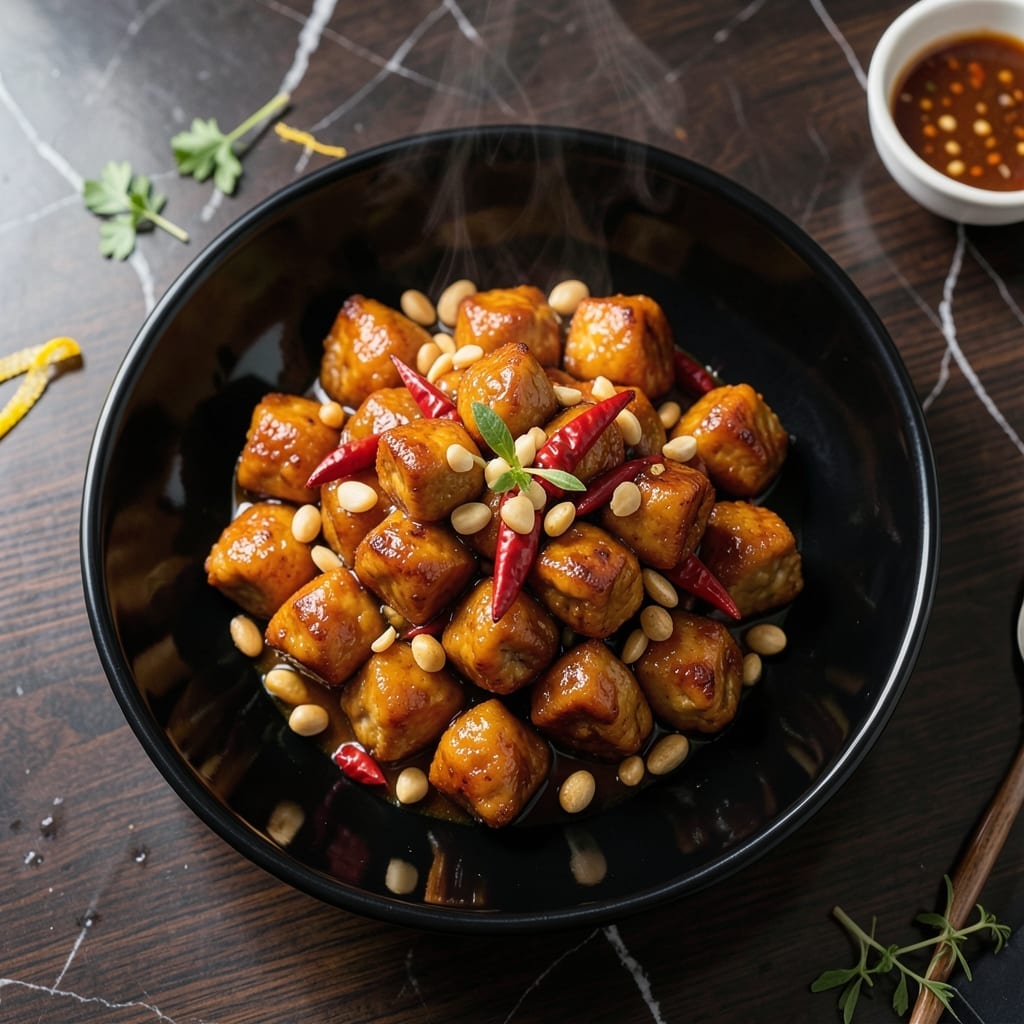
I’ve recreated the signature flavors of this restaurant favorite at home with a perfect balance of heat, sweetness, and nutty crunch.
This version captures the bold, complex taste of the original using simple ingredients and a straightforward cooking method. The chicken stays tender while the sauce delivers that iconic spicy-sweet punch.
Each bite combines crispy peanuts, tender chicken, and a glossy sauce that clings to every piece. The dish comes together quickly with standard pantry staples.
Serve over steamed rice for a meal that rivals any takeout experience. The results are consistently impressive.
Ingredients for Kung Pao Chicken Recipe P.f. Chang’s
Standard pantry staples deliver that signature spicy-sweet heat with satisfying crunch in every bite.
| Ingredient | Amount | Notes |
|---|---|---|
| Boneless Skinless Chicken Breast 🍗 | 1 ½ lb | Cut into 1-inch cubes |
| Roasted Peanuts 🥜 | ¾ cup | Unsalted, dry-roasted preferred |
| Dried Red Chili Peppers 🌶️ | 6 pieces | Whole, seeds intact for heat |
| Garlic Cloves 🧄 | 4 cloves | Minced for aromatic base |
| Fresh Ginger Root 🌿 | 1 tbsp | Finely minced for depth |
| Soy Sauce 🫒 | 3 tbsp | Low-sodium for balance control |
| Rice Vinegar 💧 | 2 tbsp | Unseasoned for tang |
| Hoison Sauce 🥫 | 2 tbsp | Thick, sweet-savory base |
| Granulated Sugar 🍚 | 1 tbsp | Balances heat and salt |
| Cornstarch 🌾 | 1 tbsp | For sauce thickening |
| Sesame Oil 🫒 | 1 tsp | Toasted, for finishing aroma |
| Vegetable Oil 🫒 | 3 tbsp | High smoke point for stir-frying |
| Green Onions 🧅 | 4 whole | Thinly sliced for garnish |
| Water 💧 | ¼ cup | For cornstarch slurry |
[recipe_ingredient_scaler]
The chicken quality directly impacts texture. Boneless, skinless thighs stay juicier than breasts (though the recipe uses breasts for authenticity). For peanuts, Whole Foods bulk section has the freshest dry-roasted. The dried chilies must be whole—Asian markets carry the proper variety with seeds intact for authentic heat. Fresh ginger and garlic are non-negotiable; pre-minced lacks the necessary potency for this dish’s bold profile.
Need to reduce heat? Remove chili seeds or substitute with red pepper flakes at half the amount. No hoison? Combine 1 tbsp soy sauce + 1 tbsp molasses + 1 tsp rice vinegar. For gluten-free, use tamari instead of soy sauce. The peanuts can be swapped for cashews (toast them first). Cornstarch slurry must be cold—mix the water and cornstarch just before adding to prevent settling.
The dish tastes even better the next day as flavors meld. Store in an airtight container for up to 3 days in the fridge—peanuts may soften. Freezing isn’t recommended due to texture changes. Always garnish with green onions just before serving for fresh crunch and color contrast.
Why You’ll Love This Recipe
- One Pan Magic: I toss everything—chicken, peanuts, chilies—in a single skillet. Cleanup? Almost non-existent.
- Spicy-Sweet Addiction: That garlic-ginger punch with a hint of heat from the chilies? Ridiculously good.
- Weeknight Hero: Honestly, I make this on a Tuesday and feel like I’ve treated myself to takeout.
- Leftovers Win: The flavors deepen overnight. My lunch the next day? Even better than dinner.
Step-by-Step Instructions for Kung Pao Chicken
Master this restaurant-quality dish with precise technique and authentic flavor balance.
Step 1: Velvet the Chicken for Maximum Tenderness
Cut the boneless skinless chicken breast into 1-inch cubes and place in a bowl. In a small dish, whisk together the soy sauce, rice vinegar, hoison sauce, granulated sugar, and cornstarch until smooth. Pour this marinade over the chicken and mix until every piece is thoroughly coated.
Let it sit for 15 minutes while you prepare the remaining ingredients. This velveting process ensures the chicken stays impossibly tender during the high-heat stir-fry. The cornstarch creates a protective barrier that locks in moisture.
Step 2: Toast the Aromatics and Chili Peppers
Heat the vegetable oil in a wok or large skillet over high heat until it begins to shimmer. Add the dried red chili peppers and stir for 10-15 seconds until they turn slightly darker and become fragrant. Be careful not to burn them—they should infuse the oil with color and heat without becoming bitter.
Immediately add the minced garlic cloves and finely minced fresh ginger root. Stir constantly for 30 seconds until the aromatics are golden and their scent fills your kitchen. This builds the flavor foundation that defines authentic Kung Pao.
Step 3: Stir-Fry the Chicken to Perfection
Add the marinated chicken to the wok in a single layer, working in batches if necessary to avoid overcrowding. Cook over high heat for 4-5 minutes, stirring frequently, until the chicken is cooked through and the edges begin to caramelize slightly from the sauce.
The chicken should turn opaque and develop a light golden crust where it contacts the wok. The sauce will thicken and cling to each piece. If the mixture seems too thick, add a splash of the water to loosen it.
Step 4: Incorporate Peanuts and Finish the Sauce
Stir in the roasted peanuts and cook for an additional 1-2 minutes to allow them to absorb the flavors and warm through. The peanuts should retain their crunch while becoming coated in the glossy sauce. Taste and adjust seasoning if needed—the balance should be spicy, sweet, and tangy all at once.
Create a slurry by mixing the remaining cornstarch with the water, then stir it into the wok. Cook for 30-60 seconds until the sauce thickens to your desired consistency, coating the chicken and peanuts in a glossy sheen.
Step 5: Garnish and Serve Immediately
Remove from heat and stir in the sesame oil. The toasted aroma will bloom instantly, adding depth to the dish. Transfer to a serving platter and garnish with the thinly sliced green onions, scattering them across the top for freshness and color.
Serve hot over steamed rice to soak up every bit of the complex sauce. Each bite should deliver tender chicken, crunchy peanuts, and the perfect balance of heat, sweetness, and umami that makes this dish unforgettable.
Pro Tips For Making Kung Pao Chicken Recipe P.F. Chang’S
- Velvet the Chicken: Toss the chicken breast with 1 tsp cornstarch and 1 tbsp soy sauce before cooking—I learned this the hard way after my first batch came out rubbery instead of tender.
- Toast the Peanuts: Spread the peanuts on a dry pan for 2-3 minutes until fragrant; skipping this leaves them tasting raw and dull against the bold flavors.
- Dry the Chilies: Microwave the dried chilies for 10 seconds to crisp them up, or they’ll soak up oil and turn the sauce greasy instead of vibrant.
- Mince Ginger Fine: Grate the ginger instead of chopping—after burning three batches, I finally figured out that fine ginger integrates better into the sauce.
Pro Cooking Tips for Perfect Results
Wok Heat Control
Your wok must be screaming hot before adding oil—test by flicking water droplets that should dance and evaporate instantly. I use a 14-inch carbon steel wok on my gas range’s highest BTU burner. Maintain high heat throughout; if your kitchen fills with smoke, that’s the authentic Szechuan experience. 🔥
Velveting Secret
The 15-minute marinade with cornstarch is non-negotiable for that restaurant-quality tenderness. I always use cold water for the slurry to prevent premature cooking. This technique, called velveting, creates a silky texture that sets this dish apart from standard stir-fries.
Chili Pepper Technique
Toast the whole dried chilies for only 10-15 seconds—any longer and they’ll turn bitter. I source mine from Asian markets for authentic heat. Remove them before serving if you prefer less spice, but keep them in for the full P.F. Chang’s experience.
Sauce Consistency
Your sauce should coat the back of a spoon but still drip slowly. If too thick, add 1 tbsp water at a time. The ideal consistency clings to chicken and peanuts without pooling. I find the slurry needs 30-60 seconds to reach perfect glossiness.
Peanut Timing
Add peanuts only in the final 1-2 minutes to preserve their crunch. I use Whole Foods dry-roasted for consistent quality. Stir constantly during this phase to prevent burning—their natural oils can scorch quickly at high heat.
Finishing Touch
Always remove from heat before adding sesame oil to prevent its delicate aroma from burning off. The 1 tsp at the end makes a noticeable difference in depth. Garnish with green onions immediately for fresh contrast. 💡
Nutrition Facts
Frequently Asked Questions
Can I use chicken thighs instead of breasts?
Yes! Thighs stay juicier and hold up better to high heat. Just trim excess fat and cut into 1-inch cubes like the recipe specifies. The velveting process works the same way.
How do I adjust the spice level?
Remove seeds from dried chilies for milder heat, or reduce to 3-4 peppers. For extra kick, add 1 tsp of red pepper flakes with the aromatics. Taste as you go!
What if I don’t have hoisin sauce?
Mix 1 tbsp soy sauce + 1 tbsp molasses + 1 tsp rice vinegar as a substitute. The dish will still have that sweet-savory depth.
Can I make this ahead of time?
Best served fresh, but leftovers keep in an airtight container for up to 3 days. Reheat gently on the stove with a splash of water to revive the sauce.

Trained in classic French technique but raised on slow-cooked ribs and spicy rubs, she blends culinary skill with smoke and soul.
- Recipe for Boneless Pork Chops in Cast Iron Skillet: Sear and Baste to Juicy Perfection - October 3, 2026
- Recipe for Boneless Cross Rib Roast: Slow-Roasted Beef with Herb Crust - October 3, 2026
- Hamburgers in Sauce Recipe Crock Pot: Slow-Cooked Savory Delight - October 3, 2026