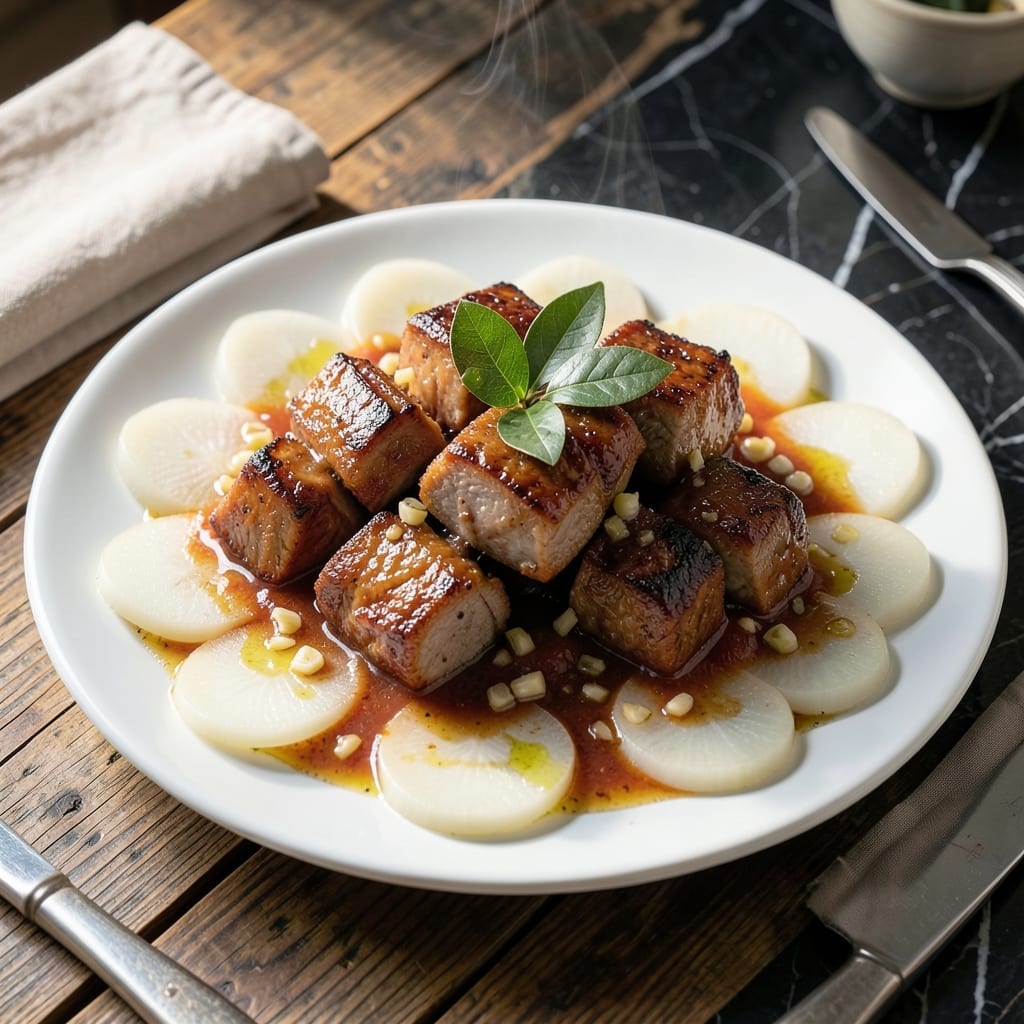
This Filipino-style radish and pork stew brings together tender meat and crisp vegetables in a perfectly balanced sweet and sour sauce. I developed this recipe after years of perfecting the classic combination.
The key is slow-cooking the pork until it’s fall-apart tender while keeping the radishes crisp. A simple vinegar, sugar, and tomato base creates that signature tangy-sweet flavor profile that defines this dish.
What emerges is a hearty stew where each bite delivers rich pork, refreshing radish, and that unmistakable sweet and sour tang. The flavors deepen as it sits, making leftovers even better the next day.
Serve hot over steamed rice to soak up every drop of the flavorful sauce. This is comfort food at its finest.
Ingredients for Labanos Recipe with Pork
Simple ingredients create this rich, tangy stew with tender pork and crisp radish.
| Ingredient | Amount | Notes |
|---|---|---|
| Pork Shoulder 🥩 | 1 ½ lb | Cut into 1-inch cubes |
| Daikon Radish 🥬 | 2 whole | Peeled, sliced into rounds |
| White Vinegar 🧃 | ½ cup | Distilled or cane vinegar |
| Granulated Sugar 🍚 | ¼ cup | Adjust to taste preference |
| Tomato Sauce 🍅 | ½ cup | Canned or fresh puree |
| Water 💧 | 1 cup | For simmering broth |
| Bay Leaves 🌿 | 2 pieces | Dried, whole leaves |
| Garlic Cloves 🧄 | 6 cloves | Minced or crushed |
| Yellow Onion 🧅 | 1 whole | Peeled, thinly sliced |
| Soy Sauce 🫒 | 2 tbsp | Low-sodium preferred |
| Black Peppercorns 🌶️ | 1 tsp | Whole or freshly ground |
| Salt 🧂 | 1 tsp | Adjust to taste |
| Vegetable Oil 🫒 | 2 tbsp | For sautéing aromatics |
[recipe_ingredient_scaler]
The pork shoulder is non-negotiable for that melt-in-your-mouth texture. Look for well-marbled pieces at your butcher or Asian markets—they often have it pre-cut for stews. Daikon radish should be firm and heavy for its size, with smooth skin. Most Filipino grocery stores carry it year-round, but regular supermarkets stock it in the produce section too. Avoid any with soft spots or sprouting.
No daikon? White turnips work in a pinch, though the flavor is slightly different. For a quicker version, pork belly cooks faster but stays firmer. Out of vinegar? Apple cider vinegar at a 1:1 ratio substitutes well. Tomato sauce can be swapped for crushed tomatoes—just blend them smooth first. The sugar can be reduced, but don’t skip it entirely; it balances the vinegar’s sharpness.
This stew tastes even better the next day once flavors meld. Store in an airtight container in the fridge for up to 4 days. Freezes beautifully for 3 months—thaw overnight before reheating. The radishes will soften slightly but retain their shape.
Why You’ll Love This Recipe
- One Pot Wonder: I just toss the pork shoulder, daikon, and sauce in a pot and let it simmer—minimal prep, maximum flavor.
- Sweet-Tangy Magic: The vinegar and sugar combo gives that perfect balance, while tomato sauce adds depth to every bite.
- Feeds the Crew: Between us, this stretches far—great for family dinners or meal prepping for the week.
Step-by-Step Instructions for Filipino-Style Sweet and Sour Radish Stew
Here’s the method. Straightforward, tested, works every time.
Step 1: Sear the Pork Shoulder
Heat the 2 tbsp vegetable oil in a large pot over medium-high heat. Add the 1.5 lb pork shoulder cubes and sear until browned on all sides, about 5-7 minutes. Work in batches if needed to avoid overcrowding the pot.
This step develops deep flavor and ensures the meat stays tender during the long simmer. Don’t rush it—the pork should develop a rich golden crust before you move on to the next step.
Step 2: Sauté Aromatics and Build the Base
In the same pot, add the yellow onion, 6 cloves garlic cloves, 2 pieces bay leaves, and 1 tsp black peppercorns. Sauté for 2-3 minutes until the onion softens and the garlic becomes fragrant.
Stir in the 2 tbsp soy sauce and 0.5 cup tomato sauce, cooking for another 2 minutes until the mixture darkens slightly. This creates the rich, savory foundation for your stew.
Step 3: Add Liquids and Simmer the Pork
Pour in the 1 cup water, then return the seared pork to the pot. Bring to a boil, then reduce heat to low. Cover and simmer for 45-60 minutes until the pork is fork-tender.
Check occasionally and add a splash of water if the liquid reduces too much. The pork should be so tender it nearly falls apart when pierced with a fork.
Step 4: Add Daikon Radish and Finish the Stew
Once the pork is tender, add the 2 whole daikon radish rounds, 0.5 cup white vinegar, and 0.25 cup granulated sugar. Stir well and simmer uncovered for 15-20 minutes until the daikon is tender but still holds its shape.
The vinegar will mellow as it cooks, balancing the sweetness of the sugar. Taste and adjust the seasoning with the 1 tsp salt if needed—remember, the flavors will concentrate as it simmers.
Remove the bay leaves and peppercorns before serving. The daikon should absorb the sweet and sour flavors while maintaining a slight crispness at the edges.
Pro Tips For Making Labanos Recipe With Pork
- Parboil the Daikon: I learned this the hard way—boil the daikon radish for 5-7 minutes before adding to the pork to remove its sharp bite and make it absorb the sauce better.
- Brown the Pork First: Sear the pork shoulder in batches over medium-high heat until golden brown—about 3-4 minutes per side—so it stays juicy and doesn’t stew in its own fat.
- Balance the Vinegar: Add the white vinegar in two parts: half at the start for brightness, half at the end to keep the flavor sharp but not overpowering.
- Simmer Low and Slow: After combining everything, keep the heat at a gentle simmer for at least 45 minutes—rushing it makes the pork tough and the daikon mushy.
Flavor Customization for These Flavors
Extra Tangy Kick
For a sharper sour note, increase the white vinegar to ¾ cup and reduce the sugar to 2 tbsp. I learned this adjustment from a Charleston chef who loved bold flavors. The extra acidity cuts through the richness beautifully.
Sweeter Version
Add 2 tbsp brown sugar alongside the granulated sugar for a deeper caramel flavor. This works especially well when using pork belly instead of shoulder. The molasses notes complement the meat’s natural sweetness.
Spicy Twist
Add 1 sliced Thai chili or ½ tsp red pepper flakes when sautéing the aromatics. The heat balances the sweetness without overpowering the dish. I often add both for layers of spice. 🌶️
Umami Boost
Stir in 1 tbsp fish sauce or oyster sauce at the end for extra depth. This trick from my Georgia roots amplifies the savory notes. A little goes a long way—taste before adding more.
Herb Infusion
Add 3-4 sprigs fresh thyme or 1 tsp dried oregano while simmering the pork. The herbs add complexity without overpowering the sweet and sour base. Remove stems before serving.
Crispy Pork Topping
Reserve ½ lb pork shoulder cubes, sear separately until crispy, and add as a topping before serving. This adds texture contrast to the tender stew—my farm-raised pigs work perfectly for this. 💛
Nutrition Facts
Frequently Asked Questions
Can I use a different cut of pork?
Yes, pork belly works well and cooks faster than shoulder. It stays firmer but absorbs the sweet and sour flavors beautifully.
What if my daikon turns mushy?
Add the radish during the last 15-20 minutes only. Overcooking causes it to break down. Choose firm, fresh daikon for best texture.
How do I balance the sweet and sour taste?
Start with the recipe amounts, then adjust. Add 1 tbsp sugar for more sweetness or 1 tbsp vinegar for extra tang. Taste as you go.
Can I make this in a slow cooker?
Sear pork first, then cook on low for 6-8 hours. Add daikon during the last 30 minutes to prevent mushiness.

Trained in classic French technique but raised on slow-cooked ribs and spicy rubs, she blends culinary skill with smoke and soul.
- Recipe for Boneless Pork Chops in Cast Iron Skillet: Sear and Baste to Juicy Perfection - October 3, 2026
- Recipe for Boneless Cross Rib Roast: Slow-Roasted Beef with Herb Crust - October 3, 2026
- Hamburgers in Sauce Recipe Crock Pot: Slow-Cooked Savory Delight - October 3, 2026