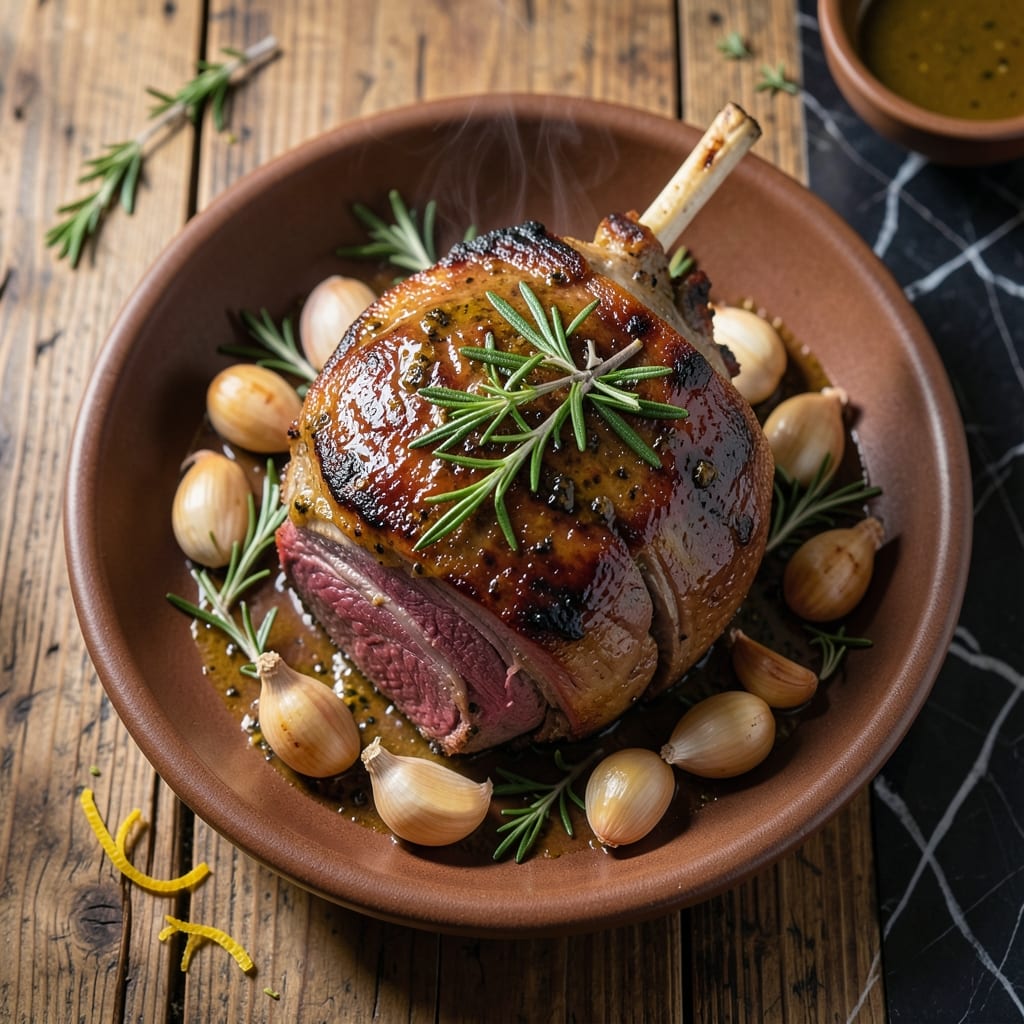
There’s something special about a bone-in lamb loin roast that transforms a meal into an occasion. My grandmother taught me that the bone adds depth of flavor that boneless cuts simply can’t match.
This method combines classic French technique with home kitchen practicality. A simple garlic and rosemary paste infuses the meat with aroma while the bone conducts heat evenly throughout the roast.
The result is succulent, tender lamb with a golden crust that falls off the bone. The meat stays juicy from edge to edge, with the herb flavors complementing rather than overpowering the natural lamb richness.
Perfect for Sunday suppers or holiday gatherings, this roast delivers professional results without requiring professional skills. The process is straightforward, the presentation impressive.
Ingredients for Lamb Loin Roast Recipe Bone In
Quality ingredients for a showstopping centerpiece that feels special but stays approachable.
| Ingredient | Amount | Notes |
|---|---|---|
| Bone-In Lamb Loin Roast 🐑 | 3 lb | Frenched bones preferred |
| Garlic Cloves 🧄 | 8 cloves | Freshly peeled, minced |
| Fresh Rosemary 🌿 | 3 tbsp | Finely chopped, stems discarded |
| Extra-Virgin Olive Oil 🫒 | 3 tbsp | Divided for paste and searing |
| Dijon Mustard 🟡 | 2 tbsp | Smooth, not whole grain |
| Kosher Salt 🧂 | 2 tsp | Diamond Crystal preferred |
| Black Pepper 🌶️ | 1 tsp | Freshly ground, coarse |
| Red Wine 🍷 | ½ cup | Dry variety, like Cabernet |
| Lamb Stock 🥘 | 1 cup | Low-sodium preferred |
| Unsalted Butter 🧈 | 2 tbsp | Cubed, for basting |
| Shallot 🧅 | 1 whole | Finely minced |
| Fresh Thyme 🍃 | 1 tbsp | Leaves stripped from stems |
[recipe_ingredient_scaler]
The lamb is non-negotiable here. Bone-in loin roast from a reputable butcher like Whole Foods or a local farm ensures superior flavor and texture. Look for bright pink meat with creamy fat—avoid anything gray or dry. The bone should be Frenched (cleaned of meat and fat) for presentation. If your butcher hasn’t done this, ask them to—it takes seconds and elevates the final dish.
No fresh rosemary? Dried at one-third the amount works, but fresh is ideal for the paste. Garlic powder can substitute in a pinch, though the flavor won’t be as vibrant. For the wine, any dry red works—Pinot Noir or Merlot are great. If avoiding alcohol, use extra lamb stock with a splash of balsamic. The Dijon mustard adds acidity; whole-grain mustard changes the texture but still works.
The roast can rest at room temperature for 1 hour before cooking. Leftover lamb keeps in the fridge for 3-4 days or freezes beautifully for 3 months. Slice cold and reheat gently in a warm oven with a splash of stock to revive.
Why You’ll Love This Recipe
- One Pan Wonder: I rub the lamb with olive oil, garlic, and rosemary, pop it in the oven, and let the bone-in loin do all the work.
- Herb-Crusted Bliss: That Dijon and herb crust forms a crispy, fragrant layer that makes every bite ridiculously good.
- Company-Worthy Centerpiece: I serve this for Sunday suppers or holidays—it feels fancy but takes barely any effort.
- Leftovers Magic: The meat slices beautifully for sandwiches or salads the next day, and honestly, it tastes even better cold.
Step-by-Step Instructions for Lamb Loin Roast Bone-In
Master the technique for succulent, herb-infused lamb with a perfect crust every time.
Step 1: Prepare the Herb Paste and Season the Roast
In a small bowl, combine the 8 cloves garlic cloves, 3 tbsp fresh rosemary, 2 tbsp Dijon mustard, 2 tsp kosher salt, 1 tsp black pepper, and 2 tbsp extra-virgin olive oil. Stir until it forms a thick, aromatic paste. This blend ensures every bite carries intense flavor.
Pat the 3 lb bone-in lamb loin roast completely dry with paper towels. Rub the herb paste evenly over the entire surface, pressing it into the meat. Allow it to sit at room temperature for 30 minutes to let the flavors penetrate deeply.
Step 2: Sear the Roast for a Flavorful Crust
Preheat your oven to 375°F. In a large oven-safe skillet or Dutch oven, heat the remaining 1 tbsp extra-virgin olive oil over medium-high heat until shimmering. Sear the lamb on all sides, including the ends, for 2-3 minutes per side until deeply golden brown.
The searing process creates a caramelized crust that locks in juices. Don’t rush this step—wait until the lamb releases easily from the pan before turning. This ensures a proper Maillard reaction, which is essential for developing complex flavors.
Step 3: Deglaze and Add Aromatics
Transfer the lamb to a plate temporarily. In the same skillet, add the 1 whole shallot and cook for 1-2 minutes until softened and fragrant. Pour in the 0.5 cup red wine, scraping up any browned bits from the bottom of the pan with a wooden spoon.
Let the wine reduce by half, about 2-3 minutes. Add the 1 cup lamb stock and 1 tbsp fresh thyme, then return the lamb to the skillet. The liquid should come about halfway up the roast, creating a moist cooking environment.
Step 4: Roast and Baste to Perfection
Transfer the skillet to the preheated oven. Roast the lamb for 25-30 minutes, basting it with the pan juices every 10 minutes. Add the 2 tbsp unsalted butter during the last 10 minutes of cooking to enrich the sauce.
Use an instant-read thermometer to check for doneness. For medium-rare, remove the lamb when the internal temperature reaches 130-135°F. The meat should feel slightly springy to the touch but still yield under gentle pressure.
Step 5: Rest and Serve
Transfer the lamb to a cutting board and tent loosely with foil. Let it rest for 15 minutes before carving. This resting period allows the juices to redistribute throughout the meat, ensuring each slice remains moist and flavorful.
Carve the lamb between the bones into thick chops and serve with the pan juices spooned over the top. The meat should be tender and blush pink in the center, with a rich, herb-infused crust that enhances every bite.
Pro Tips For Making Lamb Loin Roast Recipe Bone In
- Sear the Bone Side: Start by searing the bone side first in a hot pan with olive oil—this renders fat and builds flavor before flipping to the meat side.
- Slash the Fat Cap: Make shallow cuts in the fat cap every inch or so before roasting so the rosemary and garlic can penetrate deeper as it cooks.
- Pull at 130°F: I learned this the hard way—lamb loin keeps rising 5-10 degrees while resting, so take it out at 130°F for perfect medium-rare.
- Crush the Garlic: Smash the garlic cloves with the flat of your knife before using—they’ll release more aroma into the oil and mustard rub without burning.
Best Sauces and Condiments for This Dish
Classic Mint Sauce
I love this British-inspired pairing—finely chop ½ cup fresh mint leaves and mix with ¼ cup white wine vinegar, 1 tbsp sugar, and a pinch of salt. Let it sit for 30 minutes before serving. The bright acidity cuts through the richness beautifully. 🌟
Red Wine Reduction
Use the pan drippings from your roast and add 1 cup dry red wine and 1 cup lamb stock. Simmer until reduced by half, then finish with 1 tbsp cold butter for a glossy, luxurious sauce. Strain before serving for a silky texture.
Garlic-Herb Chimichurri
Blend 1 cup fresh parsley, ¼ cup fresh oregano, 4 garlic cloves, ½ cup olive oil, 3 tbsp red wine vinegar, and ½ tsp red pepper flakes. This Argentine sauce adds a fresh, herby punch that complements the lamb’s depth. 💫
Pomegranate Molasses Glaze
Whisk together ¼ cup pomegranate molasses, 1 tbsp honey, 1 tbsp lemon juice, and 1 minced garlic clove. Drizzle over slices just before serving. The sweet-tart flavor contrasts perfectly with the savory roast.
Tzatziki Sauce
Combine 1 cup Greek yogurt, ½ cup grated cucumber (squeezed dry), 2 minced garlic cloves, 1 tbsp lemon juice, and 1 tbsp chopped dill. This cooling sauce balances the lamb’s richness with a refreshing tang.
Nutrition Facts
Frequently Asked Questions
What internal temperature should I aim for?
For medium-rare, remove from oven at 130-135°F. It will rise to 140°F while resting. Use an instant-read thermometer for accuracy.
Can I use boneless instead of bone-in?
Yes, but reduce cooking time by 10-15%. The bone adds flavor and helps conduct heat, so boneless may cook less evenly.
How long should it rest before slicing?
Always rest for 15 minutes tented with foil. This lets juices redistribute, keeping the meat moist. Slicing too soon causes dryness.
What if my roast browns too quickly?
Tent loosely with foil and reduce oven temp to 325°F. The sear already locked in flavor, so focus on even cooking.

Trained in classic French technique but raised on slow-cooked ribs and spicy rubs, she blends culinary skill with smoke and soul.
- Recipe for Boneless Pork Chops in Cast Iron Skillet: Sear and Baste to Juicy Perfection - October 3, 2026
- Recipe for Boneless Cross Rib Roast: Slow-Roasted Beef with Herb Crust - October 3, 2026
- Hamburgers in Sauce Recipe Crock Pot: Slow-Cooked Savory Delight - October 3, 2026