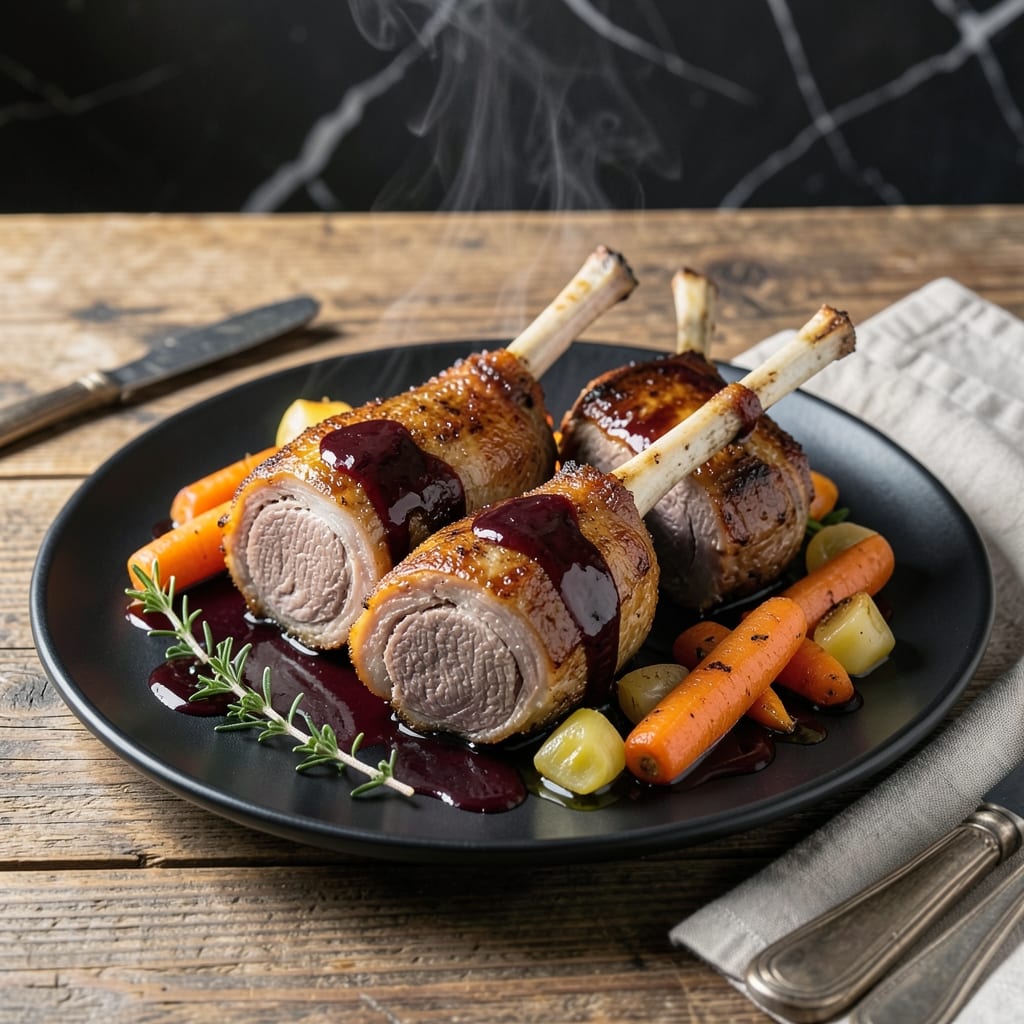
This oven-braised lamb shank delivers the kind of fall-off-the-bone tenderness that transforms a simple Sunday into something special. I developed this method after one too many tough lamb dishes in my tiny Boston kitchen.
The secret lies in the slow, low-temperature cooking that breaks down the connective tissue while concentrating the natural flavors. A rich red wine and herb braising liquid ensures every bite is infused with depth.
What emerges from the oven is meat so tender it nearly dissolves at the touch of a fork, surrounded by a velvety sauce that begs to be soaked up with crusty bread. The aroma alone will have everyone gathering around the table.
Pair with creamy polenta or roasted root vegetables for a complete meal that feels like a restaurant experience at home.
Ingredients for Lamb Shank Recipe Oven Cooked
Pantry staples and a few fresh herbs create that melt-in-your-mouth magic.
| Ingredient | Amount | Notes |
|---|---|---|
| Lamb Shanks 🐑 | 4 whole | Bone-in, about 1 lb each |
| Olive Oil 🫒 | 2 tbsp | Extra-virgin for searing |
| Kosher Salt 🧂 | 1 ½ tsp | Diamond Crystal preferred |
| Black Pepper 🌶️ | 1 tsp | Freshly ground |
| Red Wine 🍷 | 2 cups | Dry, bold variety like Cabernet |
| Beef Stock 🥩 | 1 ½ cups | Low-sodium preferred |
| Garlic Cloves 🧄 | 6 cloves | Minced for braising liquid |
| Yellow Onion 🧅 | 1 whole | Large, finely chopped |
| Carrots 🥕 | 2 whole | Peeled, cut into chunks |
| Celery Stalks 🌿 | 2 whole | Cut into chunks |
| Tomato Paste 🍅 | 2 tbsp | For depth of flavor |
| Fresh Rosemary 🌿 | 2 sprigs | Whole sprigs for braise |
| Fresh Thyme 🍃 | 4 sprigs | Whole sprigs for braise |
| Bay Leaves 🌿 | 2 whole | Dried or fresh |
[recipe_ingredient_scaler]
The lamb shanks are the star here. Look for bone-in, meaty cuts—about 1 lb each is ideal. I grab mine from Whole Foods or the local butcher when they’ve got good marbling (that fat keeps everything juicy). The red wine shouldn’t be anything you wouldn’t drink—Cabernet or Merlot both work beautifully. For the stock, low-sodium beef stock lets you control the salt.
No red wine? Beef broth with a splash of balsamic vinegar gets you 80% there. Fresh herbs are ideal but dried at half the amount works in a pinch. If you’re missing one herb, lean into the others—rosemary and thyme are the heavy hitters. The tomato paste can be swapped for crushed tomatoes if that’s what you’ve got open (just reduce the stock slightly).
This tastes even better the next day—3-4 days in the fridge, freezes for 3 months. The braising liquid thickens into a rich sauce as it cools. Perfect for making ahead.
Why You’ll Love This Recipe
- I’ll be real: the leftovers taste even better, and they reheat like a dream for quick lunches.
- Set It & Forget: The oven does all the work while I sip my coffee—just sear, season, and let it braise.
- Wine-Deep Flavor: Honestly, the red wine turns the pan juices into a rich, velvety sauce that soaks right into the lamb.
- Sunday Dinner Star: It feels fancy enough for guests but unfussy enough for a lazy weekend with my family.
Step-by-Step Instructions for Oven Braised Lamb Shanks
Here’s how to turn tough cuts into melt-in-your-mouth perfection with simple hands-off cooking.
Step 1: Sear the Lamb Shanks to Lock in Flavor
Pat the 4 whole Lamb Shanks completely dry with paper towels—this prevents steaming and ensures a good sear. Season them generously with the 1.5 tsp Kosher Salt and 1 tsp Black Pepper, rubbing it into all sides.
Heat the 2 tbsp Olive Oil in a large Dutch oven over medium-high heat until it shimmers. Sear the lamb shanks for 4-5 minutes per side until deeply browned. You’re looking for a rich, caramelized crust—this builds the flavor foundation. Remove the shanks and set aside.
Step 2: Sauté the Aromatics for Depth
In the same pot, add the finely chopped Yellow Onion, Carrots, and Celery Stalks. Cook for 5-6 minutes until the vegetables start to soften and the onion turns translucent. Stir in the 2 tbsp Tomato Paste and cook for another 1-2 minutes until it darkens slightly.
Add the 6 cloves Garlic Cloves and cook for 30 seconds until fragrant. This step builds layers of flavor that will infuse into the meat during braising. Don’t let the garlic burn—it turns bitter quickly.
Step 3: Deglaze and Add Braising Liquid
Pour in the 2 cups Red Wine and scrape up all the browned bits from the bottom of the pot with a wooden spoon. Let it simmer for 2-3 minutes until reduced by about half. This deglazing step captures all that concentrated flavor from searing.
Add the 1.5 cups Beef Stock, 2 sprigs Fresh Rosemary, 4 sprigs Fresh Thyme, and 2 whole Bay Leaves. Return the lamb shanks to the pot, nestling them into the liquid. The liquid should come about halfway up the shanks.
Step 4: Braise in the Oven Until Tender
Cover the Dutch oven and transfer it to a preheated 325°F oven. Braise for 2.5 to 3 hours, turning the shanks halfway through. You’ll know it’s done when the meat pulls away from the bone easily and a fork slides in without resistance.
Check occasionally and add a splash of water or stock if the liquid level gets too low. The shanks are ready when they’re fall-off-the-bone tender and the braising liquid has reduced to a rich, flavorful sauce.
Step 5: Rest and Serve
Carefully remove the lamb shanks from the braising liquid and place them on a serving platter. Skim any excess fat from the surface of the sauce if desired. The sauce should coat the back of a spoon—if it’s too thin, simmer it on the stovetop for a few minutes to thicken.
Let the shanks rest for 5-10 minutes before serving. Spoon the sauce over the top and garnish with fresh herbs if you like. Serve with mashed potatoes or crusty bread to soak up every last bit of that incredible sauce.
Pro Tips For Making Lamb Shank Recipe Oven Cooked
- Sear Hard First: I learned this the hard way—get your pan screaming hot and sear the lamb shanks until deeply browned, about 3-4 minutes per side. This builds the flavor base that braising alone can’t achieve.
- Salt Generously Early: Season the shanks aggressively with kosher salt at least 30 minutes before cooking—more than you think you need. Lamb can handle it, and it guarantees the meat is flavorful all the way through.
- Don’t Rush the Braise: After adding red wine, let it reduce by half before covering and transferring to the oven. Skipping this step leaves the sauce thin and watery—it needs that time to concentrate.
- Use Bone-In Shanks: Sounds obvious, but bone-in lamb shanks stay juicier and add richness to the sauce as they cook. I tried boneless once and regretted it—stick with the classic cut.
Health Benefits of lamb shank recipe oven cooked
Rich in Protein
Each lamb shank provides about 30 grams of protein per serving, supporting muscle repair and growth. This high-quality protein includes all essential amino acids your body can’t produce on its own. I notice I feel more satisfied after meals with this dish. 💪
Iron and Zinc Boost
Lamb is an excellent source of heme iron, the type your body absorbs most easily. A single serving delivers about 20% of your daily iron needs. It’s also packed with zinc, crucial for immune function and wound healing.
B Vitamin Powerhouse
You’ll get a full spectrum of B vitamins from this dish, particularly B12 and niacin. These nutrients help convert food into energy and maintain a healthy nervous system. Lamb provides about 50% of your daily B12 in one serving.
Healthy Fats
While lamb does contain saturated fat, it also provides monounsaturated fats similar to those in olive oil. The fat cap on shanks helps keep the meat moist during cooking. I trim excess fat after cooking if desired.
Bone Health Benefits
The slow cooking process releases collagen from the bone and connective tissue, which may support joint health. The braising liquid becomes rich in gelatin—great for gut health. This is why the sauce is so velvety smooth.
Low in Sodium
When prepared at home without added processed ingredients, this dish is naturally low in sodium. I control the salt content by using low-sodium beef stock and fresh herbs for flavor. Perfect for those watching their sodium intake. 🥗
Nutrition Facts
Frequently Asked Questions
What temperature should I use for braising?
Use a 325°F oven for perfect results. This low temperature allows the connective tissue to break down slowly over 2.5-3 hours without drying out the meat. Higher heat can make the shanks tough.
Can I use a different cooking liquid?
Yes! If you don’t have red wine, try beef broth with 1 tablespoon balsamic vinegar for similar depth. You can also use chicken stock in a pinch, though it will be milder. Avoid white wine as it lacks the richness needed.
How do I know when the lamb is done?
The meat should pull away from the bone easily and a fork should slide in without resistance. If it’s not tender after 3 hours, cook for another 30 minutes and check again.
Can I make this ahead of time?
The flavors actually improve after a day in the fridge. Store in an airtight container for up to 4 days or freeze for 3 months. Reheat gently on the stove to preserve texture.

Trained in classic French technique but raised on slow-cooked ribs and spicy rubs, she blends culinary skill with smoke and soul.
- Recipe for Boneless Pork Chops in Cast Iron Skillet: Sear and Baste to Juicy Perfection - October 3, 2026
- Recipe for Boneless Cross Rib Roast: Slow-Roasted Beef with Herb Crust - October 3, 2026
- Hamburgers in Sauce Recipe Crock Pot: Slow-Cooked Savory Delight - October 3, 2026