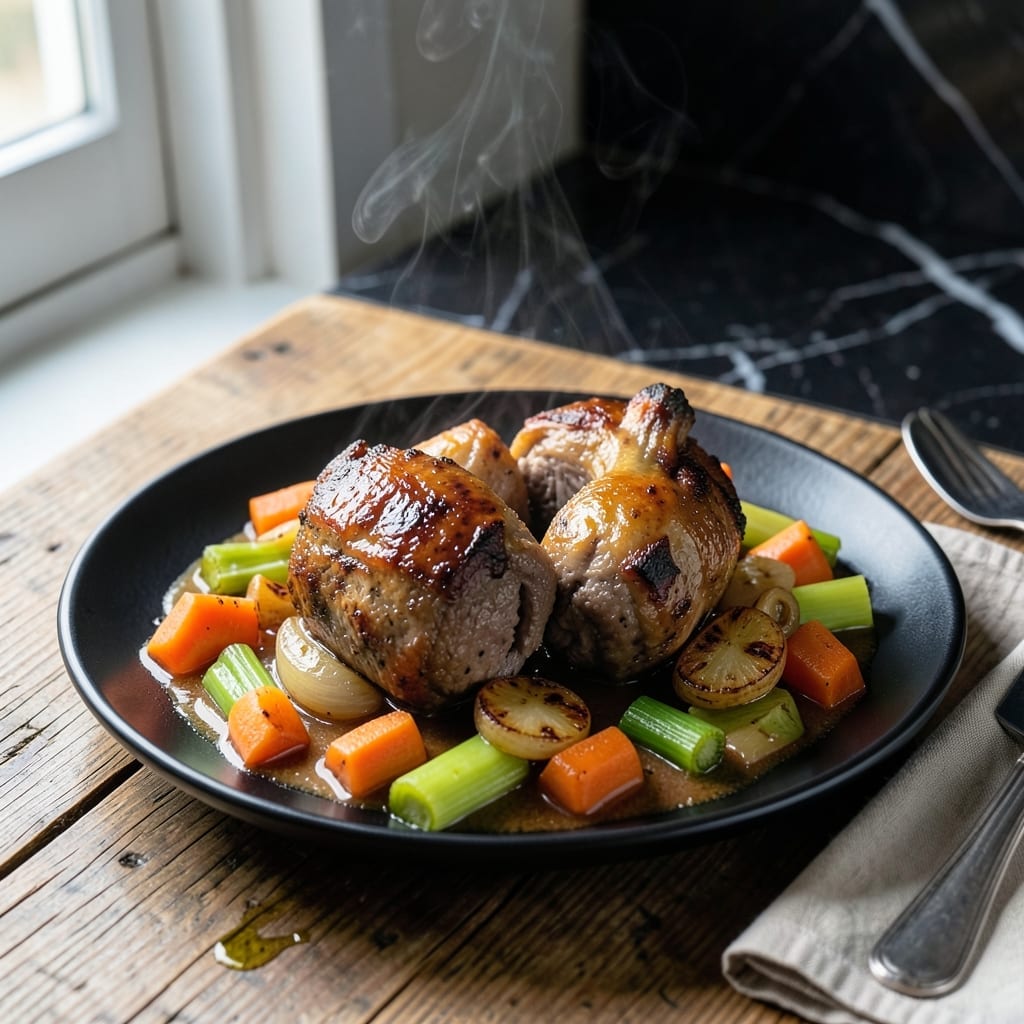
This slow-braised lamb shank transforms tough cuts into fall-off-the-bone tenderness with white wine and herbs. I developed this method after several attempts to perfect the balance of acidity and richness, testing each iteration in my small kitchen.
The secret lies in the long, gentle cooking process that allows the meat to become unbelievably tender while the white wine reduces into a flavorful sauce. Garlic, lemon, and fresh herbs infuse every bite with bright, aromatic complexity.
By the end of cooking, the lamb will be so tender it nearly collapses at the touch of a fork, with a sauce that’s rich and deeply flavorful. The white wine adds a subtle brightness that cuts through the richness of the meat.
Serve this elegant dish with mashed potatoes or crusty bread to soak up every last drop of the herb-infused sauce.
Ingredients for Lamb Shank Recipe White Wine
Lamb shanks, white wine, and fresh herbs—pantry raid plus a quick grocery run.
| Ingredient | Amount | Notes |
|---|---|---|
| Lamb Shanks 🐑 | 4 whole | Bone-in, about 1.5 lb each |
| Olive Oil 🫒 | 2 tbsp | For searing lamb |
| Dry White Wine 🍷 | 2 cups | Sauvignon Blanc or Pinot Grigio |
| Garlic Cloves 🧄 | 8 cloves | Smashed, peeled |
| Yellow Onion 🧅 | 1 whole | Large, roughly chopped |
| Carrots 🥕 | 3 whole | Peeled, cut into chunks |
| Celery Stalks 🥬 | 3 whole | Cut into large pieces |
| Low-Sodium Chicken Stock 🥣 | 2 cups | Or substitute vegetable stock |
| Fresh Rosemary Sprigs 🌿 | 2 whole | Plus 1 tbsp chopped |
| Fresh Thyme Sprigs 🌿 | 4 whole | Plus 1 tbsp chopped |
| Fresh Flat-Leaf Parsley 🌿 | ½ cup | Chopped, for garnish |
| Lemon 🍋 | 1 whole | Zested and juiced |
| Tomato Paste 🍅 | 2 tbsp | For depth of flavor |
| Kosher Salt 🧂 | 1 ½ tsp | Divided for seasoning |
| Freshly Ground Black Pepper 🌶️ | 1 tsp | Divided for seasoning |
[recipe_ingredient_scaler]
The lamb shanks are non-negotiable here. Bone-in gives you that rich, gelatinous sauce. Look for ones that are 1.5 lb each—any smaller and they’ll dry out. Whole Foods or a good butcher shop will have them, but most supermarkets stock them in the freezer section (thaw overnight). The white wine should be something you’d actually drink—Sauvignon Blanc or Pinot Grigio work perfectly, no need for expensive bottles.
No white wine? Substitute dry vermouth or a mix of apple cider vinegar and water (1:3 ratio). Swap chicken stock for vegetable stock if needed. Fresh herbs are ideal, but dried at one-third the amount works in a pinch. The lemon zest adds brightness—if you’re out, a splash of red wine vinegar at the end gives similar pop. Carrots and celery can be swapped for parsnips or fennel.
This tastes even better the next day—make it ahead if you can. Keeps 4-5 days in the fridge, freezes for 3 months. Skim the fat before reheating (it’ll solidify when cold). Serve with crusty bread—it’s basically mandatory for sopping up that sauce.
Why You’ll Love This Recipe
- One Pot Magic: The lamb shanks and onions just sear in the same pot before the wine goes in—minimal cleanup, maximum flavor.
- Garlic-Infused Luxury: The white wine and garlic turn into this rich, aromatic sauce that soaks into the meat. I’ll be real: I could drink it with a spoon.
- Sunday or Tuesday: Honestly, it feels fancy enough for company but is just as good reheated for lunch the next day.
- Budget-Friendly Feast: Lamb shanks are inexpensive cuts, and a single bottle of dry white wine stretches across the whole dish.
Step-by-Step Instructions for Slow-Braised Lamb Shank with White Wine
Here is the method I use to get fall-off-the-bone lamb every time.
Step 1: Sear the Lamb Shanks
Pat the lamb shanks dry with paper towels, then season generously with 1 tsp kosher salt and ½ tsp freshly ground black pepper. I always press the seasoning into the meat so it sticks well during searing.
Heat the 2 tbsp olive oil in a large Dutch oven over medium-high heat until it shimmers. Add the lamb shanks and sear for 4-5 minutes per side until deeply browned. You’ll know they’re ready to flip when they release easily from the pan. Transfer the shanks to a plate and set aside.
Step 2: Build the Flavor Base
In the same pot, add the roughly chopped yellow onion, chunked carrots and celery stalks. Cook for 5 minutes until the vegetables start to soften and develop some color. This creates the foundation for your braising liquid.
Add the 2 tbsp tomato paste and cook for 1-2 minutes until it darkens slightly. Stir in the 8 cloves garlic, 2 whole fresh rosemary sprigs, and 4 whole fresh thyme sprigs, cooking for 30 seconds until fragrant. The tomato paste adds depth and helps thicken the sauce later.
Step 3: Deglaze and Braise
Pour in the 2 cups dry white wine and scrape up all the browned bits from the bottom of the pot. Let it simmer for 3-4 minutes until reduced by about half. This step captures all that caramelized flavor from the lamb and vegetables.
Return the lamb shanks to the pot along with any accumulated juices. Add the 2 cups low-sodium chicken stock, the zest and juice of the lemon, and remaining ½ tsp kosher salt and ½ tsp freshly ground black pepper. Bring to a simmer, then cover and transfer to a 325°F oven.
Step 4: Slow Cook to Tenderness
Braise the lamb shanks for 2 to 2.5 hours, turning them halfway through, until the meat is fork-tender and nearly falling off the bone. You’ll know it’s done when a knife slides in with no resistance. The liquid should be reduced and slightly thickened.
I check on it occasionally to make sure the braising liquid doesn’t reduce too much. If it seems dry, add a splash of water or stock. The aroma filling your kitchen will be incredible at this point.
Step 5: Garnish and Serve
Remove the lamb shanks from the oven and transfer them to a serving platter. Skim any excess fat from the surface of the sauce, then spoon the sauce and vegetables over the lamb. Garnish with the ½ cup chopped fresh flat-leaf parsley.
The meat should be so tender it pulls away from the bone with just a fork. Serve this with crusty bread or over polenta to soak up that amazing sauce. The bright lemon note cuts through the richness perfectly.
Pro Tips For Making Lamb Shank Recipe White Wine
- Sear the Shanks: Get a deep golden crust on all sides using high heat and about 2 tablespoons of olive oil—I learned this the hard way after my first few attempts turned out bland and pale.
- Deglaze with Wine: After searing, pour in the dry white wine while the pan’s still hot to scrape up all those browned bits; that’s where the real flavor hides.
- Skip the Rinsing: Resist the urge to rinse the lamb shanks before cooking; a dry surface ensures a better sear and more flavor in the final dish.
- Add Garlic Late: Toss in the garlic cloves only after the onions have softened—about 5 minutes in—to keep it from burning and turning bitter.
Health Benefits of This lamb shank recipe white wine
Rich in Iron
Lamb is packed with heme iron, the most easily absorbed form that helps prevent anemia. A 3-ounce serving provides about 2.5mg—that’s 14% of your daily needs. I notice my energy levels stay more consistent when I include lamb in my diet regularly. 💪
High-Quality Protein
This dish delivers 23 grams of protein per serving with all nine essential amino acids. The slow cooking breaks down collagen into gelatin, which supports joint health and digestion. Perfect for muscle recovery after those long walks around Boston.
B Vitamin Boost
Lamb is particularly rich in vitamin B12, crucial for nerve function and red blood cell production. You’ll also get niacin and riboflavin important for energy metabolism. One serving covers about 40% of your daily B12 needs.
Zinc for Immunity
A 3-ounce portion provides nearly 5mg of zinc—about 45% of the daily value. This mineral supports immune function and wound healing. I always feel like I’m giving my body a little extra protection when I make this dish.
White Wine Benefits
The white wine in this recipe doesn’t just add flavor—it contains polyphenols that act as antioxidants. Moderate consumption has been linked to heart health benefits. Plus, the alcohol cooks off during the long braise, leaving just the flavor. ✨
Bone Health Support
Lamb provides phosphorus and calcium, essential for maintaining strong bones. The collagen from the bone-in shanks also supports joint health. This makes it a particularly good choice for aging family members.
Nutrition Facts
Frequently Asked Questions
Can I use red wine instead?
Yes, but the flavor profile will be richer and deeper. Red wine works well for a more robust sauce, though white wine provides the bright, acidic balance this recipe is known for.
How do I know when it’s done?
The meat should pull away from the bone easily with a fork. For perfect results, braise for 2 to 2.5 hours at 325°F until fork-tender.
What if the sauce is too thin?
Remove the lid and simmer on the stovetop for 5-10 minutes to reduce. Alternatively, mix 1 tbsp cornstarch with water and stir into the sauce.
Can I make this in a slow cooker?
Sear the lamb first, then transfer everything to the slow cooker. Cook on low for 6-8 hours or high for 4-5 hours.

Trained in classic French technique but raised on slow-cooked ribs and spicy rubs, she blends culinary skill with smoke and soul.
- Recipe for Boneless Pork Chops in Cast Iron Skillet: Sear and Baste to Juicy Perfection - October 3, 2026
- Recipe for Boneless Cross Rib Roast: Slow-Roasted Beef with Herb Crust - October 3, 2026
- Hamburgers in Sauce Recipe Crock Pot: Slow-Cooked Savory Delight - October 3, 2026