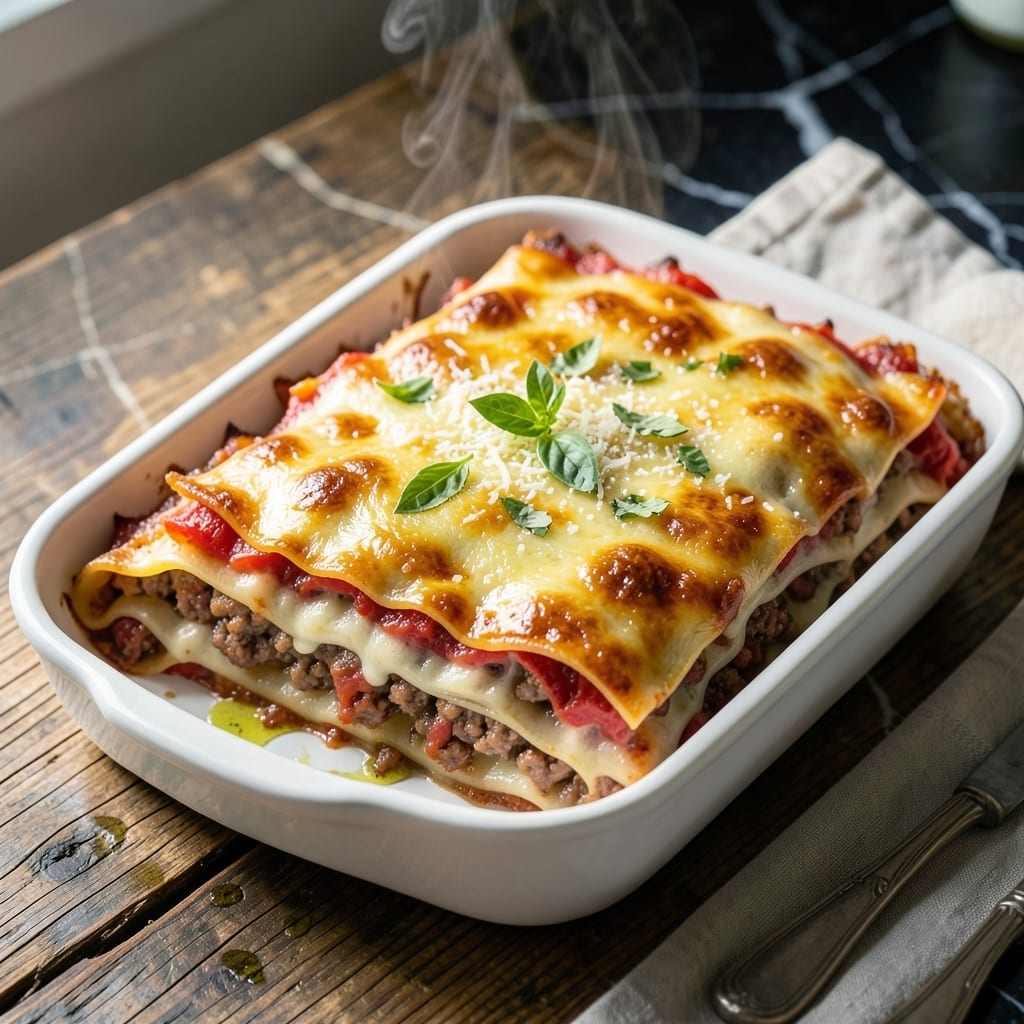
Achieving perfectly baked lasagna is all about precision—layering, temperature, and timing must align. This method delivers that ideal balance of tender pasta, rich sauce, and melted cheese every time.
I developed this approach after years of trial and error, learning that 375°F is the sweet spot for even cooking without drying. The key is covering with foil for the first portion of baking, then uncovering to achieve that golden, bubbling finish.
The result is a dish where each layer maintains its integrity while blending seamlessly with the next. No soggy noodles, no burnt edges—just that classic lasagna texture we all crave.
Whether for Sunday dinner or a special occasion, this technique ensures consistent, restaurant-quality results in your home kitchen.
Ingredients for Lasagna Recipe Cook Temp
Rich layers start with quality ingredients for that perfect lasagna every time.
| Ingredient | Amount | Notes |
|---|---|---|
| Lasagna Noodles 🍝 | 12 pieces | Oven-ready or no-boil preferred |
| Ground Beef 🥩 | 1 ½ lb | 80/20 lean-to-fat ratio ideal |
| Italian Sausage 🌭 | ½ lb | Sweet or spicy, casings removed |
| Onion 🧅 | 1 whole | Yellow or white, finely diced |
| Garlic Cloves 🧄 | 4 cloves | Minced for sauce |
| Crushed Tomatoes 🍅 | 28 oz | San Marzano preferred |
| Tomato Paste 🍅 | 6 oz | For depth of flavor |
| Ricotta Cheese 🧀 | 15 oz | Whole milk for creaminess |
| Mozzarella Cheese 🧀 | 1 lb | Shredded, low-moisture preferred |
| Parmesan Cheese 🧀 | ½ cup | Freshly grated from block |
| Fresh Basil Leaves 🌿 | ¼ cup | Chopped, for layering |
| Extra-Virgin Olive Oil 🫒 | 2 tbsp | For sautéing vegetables |
| Dried Oregano 🌿 | 1 tsp | Mediterranean variety preferred |
| Salt 🧂 | 1 ½ tsp | Kosher or sea salt |
| Black Pepper 🌶️ | ½ tsp | Freshly ground preferred |
[recipe_ingredient_scaler]
The meat blend is key here. Ground chuck with 20% fat keeps the sauce rich, and adding Italian sausage (sweet or spicy) gives it that classic depth. I always grab San Marzano tomatoes from Whole Foods or Trader Joe’s—their sweeter flavor and thicker texture make a difference. For the ricotta, whole milk is non-negotiable; part-skim just doesn’t melt the same way.
No sausage? Double the ground beef with an extra pinch of fennel seeds to mimic the flavor. Fresh mozzarella can be used instead of shredded, but pat it dry first to avoid a watery lasagna. If you’re skipping meat entirely, lentils or mushrooms work great—just sauté them until all the liquid’s gone. The noodles? Oven-ready saves time, but regular lasagna noodles work if you parboil them for 2 minutes less than the package says.
Assemble and bake right away, or refrigerate the unbaked lasagna for up to 24 hours. Leftovers keep for 5 days in the fridge and freeze beautifully for 3 months. Always let it rest for 15 minutes after baking—this keeps the layers intact when you slice into it.
Why You’ll Love This Recipe
- I’ll be real: it tastes even better the next day, and it freezes like a dream for busy weeks ahead.
- No-Fuss Layers: Honestly, the no-boil noodles and simple meat sauce mean I spend less time prepping and more time enjoying.
- Meaty Perfection: The combo of ground beef and Italian sausage with garlic gives it that rich, savory depth I crave every time.
- Crowd Pleaser: Between us, this is my go-to for Sunday dinner, potlucks, or even just a cozy weeknight in.
Step-by-Step Instructions for Lasagna
Here’s how I build and bake this dish to achieve that ideal bubbling, golden finish.
Step 1: Brown the Meat and Build Flavor Base
Heat the 2 tbsp Extra-Virgin Olive Oil in a large pot over medium-high heat. Add the 1.5 lb Ground Beef and 0.5 lb Italian Sausage (casings removed), breaking them up with a wooden spoon. Cook for 6-8 minutes until the meat is no longer pink and starts to brown.
Add the finely diced 1 whole Onion and cook for another 3-4 minutes until softened. Stir in the minced 4 cloves Garlic Cloves and cook for 30 seconds until fragrant. This builds the aromatic foundation for your sauce.
Season with 1.5 tsp Salt, 0.5 tsp Black Pepper, and 1 tsp Dried Oregano. The meat should be deeply browned with fond developing on the bottom of the pot—this adds incredible depth to your sauce.
Step 2: Develop the Rich Tomato Sauce
Pour in the 28 oz Crushed Tomatoes and 6 oz Tomato Paste, stirring to combine with the browned meat. Add the 0.25 cup Fresh Basil Leaves (chopped) and reduce heat to medium-low.
Let the sauce simmer uncovered for 20-25 minutes, stirring occasionally, until it thickens and the flavors meld. You’ll know it’s ready when the sauce has deepened in color and coats the back of a spoon. This slow simmer allows the tomato flavors to concentrate and the meat to absorb all that richness.
Step 3: Prepare the Cheese Mixture and Noodles
In a bowl, combine the 15 oz Ricotta Cheese with 0.5 cup Parmesan Cheese. I like to mix these thoroughly so every bite has that perfect cheesy consistency. Set this aside while you prepare the 12 pieces Lasagna Noodles.
If using regular lasagna noodles, cook them according to package directions until al dente, then drain. For oven-ready or no-boil noodles, you can use them directly from the package. Have your 1 lb Mozzarella Cheese (shredded) ready to go as well—this will be your final layer.
Step 4: Layer and Assemble the Lasagna
Spread a thin layer of the meat sauce on the bottom of a 9×13-inch baking dish. Add a layer of lasagna noodles (about 4 pieces), slightly overlapping if needed. Spread half of the ricotta mixture over the noodles, then top with more meat sauce.
Repeat with another layer of noodles, the remaining ricotta, and more sauce. For the final layer, use the remaining noodles, the rest of the meat sauce, and all of the mozzarella cheese. The dish should look generously saucy before baking—it’ll absorb as it cooks.
Step 5: Bake to Bubbling Perfection
Preheat your oven to 375°F. Cover the lasagna with foil (sprayed with oil to prevent sticking) and bake for 25 minutes. Then, remove the foil and bake for another 20-25 minutes until the top is golden brown and bubbling around the edges.
Let it rest for 10-15 minutes before slicing—this allows the layers to set so you get clean, beautiful portions. The perfect lasagna should have distinct layers, with the cheese melted and slightly browned on top and the sauce bubbling at the edges.
Pro Tips For Making Lasagna Recipe Cook Temp
- Precook the Noodles: Boil lasagna noodles for 2 minutes less than package instructions—they’ll finish cooking in the oven without turning mushy.
- Brown Meat Thoroughly: Cook ground beef and Italian sausage until deeply browned, not just gray; this builds flavor that simmering won’t fix.
- Skip the Raw Onions: Sauté onions with garlic until soft and translucent—raw onions in the sauce taste harsh and can overpower the dish.
- Rest Before Serving: Let the lasagna sit 10-15 minutes after baking so layers set and don’t slide apart when you cut into it.
Storing and Reheating This lasagna recipe cook temp
Fridge Storage Basics
Let your lasagna cool for no more than 2 hours before refrigerating. I use glass containers from New Seasons Market—they stack well and won’t absorb odors. Store for up to 5 days at 40°F or below. The flavors actually deepen overnight. ❄️
Freezer Prep
For longer storage, wrap individual portions tightly in plastic wrap, then place in freezer bags. Squeeze out all air to prevent freezer burn. It keeps for 3 months without losing quality. I always label with the date—it’s easy to forget!
Oven Reheating
Preheat to 350°F and cover with foil. Bake frozen lasagna for 45-60 minutes, or thawed for 25-30 minutes. Add a splash of water to the dish if it seems dry. Uncover the last 10 minutes to crisp the top. 🔥
Microwave Method
Place a single portion on a microwave-safe plate and cover with a damp paper towel. Heat on 70% power for 2-3 minutes, then check. Continue in 30-second bursts until reaching 165°F.
Reviving Leftovers
If your reheated lasagna seems dry, sprinkle 2 tbsp water or broth over the top before covering. This steams the dish, restoring moisture. I learned this trick from my dad—he swore by it for his famous chili too.
Nutrition Facts
Frequently Asked Questions
Why cover lasagna with foil when baking?
Covering with foil prevents the top from drying out and burning before the center cooks through. It traps steam to cook the noodles evenly. Remove it for the last 20-25 minutes for that golden crust.
Can I bake lasagna at a higher temperature?
Avoid going above 375°F—higher heat risks burnt cheese and undercooked layers. Lower temps like 350°F work but require longer baking time, which may dry the dish.
How do I know when lasagna is done?
Look for bubbling sauce at the edges and a golden-brown top. Insert a knife in the center—it should come out hot to the touch. Let it rest 10-15 minutes before serving.
Should I adjust oven temp for glass vs. metal pans?
Glass pans retain heat better, so reduce temp by 25°F if using one. Metal pans are standard for 375°F. Always check 5 minutes early when trying a new dish.

Trained in classic French technique but raised on slow-cooked ribs and spicy rubs, she blends culinary skill with smoke and soul.
- Recipe For Fried Salmon Patties With Flour: Crispy Golden Crust With Flaky Centers - October 3, 2026
- Meat and Potato Recipe Ideas: Savory Pairings for Hearty Meals - October 3, 2026
- Recipe for Fried Prawns Batter: Ultra-Crispy Golden Shell - October 3, 2026