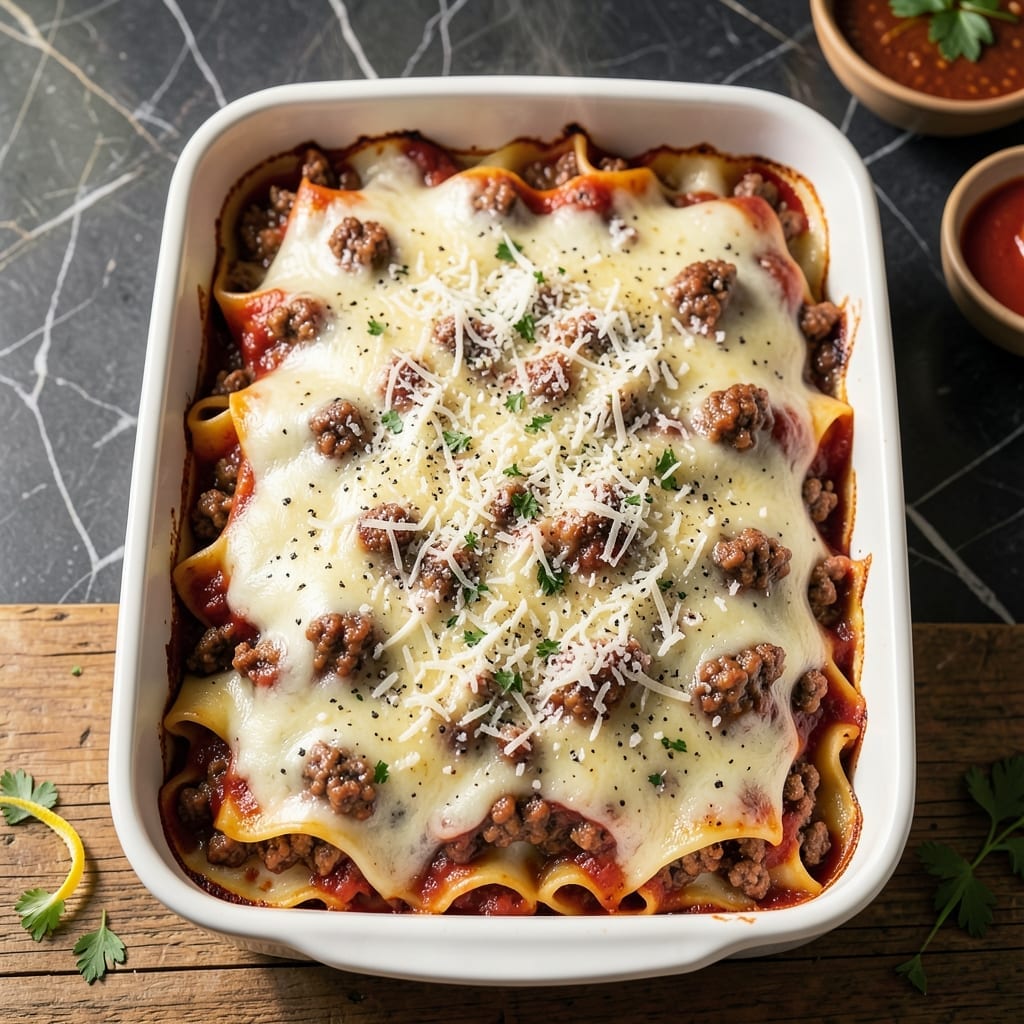
Achieving perfect lasagna layers starts with precise oven temperature control. I learned this the hard way after one too many soggy, undercooked attempts in my early cooking days.
This method ensures evenly cooked noodles, melted cheese, and a golden top without drying out the edges. The key is maintaining consistent heat throughout baking.
You’ll get distinct layers that hold their shape when served, with no raw spots or burnt cheese. It’s the difference between good lasagna and unforgettable lasagna.
Follow these temperature guidelines exactly, and you’ll deliver restaurant-quality results every time. The secret lies in patience and proper heat management.
Ingredients for Lasagna Recipe Cooking Temperature
Precise layers demand quality ingredients. No shortcuts, just perfect texture every time.
| Ingredient | Amount | Notes |
|---|---|---|
| Lasagna Noodles 🍝 | 12 sheets | Oven-ready or no-boil preferred |
| Ground Beef 🥩 | 1 ½ lb | 80/20 lean-to-fat ratio |
| Italian Sausage 🌭 | ½ lb | Sweet or spicy variety |
| Ricotta Cheese 🧀 | 2 cups | Whole-milk for creaminess |
| Mozzarella Cheese 🧀 | 3 cups | Shredded, low-moisture preferred |
| Parmesan Cheese 🧀 | 1 cup | Freshly grated from wedge |
| Marinara Sauce 🍅 | 4 cups | Homemade or high-quality jarred |
| Onion 🧅 | 1 whole | Yellow or white, finely diced |
| Garlic Cloves 🧄 | 4 cloves | Minced for maximum flavor |
| Fresh Basil Leaves 🌿 | ¼ cup | Chopped, for layering |
| Large Egg 🥚 | 1 whole | For ricotta mixture binding |
| Olive Oil 🫒 | 2 tbsp | Extra-virgin for sautéing |
| Dried Oregano 🍃 | 1 tsp | Mediterranean variety preferred |
| Kosher Salt 🧂 | 1 ½ tsp | Divided for seasoning layers |
| Ground Black Pepper 🌶️ | ½ tsp | Freshly ground for best flavor |
[recipe_ingredient_scaler]
The noodles are non-negotiable here. Barilla no-boil or De Cecco hold up best to the moisture—regular lasagna sheets turn mushy. For the meats, butcher-ground beef with good fat content (80/20) keeps things juicy. I always hit Whole Foods for their organic Italian sausage—sweet or spicy, your call. The ricotta? Calabria or BelGioioso are my go-tos (whole-milk only, low-fat weeps).
No ground beef? Italian turkey sausage plus mushrooms gets you close. Vegetarian? Swap in lentils at half the meat weight. Fresh mozzarella can replace ricotta in a pinch (pat dry first). Out of marinara? Crushed San Marzano tomatoes with garlic and herbs work. The egg in the ricotta? Skip it if you must, but it helps bind. And yes, pre-shredded cheese works (just drain the anti-caking agents).
Assemble up to 24 hours ahead—cover tightly and refrigerate. Bake straight from the fridge (add 15 minutes to cook time). Leftovers keep 5 days refrigerated or freeze portions for 3 months. Reheats like a dream (cover with foil, 350°F until warm).
Why You’ll Love This Recipe
- One Pot Wonder: I love that I can brown the beef and sausage, layer everything raw, and let the oven do the rest—no pre-cooking noodles.
- Meat & Cheese Magic: That combination of Italian sausage, ground beef, and the ricotta-mozzarella duo creates this rich, hearty flavor that’s hard to beat.
- Feeds My Crew: Between us, this pan feeds my family of five with enough left for lunch tomorrow—no extra effort.
- Budget Stretcher: Honestly, it’s a solid meal that doesn’t break the bank, especially when I buy the cheese in bulk.
Step-by-Step Instructions for Lasagna
Here’s how I build those perfect layers with ideal texture and temperature every time.
Step 1: Prepare the Meat Sauce Base
Heat the 2 tbsp olive oil in a large skillet over medium heat. Add the finely diced onion and cook for 3-4 minutes until it becomes translucent and begins to soften. This builds the aromatic foundation for your sauce.
Add the 1.5 lb ground beef and 0.5 lb Italian sausage, breaking it up with a wooden spoon. Cook for 8-10 minutes until the meat is browned evenly and cooked through. Stir in the minced garlic cloves, 1 tsp dried oregano, 1.5 tsp kosher salt, and 0.5 tsp ground black pepper. Pour in the 4 cups marinara sauce and simmer for 5 minutes to meld the flavors.
Step 2: Create the Ricotta Cheese Mixture
In a medium bowl, combine the 2 cups ricotta cheese, 1 whole large egg, and ½ cup of the parmesan cheese. I like to fold in the 0.25 cup fresh basil leaves at this stage for a pop of color and freshness.
Mix until just combined—you want the texture to remain slightly lumpy rather than completely smooth. Season lightly with a pinch of the remaining kosher salt and ground black pepper. This mixture adds a creamy, rich layer that balances the hearty meat sauce.
Step 3: Assemble the Lasagna Layers
Preheat your oven to 375°F. Spread a thin layer of the meat sauce on the bottom of a 9×13-inch baking dish to prevent sticking. Begin layering with 4 sheets lasagna noodles, slightly overlapping if needed.
Spoon half of the ricotta mixture over the noodles, spreading it evenly. Top with 1 cup of the mozzarella cheese, then repeat with another layer of noodles, the remaining ricotta, and 1 cup more mozzarella cheese. Finish with the remaining 4 sheets lasagna noodles, the rest of the meat sauce, and the remaining 1 cup mozzarella cheese and ½ cup parmesan cheese.
Step 4: Bake to Perfection
Cover the dish tightly with aluminum foil, ensuring it doesn’t touch the cheese. Bake at 375°F for 25 minutes. This initial covered bake allows the noodles to soften and absorb the flavors without drying out.
Remove the foil and bake for another 20-25 minutes until the top is golden brown and bubbly, and the edges are slightly crisp. Let it rest for 10 minutes before slicing—this ensures the layers set properly and don’t fall apart when served. The internal temperature should reach 165°F for perfect doneness.
Pro Tips For Making Lasagna Recipe Cooking Temperature
- Preheat the Oven: Crank it to 375°F before assembling—this guarantees even cooking and prevents a soggy bottom layer.
- Brown the Meats: Cook the ground beef and Italian sausage together over medium-high heat until deeply browned, not just gray, for maximum flavor.
- Skip No-Boil Noodles: I learned this the hard way—regular lasagna noodles hold up better and absorb the sauce without turning mushy.
- Rest Before Serving: Let it sit for 15-20 minutes after baking so the layers set and don’t slide apart when sliced.
Troubleshooting This Recipe
Soggy Noodle Fix
If your lasagna comes out with mushy noodles, you likely used regular lasagna sheets instead of no-boil. Always use Barilla or De Cecco no-boil noodles—they hold up to the moisture. Also, check that your oven is properly calibrated at 375°F. 🌡️
Dry Top Solution
A dry, over-brown top usually means it baked uncovered too long. Cover with foil for the first 25 minutes, then remove for the final 20-25 minutes. If it’s already dry, tent with foil and return to the oven with a splash of warm marinara on top.
Undercooked Center
If the center is still cool while edges are done, your oven may have hot spots. Rotate the dish 180 degrees halfway through baking. Also, let it rest for 10 minutes after baking—this allows the heat to distribute evenly throughout the layers.
Cheese Not Melting
Pre-shredded cheese often contains anti-caking agents that prevent smooth melting. Use freshly grated mozzarella and parmesan for the best melt. If you must use pre-shredded, toss it with 1 tsp cornstarch first to help it melt better. I learned this trick at our local Portland farmers market!
Burnt Edges
Burnt edges usually indicate the oven temperature is too high. Verify your oven temp with an oven thermometer—many home ovens run hot. If edges brown too quickly, cover them with aluminum foil strips while the center continues baking. 🔥
Layer Separation
If layers slide apart when serving, the lasagna may not have rested long enough. Always let it rest for at least 10 minutes after baking. Also, ensure your ricotta mixture includes 1 egg—this helps bind everything together beautifully.
Nutrition Facts
Frequently Asked Questions
Should I cover lasagna while baking?
Yes, cover with foil for the first 25 minutes at 375°F. This prevents the top from drying out while noodles soften.
How do I know when lasagna is done?
Look for a golden brown top and bubbling edges. The internal temperature should reach 165°F. Always let it rest for 10 minutes before serving.
Why did my lasagna turn out watery?
This usually happens with regular noodles instead of no-boil. Also, avoid overfilling with sauce. Let it rest to absorb excess moisture.
Can I bake lasagna at a lower temperature?
You can bake at 350°F but increase time to 45-50 minutes covered. Lower heat works for make-ahead dishes straight from the fridge.

Trained in classic French technique but raised on slow-cooked ribs and spicy rubs, she blends culinary skill with smoke and soul.
- Recipe for Boneless Leg of Lamb Roast in the Oven: Herb-Crusted and Rosy Pink Inside - October 3, 2026
- Meat Loaf Recipe With Beef And Pork: Homestyle Blend With Rich Gravy - October 3, 2026
- Hamburger Patty Recipe No Egg: Juicy Bind With Breadcrumbs and Milk - October 3, 2026