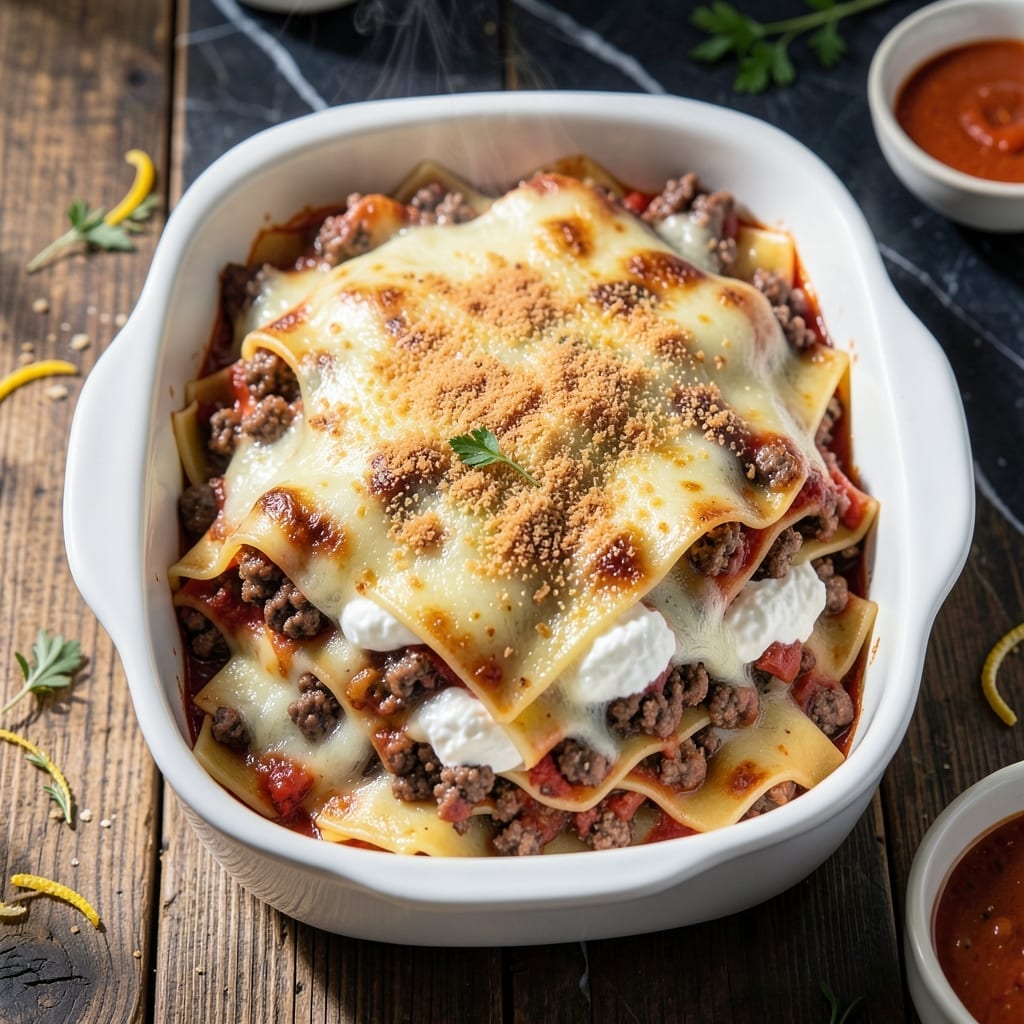
This lasagna recipe transforms fresh pasta sheets into layers of rich, cheesy perfection without the hassle of pre-boiling. The delicate sheets cook directly in the oven, absorbing flavors from the sauce and cheese as they bake.
Using fresh pasta means a tender, silky texture that dried noodles simply can’t match. The key is ensuring each layer has enough moisture to soften the sheets properly, creating that ideal balance between structure and melt-in-your-mouth goodness.
I’ve tested this method extensively in my small Boston kitchen, perfecting the ratio of sauce to pasta to prevent dryness. The result is a dish that tastes like it came from a traditional Italian kitchen, with minimal effort.
Serve this to family or guests, and watch as they ask for seconds. The layers come together beautifully, with every bite offering the perfect combination of flavors and textures.
Ingredients for Lasagna Recipe Using Fresh Pasta Sheets
Fresh pasta, rich meats, and three cheeses create layers of indulgence. No pre-boiling required.
| Ingredient | Amount | Notes |
|---|---|---|
| Fresh Pasta Sheets 🍝 | 12 sheets | No-boil, egg-based preferred |
| Ground Beef 🥩 | 1 lb | 80-85% lean for flavor |
| Italian Sausage 🌭 | ½ lb | Sweet or spicy, casings removed |
| Ricotta Cheese 🧀 | 2 cups | Whole milk for creaminess |
| Mozzarella Cheese 🧀 | 3 cups | Shredded, low-moisture preferred |
| Parmesan Cheese 🧀 | 1 cup | Freshly grated from block |
| Marinara Sauce 🍅 | 4 cups | High-quality jarred or homemade |
| Onion 🧅 | 1 whole | Medium yellow, finely diced |
| Garlic Cloves 🧄 | 4 cloves | Minced for sauce depth |
| Dried Basil 🌿 | 1 tbsp | Or 2 tbsp fresh, chopped |
| Dried Oregano 🌿 | 1 tbsp | Mediterranean variety preferred |
| Olive Oil 🫒 | 2 tbsp | Extra-virgin for sautéing |
| Salt 🧂 | 1 tsp | Kosher or sea salt |
| Black Pepper 🌶️ | ½ tsp | Freshly ground preferred |
| Egg 🥚 | 1 whole | Optional, for ricotta binding |
[recipe_ingredient_scaler]
The fresh pasta sheets are non-negotiable here. Eppolito’s or DeCecco brands are widely available in Boston-area Whole Foods and specialty markets. Look for thin, pliable sheets—dry or brittle ones won’t soften properly. For the meats, a mix of beef and sausage adds complexity, but ground turkey or Italian-style sausage works if you’re cutting back on red meat.
No ricotta? Cottage cheese blended smooth is a decent substitute. Skipping the egg in the ricotta mixture? The lasagna will still hold together, though the texture might be slightly grainier. For the sauce, San Marzano tomatoes crushed by hand with a pinch of sugar and basil make a quick homemade version (or use Rao’s for jarred).
Assemble this up to 24 hours ahead—cover tightly and refrigerate. Bake straight from the fridge, adding 10-15 minutes to the time. Leftovers keep 4-5 days in the fridge or freeze for 3 months (thaw overnight before reheating).
Why You’ll Love This Recipe
- No Boiling Needed: I skip the pre-boil step entirely because fresh pasta sheets soften perfectly in the oven, saving me time and a pot to wash.
- Meaty Richness: The combo of ground beef and Italian sausage gives every bite a deep, savory flavor that’s next-level good.
- Feeds a Crowd: This lasagna is my go-to for Sunday dinners—it stretches to feed eight without breaking the bank.
- Better Leftovers: Honestly, it tastes even richer the next day when the ricotta and mozzarella meld together overnight.
Step-by-Step Instructions for Lasagna Using Fresh Pasta
Here is the method. Tested, reliable, and designed for perfect layers every time.
Step 1: Prepare the Meat Sauce Base
Heat the 2 tbsp olive oil in a large pan over medium heat. Add the diced onion and cook for 3-4 minutes until softened and translucent, stirring occasionally to prevent browning.
Add the ground beef and italian sausage (with casings removed), breaking it up with a wooden spoon. Cook for 6-8 minutes until the meat is browned evenly and no pink remains. This builds a rich foundation of flavor for your dish.
Stir in the minced garlic cloves, 1 tbsp dried basil, 1 tbsp dried oregano, 1 tsp salt, and 0.5 tsp black pepper. Pour in the 4 cups marinara sauce and simmer for 10 minutes to meld the flavors. The sauce should thicken slightly and develop a deep, savory aroma.
Step 2: Mix the Cheese Filling
In a medium bowl, combine the 2 cups ricotta cheese, 1 cup parmesan cheese, and the egg. Stir until the mixture is smooth and fully integrated. The egg binds the ricotta, preventing it from oozing out during baking.
Season lightly with a pinch of salt and black pepper if desired, though the parmesan already adds saltiness. The filling should be thick and creamy, ready to spread evenly between the layers. This step ensures each bite is rich and well-balanced.
Step 3: Assemble the Layers
Preheat your oven to 375°F. In a 9×13-inch baking dish, spread a thin layer of the meat sauce on the bottom. This prevents the first layer of pasta from sticking and adds immediate flavor.
Arrange 4 sheets of fresh pasta sheets on top, slightly overlapping if needed. Spread a third of the ricotta mixture over the pasta, followed by a third of the remaining meat sauce. Sprinkle 1 cup mozzarella cheese evenly over the top. Repeat this process two more times, using the remaining pasta, ricotta, sauce, and 2 cups mozzarella cheese.
Step 4: Bake to Bubbly Perfection
Cover the dish loosely with foil, ensuring it doesn’t touch the top layer. Bake for 25 minutes, then remove the foil and bake for another 15-20 minutes until the top is golden brown and the edges are bubbling.
The lasagna is done when a knife inserted in the center comes out hot to the touch and the cheese is fully melted with spots of light browning. Let it rest for 10 minutes before slicing—this allows the layers to set and makes serving easier.
This rest period ensures the lasagna holds its structure and the flavors meld together beautifully.
Pro Tips For Making Lasagna Recipe Using Fresh Pasta Sheets
- Precook Fresh Pasta: Fresh pasta sheets can turn mushy if baked raw—boil them for just 30-45 seconds first, then rinse in cold water to stop cooking. I learned this the hard way after pulling out a gummy, undercooked lasagna.
- Drain the Meat Well: After browning the ground beef and sausage, drain off all the fat—otherwise your layers will swim in grease. Sounds obvious, but I skipped this once and regretted it immediately.
- Skip the No-Boil: Some recipes claim you can use fresh pasta sheets without precooking, but with this much moisture from ricotta and meat sauce, they’ll stay raw in the center. Just take the extra 2 minutes.
- Rest Before Slicing: Let the lasagna sit for at least 15 minutes after baking—any sooner and it’ll fall apart on the plate. My grandmother swore by this, and she was right: patience actually changes the outcome.
Troubleshooting lasagna recipe using fresh pasta sheets
Pasta Sheets Too Dry
If your fresh pasta sheets feel dry or brittle, chances are they’ve been exposed to air too long. I always keep mine sealed in the fridge until ready to use. For rescue, brush each sheet lightly with olive oil before layering. This adds moisture and prevents cracking during baking. 💡
Sauce Not Moist Enough
Fresh pasta needs more moisture than dried. If your sauce seems thick, stir in ¼ cup water or broth before assembling. I learned this the hard way in my tiny Boston kitchen—dry lasagna is a sad sight. The pasta should soften beautifully, not turn to cardboard.
Cheese Layer Separating
The ricotta mixture can ooze out if not bound properly. Always include the egg in your ricotta blend—it acts as a glue. If you skip it, let the mixture sit for 10 minutes to thicken before spreading. This small step saves your layers from collapsing.
Uneven Baking
Hot spots in your oven can cause uneven cooking. Rotate the dish halfway through baking if you notice one side browning faster. Also, ensure your oven is fully preheated to 375°F before inserting the lasagna. Patience pays off here.
Top Layer Burning
If your cheese browns too quickly, tent the dish with foil after 20 minutes of uncovered baking. I use heavy-duty foil to prevent tearing. This keeps the top golden without overcooking the lower layers. Watch closely during the final 10 minutes. 🔥
Lasagna Falling Apart
Let it rest for the full 10 minutes after baking—this is non-negotiable. Cutting too soon releases steam, causing the layers to slide. I set a timer and distract myself with a glass of wine. The wait ensures clean, beautiful slices every time.
Nutrition Facts
Frequently Asked Questions
Do I need to boil fresh pasta sheets first?
No, fresh pasta sheets cook perfectly in the oven. The moisture from the sauce and cheese softens them during baking at 375°F.
Can I use no-boil noodles instead?
No-boil noodles work, but fresh pasta gives a tender, silky texture that dried noodles can’t match. The cooking time remains the same.
How do I prevent a soggy bottom layer?
Spread a thin layer of meat sauce on the bottom of the dish before adding the first pasta sheet. This creates a barrier to prevent sogginess.
Can I assemble this ahead of time?
Yes! Assemble up to 24 hours ahead, cover tightly, and refrigerate. Add 10-15 minutes to the baking time if cooking straight from the fridge.

Trained in classic French technique but raised on slow-cooked ribs and spicy rubs, she blends culinary skill with smoke and soul.
- Recipe for Boneless Pork Chops in Cast Iron Skillet: Sear and Baste to Juicy Perfection - October 3, 2026
- Recipe for Boneless Cross Rib Roast: Slow-Roasted Beef with Herb Crust - October 3, 2026
- Hamburgers in Sauce Recipe Crock Pot: Slow-Cooked Savory Delight - October 3, 2026