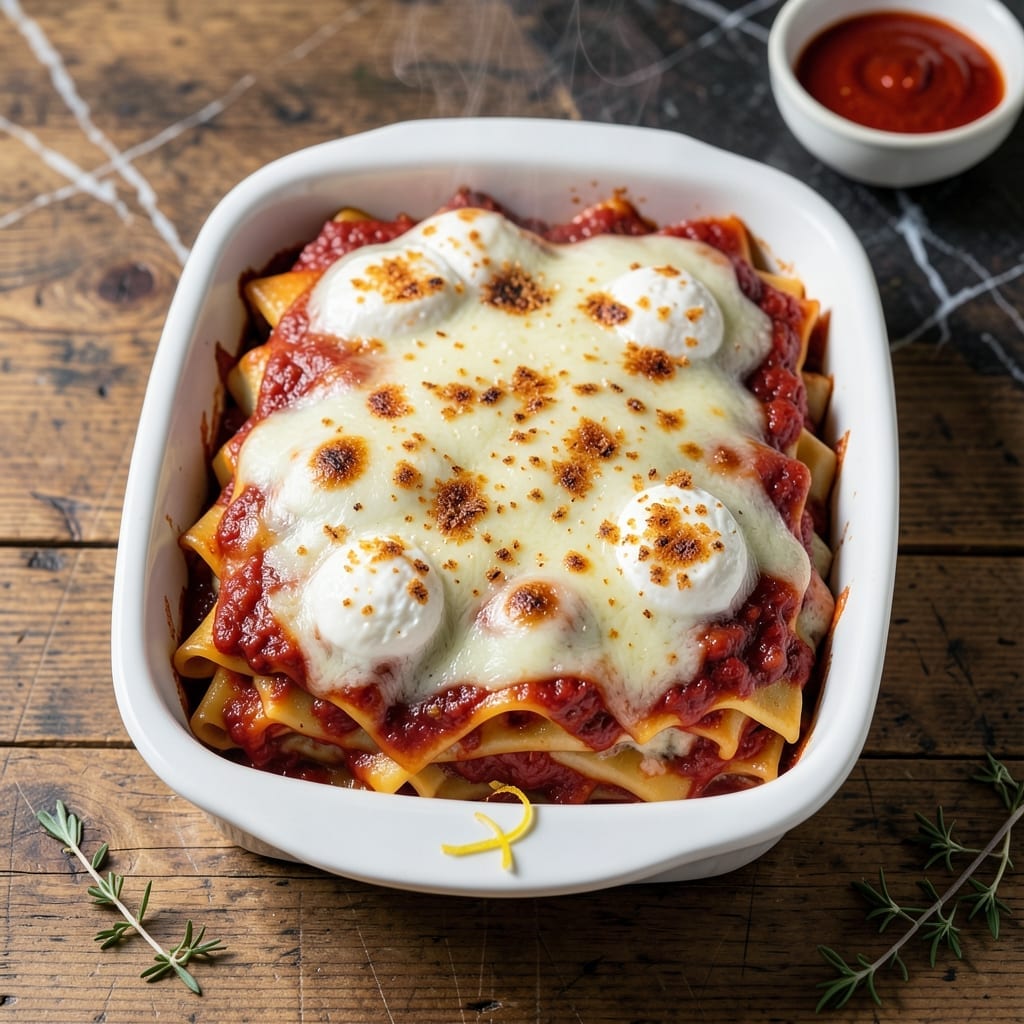
There’s nothing quite like pulling a perfectly baked lasagna from the oven, its layers bubbling with rich tomato sauce and creamy ricotta. This dish embodies Italian comfort at its finest.
Each bite delivers tender pasta, savory meat, and that signature ricotta texture that makes it irresistibly satisfying. The secret lies in proper layering and precise baking time.
Ingredients for Lasagna Recipe with Ricotta Cheese
Layered perfection starts with these Italian classics plus one clever vegetarian twist.
| Ingredient | Amount | Notes |
|---|---|---|
| Lasagna Noodles 🍝 | 12 sheets | Oven-ready or no-boil variety |
| Ricotta Cheese 🧀 | 2 cups | Whole-milk for creaminess |
| Mozzarella Cheese 🧀 | 3 cups | Shredded, low-moisture preferred |
| Parmesan Cheese 🧀 | 1 cup | Freshly grated from wedge |
| Marinara Sauce 🍅 | 4 cups | Homemade or high-quality jarred |
| Ground Beef Substitute 🌱 | 1 lb | Plant-based crumbles or lentils |
| Large Egg 🥚 | 1 whole | For ricotta mixture binding |
| Fresh Garlic 🧄 | 4 cloves | Minced for sauce enhancement |
| Yellow Onion 🧅 | 1 whole | Finely diced for base flavor |
| Dried Oregano 🍃 | 1 tbsp | For Italian seasoning blend |
| Dried Basil 🌿 | 1 tbsp | Complements tomato sauce perfectly |
| Olive Oil 🫒 | 2 tbsp | Extra-virgin for sautéing |
| Salt 🧂 | 1 ½ tsp | Kosher or sea salt preferred |
| Black Pepper 🌶️ | ½ tsp | Freshly ground for best flavor |
| Fresh Parsley 🌿 | ¼ cup | Chopped for final garnish |
[recipe_ingredient_scaler]
The ricotta is non-negotiable for that signature texture—Whole Foods 365 or BelGioioso are reliable brands. For the meat substitute, Beyond Meat crumbles or lentils provide the heartiness without compromising the dish’s integrity. Oven-ready noodles save time without sacrificing quality. The Parmesan should be Parmigiano-Reggiano for authentic depth of flavor.
No ricotta? Cottage cheese blended smooth works in a pinch. Swap mozzarella for provolone if you prefer a sharper melt. For the marinara, San Marzano tomatoes crushed by hand with garlic and basil make a superior homemade version. The egg in the ricotta mixture can be omitted, but it helps bind the layers. Fresh herbs at the end brighten the dish significantly.
Assemble and refrigerate unbaked lasagna for up to 24 hours before cooking. Baked lasagna keeps 4-5 days in the fridge or 3 months frozen. Reheat covered with foil to prevent drying, then uncover to crisp the top layer.
Why You’ll Love This Recipe
- I’ll be real: it tastes even better reheated for lunch the next day, as the flavors meld overnight.
- No Boil Noodles: I skip the pre-cooking step—just layer dry lasagna sheets with the ricotta and sauce, and they soften perfectly in the oven.
- Creamy Dreamy Layers: The ricotta mixed with Parmesan and egg creates this rich, velvety texture between the noodles that’s honestly my favorite part.
- Feeds a Crowd: One pan makes enough for six generous servings, so it’s my go-to for Sunday dinners or when the in-laws drop by unexpectedly.
Step-by-Step Instructions for Lasagna With Ricotta Cheese
Master the art of layering with this methodical approach to achieve perfect texture and flavor.
Step 1: Prepare the Meat Sauce Base
Heat 2 tbsp Olive Oil in a large skillet over medium heat. Add 1 whole Yellow Onion finely diced and sauté for 3-4 minutes until translucent. Stir in 4 cloves Fresh Garlic minced and cook for 30 seconds until fragrant.
Add 1 lb Ground Beef Substitute, breaking it up with a wooden spoon. Cook for 5-6 minutes until browned. Stir in 4 cups Marinara Sauce, 1 tbsp Dried Oregano, 1 tbsp Dried Basil, 1.5 tsp Salt, and 0.5 tsp Black Pepper. Simmer for 10 minutes until slightly thickened.
Step 2: Mix the Ricotta Layer
In a medium bowl, combine 2 cups Ricotta Cheese with 1 whole Large Egg. Mix well until smooth and fully incorporated. This binding step ensures the ricotta layer holds together during baking.
The egg creates structure while maintaining creaminess. Avoid overmixing to prevent a dense texture. Set aside while you prepare the remaining components.
Step 3: Assemble the Lasagna Layers
Spread 1 cup of the meat sauce on the bottom of a 9×13-inch baking dish. Arrange 4 sheets Lasagna Noodles on top, slightly overlapping if needed. Spread half of the ricotta mixture evenly over the noodles.
Sprinkle 1 cup Mozzarella Cheese and ⅓ cup Parmesan Cheese over the ricotta. Repeat layers: sauce, 4 sheets Lasagna Noodles, remaining ricotta, 1 cup Mozzarella Cheese, and ⅓ cup Parmesan Cheese. Top with a final layer of 4 sheets Lasagna Noodles, remaining meat sauce, and the last 1 cup Mozzarella Cheese and ⅓ cup Parmesan Cheese.
Step 4: Bake to Perfection
Cover the dish tightly with foil and bake in a preheated 375°F oven for 25 minutes. This initial covered bake allows the noodles to soften and absorb flavors without drying out.
Remove the foil and bake for an additional 20-25 minutes until the top is golden brown and the edges are bubbling. The cheese should be fully melted with some spots of deep golden color.
Step 5: Rest and Serve
Let the lasagna rest for 10-15 minutes before slicing. This resting period allows the layers to set and makes serving neat portions easier. The internal temperature will equalize, ensuring each serving is uniformly heated.
Garnish with 0.25 cup Fresh Parsley chopped just before serving. Cut into squares and serve while hot, with any extra marinara sauce on the side if desired. The layers should be distinct but cohesive, with the ricotta creaminess contrasting the hearty meat sauce.
Pro Tips For Making Lasagna Recipe With Ricotta Cheese
- Drain the Ricotta: I learned this the hard way—place your ricotta in a strainer over a bowl for 15-20 minutes before using. It removes excess liquid that would otherwise make your lasagna watery and sad.
- Pre-cook Noodles Al Dente: Boil your lasagna noodles for just 2-3 minutes less than package instructions. They’ll finish cooking in the oven without turning to mush—trust me, nobody likes gummy lasagna.
- Skip the Overload: Resist the urge to dump all your cheese in one layer. Spread the ricotta thinly between each noodle layer, or you’ll end up with a dense, heavy middle and burnt edges.
- Rest Before Slicing: After baking, let your lasagna sit for at least 10 minutes under foil. I used to cut right in and ended up with a runny, messy plate—this wait locks the layers in place.
Common Mistakes When Making This Recipe
Overworking the Ricotta
Mixing the ricotta too vigorously creates a dense, heavy layer. I gently fold in the egg with a spatula—just 8-10 strokes—to keep it light and fluffy. Overmixing also causes the ricotta to separate during baking.
Skipping the Noodle Prep
Even with oven-ready noodles, I always add ½ cup hot water to the bottom of the dish before the first layer. This ensures they soften properly. Without this, you risk dry, crunchy pasta, especially on the edges. 💡
Underseasoning Layers
Each component needs its own seasoning. I add ¼ tsp salt and ⅛ tsp black pepper directly to the ricotta mixture. The meat sauce should taste bold before assembly—it won’t intensify during baking.
Overloading the Pan
A 9×13-inch dish is ideal for this recipe. Piling too many layers into a smaller pan prevents even cooking. I aim for no more than 4 noodle layers total to ensure the center cooks through.
Cutting Too Soon
Resting for 10-15 minutes is non-negotiable. Slicing immediately causes the layers to slide apart. I tent the pan with foil during resting to keep it warm while the cheese sets.
Ignoring Sauce Consistency
Your marinara should coat a spoon but not be watery. If it’s too thin, simmer it longer before assembly. I reduce mine by ¼ cup to ensure the lasagna holds its shape when served.
Nutrition Facts
Frequently Asked Questions
Can I use cottage cheese instead of ricotta?
Yes, but blend it smooth first to match ricotta’s texture. Cottage cheese works in a pinch, though the flavor is slightly tangier.
How do I prevent a watery lasagna?
Use low-moisture mozzarella and simmer your sauce until thick. Let it rest 10-15 minutes before serving to absorb excess liquid.
Is it okay to make this ahead of time?
Assemble, cover, and refrigerate for up to 24 hours. Bake as directed, adding 5-10 minutes if cold.
Can I freeze leftover lasagna?
Yes, it freezes beautifully for up to 3 months. Wrap individual portions tightly in foil before freezing for best results.

Trained in classic French technique but raised on slow-cooked ribs and spicy rubs, she blends culinary skill with smoke and soul.
- Recipe for Boneless Pork Chops in Cast Iron Skillet: Sear and Baste to Juicy Perfection - October 3, 2026
- Recipe for Boneless Cross Rib Roast: Slow-Roasted Beef with Herb Crust - October 3, 2026
- Hamburgers in Sauce Recipe Crock Pot: Slow-Cooked Savory Delight - October 3, 2026