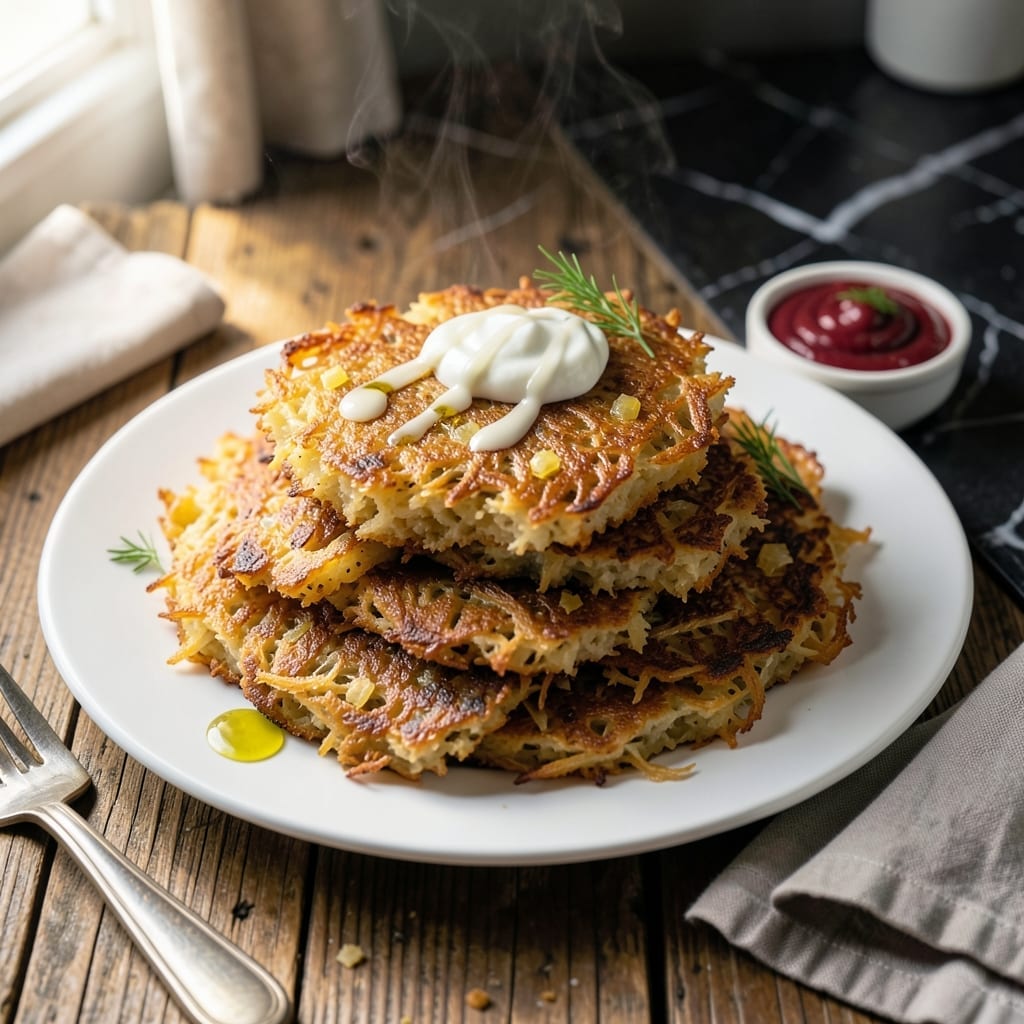
Achieving perfectly crispy latkes at home is simpler than you think with a food processor. This method eliminates the manual grating while ensuring consistent texture every time.
I developed this technique after years of struggling with uneven hand-grated potatoes. The food processor creates uniformly thin shreds that crisp beautifully when fried, while still maintaining that traditional latke character.
The result is golden, crispy latkes with tender centers, ready in minutes. No more soggy or unevenly cooked pancakes—just restaurant-quality results with minimal effort.
Serve hot with applesauce or sour cream for the ultimate Hanukkah treat or comforting side dish.
Ingredients for Latke Recipe Food Processor
Crispy, golden latkes start with just a handful of humble ingredients and a food processor.
| Ingredient | Amount | Notes |
|---|---|---|
| Russet Potatoes 🥔 | 2 lb | Peeled and cut into chunks |
| Yellow Onion 🧅 | 1 whole | Peeled and quartered |
| Large Eggs 🥚 | 2 whole | Lightly beaten |
| All-Purpose Flour 🌾 | ¼ cup | For binding the mixture |
| Kosher Salt 🧂 | 1 ½ tsp | Diamond Crystal preferred |
| Black Pepper 🌶️ | ½ tsp | Freshly ground |
| Vegetable Oil 🫒 | 1 cup | For frying, high smoke point |
| Applesauce 🍏 | 1 cup | For serving alongside |
| Sour Cream 🥛 | ½ cup | Full-fat for richness |
| Matzo Meal 🍞 | 2 tbsp | Traditional binder option |
| Fresh Parsley 🌿 | 2 tbsp | Chopped, for garnish |
[recipe_ingredient_scaler]
Potatoes are the star here. Russet potatoes yield the crispiest results due to their high starch content and low moisture. Yukon Golds work in a pinch but produce a denser latke. For optimal texture, use a food processor with a shredding disc—avoid the grating blade as it creates too fine a texture. Most grocery stores carry both varieties year-round, but farmers markets often have superior quality in season.
No eggs? Flax eggs (1 tablespoon ground flaxseed plus 3 tablespoons water per egg) work as a binder, though the texture will be slightly different. Matzo meal can replace flour for a more traditional approach. Out of sour cream? Greek yogurt offers a tangy alternative. The oil must have a high smoke point—peanut or canola oil are excellent substitutes for vegetable oil.
Shredded potatoes oxidize quickly, so work fast once they’re processed. Store uncooked latke mixture in the fridge for up to 2 hours (press plastic wrap directly on the surface). Cooked latkes reheat well in a 375°F oven for 10-15 minutes to restore crispiness. Freeze cooked latkes between parchment paper for up to 3 months.
Why You’ll Love This Recipe
- No-Fuss Prep: The food processor does all the grating—just dump in the potatoes and onion, pulse, and you’re halfway done before the oil even heats.
- Crispy Outside, Tender Inside: Russet potatoes fry up golden and crunchy while staying fluffy within, and that touch of salt brings out a depth that’s honestly hard to resist.
- Holiday or Tuesday: I’ve served these at Hanukkah and for random weeknight dinners—equally beloved both times.
- Leftovers Reimagined: Cold latkes make a killer breakfast hash the next morning, and they reheat in a pan like a dream.
Step-by-Step Instructions for Latkes with Food Processor
This method ensures crispy, golden results with minimal effort and maximum consistency.
Step 1: Process the Vegetables to Ideal Texture
Fit your food processor with the shredding disc. Cut the 2 lb Russet Potatoes into chunks that fit the feed tube and process in batches until all are uniformly shredded. The texture should be fine but not pasty—stop as soon as the potatoes reach a consistent shred.
Transfer to a large bowl, then process the 1 whole Yellow Onion the same way. I use the same disc without cleaning between batches; the residual starch helps bind the mixture. Avoid over-processing, as liquid from the vegetables will make the latkes soggy instead of crisp.
Step 2: Drain Excess Moisture and Combine Binders
Place the shredded potatoes and onion in a clean kitchen towel and squeeze out as much liquid as possible. This step is critical—excess moisture prevents crisping. Return the dried mixture to the bowl and add the 2 whole Large Eggs, 0.25 cup All-Purpose Flour, 2 tbsp Matzo Meal, 1.5 tsp Kosher Salt, and 0.5 tsp Black Pepper.
Mix thoroughly with a fork or your hands until the mixture holds together when pressed. The eggs and flour should coat the shreds evenly, creating a batter-like consistency. If it feels too wet, add a teaspoon more matzo meal, but don’t exceed the 2 tbsp—this maintains the traditional texture.
Step 3: Fry in Batches for Even Browning
Heat 1 cup Vegetable Oil in a large, heavy skillet over medium-high heat until shimmering but not smoking. The oil is ready when a small piece of potato sizzles immediately upon contact. Scoop 2-tablespoon portions of the mixture into the pan, flattening slightly with the back of the spoon.
Fry for 3-4 minutes per side until deep golden brown and crisp. Don’t overcrowd the pan—leave space between each latke to allow steam to escape. Transfer to a paper towel-lined plate to drain excess oil. Repeat with the remaining mixture, adding more oil if needed to maintain ¼-inch depth.
Step 4: Serve Immediately with Traditional Accompaniments
Arrange the latkes on a serving platter while still hot. Garnish with 2 tbsp Fresh Parsley for a pop of color and freshness. The contrast of crispy edges and tender centers is best enjoyed right away.
Serve with 1 cup Applesauce and 0.5 cup Sour Cream on the side for dipping. The sweetness of the applesauce and tang of the sour cream complement the savory latkes perfectly. Real talk: these disappear fast, so make a double batch if you’re feeding a crowd.
Pro Tips For Making Latke Recipe Food Processor
- Squeeze Out Moisture: After grating the potatoes and onions in the food processor, transfer to a clean kitchen towel and wring out every last drop of liquid—I learned this the hard way after my first batch turned into soggy pancakes.
- Chill the Batter: Let the potato-onion mixture rest in the fridge for 15 minutes before adding flour and eggs; it keeps the starch from turning the latkes gummy, and yes, it actually changes the outcome.
- Skip the Overcrowding: Fry in batches with at least an inch between each latke—steam from crowded pans turns them greasy instead of crisp, and nobody wants that.
- Use Cold Oil: Start with oil at 350°F, not smoking hot; cold oil heats evenly and gives you that perfect golden crust without burning the outside before the inside cooks.
Flavor Customization for This Recipe
Herb Infusions
Add 1 tbsp fresh dill or 1 tsp dried to the potato mixture for a bright, aromatic twist. I discovered this variation at a Boston deli that served latkes with a dollop of herbed sour cream. The dill pairs beautifully with the traditional applesauce. 🌿
Spicy Kick
For heat lovers, mix in ½ tsp cayenne pepper or 1 tsp smoked paprika with the dry ingredients. This adds warmth without overpowering the classic flavor. I tested this with my Irish-Italian family—my cousin now requests it every Hanukkah.
Cheesy Variation
Fold in ½ cup grated Parmesan or crumbled feta after draining the potatoes. The cheese creates delicious crispy bits on the edges. Use a high-quality Parmigiano-Reggiano from your local Italian deli for the best results.
Sweet Potato Swap
Replace half the russets with 1 lb sweet potatoes for a colorful, slightly sweet variation. The texture stays crispy, but the flavor profile shifts beautifully. This became a hit at my Thanksgiving table last year.
Garlic Lovers
Add 3 minced garlic cloves to the onion before processing, or sprinkle 1 tsp garlic powder with the dry ingredients. The aroma while frying is incredible. Just don’t overdo it—garlic can burn easily in hot oil.
Crispy Coating
For extra crunch, roll the latkes in ¼ cup panko breadcrumbs before frying. Press gently so the crumbs adhere. This works especially well if your mixture feels too wet—it creates a perfect golden crust. 💛
Nutrition Facts
Frequently Asked Questions
Can I use a different potato variety?
Yes, but Russets work best for crispiness. Yukon Golds yield denser results. Avoid waxy potatoes like red or new potatoes, as they won’t crisp properly.
Why did my latkes turn out soggy?
Likely too much moisture. Squeeze the shredded potatoes and onion very dry in a towel before mixing. Also, avoid overcrowding the pan during frying.
Can I bake instead of fry?
Yes! Bake at 425°F for 20-25 minutes, flipping halfway. Brush with oil for crispiness. They won’t be as crispy as fried but will still be delicious.
How do I keep them warm for a crowd?
Place cooked latkes on a wire rack in a 200°F oven. This keeps them crispy without steaming. Avoid stacking, as this traps moisture.

Trained in classic French technique but raised on slow-cooked ribs and spicy rubs, she blends culinary skill with smoke and soul.
- Recipe for Boneless Pork Chops in Cast Iron Skillet: Sear and Baste to Juicy Perfection - October 3, 2026
- Recipe for Boneless Cross Rib Roast: Slow-Roasted Beef with Herb Crust - October 3, 2026
- Hamburgers in Sauce Recipe Crock Pot: Slow-Cooked Savory Delight - October 3, 2026