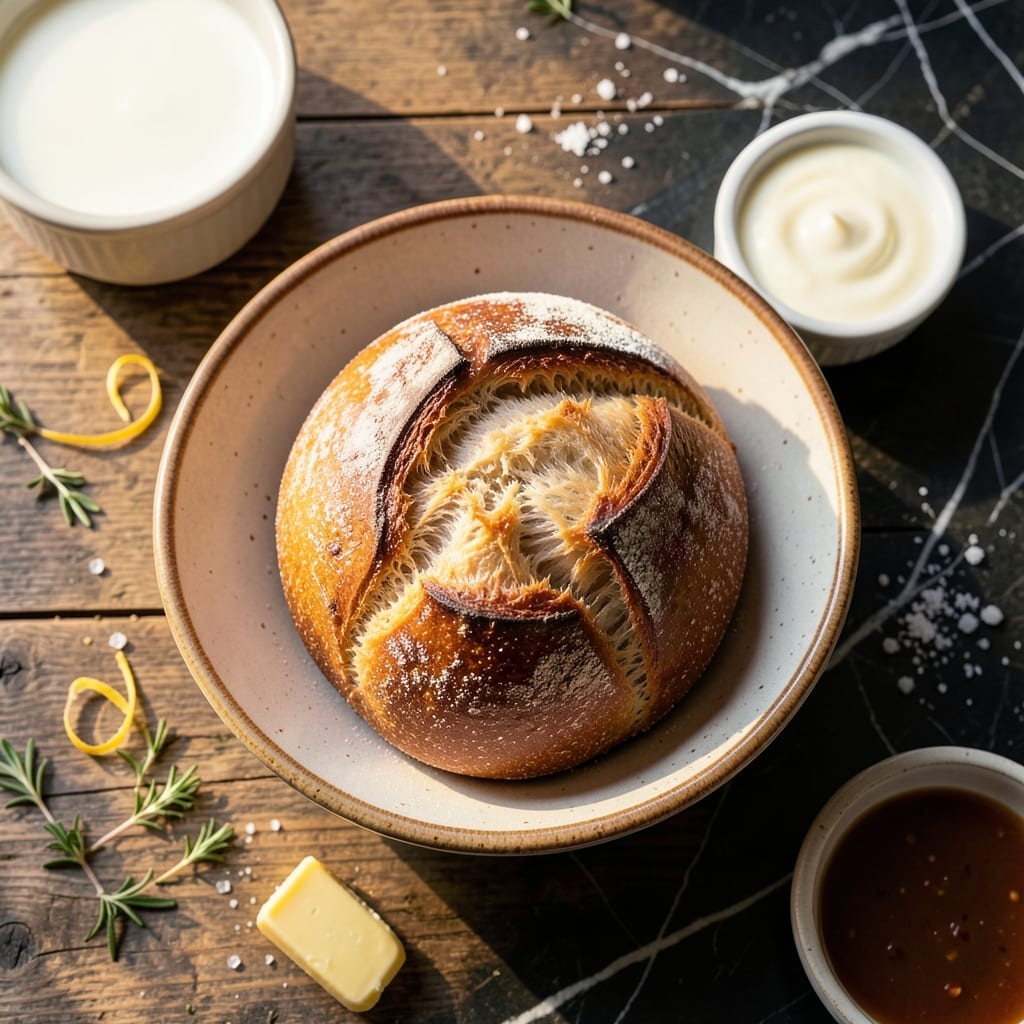
This New Orleans classic delivers perfect texture and flavor in every bite. The crisp crust and soft, airy interior are the hallmarks of authentic Leidenheimer bread.
I’ve refined this method to capture that signature taste without complicated techniques. The result is a loaf that stands up to po’boys or tastes incredible on its own.
Ingredients for Leidenheimer Bread
High-protein flour and a touch of butter create that signature Leidenheimer texture and flavor.
| Ingredient | Amount | Notes |
|---|---|---|
| Bread Flour 🌾 | 4 cups | High-protein for structure |
| Active Dry Yeast 🍞 | 2 ¼ tsp | One packet, proofed in warm water |
| Granulated Sugar 🍚 | 1 tbsp | Feeds the yeast activation |
| Salt 🧂 | 2 tsp | Fine sea salt preferred |
| Unsalted Butter 🧈 | 2 tbsp | Melted and cooled |
| Whole Milk 🥛 | 1 cup | Warm, about 110°F |
| Large Egg 🥚 | 1 whole | Room temperature, for richness |
| Cornmeal 🌽 | ¼ cup | For dusting baking sheet |
| Vegetable Oil 🫒 | 1 tbsp | For greasing bowl |
| Water 💧 | ¼ cup | Warm, for yeast activation |
| Honey 🍯 | 1 tbsp | Optional, for subtle sweetness |
[recipe_ingredient_scaler]
The bread flour is non-negotiable—King Arthur or Bob’s Red Mill deliver consistent protein content (12-14%) for the right chew. Yeast freshness matters; check the expiration date and store unopened packets in the freezer. Whole milk adds richness, but ensure it’s warm (not hot) to avoid killing the yeast. Diamond Crystal salt dissolves evenly, though any fine sea salt works.
No bread flour? All-purpose plus 1 tbsp vital wheat gluten per cup mimics the protein. Out of yeast? This recipe won’t work with baking powder—yeast is essential for the airy crumb. For a lighter color, swap honey for sugar, but the flavor difference is minimal. The egg can be omitted, though the crust won’t brown as deeply.
Dough rises best in a warm, draft-free spot—75-80°F is ideal. Baked loaves keep at room temperature for 2 days or freeze for 1 month. Slice before freezing for easy toasting later. Always cool completely before storing to prevent sogginess.
Why You’ll Love This Recipe
- No-Fuss Dough: I just mix the flour, yeast, sugar, and butter—no fancy techniques, and it still turns out light and airy every time.
- Rich, Buttery Layers: That unsalted butter folded in gives it this melt-in-your-mouth texture that’s honestly hard to resist.
- Breakfast to Dinner: I’ve served this as toast in the morning and as sandwich rolls at dinner—it’s that adaptable.
- Budget-Friendly Batch: A few pantry staples make a big loaf, so I save money and still get bakery-quality bread at home.
Step-by-Step Instructions for New Orleans-Style French Loaf
Achieve bakery-quality results with this tested method for a crisp crust and airy crumb.
Step 1: Activate the Yeast and Prepare Wet Ingredients
In a small bowl, combine the 0.25 cup Water with the 1 tbsp Granulated Sugar and 2.25 tsp Active Dry Yeast. Stir gently and let it sit for 5-10 minutes until the mixture becomes foamy and fragrant. This proofing step confirms your yeast is alive and ready to work.
While the yeast activates, warm the 1 cup Whole Milk to about 110°F—it should feel warm but not hot to the touch. In a separate bowl, whisk the 1 whole Large Egg and melt the 2 tbsp Unsalted Butter, allowing it to cool slightly before incorporating.
Step 2: Mix and Knead the Dough
In a stand mixer fitted with the dough hook, combine the 4 cups Bread Flour and 2 tsp Salt. Add the proofed yeast mixture, warmed whole milk, melted unsalted butter, and the whisked large egg. Mix on low speed until the dough comes together, then increase to medium and knead for 6-8 minutes.
The dough should become smooth, elastic, and slightly tacky but not sticky. If it feels too dry, add 1 tablespoon of additional warm water; if too sticky, add 1 tablespoon of extra bread flour. This dough is forgiving, but consistency is key for the right texture.
Step 3: First Rise Until Doubled
Lightly grease a large bowl with the 1 tbsp Vegetable Oil. Transfer the dough to the bowl, turning once to coat it lightly in oil. Cover the bowl with a clean kitchen towel or plastic wrap and place it in a warm, draft-free spot.
Allow the dough to rise for 1-2 hours, or until it has doubled in volume. The ideal environment is around 75-80°F—if your kitchen is cooler, the rise may take longer. Press your finger gently into the dough; if the indentation remains, it’s ready for the next step.
Step 4: Shape, Proof, and Prepare for Baking
Punch down the risen dough to release the air, then turn it out onto a lightly floured surface. Divide it into two equal portions and shape each into a long, slender baguette or a slightly wider French loaf, approximately 12-15 inches in length.
Dust a baking sheet generously with the 0.25 cup Cornmeal to prevent sticking and add a subtle crunch. Place the shaped loaves on the baking sheet, spacing them at least 3 inches apart. Cover loosely and let them proof for 30-45 minutes until puffy and nearly doubled in size.
During the last 15 minutes of proofing, preheat your oven to 400°F. For extra authenticity, place a baking stone or inverted baking sheet in the oven to heat. Just before baking, use a sharp razor or serrated knife to score the tops of the loaves diagonally.
Step 5: Bake to Golden Perfection
Bake the loaves for 20-25 minutes, or until they are deep golden brown and sound hollow when tapped on the bottom. For a crispier crust, add a pan of boiling water to the lower rack of the oven when you begin baking to create steam.
Remove the loaves from the oven and transfer them to a wire rack. If desired, brush the tops lightly with the 1 tbsp Honey diluted in 1 tablespoon of warm water for a subtle sheen and hint of sweetness. Allow the bread to cool completely before slicing—this ensures the crumb sets properly and prevents gumminess.
Pro Tips For Making Leidenheimer Bread
- Proof the Yeast: Always activate your dry yeast in warm water (110°F) with a pinch of sugar first—I learned this the hard way after a few dense loaves that refused to rise.
- Use Room-Temp Butter: Let your unsalted butter sit out for at least 30 minutes before mixing; cold butter tears the gluten, and your bread won’t get that signature Leidenheimer softness.
- Don’t Rush the Rise: Give the dough its full first rise, even if it takes 2 hours—punching it down too soon leaves you with a tight crumb and half the flavor.
- Brush With Butter: Right after baking, brush the top with melted unsalted butter; it’s the lazy way to get that rich, slightly glossy crust without extra effort.
Regional Styles of This Dish
New Orleans Classic
In the Big Easy, this bread is the foundation of legendary po’boys. The local bakeries use a slightly sweeter dough with whole milk and butter for that signature tenderness. I remember my first bite of a Leidenheimer loaf at a corner deli—it was love at first crunch. 💛
French Influence
The French brought their baking traditions to Louisiana, and it shows. A true New Orleans version has a crisp crust and airy interior, much like a baguette but with more richness. The egg in the dough gives it that golden color and soft texture.
Cajun Twist
Some local bakers add a pinch of cayenne or paprika to the dough for a subtle kick. It’s not traditional, but it’s a delicious nod to the region’s spicy roots. I’ve experimented with this and love the extra depth it adds.
Bakery Style
The original Leidenheimer bakery in New Orleans uses a long, slow fermentation for maximum flavor. Their loaves are slightly wider than baguettes, perfect for stacking with roast beef and gravy. For home bakers, a 12-hour cold proof in the fridge mimics this process.
Modern Adaptations
Many home cooks now use a stand mixer for kneading, which saves time without sacrificing quality. The key is not to over-knead—stop when the dough is smooth and elastic. I prefer my KitchenAid with the dough hook attachment for consistency.
Serving Tradition
In New Orleans, this bread is served warm, often with a schmear of mayonnaise or Creole mustard. The crust holds up to the sauces without getting soggy. It’s the little details that make it authentic. 🔥
Nutrition Facts
Frequently Asked Questions
Why does the recipe use whole milk instead of water?
Whole milk adds richness and tenderness to the crumb. The fat content creates a softer texture that’s signature to New Orleans-style loaves. Water alone would make the bread too lean and less flavorful.
Can I make this without a stand mixer?
Knead by hand for 8-10 minutes on a floured surface until smooth and elastic. The process is more labor-intensive but yields the same results. Just keep an eye on dough consistency.
How do I know when the bread is fully baked?
Look for a deep golden-brown crust and a hollow sound when tapped on the bottom. The internal temperature should reach 190-200°F to ensure it’s fully cooked through.
What’s the best way to store leftovers?
Keep cooled loaves in an airtight container at room temperature for up to 2 days. For longer storage, freeze sliced portions for up to 1 month and toast as needed.

Trained in classic French technique but raised on slow-cooked ribs and spicy rubs, she blends culinary skill with smoke and soul.
- Recipe for Boneless Pork Chops in Cast Iron Skillet: Sear and Baste to Juicy Perfection - October 3, 2026
- Recipe for Boneless Cross Rib Roast: Slow-Roasted Beef with Herb Crust - October 3, 2026
- Hamburgers in Sauce Recipe Crock Pot: Slow-Cooked Savory Delight - October 3, 2026