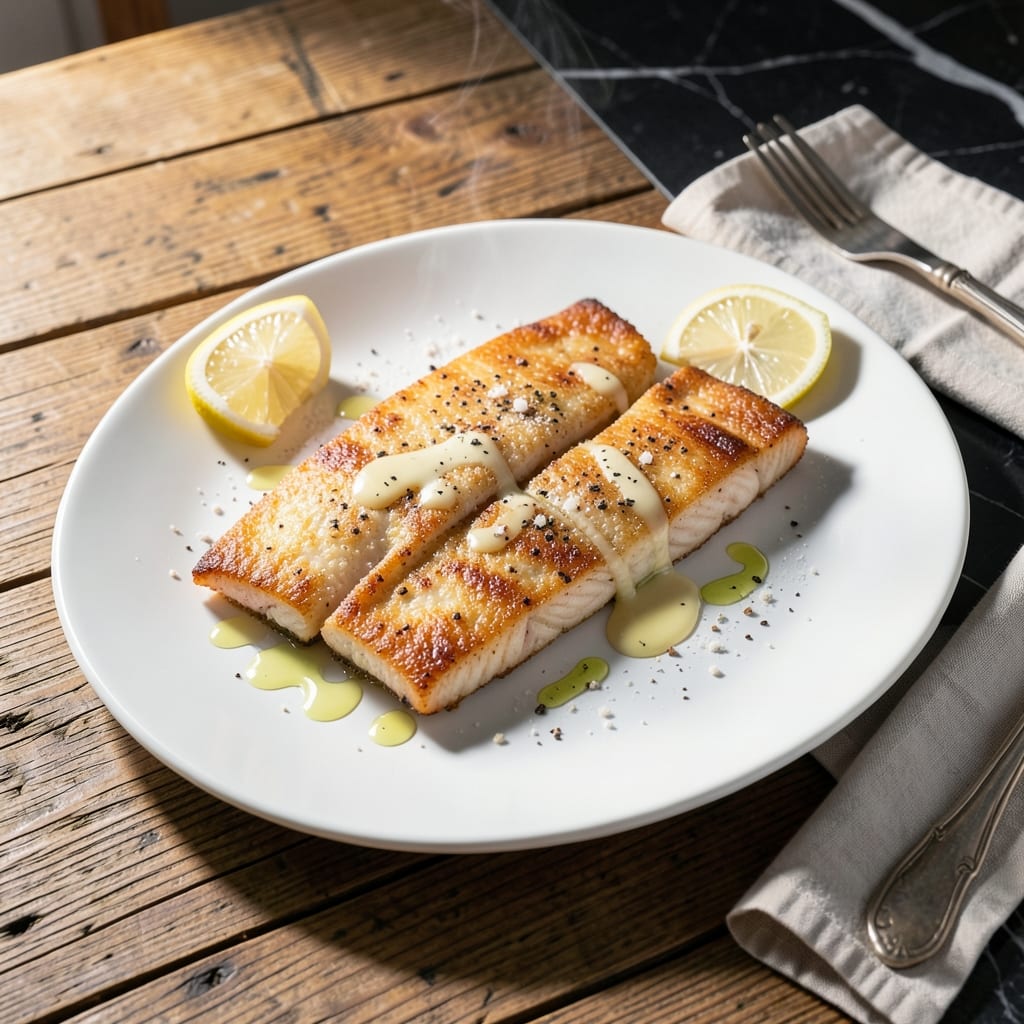
Achieving crispy skin on pan-fried lemon sole is simpler than you might think. This method delivers tender, flaky fish with a golden, butter-infused crust in under 15 minutes.
The key lies in proper pan temperature and minimal handling. A hot skillet ensures the skin crispens immediately while the delicate flesh cooks through gently. The lemon sole requires little more than salt, pepper, and a touch of butter to shine.
You’ll end up with a dish that feels restaurant-worthy but comes together with everyday ingredients. The skin stays perfectly crisp, while the fish remains moist and delicate, with a subtle citrus brightness.
Serve with a squeeze of fresh lemon and a sprinkle of parsley for a vibrant finish. This technique works for any thin white fish.
Ingredients for Lemon Sole Recipe Pan Fried
Minimal ingredients for maximum impact with delicate lemon sole fillets and crisp skin.
| Ingredient | Amount | Notes |
|---|---|---|
| Lemon Sole Fillets 🐟 | 1 ½ lb | Skin-on, about 4 fillets |
| Unsalted Butter 🧈 | 4 tbsp | Divided for cooking and finishing |
| All-Purpose Flour 🌾 | ¼ cup | For dusting fish lightly |
| Kosher Salt 🧂 | 1 tsp | Diamond Crystal preferred |
| Freshly Ground Black Pepper 🌶️ | ½ tsp | Coarse grind for texture |
| Fresh Lemon 🍋 | 1 whole | Zested and juiced |
| Fresh Flat-Leaf Parsley 🌿 | 2 tbsp | Finely chopped for garnish |
| Olive Oil 🫒 | 2 tbsp | High smoke point variety |
| Garlic Cloves 🧄 | 2 cloves | Minced for butter sauce |
| Dry White Wine 🍷 | ¼ cup | Optional for deglazing pan |
[recipe_ingredient_scaler]
Lemon sole is the star—look for skin-on fillets at the seafood counter, ideally about 1/2-inch thick for even cooking. Whole Foods or a trusted local fishmonger will have the freshest. The butter is non-negotiable; unsalted European-style gives the best flavor and control. For the flour, any all-purpose works, but a light dusting is key—too much creates a gummy crust rather than crisp.
No white wine? Substitute with chicken or vegetable broth plus a squeeze of lemon. If you can’t find lemon sole, any thin white fish like flounder or tilapia works—just adjust cooking time slightly. Fresh parsley is ideal, but dried at one-third the amount in a pinch. The garlic can be omitted if you prefer, but it adds a subtle depth that complements the lemon beautifully.
Lemon sole is best cooked the day of purchase. If storing, wrap tightly and refrigerate for no more than 1 day. Leftovers? Rare with this dish, but they’ll keep in the fridge for 24 hours—reheat gently to preserve the crisp skin.
Why You’ll Love This Recipe
- One Pan Wonder: I love that I only need a skillet, a few ingredients, and 15 minutes to get this on the table. No fuss, no extra dishes.
- Buttery Perfection: The butter creates the most delicate, golden crust on the sole—crisp at the edges, tender in the middle. Honestly, it’s restaurant-quality at home.
- Weeknight Hero: This works for a quiet dinner for two or a last-minute meal when friends drop by. I’ll be real: it’s my fallback when I need something reliable.
- Budget Friendly: Lemon sole is affordable, and a little goes a long way. Between us, it feels fancy without the price tag.
Step-by-Step Instructions for Pan Fried Lemon Sole
Master the technique for perfectly crisp skin and tender flesh with this straightforward approach.
Step 1: Prepare and Season the Fillets
Pat the 1.5 lb lemon sole fillets completely dry with paper towels. This step is non-negotiable—any moisture prevents the flour from adhering and crisping properly.
Season both sides evenly with the 1 tsp kosher salt and 0.5 tsp freshly ground black pepper. Then lightly dust each fillet with the 0.25 cup all-purpose flour, shaking off any excess. The flour creates a delicate crust that turns golden when cooked.
Real talk: if your fillets have uneven thickness, fold the thinner ends under to create a uniform shape. This ensures even cooking and prevents overdone edges.
Step 2: Sear the Fillets Skin-Side Down
Heat the 2 tbsp olive oil in a large nonstick skillet over medium-high heat until it shimmers but doesn’t smoke. Carefully place the fillets in the pan, skin-side down. Press down gently with a fish spatula for the first 10 seconds to ensure full contact with the pan.
Cook undisturbed for 3-4 minutes until the skin is golden brown and crisp. Resist the urge to peek or move the fillets—this is when the magic happens. The edges should appear opaque and start to pull away from the pan when ready to flip.
Step 3: Finish Cooking and Build the Sauce
Flip the fillets and immediately add 2 tbsp unsalted butter to the pan. As the butter melts, add the minced 2 cloves garlic cloves and cook for 30 seconds until fragrant but not browned. Baste the fillets with the butter-garlic mixture for the final 1-2 minutes of cooking.
The fish is done when it flakes easily with a fork and reaches an internal temperature of 145°F. Transfer the fillets to a warm plate, leaving the butter in the pan.
Step 4: Deglaze and Emulsify the Pan Sauce
Off the heat, carefully add the 0.25 cup dry white wine to the skillet. Return to medium heat and scrape up all the browned bits with a wooden spoon. Let it simmer for 1-2 minutes until reduced by half.
Remove from heat and whisk in the remaining 2 tbsp unsalted butter one piece at a time to create a creamy emulsion. Stir in the zest and juice from the 1 whole fresh lemon. The sauce should coat the back of a spoon lightly.
Step 5: Plate and Garnish
Pour the sauce over the fillets. Garnish with the 2 tbsp fresh flat-leaf parsley, finely chopped. The parsley adds a pop of color and freshness that cuts through the richness of the butter sauce.
Serve immediately while the skin is still crisp. Each fillet should have a beautiful golden crust, tender flakes, and a bright, buttery sauce that ties everything together perfectly.
Pro Tips For Making Lemon Sole Recipe Pan Fried
- Pat Fillets Dry: I learned this the hard way—damp fillets steam instead of sear. Use paper towels to remove every bit of moisture before dredging in flour.
- Heat the Pan First: Start with a screaming-hot pan over medium-high heat, then add butter right before the fish. Cold butter in a hot pan browns better than melted butter.
- Skip the Overcrowding: After ruining two batches, I now cook just two fillets at a time in my 12-inch skillet. Crowding drops the temperature and turns your sole into soggy disappointment.
- Use Room-Temp Butter: Sounds weird, but it works: take the butter out 10 minutes before cooking. It melts more evenly and coats the fish without burning.
Troubleshooting Perfect Results
Skin Not Crisping
If your skin isn’t getting crisp, your pan likely isn’t hot enough. Heat the 2 tbsp olive oil over medium-high heat until it shimmers before adding the fillets. Also, pat the fillets completely dry—any moisture creates steam instead of a crust.
Fish Sticks to Pan
This usually means the fillets weren’t ready to flip. Wait until the edges turn opaque and pull away from the pan before attempting to flip. Use a thin metal spatula to gently lift and check. If it resists, give it another 30 seconds. 💡
Overcooked Fish
Lemon sole cooks fast—just 3-4 minutes per side. If your fillets are thin, reduce the time. The flesh should flake easily and reach 145°F internal temperature. Pull them off just before they’re fully done, as they’ll carry over cook.
Sauce Breaks
If your butter sauce separates, it’s likely too hot. Remove the pan from heat when whisking in the final 2 tbsp unsalted butter. Add it one piece at a time, whisking constantly. A splash of cold water can help bring a broken sauce back together.
Bland Flavor
Don’t skip the lemon zest—it adds depth. Also, taste your sauce before serving and adjust with more lemon juice or a pinch of salt. The acidity brightens all the flavors and balances the richness of the butter. 🍋
Uneven Cooking
If your fillets have uneven thickness, fold the thinner ends under before cooking. This creates a uniform shape so everything cooks at the same rate. Press down gently with a spatula for the first 10 seconds to ensure full contact with the pan.
Nutrition Facts
Frequently Asked Questions
What’s the best oil for pan-frying?
Use a high smoke-point oil like vegetable or canola oil. For this recipe, 2 tbsp olive oil works well since you’re cooking at medium-high heat and it adds a nice flavor that complements the butter and lemon.
Can I use frozen fillets?
Yes, but thaw them completely in the fridge overnight first. Pat them extremely dry before cooking, as frozen fish releases more moisture which can prevent the skin from crisping properly.
How do I know when it’s done?
The flesh will flake easily with a fork and reach an internal temperature of 145°F. For thin fillets, this usually takes 3-4 minutes per side. Don’t overcook—it continues cooking slightly after you remove it from the pan.
What if I don’t have a fish spatula?
A thin metal spatula works as a good substitute. The key is using something flexible enough to slide under the delicate fillets without breaking them, especially when flipping.

Trained in classic French technique but raised on slow-cooked ribs and spicy rubs, she blends culinary skill with smoke and soul.
- Recipe for Boneless Pork Chops in Cast Iron Skillet: Sear and Baste to Juicy Perfection - October 3, 2026
- Recipe for Boneless Cross Rib Roast: Slow-Roasted Beef with Herb Crust - October 3, 2026
- Hamburgers in Sauce Recipe Crock Pot: Slow-Cooked Savory Delight - October 3, 2026