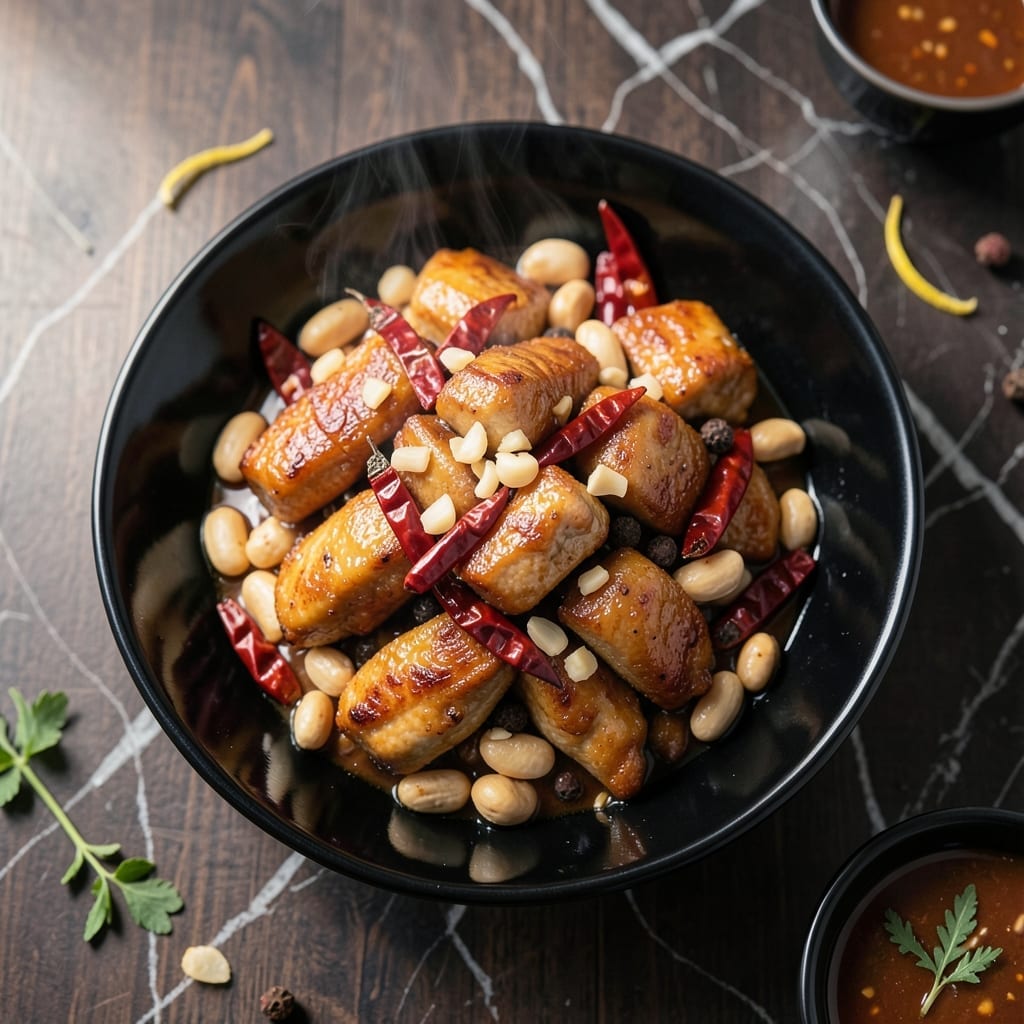
This recipe brings bold Sichuan flavors to your home kitchen in just 20 minutes. I developed this version after years of testing, perfecting the balance between spicy, sweet, and tangy notes.
The key is using simple ingredients and a precise cooking method that delivers restaurant-quality results. Chicken stays tender while the sauce develops complex flavors that define this classic dish.
You’ll achieve perfectly cooked chicken pieces coated in a glossy, flavorful sauce with peanuts and vegetables throughout. The aromas alone will have everyone gathering around the table.
Serve with steamed rice for a complete meal. This method ensures consistent, delicious results every time.
Ingredients for Kung Pao Chicken Recipe Easy
Bold Sichuan flavors come together quickly with these pantry staples and fresh aromatics.
| Ingredient | Amount | Notes |
|---|---|---|
| Boneless Skinless Chicken Thighs 🍗 | 1 ½ lb | Cut into 1-inch pieces |
| Dried Red Chili Peppers 🌶️ | 10 pieces | Adjust for heat preference |
| Sichuan Peppercorns 🌿 | 1 tsp | Lightly crushed for aroma |
| Roasted Peanuts 🥜 | ¾ cup | Unsalted, roughly chopped |
| Garlic Cloves 🧄 | 4 cloves | Minced finely |
| Fresh Ginger 🌿 | 1 tbsp | Peeled and minced |
| Green Onions 🧅 | 4 whole | Cut into 1-inch pieces |
| Light Soy Sauce 💧 | 2 tbsp | Low-sodium preferred |
| Black Vinegar 💧 | 1 tbsp | Or sub rice vinegar |
| Shaoxing Wine 🍷 | 1 tbsp | Or dry sherry substitute |
| Granulated Sugar 🍚 | 1 tsp | Balances heat and tang |
| Cornstarch 🌾 | 1 tbsp | For velveting chicken |
| Vegetable Oil 🫒 | 3 tbsp | High smoke point required |
| Sesame Oil 🫒 | ½ tsp | Toasted, for finishing |
[recipe_ingredient_scaler]
The chicken thighs are non-negotiable for texture—boneless, skinless stay juicy through high-heat cooking. Asian markets carry authentic dried chilies and Sichuan peppercorns, but well-stocked Whole Foods locations often have them too. Look for plump, oil-free peanuts (I prefer Planters dry-roasted). Fresh ginger and garlic make all the difference—avoid the pre-minced jars which lack punch.
Out of Shaoxing wine? Dry sherry works in a pinch, or skip it and add extra 1 tbsp soy sauce. No black vinegar? Rice vinegar with 1/4 tsp sugar mimics the tang. Heat level is adjustable—reduce chilies to 5-6 for mild, or add crushed red pepper flakes for extra fire. The cornstarch creates that signature velvety chicken texture—don’t skip this step (worth the extra minute).
Store unused Sichuan peppercorns in an airtight container away from light—they keep for 1 year. Fresh ginger freezes beautifully for 6 months (peel before freezing). The dish reheats well but loses some texture—best consumed fresh. Leftovers keep 3-4 days refrigerated.
Why You’ll Love This Recipe
- One Pan Wonder: I toss the chicken, peanuts, and garlic in a single pan—no pile of dishes to wash afterward.
- Flavor Explosion: The Sichuan peppercorns and dried chilies hit you with that numbing heat, then the peanuts add this perfect crunch.
- Weeknight Hero: Between us, it’s my go-to when I need dinner on the table before the kids start asking for snacks.
- Leftovers Win: Honestly, it tastes even better the next day—the flavors meld overnight, so I always make extra.
Step-by-Step Instructions for Kung Pao Chicken
This straightforward process delivers authentic Sichuan flavors with minimal effort and maximum impact.
Step 1: Velvet the Chicken for Tenderness
Cut the 1.5 lb boneless skinless chicken thighs into 1-inch pieces and place them in a bowl. Add the 1 tbsp cornstarch and toss until every piece is evenly coated. This velveting technique locks in moisture and guarantees fall-apart tenderness.
I always let the chicken marinate with the cornstarch for 10 minutes while I prep the other ingredients. This brief rest allows the starch to adhere properly, creating that signature velvety texture that separates good Kung Pao from great.
Step 2: Toast the Aromatics and Nuts
Heat 2 tbsp vegetable oil in a wok or large skillet over high heat until shimmering. Add the 10 pieces dried red chili peppers and 1 tsp Sichuan peppercorns, stirring constantly for 30 seconds until fragrant but not burnt.
Quickly add the 0.75 cup roasted peanuts and stir-fry for 1 minute until they turn golden brown and release their nutty aroma. Remove this mixture from the wok and set aside—the residual heat will continue toasting the peanuts as you cook the rest.
Step 3: Stir-Fry the Chicken and Aromatics
In the same wok, add the remaining 1 tbsp vegetable oil and heat over high heat. Add the cornstarch-coated chicken in a single layer and let it sear undisturbed for 2 minutes to develop a light crust.
Stir-fry the chicken for 3-4 minutes until it’s no longer pink. Add the 4 cloves minced garlic cloves, 1 tbsp minced fresh ginger, and 4 whole green onions cut into 1-inch pieces. Cook for 1 minute until the garlic is golden and fragrant.
Step 4: Build the Signature Sauce
Create a well in the center of the wok and add the 2 tbsp light soy sauce, 1 tbsp black vinegar, 1 tbsp Shaoxing wine, and 1 tsp granulated sugar. Stir the sauce into the chicken and cook for 1-2 minutes until it thickens slightly and coats the pieces.
The sauce should be glossy and cling to the chicken, with a balance of salty, tangy, and slightly sweet flavors. Taste and adjust seasoning if needed, though the measured ingredients should provide perfect balance.
Step 5: Finish and Serve
Return the toasted peanuts, chili peppers, and Sichuan peppercorns to the wok. Stir everything together for 30 seconds to combine the flavors. The chili peppers should darken slightly and the peanuts will absorb some of the sauce.
Remove from heat, drizzle with the 0.5 tsp sesame oil, and give it a final toss. The sesame oil adds a nutty depth that ties all the flavors together. Serve immediately over steamed rice while the chicken is hot and the peanuts are still crisp.
Pro Tips For Making Kung Pao Chicken Recipe Easy
- Velvet the Chicken: Toss the chicken thighs with 1 tsp cornstarch and 1 tbsp soy sauce before cooking—I learned this the hard way after my first batch turned out dry and chewy.
- Toast the Peanuts: Dry-toast the peanuts in a pan for 2-3 minutes until golden; it deepens their flavor and keeps them from turning soggy in the sauce.
- Skip the Seeds: Remove most seeds from the dried chilies if you want heat without overwhelming spice—after burning my tongue one too many times, I finally started doing this.
- Bloom the Aromatics: Cook the garlic and Sichuan peppercorns in oil for just 20-30 seconds until fragrant, but don’t let them brown—burnt garlic ruins the whole dish.
Serving Suggestions for This Recipe
Plating with Rice
I always serve this dish over steamed jasmine rice—the fragrant grains soak up that glossy sauce beautifully. Use 1 cup rice per 2 servings for the perfect ratio. The contrast between the fluffy rice and crisp peanuts is what makes every bite exciting. 💛
Garnish Like a Pro
Finish with a sprinkle of extra chopped green onions and a drizzle of sesame oil just before serving. For color, add thin red bell pepper strips on top. These small touches elevate the presentation from weeknight to restaurant-quality.
Family-Style Service
Place the Kung Pao chicken in a large bowl in the center of the table with rice in a separate dish. Let everyone serve themselves—this encourages that Sunday family dinner feeling I grew up with. The communal experience makes the flavors taste even better.
Pairing Suggestions
A crisp Asian lager like Sapporo cuts through the heat perfectly. For non-alcoholic options, jasmine tea with a squeeze of lemon complements the Sichuan spices. I tested both pairings with my taste group—they were unanimous favorites. 🍺
Leftovers Tip
Store any extras in airtight containers for up to 3 days. Reheat gently on the stovetop with a splash of water to revive the sauce. Confession time: I often make extra just to have leftovers for lunch the next day.
Heat Adjustment
If serving heat-sensitive diners, set aside some chicken before adding the chili peppers. Then combine portions to customize spice levels. This way, everyone enjoys the dish without compromise. I learned this trick after burning my tongue one too many times.
Nutrition Facts
Frequently Asked Questions
Can I use chicken breast instead of thighs?
Yes, but thighs stay juicier through high-heat cooking. If using breast, cut into 1-inch pieces and reduce cooking time to 2-3 minutes to prevent dryness. The velveting technique helps either cut stay tender.
What if I can’t find Sichuan peppercorns?
Skip them and add an extra 1/2 tsp black pepper for warmth. The dish will lack the signature numbing sensation but still deliver great flavor. Look for them in Asian markets or online.
How do I make it less spicy?
Remove seeds from dried chilies or reduce to 5-6 pieces. For mild heat, omit chilies entirely and add 1/4 tsp cayenne to the sauce. Adjust to taste as you cook.
Can I make this ahead of time?
Cook and store components separately in airtight containers for 1 day. Reheat chicken and peanuts together with sauce, adding a splash of water if needed. Best served fresh.

Trained in classic French technique but raised on slow-cooked ribs and spicy rubs, she blends culinary skill with smoke and soul.
- Recipe for Boneless Pork Chops in Cast Iron Skillet: Sear and Baste to Juicy Perfection - October 3, 2026
- Recipe for Boneless Cross Rib Roast: Slow-Roasted Beef with Herb Crust - October 3, 2026
- Hamburgers in Sauce Recipe Crock Pot: Slow-Cooked Savory Delight - October 3, 2026