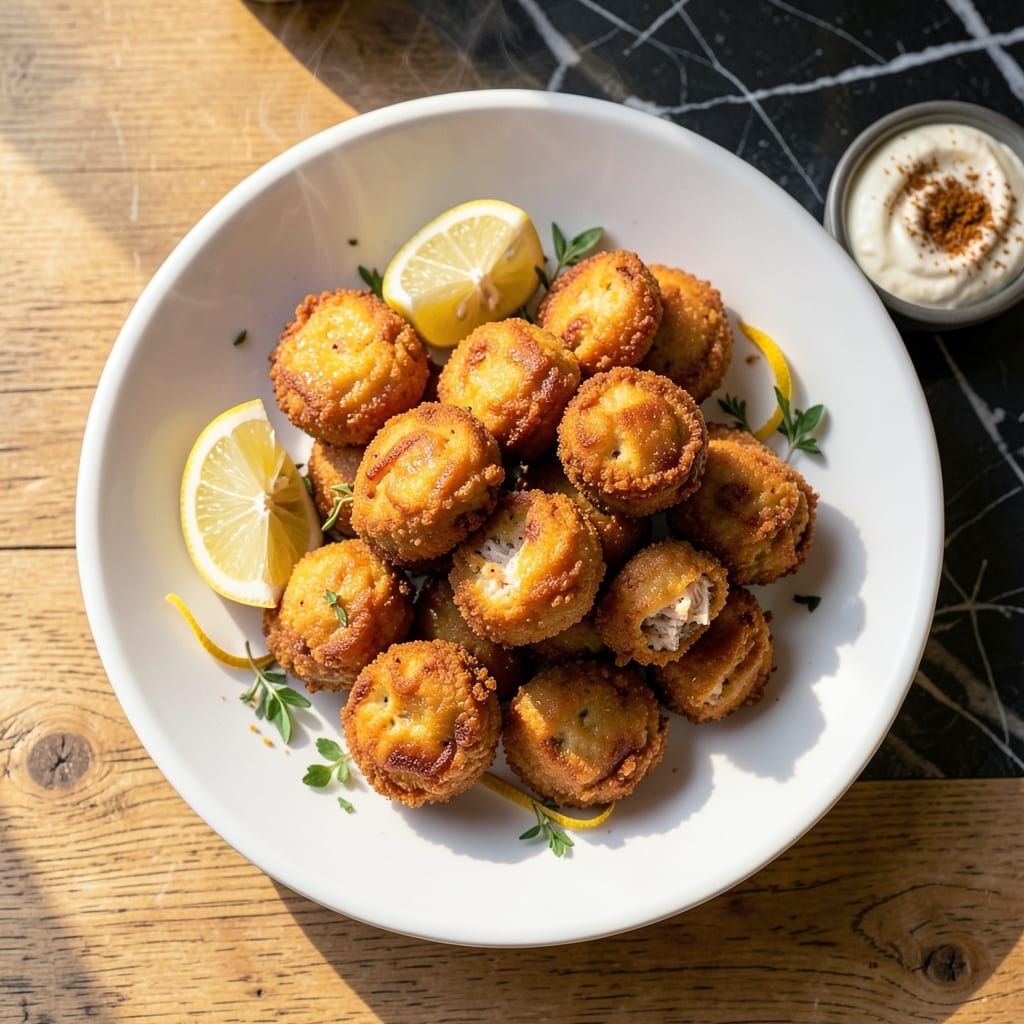
This recipe transforms fresh lobster into crispy, golden bites that highlight the meat’s natural sweetness. The secret lies in a light, seasoned batter that fries up perfectly without overwhelming the delicate flavor.
I developed this method after years of perfecting the balance between a delicate interior and a shatteringly crispy exterior. The key is using cold lobster meat and maintaining the right oil temperature throughout frying.
Each bite delivers tender lobster encased in a golden, crispy shell. The contrast between the sweet meat and the savory batter creates an irresistible combination that’s worth the effort.
Serve immediately with lemon wedges or your favorite dipping sauce. Here’s how to make them right the first time.
Ingredients for Lobster Fritters
Cold lobster meat and a light batter are all you need for these golden, crispy fritters.
| Ingredient | Amount | Notes |
|---|---|---|
| Lobster Meat 🦞 | 1 lb | Cooked, chopped, cold |
| All-Purpose Flour 🌾 | 1 cup | For batter structure |
| Large Egg 🥚 | 1 whole | Lightly beaten for binding |
| Whole Milk 🥛 | ½ cup | Cold for crispier batter |
| Baking Powder 🧂 | 1 ½ tsp | For batter lightness |
| Old Bay Seasoning 🌶️ | 1 tbsp | Classic seafood seasoning |
| Salt 🧂 | ½ tsp | Adjust to taste |
| Freshly Ground Black Pepper 🌶️ | ¼ tsp | Coarsely ground preferred |
| Green Onions 🧅 | 3 whole | Thinly sliced for garnish |
| Vegetable Oil 🫒 | 4 cups | For deep frying |
| Lemon 🍋 | 1 whole | Cut into wedges for serving |
| Fresh Parsley 🌿 | 2 tbsp | Chopped for garnish |
| Mayonnaise 🥄 | ½ cup | For dipping sauce |
| Dijon Mustard 🟡 | 1 tbsp | Blends into dipping sauce |
| Hot Sauce 🔥 | 1 tsp | Optional for spicy kick |
[recipe_ingredient_scaler]
The lobster is everything here. Fresh, cold, and high-quality—previously cooked tails or claws work best (avoid canned). I grab mine from Whole Foods or a trusted local seafood market. Make sure it’s chopped into even, bite-sized pieces so every fritter cooks uniformly. The meat’s sweetness shines through, so don’t mask it with too much seasoning. Old Bay is the classic choice, but any seafood seasoning blend will work.
No lobster? Shrimp or crab meat make great substitutes—just pat them dry to avoid soggy batter. Out of milk? Buttermilk or even cold water in a pinch (though the richness drops slightly). For a gluten-free version, swap the all-purpose flour for rice flour or a GF blend. The baking powder gives the batter lift, but if you’re out, a splash of club soda can add airiness.
Fritters are best eaten fresh—same day, ideally within 2 hours of frying. Leftovers? Reheat in a 350°F oven for 10 minutes to revive the crisp. Raw batter keeps in the fridge for 1 day, but the lobster should be used immediately after cooking.
Why You’ll Love This Recipe
- 20-Minute Magic: I mix the flour, egg, and milk, then fold in the lobster—no fancy techniques, just a bowl and a spoon.
- Buttery Sweetness: The lobster meat shines through, rich and tender, with a light, crisp coating that melts in your mouth.
- Party or Lunchbox: Serve these as elegant appetizers or pack them for a decadent work lunch—either way, they disappear fast.
- Stretches Further: A little lobster goes a long way here, so I can treat my family without breaking the bank.
Step-by-Step Instructions for Lobster Fritters
Here’s how I nail that perfect golden crust with sweet, tender lobster every single time.
Step 1: Prepare the Crispy Batter
In a large mixing bowl, whisk together the 1 cup All-Purpose Flour, 1.5 tsp Baking Powder, 1 tbsp Old Bay Seasoning, 0.5 tsp Salt, and 0.25 tsp Freshly Ground Black Pepper. This dry blend creates the structure and signature flavor we’re after.
Make a well in the center and pour in the 0.5 cup Whole Milk and 1 whole Large Egg. Whisk from the center outward until just combined—small lumps are fine. The batter should be thick enough to coat the back of a spoon but still pourable. Cold milk is key here; it prevents the batter from absorbing too much oil during frying.
Step 2: Fold in the Lobster Meat
Gently fold the 1 lb Lobster Meat into the batter using a silicone spatula. You want the chunks to stay intact for that perfect bite. I use cooked, chopped, cold lobster meat—this prevents it from overcooking during frying and helps it hold its shape.
Let the batter rest for 5-10 minutes while you prep the rest. This allows the flour to fully hydrate, which is crucial for that light, crispy texture. You’ll notice the batter thickens slightly as it rests—this is exactly what we want.
Step 3: Fry to Golden Perfection
Heat the 4 cups Vegetable Oil in a deep, heavy-bottomed pot to 375°F. Use a deep-fry thermometer for accuracy—this temperature is the sweet spot for crispy exterior and fully cooked interior without greasiness.
Working in batches to avoid crowding, drop heaping tablespoon-sized portions of batter into the hot oil. Fry for 2-3 minutes per side until deep golden brown and crispy. The fritters will float when ready to flip. Don’t rush this—golden brown means the inside is perfectly cooked.
Step 4: Drain and Finish
Transfer the cooked fritters to a paper towel-lined plate to drain excess oil. While they’re still hot, I like to sprinkle a pinch of extra Old Bay Seasoning on top—this amps up the flavor without overpowering.
Thinly slice the 3 whole Green Onions and chop the 2 tbsp Fresh Parsley. Mix these with the 0.5 cup Mayonnaise, 1 tbsp Dijon Mustard, and 1 tsp Hot Sauce for a quick dipping sauce. Serve the fritters immediately with the sauce and lemon wedges on the side.
Pro Tips For Making Lobster Fritters
- Chill the Batter: After mixing, let the batter rest in the fridge for 20-30 minutes—this helps the flour absorb the liquid and keeps the fritters from falling apart in the pan.
- Pat Lobster Dry: I learned this the hard way—blot the lobster meat with a paper towel before adding it to the batter, or the extra moisture will make your fritters greasy instead of crisp.
- Skip Overcrowding: Cook in small batches with space between each fritter, about 3-4 at a time in a 12-inch pan, otherwise they’ll steam instead of fry.
- Use Cold Milk: Sounds weird, but it works: cold whole milk makes the batter thicker and the fritters lighter, especially when combined with the baking powder.
Storing and Reheating Leftovers
Refrigerator Storage
Let your fritters cool completely before storing—I typically wait about 30 minutes. Place them in a single layer on a paper towel-lined plate, then transfer to an airtight container. They’ll keep in the fridge for up to 2 days, though the texture is best within 12 hours. ❄️
Freezer Storage
For longer storage, freeze fritters on a baking sheet first for 1 hour to prevent sticking. Then transfer to a freezer bag, squeezing out excess air. They’ll maintain quality for up to 1 month. I label mine with the date using a Sharpie marker for easy tracking.
Oven Reheating
Preheat your oven to 375°F—this is the same temperature we used for frying. Place fritters on a wire rack set over a baking sheet to allow air circulation. Heat for 8-10 minutes until crispy and heated through. This method works best for restoring that golden texture. 🔥
Air Fryer Method
Set your air fryer to 350°F and reheat in a single layer for 3-4 minutes. Shake the basket halfway through. This quick method works surprisingly well for small batches. I use my Ninja Foodi for this.
Dipping Sauce Storage
The mayonnaise-based dipping sauce will keep in the fridge for up to 5 days in a sealed container. If it separates, just give it a good stir before serving. For best results, make fresh sauce when reheating the fritters.
Nutrition Facts
Frequently Asked Questions
Can I use canned lobster for fritters?
Fresh cooked lobster is ideal, but canned works in a pinch. Drain and pat it very dry first to remove excess moisture. The texture won’t be as firm, but the flavor will still shine.
Why did my fritters fall apart in the oil?
The batter may have been too thin or the oil not hot enough. Use cold ingredients and maintain 375°F oil temperature. Let the batter rest 5-10 minutes before frying for better cohesion.
What oil works best for frying?
Vegetable, canola, or peanut oil are excellent choices. They have high smoke points and neutral flavors. Avoid olive oil—it can burn at frying temperatures.
Can I bake these instead of frying?
Yes, but the texture differs. Bake at 400°F for 12-15 minutes, flipping halfway. They’ll be less crispy but still delicious. Use a wire rack for air circulation.

Trained in classic French technique but raised on slow-cooked ribs and spicy rubs, she blends culinary skill with smoke and soul.
- Recipe for Boneless Pork Chops in Cast Iron Skillet: Sear and Baste to Juicy Perfection - October 3, 2026
- Recipe for Boneless Cross Rib Roast: Slow-Roasted Beef with Herb Crust - October 3, 2026
- Hamburgers in Sauce Recipe Crock Pot: Slow-Cooked Savory Delight - October 3, 2026