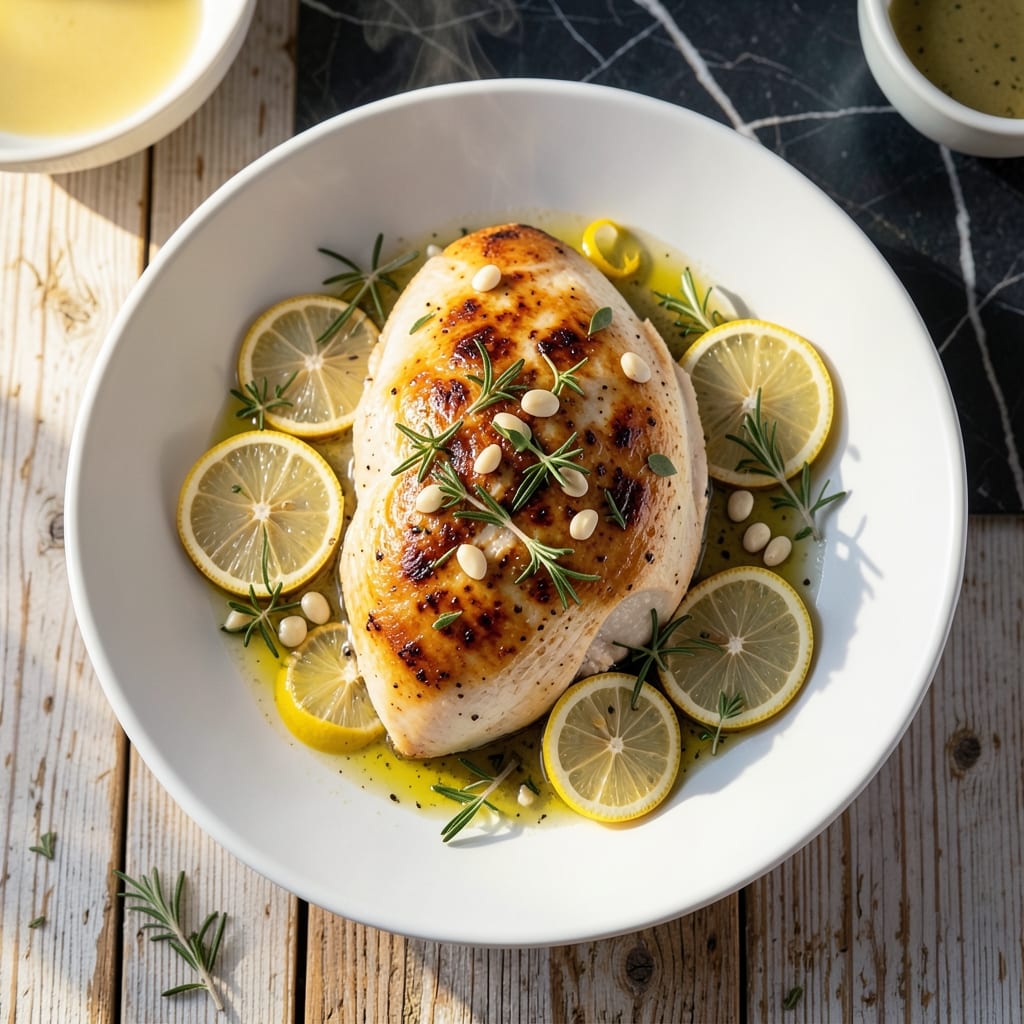
This baked chicken breast method delivers moist, flavorful results without relying on salt for taste. I developed this technique after years of dry, bland chicken that disappointed at dinner.
The key is a combination of high-heat roasting and a simple herb marinade that keeps the meat tender. Lemon juice and olive oil create a protective barrier that locks in natural juices while building flavor.
You’ll get perfectly cooked chicken with a golden exterior and succulent interior every time. The herbs add complexity without adding sodium, proving that low-salt cooking doesn’t mean sacrificing taste.
Ideal for meal prep, this chicken stays juicy when reheated and works in countless dishes throughout the week.
Ingredients for Low Sodium Chicken Breast Recipe Baked
Quality chicken and fresh herbs create moist, flavorful results without excess sodium.
| Ingredient | Amount | Notes |
|---|---|---|
| Boneless Skinless Chicken Breast 🍗 | 1 ½ lb | Pounded to even thickness |
| Extra-Virgin Olive Oil 🫒 | 3 tbsp | Divided for marinade and roasting |
| Fresh Lemon Juice 🍋 | 2 tbsp | About 1 medium lemon |
| Garlic Cloves 🧄 | 4 cloves | Minced finely for even distribution |
| Fresh Rosemary 🌿 | 1 tbsp | Finely chopped, stems discarded |
| Fresh Thyme Leaves 🍃 | 1 tbsp | Stripped from stems |
| Dried Oregano 🌿 | 1 tsp | Mediterranean variety preferred |
| Ground Black Pepper 🌶️ | 1 tsp | Freshly ground for maximum flavor |
| Onion Powder 🧅 | 1 tsp | Enhances natural chicken flavor |
| Smoked Paprika 🌶️ | ½ tsp | Adds depth without sodium |
| Dijon Mustard 🟡 | 1 tbsp | Low-sodium or salt-free variety |
| Salt-Free Seasoning Blend 🧂 | 1 tsp | Such as Mrs. Dash |
[recipe_ingredient_scaler]
The chicken quality is paramount. Opt for air-chilled, free-range breasts from Whole Foods or Trader Joe’s—they retain moisture better than conventionally raised. Look for uniform thickness or pound them yourself to ensure even cooking. The fresh herbs should be vibrant and aromatic; avoid any with wilting leaves or brown spots. For the olive oil, California Olive Ranch offers excellent quality at a reasonable price point.
No fresh rosemary? Dried rosemary at half the amount works, but soak it in warm water for 10 minutes first to rehydrate. Substitute fresh sage or marjoram for the thyme if needed. The Dijon mustard can be replaced with whole-grain mustard, but avoid yellow mustard—it lacks complexity. If you can’t find salt-free seasoning, simply omit it entirely; the herbs provide sufficient flavor.
Marinate the chicken for at least 30 minutes for optimal flavor penetration. Cooked chicken keeps well for 4-5 days refrigerated in an airtight container, or freeze for up to 3 months. Reheat gently to maintain moisture—microwave with a damp paper towel or warm in the oven at 300°F.
Why You’ll Love This Recipe
- One Pan Wonder: I toss everything on a sheet pan and let the oven do the work—no complicated steps, no mess.
- Bright and Zesty: The lemon and rosemary make the chicken so flavorful, you won’t miss the salt at all. Honestly, it’s my new favorite way to cook chicken.
- Meal Prep Magic: This stays juicy for days, so I make a big batch for lunches or quick dinners.
- Budget Friendly: Boneless skinless chicken breast is affordable, and a little olive oil and herbs go a long way.
Step-by-Step Instructions for Baked Chicken Breast
Here’s the method. Straightforward, tested, works every time.
Step 1: Prepare the Chicken Breast
Start by pounding the 1.5 lb boneless skinless chicken breast to an even thickness of about ½ inch. I place it between two sheets of plastic wrap and use a meat mallet or rolling pin. This ensures even cooking throughout the entire piece, preventing dry spots.
Even thickness is crucial for this recipe. Without it, thinner parts will overcook while thicker sections remain underdone. The uniform shape also helps the marinade penetrate more effectively.
Step 2: Create the Flavorful Marinade
In a bowl, whisk together 3 tbsp extra-virgin olive oil, 2 tbsp fresh lemon juice, 4 cloves minced garlic cloves, 1 tbsp fresh rosemary, 1 tbsp fresh thyme leaves, 1 tsp dried oregano, 1 tsp ground black pepper, 1 tsp onion powder, 0.5 tsp smoked paprika, 1 tbsp Dijon mustard, and 1 tsp salt-free seasoning blend.
This combination delivers robust flavor without relying on salt. The acidity from the lemon juice helps tenderize the chicken while the herbs and spices create a complex flavor profile. Let the chicken marinate in this mixture for at least 30 minutes, or up to 4 hours for maximum flavor penetration.
Step 3: Preheat and Prepare for Baking
Preheat your oven to 375°F. While it heats, remove the chicken from the marinade and place it on a wire rack set over a rimmed baking sheet. This setup allows hot air to circulate around the entire piece, promoting even browning and preventing steaming.
I reserve the leftover marinade for basting during cooking. The elevated rack also keeps the chicken out of any accumulating juices, which would otherwise create a soggy bottom. Lightly oil the rack to prevent sticking.
Step 4: Bake to Perfection
Bake the chicken for 20-25 minutes or until the internal temperature reaches 165°F on an instant-read thermometer. About halfway through, I baste the chicken with the reserved marinade to build layers of flavor and maintain moisture.
Watch for the visual cues: the chicken should be golden brown on the outside with clear juices running when pierced. The exact time may vary slightly depending on your oven and the thickness of your chicken, so rely on the temperature reading rather than time alone.
Step 5: Rest and Serve
Transfer the baked chicken to a cutting board and let it rest for 5-10 minutes before slicing. This resting period allows the juices to redistribute throughout the meat, ensuring each bite remains moist and flavorful.
Slicing too soon would cause those precious juices to spill out onto the cutting board, leaving your chicken dry. Serve immediately while still warm, perhaps with a squeeze of fresh lemon to brighten the flavors even more.
Pro Tips For Making Low Sodium Chicken Breast Recipe Baked
- Pound the Breasts: Use a rolling pin to flatten the chicken to an even ½-inch thickness—this guarantees even cooking and prevents dry, rubbery edges.
- Warm the Oil: Heat the olive oil in the oven-safe dish for 2 minutes before adding the chicken—hot oil jumpstarts the browning and locks in moisture.
- Skip the Overcrowding: Leave at least an inch between each piece so the heat circulates; I learned this the hard way when my first batch steamed instead of roasted.
- Rest Before Slicing: Tent the baked chicken with foil and let it sit for 5–7 minutes—sounds like a small thing, but it keeps every bite juicy.
Storing and Reheating low sodium chicken breast recipe baked
Refrigerator Storage
Let your chicken cool for no more than 2 hours before transferring to an airtight container. I use glass containers from Pyrex—they’re durable and easy to clean. Store in the fridge at 40°F or below for up to 4 days. 🔥
Freezer Storage
For longer storage, wrap individual portions tightly in plastic wrap, then place in a freezer bag. This double protection prevents freezer burn. Your chicken will keep for up to 3 months without losing quality. I always label with the date to keep track.
Stovetop Reheating
Place chicken in a skillet with 2 tbsp water or chicken broth over medium-low heat. Cover and warm for 5-7 minutes, turning occasionally. This gentle method prevents drying out while restoring moisture.
Microwave Reheating
Arrange slices on a microwave-safe plate, cover with a damp paper towel, and heat on 50% power for 1-2 minutes. Check and continue in 30-second intervals until reaching 165°F. The damp towel adds just enough steam. ❄️
Oven Reheating
Preheat oven to 300°F, place chicken on a baking sheet, and cover with foil. Warm for 10-15 minutes or until heated through. This method works best for larger portions and maintains texture beautifully.
Meal Prep Tip
Portion your chicken before storing to make weekday meals a breeze. I like to slice it thin for sandwiches or keep whole for salads. The flavors actually deepen after a day in the fridge, making leftovers taste even better.
Nutrition Facts
Frequently Asked Questions
Can I use dried herbs instead of fresh?
Yes, use 1/3 the amount of dried herbs since they’re more concentrated. Soak in warm water for 10 minutes first to rehydrate. The flavor will be slightly different but still delicious.
How do I keep the chicken from drying out?
Pound to even thickness, don’t overbake, and let it rest for 5-10 minutes after cooking. A meat thermometer is key—remove at 165°F.
Can I marinate it overnight?
Yes, but limit to 4 hours max for this recipe. The lemon juice can start to “cook” the chicken if left too long, making it mushy.
What if my chicken is thicker in some spots?
Fold the thinner parts under and secure with toothpicks to create even thickness. This prevents dry spots while ensuring the thicker parts cook through.

Trained in classic French technique but raised on slow-cooked ribs and spicy rubs, she blends culinary skill with smoke and soul.
- Recipe for Boneless Pork Chops in Cast Iron Skillet: Sear and Baste to Juicy Perfection - October 3, 2026
- Recipe for Boneless Cross Rib Roast: Slow-Roasted Beef with Herb Crust - October 3, 2026
- Hamburgers in Sauce Recipe Crock Pot: Slow-Cooked Savory Delight - October 3, 2026