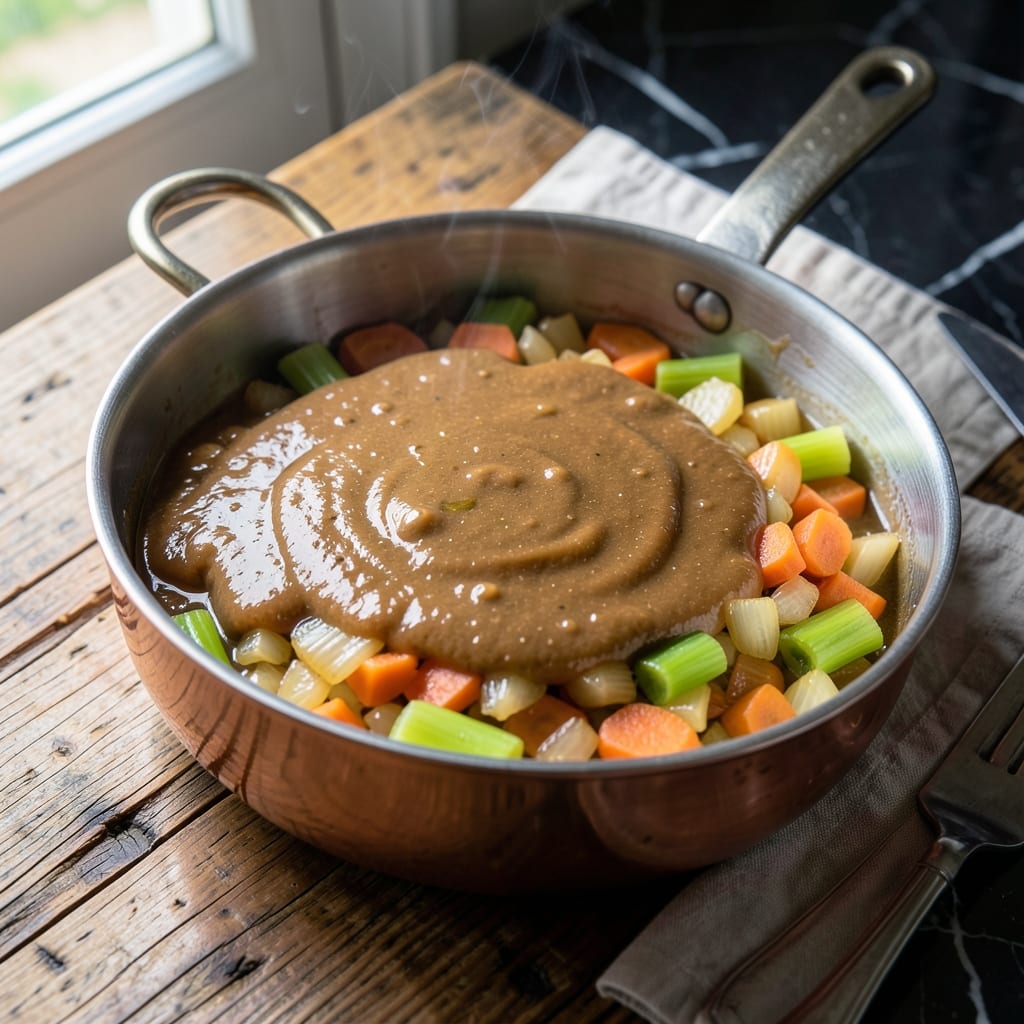
Creating a rich, flavorful gravy without excess salt is entirely possible with the right techniques. I developed this recipe after realizing how many store-bought versions rely on sodium for taste.
The secret lies in building depth through caramelized vegetables and quality stock. A splash of acid, like apple cider vinegar, brightens the flavors naturally. This approach transforms simple ingredients into a savory sauce that doesn’t compromise on taste.
What you get is a velvety gravy that enhances any meal without overpowering it. The process takes 20 minutes and uses pantry staples you likely already have on hand.
Perfect for those monitoring their salt intake or anyone who prefers homemade over processed. Here’s how to make it right.
Ingredients for Low Sodium Gravy
Pantry staples plus a few fresh veggies create this rich, velvety sauce with no excess salt.
| Ingredient | Amount | Notes |
|---|---|---|
| Unsalted Butter 🧈 | 3 tbsp | For roux base |
| All-Purpose Flour 🌾 | 3 tbsp | Creates smooth thickener |
| Low-Sodium Chicken Stock 🥣 | 2 cups | Homemade or quality store-bought |
| Yellow Onion 🧅 | 1 whole | Finely diced, caramelized |
| Carrots 🥕 | 2 whole | Peeled and finely chopped |
| Celery Stalks 🌿 | 2 whole | Finely chopped for depth |
| Garlic Cloves 🧄 | 3 cloves | Minced for aromatic base |
| Apple Cider Vinegar 🍏 | 1 tbsp | Brightens flavors naturally |
| Fresh Thyme Sprigs 🌿 | 2 whole | Leaves stripped, stems discarded |
| Black Pepper 🌶️ | ½ tsp | Freshly ground for best flavor |
[recipe_ingredient_scaler]
The stock is everything here. Low-sodium chicken stock from Trader Joe’s or Whole Foods works great, but homemade is even better (simmer bones with aromatics, no salt added). The vegetables—onion, carrot, celery—need to be finely chopped so they melt into the gravy. I always use unsalted butter (the good stuff, not margarine) to control the sodium completely.
No apple cider vinegar? White wine vinegar or lemon juice at the same amount works fine. Fresh herbs are ideal, but dried thyme at one-third the amount gets the job done. If you don’t have fresh garlic, garlic powder at half the quantity is a decent backup. The flour can be swapped for cornstarch (mix with cold water first), but it’ll be slightly less rich.
This keeps 4-5 days in the fridge—reheat gently to avoid breaking the emulsion. Freezes beautifully for 3 months too. I like to make a double batch and freeze in ice cube trays for easy portions later.
Why You’ll Love This Recipe
- One Pot Magic: I love that this gravy comes together in a single saucepan—just melt, whisk, and simmer.
- Rich & Savory: The carrots and onions sweat down into the stock, giving it a deep, naturally sweet flavor without extra salt.
- Holiday or Tuesday: Honestly, it works just as well over mashed potatoes for a feast as it does on a random weeknight roast chicken.
- Stretches Further: One batch makes enough to freeze in ice cube trays, so I always have a flavor boost ready for soups or stews.
Step-by-Step Instructions for Low Sodium Gravy
This method builds deep flavor through careful layering and precise technique.
Step 1: Build the Aromatic Base
Heat a medium saucepan over medium heat. Add the 3 tbsp unsalted butter and let it melt completely. The foam should subside before you proceed—this means the water has cooked out and the milk solids are ready to brown.
Add the finely diced yellow onion, peeled and finely chopped carrots, and finely chopped celery stalks. Cook for 8-10 minutes, stirring occasionally, until the vegetables soften and the onion becomes translucent. Don’t let them brown—you want sweetness, not bitterness.
Here’s the thing—this vegetable base (called a mirepoix) adds depth without salt. The natural sugars caramelize slightly, creating a flavor foundation that makes the gravy taste rich rather than flat.
Step 2: Create the Roux and Develop Flavor
Sprinkle the 3 tbsp all-purpose flour evenly over the cooked vegetables. Stir constantly for 2-3 minutes to cook the raw flour taste out. The mixture should look like wet sand and smell slightly nutty.
Add the minced garlic cloves and the leaves from the 2 whole fresh thyme sprigs (discard the stems). Cook for another 1 minute until the garlic releases its fragrance. This step ensures your roux has maximum flavor before the liquid goes in.
Watch the heat—if the roux darkens too quickly, reduce to medium-low. You want a light golden color, not a dark brown. A pale roux thickens at a lower temperature and keeps the gravy smooth.
Step 3: Whisk in Stock and Simmer
Slowly pour in the 2 cups low-sodium chicken stock while whisking constantly. This prevents lumps from forming. Start with a small stream, then increase as the mixture thickens and becomes easier to incorporate.
Bring the mixture to a gentle simmer. Reduce heat to low and let it cook for 10-12 minutes, stirring occasionally, until the gravy coats the back of a spoon. If it’s too thick, add a splash more stock. If it’s too thin, simmer a few minutes longer.
Real talk: Low-sodium stock can taste flat straight from the carton, but as it reduces, the flavors concentrate beautifully. Be patient—this simmering time is where the magic happens.
Step 4: Finish and Adjust Seasoning
Remove the saucepan from heat. Stir in the 1 tbsp apple cider vinegar and 0.5 tsp black pepper. The vinegar brightens all the flavors, balancing the richness of the butter and stock without adding sodium.
Taste and adjust. If you want more depth, let it simmer another 5 minutes to reduce further. If it needs more acidity, add another splash of vinegar. The black pepper adds warmth, so grind in a bit more if you like a little heat.
Strain the gravy through a fine-mesh sieve if you prefer a silky-smooth texture, or leave the vegetables in for a rustic version. Both work beautifully—it just depends on your preference.
Pro Tips For Making Low Sodium Gravy
- Brown the Flour: Cook the flour in unsalted butter for 2-3 minutes until golden—this removes the raw taste and deepens the flavor without needing extra salt.
- Sweat the Veggies: Finely dice the onion and carrots, then cook them in the butter until soft but not browned, about 5 minutes, to build a subtle sweetness that balances the low-sodium stock.
- Avoid Lumpy Gravy: Whisk the flour into the butter first to form a smooth paste before slowly adding the low-sodium chicken stock—this prevents clumps better than dumping it all in at once.
- Strain for Silkiness: After simmering, strain out the onion and carrots for a velvety texture; I learned this the hard way after serving chunky gravy to picky eaters.
Best Sauces and Condiments for This Dish
Fresh Herb Pairings
Fresh herbs add brightness to this gravy without extra sodium. I love stirring in 1 tbsp chopped parsley or 1 tsp fresh rosemary just before serving. These herbs complement the thyme already in the recipe beautifully.
Mushroom Boost
For an earthy depth, sauté 1 cup finely chopped cremini mushrooms with the mirepoix. The mushrooms release umami that makes up for the lack of salt. I learned this trick from my Nonna—her gravy always had that extra something.
Wine Reduction
Deglaze the pan with ¼ cup dry white wine before adding stock. The alcohol burns off, leaving a complex flavor that enhances the chicken stock’s natural richness. Use a crisp Sauvignon Blanc for best results. 🍷
Creamy Variation
Whisk in ¼ cup whole milk or heavy cream at the end for a velvety texture. This works especially well with poultry dishes. Just be careful not to boil after adding dairy, or it might curdle.
Roasted Garlic Twist
Swap raw garlic for 2 roasted garlic cloves when building the roux. The sweeter, mellow flavor adds depth without overpowering. Roast whole cloves with olive oil at 400°F for 20 minutes until soft. 💡
Citrus Zest Finish
Add 1 tsp lemon zest or orange zest at the very end. The citrus oils brighten the gravy’s richness, similar to how the vinegar works but with a different aromatic profile.
Nutrition Facts
Frequently Asked Questions
Can I use regular broth instead?
Use regular broth only if you reduce the sodium elsewhere. The recipe is designed for low-sodium stock to keep control over the flavor. You can dilute regular broth with water by half to approximate the same effect.
How do I fix lumpy gravy?
Whisk vigorously to break up small lumps. For stubborn ones, press through a fine-mesh sieve. Prevent lumps by slowly adding stock while whisking constantly in the roux stage.
What’s the best way to store leftovers?
Cool completely, then transfer to an airtight container. Refrigerate for up to 4-5 days or freeze for 3 months. Reheat gently on the stove with a splash of water to restore consistency.
Can I make this ahead of time?
Prepare up to 2 days in advance. The flavors deepen as it sits. Store in the fridge and reheat slowly, stirring often to prevent skin formation on top.

Trained in classic French technique but raised on slow-cooked ribs and spicy rubs, she blends culinary skill with smoke and soul.
- Recipe for Boneless Pork Chops in Cast Iron Skillet: Sear and Baste to Juicy Perfection - October 3, 2026
- Recipe for Boneless Cross Rib Roast: Slow-Roasted Beef with Herb Crust - October 3, 2026
- Hamburgers in Sauce Recipe Crock Pot: Slow-Cooked Savory Delight - October 3, 2026