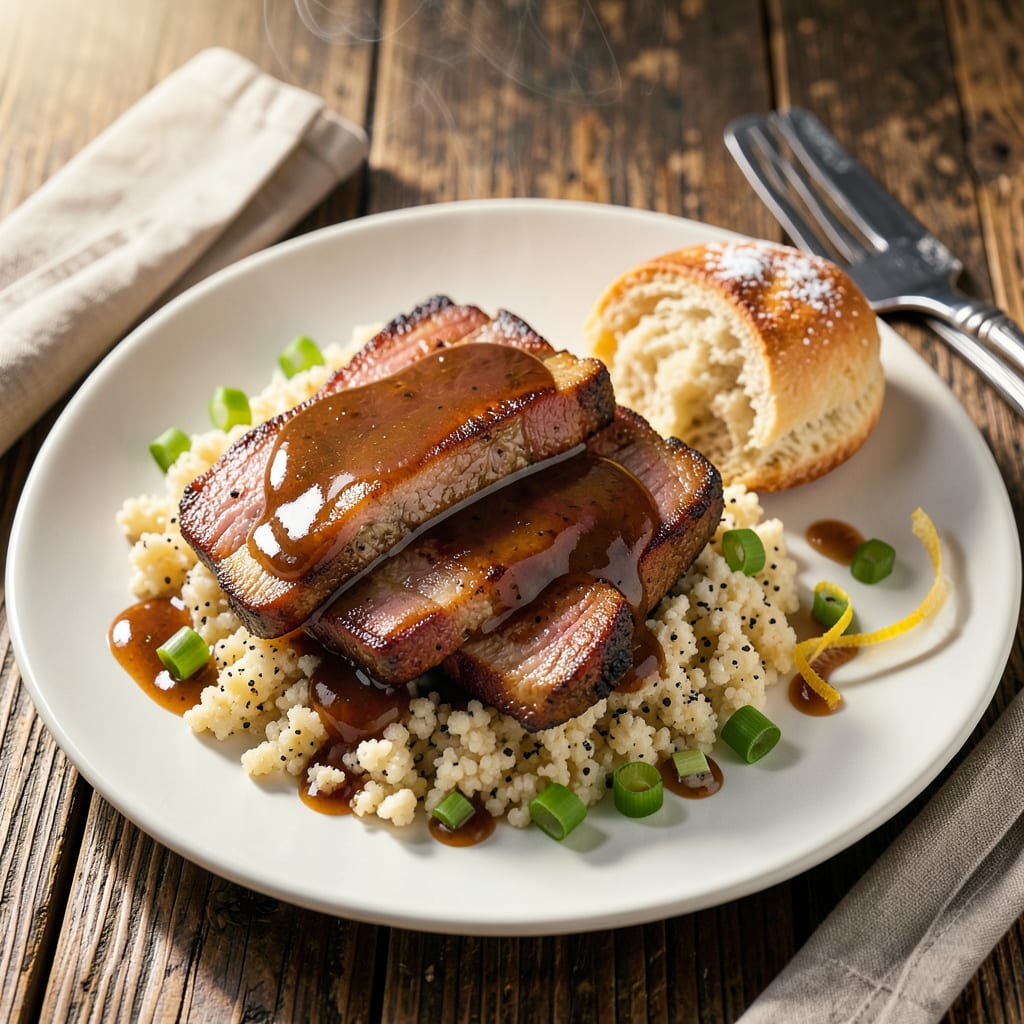
Red eye gravy delivers a bold, savory punch with rich coffee undertones balanced by salty, smoky ham flavors. Its thin yet deeply flavorful profile makes it a Southern breakfast staple with a slight tangy edge.
This gravy’s magic comes from its simple but powerful ingredients working together. 🔥 The black coffee base provides a deep, slightly bitter backbone that gets mellowed by the rendered fat from country ham—adding that signature smoky richness. What surprises most people is how the saltiness cuts through the coffee’s intensity, creating a complex flavor that’s both hearty and refreshing. I’ve found it works best when poured over fluffy biscuits or crispy fried chicken, where its thin consistency soaks in perfectly without overpowering.
💡 In This Article
- Breaking Down Red Eye Gravy’s Unique Flavor Components
- Perfect Pairings and Serving Tips for Red Eye Gravy
Breaking Down Red Eye Gravy’s Unique Flavor Components
The secret to this gravy’s distinctive taste lies in its minimalist ingredient list working in perfect harmony. Black coffee provides the foundation with its tannic bitterness and subtle fruitiness, while the rendered fat from country ham contributes smoky umami that mellows the coffee’s sharp edges.
The ham’s curing process (typically 6-12 months) develops complex salty, funky notes that balance the coffee’s acidity. What’s fascinating is how these flavors transform during cooking – the coffee reduces by about 30-40%, concentrating its intensity while the ham fat emulsifies into the liquid.
Temperature plays a crucial role in developing the final flavor profile. Traditional recipes start with a hot skillet (around 350°F) to properly render the ham fat before adding coffee. This initial high heat creates fond – those browned bits stuck to the pan – that dissolve into the gravy, adding another layer of caramelized depth.
🔥 The coffee’s acidity (pH ~5) then helps break down these browned proteins, creating a more complex flavor than simple pan drippings could achieve. Unlike cream-based gravies, red eye maintains a thin consistency that allows its flavors to penetrate rather than coat foods.
What sets this apart from other Southern gravies is its lack of flour – no roux means the flavors remain sharp and clean rather than muted by starch. The salt content typically measures 1.5-2% by weight, which might sound high but works because it’s balanced by the coffee’s natural acidity.
I’ve noticed that using freshly ground coffee beans (rather than pre-ground) adds brighter, more nuanced notes to the final product. The absence of dairy also means the flavors don’t soften over time, maintaining their bold character even when reheated.
The preparation method intensifies these flavors through careful layering. First, the ham fat renders until crispy (about 5-7 minutes), then coffee is added and reduced by nearly half. This two-stage process allows the fat-soluble flavors from the ham to infuse into the water-soluble coffee compounds.
The result is a gravy where no single element dominates – the coffee doesn’t taste like breakfast brew, and the ham doesn’t overpower with saltiness. Instead, they create something entirely new: a savory, slightly tangy liquid with enough complexity to stand up to rich breakfast meats.
Compared to other pan gravies, red eye offers a remarkably different experience. While sawmill gravy relies on milk and flour for creaminess, and chocolate gravy uses cocoa powder for sweetness, red eye achieves its depth through acid-salt-fat balance alone.
This makes it uniquely versatile – it can cut through the richness of fried chicken while also complementing the mild sweetness of cornbread. The thin consistency (similar to heavy cream) allows it to soak into foods rather than sit on top, creating a more integrated flavor experience with each bite.
One often overlooked factor is the coffee’s roast level. Darker roasts (like French or Italian) contribute more bitterness and charred notes, while medium roasts preserve more of the bean’s natural fruitiness. I prefer using a medium-dark roast for the best balance – it provides enough bitterness to contrast the ham’s saltiness without becoming overly harsh.
The final gravy should have a glossy sheen from the emulsified fat and leave a clean, slightly dry finish on the palate, making you reach for another bite. ✨
The beauty of this gravy lies in its simplicity executed perfectly. Every component serves a purpose: coffee for depth, ham for richness, and salt to tie it all together. When made correctly, it achieves that rare balance where each flavor is distinct yet none overpowers the others.
This is why it remains a beloved Southern tradition – it transforms basic ingredients into something extraordinary through careful technique and patience.

Trained in classic French technique but raised on slow-cooked ribs and spicy rubs, she blends culinary skill with smoke and soul.
- Recipe for Boneless Pork Chops in Cast Iron Skillet: Sear and Baste to Juicy Perfection - October 3, 2026
- Recipe for Boneless Cross Rib Roast: Slow-Roasted Beef with Herb Crust - October 3, 2026
- Hamburgers in Sauce Recipe Crock Pot: Slow-Cooked Savory Delight - October 3, 2026