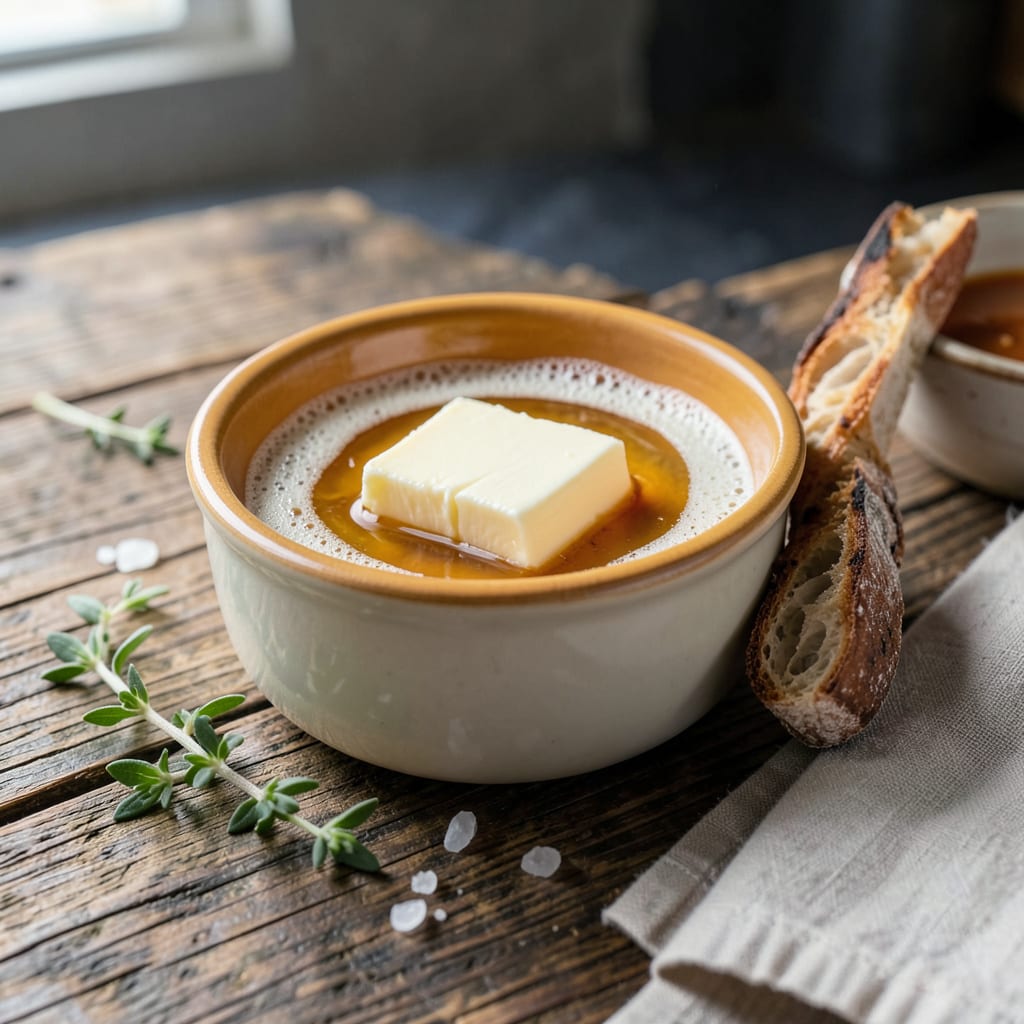
Manteiga derretida is clarified butter, a staple in Brazilian cuisine where milk solids are removed through gentle heating. It has a higher smoke point than regular butter, making it ideal for frying, sautéing, and baking with a rich, nutty flavor.
I’ve found this golden liquid to be a game-changer in the kitchen, especially when you need that buttery richness without the risk of burning. 🔥 The removal of milk solids isn’t just about higher heat tolerance—it creates a purer fat that carries flavors beautifully in dishes like farofa or feijoada. What’s fascinating is how this process also extends shelf life naturally, making it a pantry staple in Brazilian homes. The nutty depth comes from caramelizing those milk solids before straining them out, which is why proper technique matters so much.
💡 In This Article
- How Manteiga Derretida Is Made and Why It’s Unique
- Top Culinary Uses for Manteiga Derretida in Brazilian Cooking
How Manteiga Derretida Is Made and Why It’s Unique
The process starts with unsalted butter melted at 160-180°F—just enough to separate the components. As the butter heats, you’ll see three distinct layers form: foamy milk solids on top, golden clarified butter in the middle, and water at the bottom.
The key is maintaining gentle heat to avoid burning the solids, which would create bitter flavors. 🔥 This separation happens because butter is about 80% fat, 18% water, and 2% milk solids—the heat breaks these bonds.
What makes Brazilian manteiga derretida special is the caramelization step. Unlike ghee where solids are simply removed, Brazilian cooks often let the milk proteins brown slightly before straining. This adds a subtle nutty depth that regular clarified butter lacks.
The final product has a smoke point of 485°F—nearly double that of regular butter (300°F)—making it perfect for high-heat cooking like frying pastéis or searing meats. ✨
The removal of water and milk solids also means longer shelf life. Without these components, bacteria have nothing to feed on, so properly stored manteiga derretida can last 6-12 months at room temperature. This was crucial in Brazil’s tropical climate before refrigeration.
The pure butterfat also creates a cleaner mouthfeel in dishes, allowing other flavors to shine without the heaviness of regular butter.
Compared to ghee, manteiga derretida is typically lighter in color and flavor since it’s not cooked as long. Regular melted butter still contains water and milk solids, which is why it burns so easily. The Brazilian version strikes a balance—rich enough for baking but neutral enough for sautéing delicate seafood.
I’ve found it particularly magical when making farofa, where it toasts the cassava flour to golden perfection without scorching. 🌟
Here’s what most people miss: the straining method matters. Cheesecloth works but can leave residue. Professional cooks use a fine-mesh sieve lined with muslin for crystal-clear results. The solids you strain out? Don’t toss them—they’re fantastic sprinkled over popcorn or stirred into rice for extra flavor.
The entire process takes about 20-30 minutes but yields a versatile ingredient that will transform your cooking. ⚡
Temperature control is everything. Too hot and the solids burn; too cool and the separation takes forever. I use a candy thermometer to monitor the heat precisely. The ideal window is when the foam stops rising and the liquid turns translucent gold—that’s your cue to strain.
This attention to detail is why homemade versions always outperform store-bought clarified butter in both flavor and performance.
The science behind this involves Maillard reactions in those milk solids. When heated just right, the proteins and sugars create hundreds of flavor compounds. That’s why properly made manteiga derretida has such complexity—it’s not just fat, but a carefully developed flavor base.
This makes it indispensable in Brazilian cuisine, where it’s used in everything from savory stews to delicate pastries. 💫

Trained in classic French technique but raised on slow-cooked ribs and spicy rubs, she blends culinary skill with smoke and soul.
- Recipe for Boneless Pork Chops in Cast Iron Skillet: Sear and Baste to Juicy Perfection - October 3, 2026
- Recipe for Boneless Cross Rib Roast: Slow-Roasted Beef with Herb Crust - October 3, 2026
- Hamburgers in Sauce Recipe Crock Pot: Slow-Cooked Savory Delight - October 3, 2026