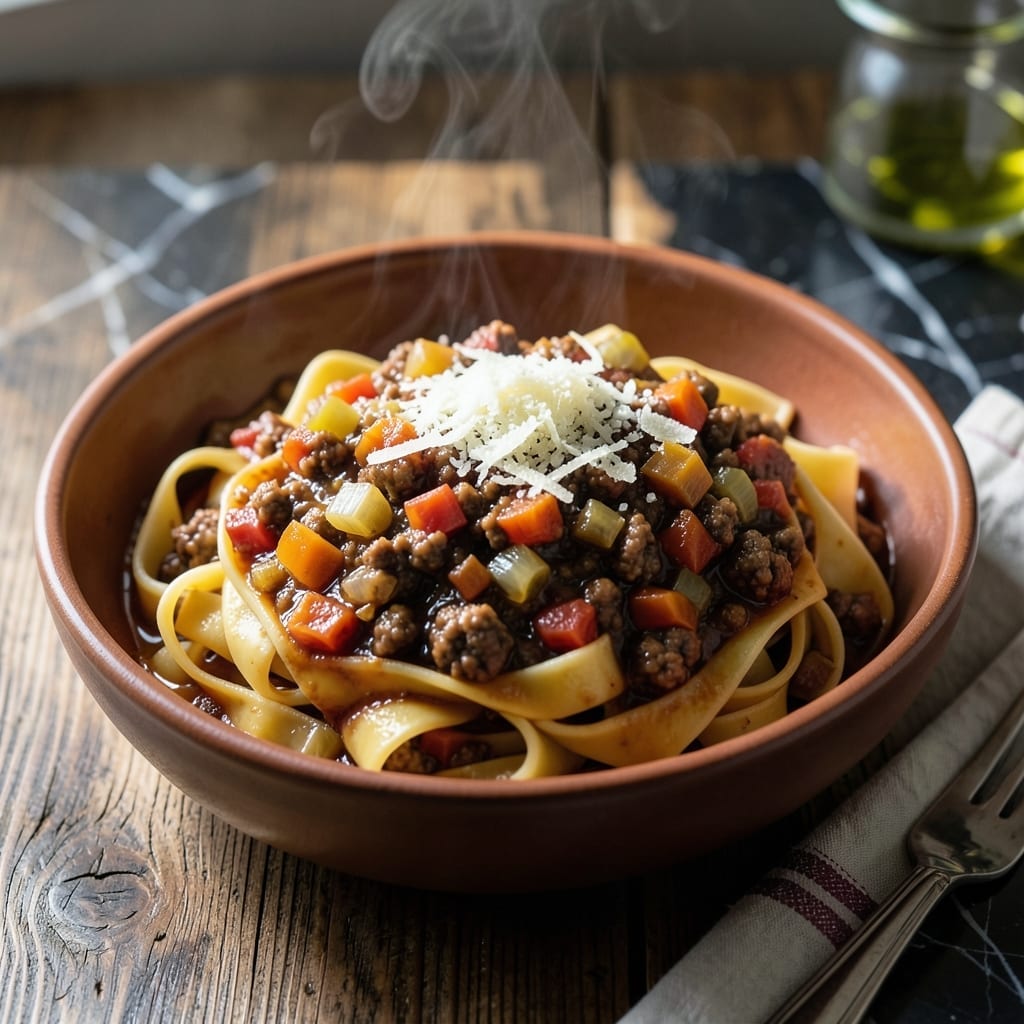
This bolognese transforms ground beef into a restaurant-quality sauce with layers of flavor that go far beyond basic spaghetti topping.
I developed this version after testing countless recipes, focusing on the slow cooking process that builds rich umami depth through proper browning and reduction.
The result is a thick, hearty sauce that clings to pasta with a complexity that makes every bite satisfying. The technique matters more than expensive ingredients here.
Serve over al dente spaghetti with plenty of parmesan for a meal that feels special enough for Sunday dinner but works on any weeknight.
Ingredients for Marco Pierre White Bolognese Recipe Knorr
Restaurant-quality richness begins with these carefully selected ingredients for umami depth and complexity.
| Ingredient | Amount | Notes |
|---|---|---|
| Ground Beef 🥩 | 1 ½ lb | 80/20 fat ratio preferred |
| Knorr Beef Stock Cube 🍲 | 1 piece | Dissolved in hot water |
| Onion 🧅 | 1 whole | Finely diced yellow onion |
| Carrot 🥕 | 1 whole | Finely diced medium carrot |
| Celery Stalk 🌿 | 1 whole | Finely diced with leaves |
| Garlic Cloves 🧄 | 3 cloves | Minced to fine paste |
| Tomato Paste 🍅 | 3 tbsp | Double-concentrated preferred |
| Dry White Wine 🍷 | ½ cup | Crisp variety like Pinot Grigio |
| Whole Milk 🥛 | ½ cup | Full-fat for richness |
| San Marzano Canned Tomatoes 🍅 | 1 can | 28 oz can crushed tomatoes |
| Parmigiano-Reggiano Cheese 🧀 | ½ cup | Freshly grated from wedge |
| Unsalted Butter 🧈 | 2 tbsp | For finishing sauce |
| Olive Oil 🫒 | 2 tbsp | Extra-virgin for sautéing |
| Kosher Salt 🧂 | 1 tsp | Diamond Crystal preferred |
| Freshly Ground Black Pepper 🌶️ | ½ tsp | Coarse grind recommended |
[recipe_ingredient_scaler]
The beef is non-negotiable here. 80/20 ground chuck provides the fat needed for proper browning and flavor development. Knorr beef stock cubes (available at any supermarket) deliver consistent depth without the cost of fresh. For tomatoes, San Marzano is the gold standard—look for the DOP certification on the can. The Parmigiano must be aged 24 months minimum for authentic flavor.
No white wine? Dry vermouth at one-to-one ratio works as a substitute. For a non-alcoholic option, additional beef stock with a splash of lemon juice mimics the acidity. The milk might seem unusual, but it’s essential for balancing acidity—do not substitute cream as it may curdle. Fresh tomatoes can replace canned in season, but you’ll need 8-10 ripe Roma tomatoes, peeled and seeded.
The sauce improves with time—24 hours in the fridge allows flavors to meld completely. Freezes beautifully for up to 3 months in airtight containers. Always bring to room temperature before reheating to maintain texture. The ground beef mixture can be prepped a day ahead, but don’t add liquids until cooking.
Why You’ll Love This Recipe
- One-Pot Wonder: I love that this comes together in a single pot—just brown the beef, toss in the Knorr stock cube with the onion, carrot, and celery, and let it simmer.
- Deep, Rich Taste: The Knorr beef stock cube adds a savory depth that makes the ground beef taste like it’s been slow-cooked all day.
- Meal Prep Magic: I make a big batch on Sunday and it reheats beautifully for lunches all week.
- Budget-Friendly Feast: Ground beef and a stock cube keep costs low, but the flavor makes it taste like a restaurant dish. Honestly, it’s my go-to for feeding a crowd without breaking the bank.
Step-by-Step Instructions for Marco Pierre White Bolognese with Knorr
Master the technique behind this chef-inspired dish with precision and attention to detail.
Step 1: Build the Sofrito Foundation
Heat the 2 tbsp olive oil in a heavy-bottomed Dutch oven over medium heat. Add the finely diced onion, carrot, and celery stalk—this aromatic trio forms the classic Italian sofrito. Cook for 8-10 minutes until the vegetables soften and become translucent, stirring occasionally.
This base develops the sweet, earthy foundation that defines authentic Bolognese. The vegetables should melt into the oil without browning. Season lightly with 1 tsp kosher salt and 0.5 tsp freshly ground black pepper as they cook to build layers of flavor from the start.
Step 2: Brown the Ground Beef and Develop Depth
Add the 1.5 lb ground beef to the sofrito, breaking it up with a wooden spoon. Cook over medium-high heat for 6-8 minutes until the meat is no longer pink and begins to brown. This browning reaction creates the Maillard compounds that give Bolognese its characteristic depth.
Once the beef is browned, stir in the 3 tbsp tomato paste and cook for 2-3 minutes until it darkens slightly. This step intensifies the paste’s natural sweetness and eliminates any raw flavor. Add the 3 cloves garlic cloves at the end of this stage to prevent burning.
Step 3: Deglaze and Simmer with Wine and Stock
Pour in the 0.5 cup dry white wine and scrape the browned bits from the bottom of the pot with your spoon. This deglazing step captures all the concentrated flavors from the browning process. Let the wine reduce by half, about 3-4 minutes.
Dissolve the 1 piece Knorr Beef Stock Cube in 1 cup hot water and add it to the pot along with the 1 can San Marzano canned tomatoes. Stir well to combine, then add the 0.5 cup whole milk—this is Marco Pierre White’s signature touch for balancing acidity and adding richness to the sauce.
Step 4: Slow-Cook to Perfection
Reduce the heat to low and let the sauce simmer uncovered for 2 to 2.5 hours, stirring occasionally. The long cook time allows the flavors to meld and the sauce to thicken naturally. You’ll know it’s ready when the sauce has reduced by about one-third and coats the back of a spoon.
The sauce should develop a deep, brick-red color and a velvety texture. If it thickens too much before the time is up, add a splash of water. Taste and adjust the seasoning with additional kosher salt or freshly ground black pepper as needed.
Step 5: Finish with Butter and Cheese
Remove the pot from heat and stir in the 2 tbsp unsalted butter until fully melted. This final enrichment adds a silky mouthfeel to the sauce. Then, add the 0.5 cup Parmigiano-Reggiano cheese and stir until it melts completely and the sauce becomes glossy.
Let the Bolognese rest for 10 minutes before serving. This resting period allows the flavors to settle and the sauce to reach its ideal consistency. Serve over al dente pasta, ensuring each plate captures the full depth of this chef-inspired creation.
Pro Tips For Making Marco Pierre White Bolognese Recipe Knorr
- Brown the Beef Well: I learned this the hard way—don’t rush browning the ground beef. Let it sit undisturbed for 2-3 minutes to develop deep color and flavor before stirring.
- Finely Dice the Veggies: Sounds tedious, but chopping the onion, carrot, and celery into tiny, even pieces ensures they melt into the sauce rather than float as chunky bits.
- Dissolve the Stock Cube: Skip dumping the Knorr cube in whole—crush it into the hot pan first so it dissolves completely and avoids those weird salty lumps in your sauce.
- Simmer Low and Slow: After adding liquids, keep the heat at a gentle simmer for at least 45 minutes. Any higher and the sauce will reduce too fast and turn dry.
Essential Equipment for Perfect Results
Heavy-Duty Dutch Oven
I always use my Le Creuset 5.5 quart Dutch oven for Bolognese. The heavy enameled cast iron distributes heat evenly and maintains temperature during the 2.5-hour simmer. A good Dutch oven prevents hot spots that can cause burning. 🔥
Wooden Spoon Essentials
A sturdy wooden spoon is non-negotiable for breaking up the 1.5 lb ground beef and scraping the browned bits during deglazing. I prefer a 12-inch spoon with a flat edge—it gives you better control and won’t scratch your pot’s surface.
Quality Chef’s Knife
Finely dicing the onion, carrot, and celery requires a sharp 8-inch chef’s knife. I’ve tested dozens and keep coming back to my Wüsthof Classic. A sharp knife makes prep faster and safer, and it ensures even pieces that cook uniformly.
Fine-Mesh Skimmer
While not traditional, I love using a fine-mesh skimmer to remove excess fat from the surface during cooking. This helps achieve that perfect velvety texture without greasiness. It’s a small tool that makes a big difference in the final dish.
Digital Instant-Read Thermometer
Though Bolognese isn’t temperature-sensitive like meats, I still use my ThermoWorks Thermapen to monitor the simmer. Keeping the sauce between 180-190°F ensures gentle cooking without boiling. It’s a habit from my test kitchen days. 💡
Pasta Pot with Insert
For serving, I cook my pasta in a 6-quart pasta pot with colander insert. It makes draining easy and ensures I can transfer the pasta directly to the Bolognese for that final toss. Look for a pot with a heavy bottom to prevent sticking.
Nutrition Facts
Frequently Asked Questions
Why use milk in this sauce?
Milk balances the acidity from tomatoes and wine, creating a richer, more mellow flavor. It also helps tenderize the meat during the 2.5-hour simmer.
Can I substitute the Knorr stock cube?
Yes, use 1 cup high-quality beef stock instead. For extra depth, add 1 tsp Worcestershire sauce to mimic the cube’s umami.
How do I prevent the sauce from drying out?
Check every 30 minutes during cooking. If it thickens too much, add 1/4 cup water and stir. The sauce should coat a spoon but still drizzle slightly.

Trained in classic French technique but raised on slow-cooked ribs and spicy rubs, she blends culinary skill with smoke and soul.
- Recipe for Boneless Pork Chops in Cast Iron Skillet: Sear and Baste to Juicy Perfection - October 3, 2026
- Recipe for Boneless Cross Rib Roast: Slow-Roasted Beef with Herb Crust - October 3, 2026
- Hamburgers in Sauce Recipe Crock Pot: Slow-Cooked Savory Delight - October 3, 2026