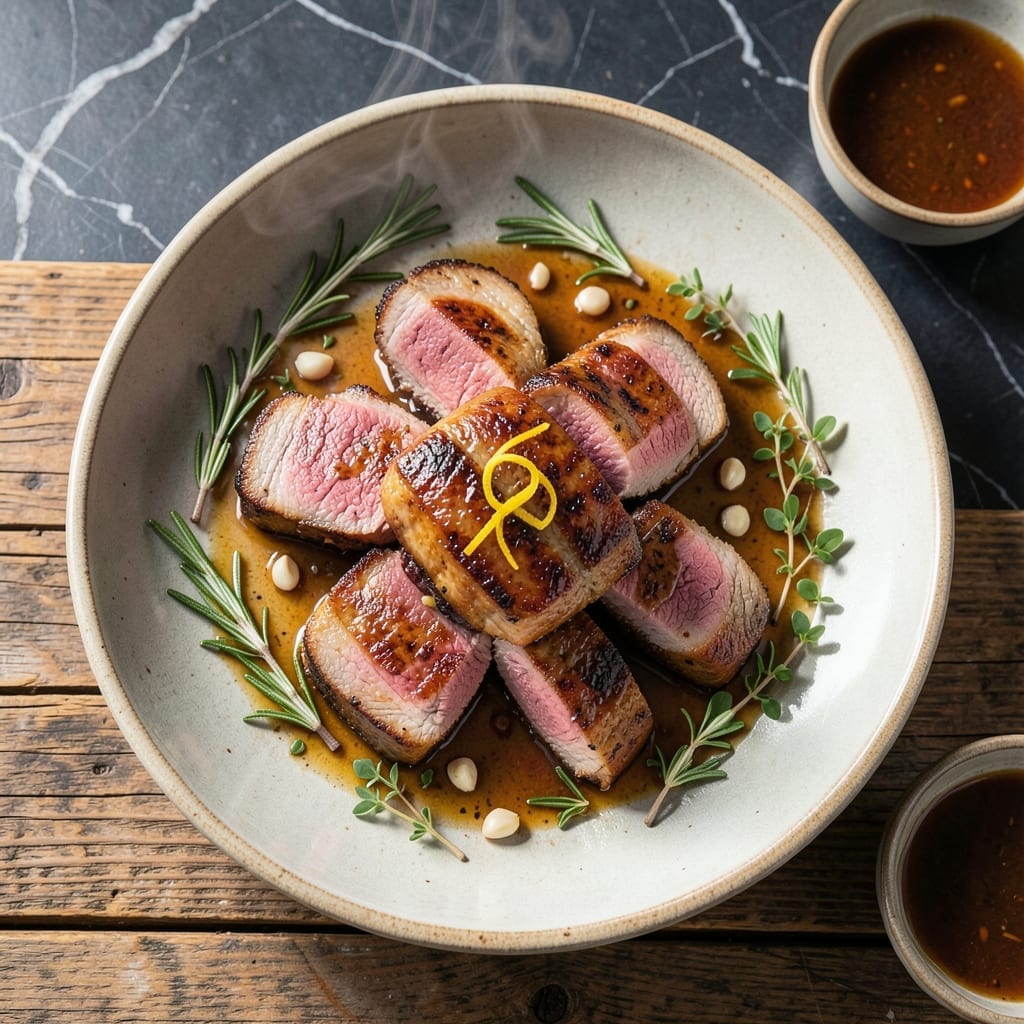
This recipe transforms lean pork tenderloin into tender, herb-infused perfection through a simple marinade. The key is allowing enough time for the flavors to penetrate deeply.
With just a few ingredients and proper technique, you’ll achieve juicy slices every time. The marinade works its magic while you prepare the rest of your meal.
Ingredients for Marinated Pork Tenderloin
Lean pork tenderloin elevated with a vibrant herb marinade for juicy, flavorful results every time.
| Ingredient | Amount | Notes |
|---|---|---|
| Pork Tenderloin 🥩 | 1 ½ lb | Trimmed of excess fat |
| Extra-Virgin Olive Oil 🫒 | ¼ cup | For marinade base |
| Soy Sauce 🥢 | ¼ cup | Low-sodium preferred |
| Fresh Rosemary 🌿 | 2 tbsp | Finely chopped, stems discarded |
| Fresh Thyme 🍃 | 2 tbsp | Stems removed, leaves only |
| Garlic Cloves 🧄 | 4 cloves | Minced for maximum flavor |
| Dijon Mustard 🟡 | 2 tbsp | Smooth, not whole grain |
| Honey 🍯 | 2 tbsp | For balancing acidity |
| Balsamic Vinegar 🍷 | 2 tbsp | Aged for depth |
| Kosher Salt 🧂 | 1 tsp | Diamond Crystal preferred |
| Black Pepper 🌶️ | 1 tsp | Freshly ground for best results |
| Red Pepper Flakes 🔥 | ½ tsp | Optional for heat |
[recipe_ingredient_scaler]
The pork tenderloin should be uniform in thickness for even cooking. Whole Foods and Costco carry excellent pre-trimmed options, but any reputable butcher can provide a quality cut. Look for pieces with a light pink hue and minimal marbling. The fresh herbs—rosemary and thyme—should be vibrant green with no wilting, as their potency is crucial for the marinade’s depth.
No fresh herbs? Dried at one-third the amount works in a pinch, though the flavor profile shifts slightly. Swap honey for maple syrup or agave if needed. Soy sauce can be replaced with tamari for gluten-free or coconut aminos for a milder taste. The Dijon mustard adds acidity and emulsifies the marinade—yellow mustard lacks the complexity but is usable.
Marinate the pork for at least 4 hours (overnight is ideal) in the refrigerator. Cook within 24 hours for best texture. Leftovers keep 3-4 days refrigerated or freeze for up to 3 months in a sealed container.
Why You’ll Love This Recipe
- 5-Minute Marinade: I mix olive oil, soy sauce, rosemary, and thyme in a bowl—no chopping, no fuss—and the pork soaks up flavor while I do something else.
- Herb-Crusted Bite: The rosemary and thyme create this crazy aromatic crust that makes every bite taste like it came from a fancy restaurant.
- Meal Prep Hero: I make a double batch on Sunday and it’s just as good sliced cold in salads or warmed up in tacos by Wednesday.
- Budget Stretcher: One pork tenderloin feeds four for less than a takeout meal, and honestly, it tastes better.
Step-by-Step Instructions for Marinated Pork Tenderloin
Master the marinade technique that guarantees tender, flavorful pork every time.
Step 1: Prepare the Herb-Infused Marinade
In a medium bowl, whisk together the 0.25 cup Extra-Virgin Olive Oil, 0.25 cup Soy Sauce, 2 tbsp Dijon Mustard, 2 tbsp Honey, and 2 tbsp Balsamic Vinegar until fully emulsified. The honey and vinegar work together to create a balanced sweet-tangy base.
Add the 2 tbsp Fresh Rosemary, 2 tbsp Fresh Thyme, 4 cloves Garlic Cloves, 1 tsp Kosher Salt, 1 tsp Black Pepper, and 0.5 tsp Red Pepper Flakes. Stir well to distribute the herbs and spices evenly. Let the marinade sit for 5 minutes to allow the flavors to meld before introducing the pork.
Step 2: Coat and Marinate the Pork Tenderloin
Place the 1.5 lb Pork Tenderloin in a resealable plastic bag or shallow dish. Pour the prepared marinade over the pork, ensuring it is completely submerged. Massage the marinade into the meat, making sure every surface is coated—this step prevents dry spots and ensures even flavor penetration.
Seal the bag or cover the dish and refrigerate for at least 4 hours, or preferably overnight. The longer the pork marinated, the more pronounced the herb and garlic notes will be. For best results, flip the pork halfway through the marinating time to ensure consistent exposure to the mixture.
Step 3: Sear the Pork for Maximum Flavor
Remove the pork from the marinade (reserve the marinade for later use) and pat it dry with paper towels. This step is crucial—excess moisture prevents proper browning. Heat a large oven-safe skillet over medium-high heat. Add a drizzle of oil if needed, then sear the pork on all sides until deeply browned, about 2-3 minutes per side.
The searing process caramelizes the surface sugars from the honey and marinade, creating a flavorful crust. Don’t rush this step; a good sear enhances both texture and taste. Transfer the seared pork to a plate temporarily while you prepare the oven.
Step 4: Roast to Tender Perfection
Preheat your oven to 400°F. Return the seared pork to the skillet and pour in the reserved marinade. Place the skillet in the oven and roast for 15-20 minutes, or until the internal temperature reaches 145°F. Baste the pork with the marinade halfway through cooking to keep it moist.
The pork is done when it feels slightly firm to the touch and the juices run clear. Avoid overcooking—pork tenderloin can become dry if left in the oven too long. The marinade will reduce slightly in the pan, forming a light glaze that enhances the pork’s natural juices.
Step 5: Rest and Serve
Transfer the pork to a cutting board and tent loosely with foil. Let it rest for 10 minutes before slicing—this allows the juices to redistribute throughout the meat, ensuring every slice is moist and flavorful. The internal temperature will rise a few degrees during resting, reaching the ideal 150-155°F for serving.
Slice the pork tenderloin into ½-inch thick medallions and arrange on a platter. Spoon any remaining pan juices over the top for added moisture and flavor. Serve immediately with your choice of sides, knowing the marinade has infused every bite with herbaceous depth and tender juiciness.
Pro Tips For Making Marinated Pork Tenderloin
- Score the Surface: Lightly score the pork tenderloin in a crosshatch pattern before marinating—this helps the olive oil, soy sauce, and herbs penetrate deeper, and I learned this the hard way after my first few attempts tasted bland on the inside.
- Marinade Overnight: Give the pork at least 8 hours in the fridge with the olive oil, soy sauce, rosemary, and thyme. Sounds weird, but it works: the flavors actually develop when they have time to mingle.
- Skip the Cold Pan: Always sear the tenderloin in a screaming-hot pan—about 2 minutes per side—otherwise you’ll end up steaming it instead of getting that golden crust.
- Rest Before Slicing: After cooking, tent it with foil and let it rest for 10 minutes (yes, even if you’re impatient like me)—this keeps the juices inside where they belong.
Best Sauces and Condiments for These Flavors
Classic Pan Sauce
After resting the pork, pour the pan juices into a saucepan. Add ½ cup chicken stock and 1 tbsp butter, then simmer for 3-4 minutes until slightly thickened. This sauce captures all the herb and garlic flavors from the marinade. 💫
Apple Compote
Dice 2 sweet apples and cook with 1 tbsp butter, 1 tsp cinnamon, and 1 tbsp brown sugar until soft. The sweetness complements the savory pork beautifully. I love this with my morning coastal rides in mind.
Mustard Cream Sauce
Whisk ½ cup heavy cream, 1 tbsp Dijon mustard, and 1 tsp honey in a small saucepan. Simmer until it coats the back of a spoon, then drizzle over sliced pork. The tang cuts through the richness perfectly.
Chimichurri
Blend 1 cup parsley, 3 garlic cloves, ¼ cup olive oil, 2 tbsp red wine vinegar, and ½ tsp red pepper flakes. This bright, herby sauce adds freshness to the dish. I often forage wild parsley for this.
Balsamic Reduction
Simmer 1 cup balsamic vinegar with 1 tbsp honey until reduced by half. The result is a glossy, sweet-tart glaze that enhances the pork’s caramelized crust. Drizzle sparingly for maximum impact.
Spicy Peach Glaze
Combine ½ cup peach preserves, 1 tbsp sriracha, and 1 tsp apple cider vinegar in a saucepan. Heat until smooth, then brush over the pork during the last 5 minutes of roasting. The heat balances the sweetness beautifully.
Nutrition Facts
Frequently Asked Questions
How long should I marinate the pork?
Marinate for at least 4 hours for noticeable flavor, but overnight is ideal. The herbs and garlic need time to penetrate the meat deeply.
Can I use dried herbs instead of fresh?
Yes, but use 1/3 the amount since dried herbs are more concentrated. The flavor will be slightly different but still delicious.
Why is my pork dry even after marinating?
Overcooking is the most likely culprit. Pork tenderloin cooks quickly—remove it from the oven at 145°F and let it rest.
Can I grill instead of roast?
Sear over medium-high heat for 2-3 minutes per side, then move to indirect heat until it reaches 145°F. The marinade works beautifully on the grill.

Trained in classic French technique but raised on slow-cooked ribs and spicy rubs, she blends culinary skill with smoke and soul.
- Recipe for Boneless Pork Chops in Cast Iron Skillet: Sear and Baste to Juicy Perfection - October 3, 2026
- Recipe for Boneless Cross Rib Roast: Slow-Roasted Beef with Herb Crust - October 3, 2026
- Hamburgers in Sauce Recipe Crock Pot: Slow-Cooked Savory Delight - October 3, 2026