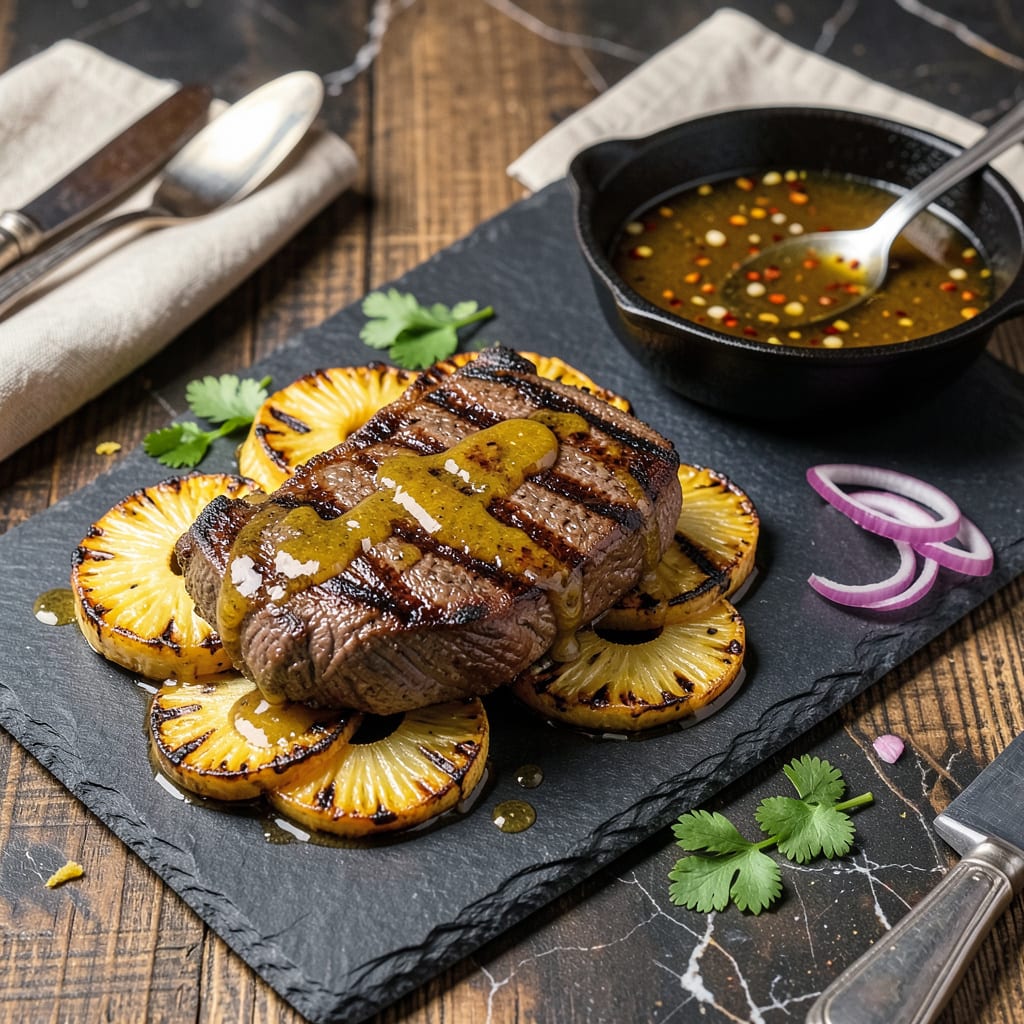
I’ll be real with you—pineapple juice in steak marinade sounds weird until you try it. That first time I tossed ribeye in pineapple juice, I was skeptical, but after 4 hours in the fridge? The meat came out so tender it nearly fell apart on the grill. The bromelain enzyme works like magic, breaking down tough fibers without turning your steak to mush if you time it right.
Here’s the thing—this isn’t just about dumping juice on meat. My go-to blend mixes pineapple with soy sauce, smashed garlic, and a hit of brown sugar to balance the tang. I’ve tested this with everything from flank steak to sirloin, and it transforms even budget cuts into restaurant-quality bites. The key is 4-6 hours max; go longer and you risk over-tenderizing.
When it’s time to cook, pat that steak dry (critical for a good sear) and hit it with high heat. I prefer cast iron for the perfect crust, but grill works too. You’ll know it’s done when the edges caramelize and the center hits 130°F for medium-rare. That first bite—juicy, tender, with just a hint of sweetness—will make you a believer.
Serve it sliced over rice to catch all those juices, or pair with charred veggies for contrast. And don’t toss that leftover marinade—simmer it down with a splash of broth for a quick pan sauce. This method changed how I cook steak, and I’m guessing it’ll do the same for you.
📚 In This Guide
- What You’ll Need
- Instructions
- Tips and Common Mistakes
What Youll Need
- ● Steak: 1–2 cuts (1–1.5 lbs total), like flank, skirt, or sirloin (½–¾ inch thick for best results).
- ● Fresh pineapple juice: 1 cup (strained, no pulp) or 100% canned pineapple juice (unsweetened).
- ● Olive oil or avocado oil: 2 tbsp (helps tenderize and prevents sticking).
- ● Soy sauce or tamari: 2 tbsp (for umami depth; use low-sodium if preferred).
- ● Garlic: 3 cloves (minced) or 1 tsp garlic powder.
- ○ Brown sugar or honey: 1 tbsp (balances acidity—optional but recommended).
- ○ Lime or lemon juice: 1 tbsp (boosts brightness—optional).
- ● Salt & black pepper: 1 tsp each (adjust to taste).
- ○ Red pepper flakes: ½ tsp (optional, for heat).
- ○ Fresh cilantro or parsley: 2 tbsp (chopped, for garnish—optional).
- ● Mixing bowl (medium, non-reactive like glass or stainless steel).
- ● Whisk or fork (to blend marinade).
- ● Resealable plastic bag or shallow dish (for marinating).
- ● Measuring cups/spoons (for accuracy).
- ● Tongs (to flip steak).
- ● Grill, skillet, or broiler (for cooking—cast iron works great!).
- ○ Meat thermometer (optional but handy for perfect doneness).
Instructions
Here’s exactly how to transform tough cuts into melt-in-your-mouth perfection using this simple technique.
Choose the Right Cut of Steak
Start with a steak that’s about 1 to 1½ inches thick—this thickness works best for marinating. I recommend flank steak, skirt steak, or sirloin for this method. These cuts have great flavor but benefit most from tenderizing. Avoid pre-tenderized cuts like filet mignon, as they don’t need this treatment.
Make sure your steak is fresh and cold from the refrigerator. Don’t trim off any fat yet—you’ll do that after marinating. The fat helps protect the meat during the marinating process and adds flavor. Pat the steak dry with paper towels before you start, but don’t worry about getting it completely dry at this stage.
Prepare the Pineapple Juice Marinade
Pour enough pineapple juice to completely submerge your steak into a large resealable plastic bag or shallow dish. You’ll need about 2 cups for a standard 1½-pound steak. The acidity in pineapple juice breaks down tough muscle fibers, making the meat incredibly tender.
For extra flavor, you can add a few simple ingredients to the juice: try 2 cloves of minced garlic, 1 tablespoon of soy sauce, and 1 teaspoon of black pepper. These complement the pineapple without overpowering it. Seal the bag or cover the dish and give it a gentle shake to mix everything together.
Marinate the Steak Properly
Place your steak in the marinade, making sure it’s fully submerged. If using a bag, squeeze out as much air as possible before sealing. For a dish, turn the steak once to coat both sides. Refrigerate for 4 to 6 hours—this is the sweet spot for tenderizing without making the meat mushy.
Don’t leave it longer than 8 hours maximum. Pineapple juice is powerful—too long and the enzymes will start to break down the meat too much, giving it a mealy texture instead of tender. Check on it occasionally, giving the bag a gentle massage to redistribute the marinade.
Cook the Steak to Perfection
Remove the steak from the marinade and pat it completely dry with paper towels. This is crucial for getting a good sear. Heat your grill or skillet to medium-high heat—you want it hot enough to sizzle when the steak hits it. For a 1-inch thick steak, cook for 4-5 minutes per side for medium-rare.
Watch for the perfect doneness cues: the steak should develop a rich brown crust and feel firm but springy when pressed. Use a meat thermometer to check—130-135°F for medium-rare is ideal. Let it rest for 5-10 minutes before slicing against the grain. This resting time lets the juices redistribute, keeping every bite juicy and tender.
Slice and Serve Immediately
Slice your steak thinly against the grain—this shortens the muscle fibers, making each bite even more tender. The grain runs in one direction, so look for those lines and cut perpendicular to them. For flank or skirt steak, you’ll want slices about ¼-inch thick.
Serve immediately while still warm. You’ll notice how the pineapple marinade has transformed the texture—each piece should be tender enough to cut with a fork, but still have that satisfying steak bite. The flavor will be subtly sweet with a bright, tangy note that complements the rich beef perfectly.
Tips and Common Mistakes
Let me share what I’ve learned from years of perfecting this technique—these details make all the difference.
The Marinating Window: That 4 to 6 hour range in Step 3 is absolutely critical. I learned this the hard way after leaving a beautiful flank steak in pineapple juice overnight—it turned to mush. The enzymes in pineapple are powerful, and right at 6 hours you get perfect tenderness without losing texture. Set a timer so you don’t forget!
Drying is Everything: When you remove the steak from the marinade in Step 4, pat it bone-dry with paper towels. I mean really dry—press hard and use multiple towels if needed. Any residual moisture will steam instead of sear when it hits that medium-high heat, and you’ll lose that beautiful crust we’re after.
Resting Matters More Than You Think: Those 5-10 minutes of resting time after cooking aren’t just a suggestion. I used to skip this step until I noticed how much juicier the steak was when I waited. The muscle fibers relax and reabsorb all those delicious juices—cutting too soon lets them all spill out onto your cutting board.
Slicing Technique: For Step 5, here’s what nobody tells you—look for the direction of the grain before you start cutting. The fibers run parallel, and you want to cut perpendicular to them. I like to make my first cut at a slight angle, then follow that line for perfectly uniform ¼-inch slices every time.
Pro Tips for Marinating Steak In Pineapple Juice
- Let me share what I’ve learned from years of perfecting this technique—these details make all the difference.
- The Marinating Window: That 4 to 6 hour range in Step 3 is absolutely critical. I learned this the hard way after lea…
- Drying is Everything: When you remove the steak from the marinade in Step 4, pat it bone-dry with paper towels. I mea…
Frequently Asked Questions
How long should I marinate steak in pineapple juice for the best results?
For tenderizing, marinate for 30 minutes to 2 hours max. Pineapple’s bromelain enzyme breaks down proteins quickly—over-marinating (beyond 4 hours) can turn your steak mushy. Thin cuts need less time; thicker steaks can handle up to 2 hours.
Can I use fresh pineapple instead of juice?
Yes! Blend fresh pineapple (strain for pulp-free juice) or mash it into a paste. The enzyme concentration is higher in fresh juice, so reduce marinating time by 20–30% to avoid over-tenderizing. Canned juice works too but may contain added sugars.
What if my steak turns out too soft or mealy?
Over-marinated? Salvage it by patting dry and searing hot and fast (2–3 mins per side) to create a crust. For future batches, cut marinating time in half or dilute the juice with oil/acid (like lime). Avoid thick cuts for long soaks.
Are there alternatives to pineapple juice for tenderizing steak?
Try kiwi, papaya, or ginger (all contain enzymes), or acidic marinades like vinegar or yogurt. For non-enzymatic options, use salt (dry-brine) or baking soda slurries. Note: Swap ratios—these alternatives may need adjusted timing.
Does pineapple juice marinade affect the steak’s flavor?
Mildly! It adds subtle sweetness and tang. Balance it with garlic, soy sauce, or smoked paprika for depth. If you dislike pineapple flavor, rinse the steak post-marinate and pat dry before cooking.
Marinating steak in pineapple juice is a game-changer for tender, flavor-packed results—thanks to its natural enzymes and sweet-tangy kick! 🍍 Whether you’re grilling, pan-searing, or meal prepping, this simple trick elevates your steak with minimal effort. Ready to try it?
Grab your favorite cut, follow the marinating tips, and fire up that grill! For even more flavor experiments, check out our guide on fruit-based marinades next.

Trained in classic French technique but raised on slow-cooked ribs and spicy rubs, she blends culinary skill with smoke and soul.
- Recipe for Boneless Pork Chops in Cast Iron Skillet: Sear and Baste to Juicy Perfection - October 3, 2026
- Recipe for Boneless Cross Rib Roast: Slow-Roasted Beef with Herb Crust - October 3, 2026
- Hamburgers in Sauce Recipe Crock Pot: Slow-Cooked Savory Delight - October 3, 2026