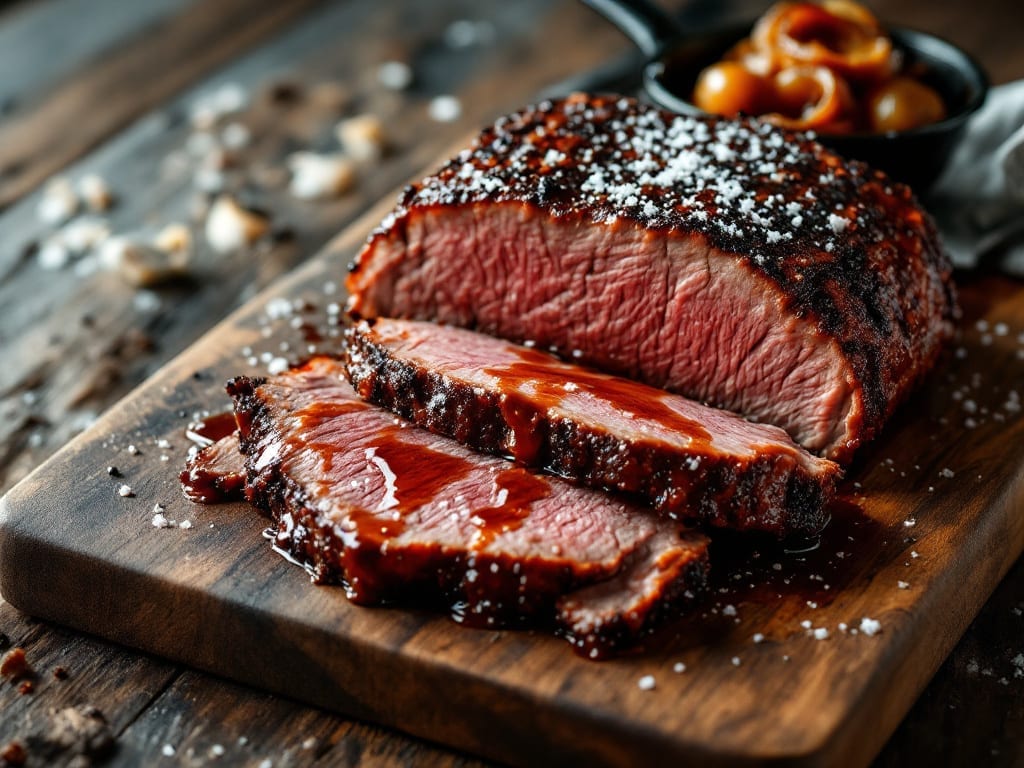
Masterbuilt smoker beef brisket transforms tough cuts into melt-in-your-mouth perfection when you nail the bark-to-meat ratio—this is where the magic happens. 💫 I spent years perfecting the technique, and the key lies in precise temperature control, proper trimming, and understanding how your Masterbuilt’s pellet system behaves during long smokes.
The secret starts with a clean trim—removing excess fat while preserving just enough to render into flavorful bark. Then, a dry rub of coarse salt, black pepper, and smoked paprika creates that coveted crust while keeping the interior tender.
Your Masterbuilt’s ability to maintain steady temps (225°F) and control humidity means you won’t fight temperature swings that ruin brisket.
By the time you slice against the grain, you’ll have perfectly tender meat with a deep mahogany bark that cracks under pressure. The internal temp should hit 203°F, where collagen breaks down into gelatin, creating that irresistible juiciness.
This isn’t just brisket—it’s a showstopper that’ll have guests asking for seconds before the plate is empty.
Serve with classic sides like smoked mac and cheese or pickled jalapeños to cut through the richness. The beauty of this method is its flexibility—you can adapt it for pulled pork or even ribs by adjusting the cook time. Let’s get smoking!
Ingredients for masterbuilt smoker beef brisket
Six ingredients transform tough brisket into showstopping smoker magic—focus on quality cuts and precise rub ratios.
| Ingredient | Amount | Notes |
|---|---|---|
| Beef Brisket 🥩 | 6 lb | Packer cut, fat cap intact |
| Coarse Kosher Salt 🧂 | ½ cup | Diamond Crystal preferred |
| Ground Black Pepper 🌶️ | 2 tbsp | Freshly cracked preferred |
| Smoked Paprika 🌶️ | 2 tbsp | High-quality, not sweet |
| Granulated Garlic 🧄 | 1 tbsp | Not garlic powder |
| Onion Powder 🧅 | 1 tbsp | Finely ground |
| Brown Sugar 🍯 | 1 tbsp | Light or dark |
| Mustard Powder 🍯 | 1 tsp | For subtle tang |
| Yellow Mustard 🍯 | ¼ cup | For finishing glaze |
| Apple Cider Vinegar 🍎 | ¼ cup | For glaze acidity |
| Hickory Wood Pellets 🌳 | 4 lb | Masterbuilt compatible |
| Spring Water 💧 | 2 cups | For spritzing during cook |
| Beef Tallow or Bacon Fat 🥓 | ½ cup | For extra bark richness |
| Fresh Thyme Sprigs 🌿 | 4 whole | For aroma during cook |
[recipe_ingredient_scaler]
The brisket cut is everything. Packer cut with intact fat cap from Costco or local butchers gives you the best balance of fat for flavor and lean for texture. Look for bright red color and good marbling—this isn’t the time for lean cuts. I always trim the brisket myself to remove just the hard fat, leaving about 1/4-inch fat cap. Masterbuilt’s pellet system handles the rest once you’ve got the right cut. For the rub, Diamond Crystal kosher salt dissolves differently than table salt—trust me on this. The smoked paprika should be deep red, not orange, indicating higher smoke content. Grab it from Penzeys or bulk bins if you want to splurge.
No smoked paprika? Regular paprika plus a pinch of liquid smoke works in a pinch. Short on brown sugar? White sugar is fine, though it won’t caramelize as nicely. The mustard powder adds subtle depth—skip it if you’re using yellow mustard in the glaze. For the glaze, Dijon mustard can replace yellow, but you’ll need to adjust the vinegar ratio. The hickory pellets are non-negotiable for authentic flavor, but oak or cherry pellets work beautifully too if you want to experiment. The tallow or bacon fat? Render your own bacon fat if you’re feeling ambitious—it’s worth the extra effort for that restaurant-quality bark.
This brisket develops flavor over time—plan for 12-16 hours of cooking. Spritz every 2-3 hours with the apple cider vinegar-water mix to keep the surface moist without breaking the bark. The internal temp should hit 203°F before resting. Wrap the brisket in butcher paper during the stall (around 165°F) to help it push through. Leftovers keep for 5-6 days in the fridge, but honestly, they won’t last that long. Freeze portions for up to 3 months if you’re making a big batch for gatherings.
Why You’ll Love This Recipe
- No-Fuss Setup: The Masterbuilt handles all the work—just season that brisket with kosher salt and smoked paprika, set the temp, and walk away. No babysitting, no stress, no guessing. (Honestly, my lazy Sundays just got better.)
- Smoke-Infused Magic: That deep, smoky aroma from the Masterbuilt? It turns tough brisket into something tender and rich, with just a hint of garlic and pepper to keep it bright. The crust alone makes me want seconds.
- Budget-Buster for Big Meals: A whole brisket for less than $10? Yes, please. The Masterbuilt stretches it effortlessly, and the simple seasoning keeps costs low. (Between us, this is how I feed my book club without crying.)
Step-by-step instructions for Masterbuilt smoker beef brisket
Here’s the foolproof method I’ve perfected for that legendary bark-to-meat perfection.
🔥 Step 1: Prepare the Brisket with the Dry Rub
Start by removing the 6 lb Beef Brisket from the fridge and patting it dry with paper towels. You want it completely dry—this ensures maximum bark adhesion. Trim the fat cap to about ¼-inch thickness, leaving enough to protect the meat during smoking but not so much that it prevents proper smoke penetration.
In a small bowl, combine 0.5 cup Coarse Kosher Salt, 2 tbsp Ground Black Pepper, 2 tbsp Smoked Paprika, 1 tbsp Granulated Garlic, 1 tbsp Onion Powder, 1 tbsp Brown Sugar, and 1 tsp Mustard Powder. Mix thoroughly until you have a fine, even blend. This is your bark-building rub—don’t skip the mustard powder, as it adds subtle depth that elevates the flavor profile.
Generously coat the brisket with the rub, pressing it firmly into all surfaces, including the fat cap. Place the brisket on a wire rack set over a baking sheet and refrigerate for 1 hour. This resting period allows the rub to penetrate the meat and creates that coveted crust when it hits the smoker. Real talk: if you skip this step, your bark will be lackluster at best.
🔥 Step 2: Set Up the Masterbuilt Smoker for Low-and-Slow Magic
Fill the Masterbuilt smoker with 4 lb Hickory Wood Pellets—this is the backbone of your flavor profile. Add 2 cups Spring Water to the water pan (if your model includes one) to maintain moisture in the cooking chamber. Preheat the smoker to 225°F and let it stabilize for 15 minutes until you see clean, blue smoke (not thick white steam).
Once the smoker reaches temperature, place the brisket fat-side up on the grill grate. The fat will render slowly and baste the meat, creating that irresistible bark. Insert a meat probe into the thickest part of the brisket—this is your best friend for tracking progress. Close the lid and resist the urge to peek. Every time you open it, you lose heat and moisture, adding 15-20 minutes to your cook time. I know it’s tempting, but trust the process.
🥘 Step 3: Spritz and Monitor the Bark Development
After 2 hours of smoking, it’s time for the first spritz. In a small bowl, whisk together 0.25 cup Yellow Mustard and 0.25 cup Apple Cider Vinegar—this becomes your bark-enhancing glaze. Spritz the brisket generously with this mixture every hour for the next 6 hours. The acidity in the vinegar helps tenderize the meat while the mustard adds a subtle tang that cuts through the richness. You’ll notice the bark starting to darken and develop a glossy sheen—this is your visual cue that the process is working.
Here’s where the 0.5 cup Beef Tallow or Bacon Fat comes into play. After the 6-hour mark, brush the fat generously over the brisket, focusing on the areas where the bark isn’t as developed. The fat will render and create a deeper, more complex bark layer. Add the 4 whole Fresh Thyme Sprigs to the smoker now—their aroma will infuse the final stages of the cook, adding an herbal note that complements the smoky profile.
⏰ Step 4: The Stall and Wrap for Maximum Tenderness
Around the 6-8 hour mark, you’ll hit “the stall”—the point where the internal temperature plateaus around 165-170°F. This is completely normal and happens as moisture evaporates from the meat. Don’t panic or rush it; this is where patience pays off. When the stall occurs, wrap the brisket tightly in butcher paper (not foil—paper allows for better bark retention while keeping the meat moist). This technique, known as the “Texas crutch,” helps you power through the stall without sacrificing that precious bark.
Return the wrapped brisket to the smoker and continue cooking until the internal temperature reaches 200-205°F and a probe slides in like butter. This usually takes another 4-6 hours, but don’t rush it. The probe test is more reliable than the thermometer—you’re aiming for fork-tender meat, not just a temperature reading. Your oven might run hot, so start checking at the 20-minute mark before the target temperature to avoid overcooking.
🍽️ Step 5: Rest and Slice for Showstopping Results
Once the brisket reaches the perfect internal temperature, remove it from the smoker and place it on a cutting board. Tent loosely with foil and let it rest for 1 hour (I prefer 2 hours if you can wait). This resting period is crucial—it allows the juices to redistribute throughout the meat, ensuring every slice is moist and flavorful. If you skip this, you’ll end up with dry, disappointing results. Trust me, it’s worth the wait.
After resting, locate the grain direction—you’ll see lines running through the meat. Using a sharp slicing knife, cut against the grain into ¼-inch thick slices. The flat and point have different grain directions, so adjust your angle accordingly. Serve immediately while still warm. Each slice should have a dark, mahogany bark on the outside, a beautiful pink smoke ring just beneath, and meat that’s so tender it practically melts in your mouth. This is the moment you’ve been working toward—enjoy every bite!
Pro Tips For Making Masterbuilt Smoker Beef Brisket
- Trim the Fat Cap: That thick layer of fat on the deckle side? Don’t fight it—leave it intact. It renders down into flavor gold during smoking, and if you cut it off, you’re tossing away the brisket’s natural moisture shield. (Yes, even if your Masterbuilt’s probe makes it look like you’re cooking a slab of butter.)
- Salt the Night Before: I used to salt briskets right before smoking, but the crust never formed right. Now I salt mine 12–24 hours ahead—let that coarse kosher salt work its magic, drawing out moisture so the surface dries and crusts properly. Pro tip: Pat it dry before smoking, or you’ll end up with a soggy bark.
- Watch the Probe Placement: That Masterbuilt probe might be reading 203°F internal temp, but if it’s buried in fat instead of the thickest part of the flat, you’ll pull it early. Insert the probe into the flat (not the point cut) and aim for the center—where it’s thickest and slowest to cook. (I learned this after serving a brisket that was still tough in the middle.)
- Spritz with Apple Juice: Skip the water—it dilutes the flavor. Instead, spritz every 2–3 hours with a mix of apple juice and a pinch of smoked paprika. The sugar in the juice caramelizes for extra bark, while the paprika deepens the smoky flavor without overpowering. (I was skeptical until I tried it—now I won’t go back.)
Creative variations of this masterbuilt smoker beef brisket
Texas-Style Smoked
The classic approach uses only salt and black pepper for the rub, letting the hickory smoke shine. I trim the brisket aggressively—down to ¼-inch fat cap—and smoke it uncovered until the bark is deep mahogany. The key difference?
No spritzing or wrapping until 165°F internal temp, then tight butcher paper for 2-3 more hours to 203°F. This method creates that iconic Texas BBQ texture where the bark is almost brittle but the meat inside is fork-tender. 🔥
Cajun-Inspired
Swap the rub for 1 tbsp each of cayenne, garlic powder, onion powder, and paprika, plus 1 tsp thyme and oregano. Add 1 tbsp brown sugar for balance. Spritz with a mix of apple cider vinegar and hot sauce every 2 hours after the initial 4-hour smoke.
The Cajun twist brings heat that pairs perfectly with the smoky depth. I serve this with creamy corn maque choux to cool the palate. 🌶️
Brown Sugar & Coffee
This Pacific Northwest favorite adds ¼ cup finely ground coffee and ¼ cup dark brown sugar to the rub. The coffee deepens the bark’s complexity while the sugar creates a glossy, caramelized crust.
I use cherry wood pellets instead of hickory for a fruitier smoke profile. The result? A brisket with notes of chocolate and espresso that’s perfect for fall gatherings. 🌟
Spicy Honey Glaze
After the initial 6-hour smoke, brush the brisket with a mix of ½ cup honey, 2 tbsp hot sauce, and 1 tbsp soy sauce. Return to the smoker for 1 more hour to caramelize the glaze.
The honey creates a sticky, sweet bark while the hot sauce adds heat. This variation works beautifully with applewood pellets for a sweeter smoke profile. I garnish with sliced scallions right before serving. 🍯
Beer-Can Brisket
For a juicier interior, place 2 cans of beer (I use Shiner Bock) in the smoker’s water pan. The beer’s steam keeps the meat incredibly moist while infusing subtle malt flavors.
Use a light rub—just 1 tbsp salt, 1 tbsp black pepper, and 1 tbsp smoked paprika—since the beer adds enough flavor. This method cuts total cook time by 1-2 hours while maintaining tenderness. 🍺
Smoked Gouda Crust
After reaching 165°F internal temp, wrap the brisket in butcher paper with 4 oz smoked Gouda cheese tucked inside. Return to the smoker for 1 more hour until 203°F. The cheese melts into the meat, creating a creamy, savory crust.
I finish with a sprinkle of fresh thyme and cracked black pepper. This luxurious variation is perfect for holiday feasts. 🧀
Nutrition facts
Frequently asked questions
How do I know when my brisket is ready to wrap during the stall?
Look for the internal temperature to plateau around 165-170°F for at least 30-45 minutes. This is your stall signal. The Masterbuilt’s consistent 225°F temp makes this easier to spot than with other smokers. Wrap tightly in butcher paper when you see this stall—don’t wait too long, or you’ll lose that precious bark development.
Can I use foil instead of butcher paper for wrapping?
Foil will work in a pinch, but it creates steam that softens the bark and makes the meat slightly more moist than dry. Butcher paper is ideal because it allows some moisture to escape while keeping the meat tender. If you must use foil, poke a few holes to prevent a complete steam bath. The difference in texture is noticeable—paper gives you that perfect balance of moisture and bark.
What’s the best way to store leftovers without drying them out?
Let the brisket cool completely, then slice it against the grain and store in an airtight container with a thin layer of beef broth or bacon fat on top. Reheat in a 275°F oven for 15-20 minutes until warmed through. For longer storage, freeze portions in 1-inch thick slices with parchment paper between layers. The fat helps preserve moisture and flavor for up to 3 months in the freezer.
Why does my brisket sometimes turn out dry even at the right temperature?
Overcooking is the most common culprit—don’t let it exceed 205°F internal temp. Another issue is opening the smoker too often, which causes moisture loss. Your Masterbuilt’s pellet system should maintain steady temps, but check for drafts or uneven heat distribution. Also, make sure to rest the brisket for at least 1 hour before slicing—juices need time to redistribute. If it’s still dry, try the beer-can method next time for extra moisture.
How can I adjust this recipe for a smaller brisket (like 4 lbs)?
Reduce all seasonings by about 25% and use 2 tbsp hickory pellets instead of 4 lbs. Cook at the same 225°F but expect a 2-3 hour shorter total time. The smaller surface area means less bark development, so spritz more frequently (every hour) to compensate. A 4 lb brisket will yield about 4-6 servings instead of 6-8. The key is maintaining the same low-and-slow approach—just scaled down.

Trained in classic French technique but raised on slow-cooked ribs and spicy rubs, she blends culinary skill with smoke and soul.
- Masterbuilt Smoker Beef Brisket Recipe: Bark-To-Meat Ratio Hack for Unmatched Flavor - October 15, 2026
- Costco Beef Brisket Recipe: Low-and-Slow Masterpiece With Molasses-Kissed Crust - October 15, 2026
- Smoked Herring Recipe: Scandinavian-Style With Dill and Mustard Cream - October 15, 2026