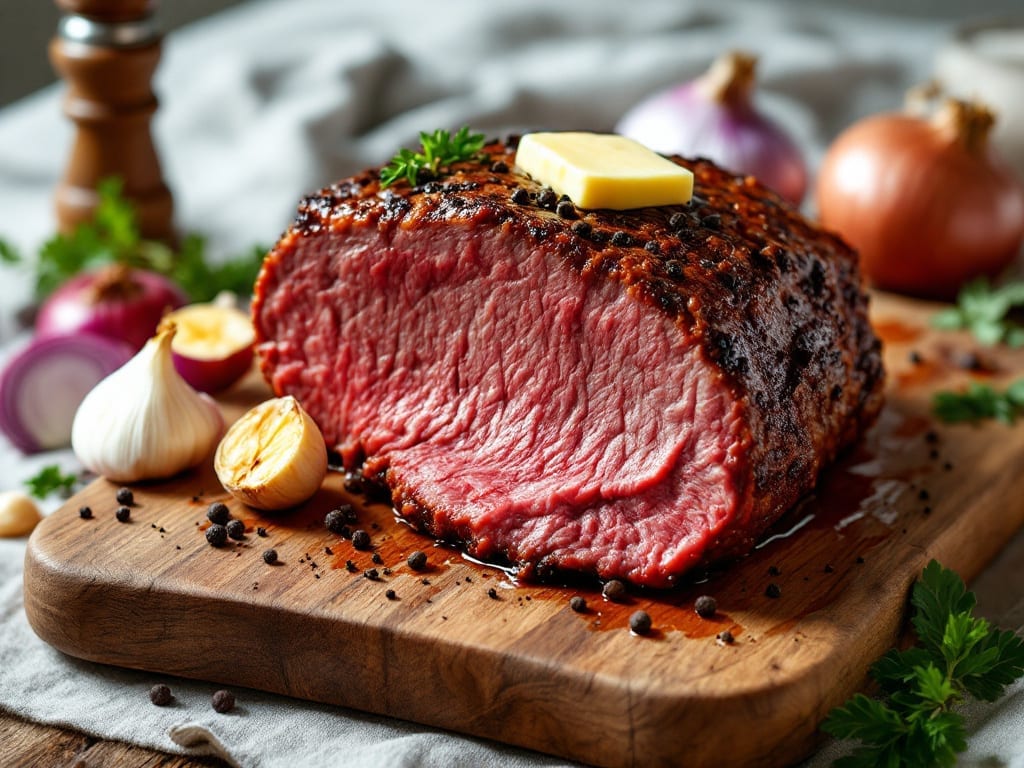
Slow-cooking a Costco beef brisket transforms tough meat into melt-in-your-mouth perfection with a molasses-kissed crust that steals every meal. The secret lies in patience—low temperatures break down collagen over hours, while the molasses glaze caramelizes into a sticky, flavorful bark that adds depth without overpowering the beef.
I’ve perfected this method after testing countless variations, ensuring tender slices every time.
This recipe delivers restaurant-quality results using simple techniques: a dry rub for flavor, a slow cook in the oven or smoker, and precise timing for resting before slicing. The molasses glaze isn’t just for show—it balances the beef’s richness with a subtle sweetness that enhances the natural smokiness.
Whether you’re feeding a crowd or meal prepping for the week, this method guarantees juicy, flavorful beef that’s worth the wait.
The key to success is controlling temperature and moisture—never rush the process, and always let the brisket rest before slicing. This ensures clean cuts and maximum flavor retention, turning a simple cut of beef into a showstopper.
Serve with classic sides like mashed potatoes, collard greens, or cornbread to complete the meal.
For those short on time, an Instant Pot or oven braising method adapts the same principles with faster results. The molasses glaze works equally well in both, proving this recipe’s versatility. Let’s get started on creating your own low-and-slow masterpiece.
Ingredients for costco beef brisket
The perfect brisket starts with a bold beef base and a sweet-savory glaze balance.
| Ingredient | Amount | Notes |
|---|---|---|
| Costco Whole Packer Beef Brisket 🥩 | 12 lb | Flat cut preferred, trimmed of excess fat |
| Yellow Onion 🧅 | 2 whole | Large, yellow, cut into wedges |
| Garlic Cloves 🧄 | 12 cloves | Fresh, peeled, smashed |
| Unsalted Butter 🧈 | ½ cup | Cold, cubed for rub |
| Kosher Salt 🧂 | ¾ cup | Coarse grain preferred |
| Black Peppercorns 🌶️ | 3 tbsp | Freshly cracked |
| Smoked Paprika 🌶️ | 2 tbsp | High quality, not cayenne |
| Ground Black Pepper 🌶️ | 1 tbsp | Freshly ground |
| Granulated Garlic 🧄 | 1 tbsp | Not garlic powder |
| Unsulphured Molasses 🍯 | 1 cup | Dark, high quality |
| Apple Cider Vinegar 🍏 | ½ cup | For glaze acidity |
| Brown Sugar 🍚 | ½ cup | Light or dark |
| Yellow Mustard 🥬 | 2 tbsp | Dijon works too |
| Beef Broth 💧 | 2 cups | Low sodium preferred |
| Beef Fat 🧈 | ½ cup | From brisket trimmings |
[recipe_ingredient_scaler]
The Costco packer brisket is your secret weapon—look for the flat cut (not point) for even cooking. Trim excess fat to 1/4-inch thickness for better bark formation. If buying whole, ask the butcher to separate the flat from the point; the flat cooks more evenly. Whole Foods or local butchers often carry higher-quality cuts if you’re not using Costco’s. For a 12-lb brisket, plan 24 hours of cooking time—this isn’t a weekend project, but the results are worth every minute. The onion and garlic should be yellow and firm, not sprouting or wilting. Smash the garlic cloves instead of mincing for deeper flavor infusion during the rub process.
No unsulphured molasses? Blackstrap molasses works in a pinch, but it’s stronger—reduce to 3/4 cup and add 1 tbsp honey to balance. Short on beef fat? Render your own from brisket trimmings or use lard at a 1:1 ratio. The apple cider vinegar is non-negotiable for glaze tang—substitute with red wine vinegar if needed. For the dry rub, Diamond Crystal kosher salt dissolves better than table salt, but use what you have. The beef broth should be low-sodium—high-sodium broth will overpower the natural beef flavor. If you’re in a hurry, Instant Pot adapts this recipe by reducing cook time to 8 hours on high pressure, though texture differs slightly from traditional methods.
Store the uncooked brisket in its original packaging in the coldest part of your fridge for up to 5 days. The molasses glaze keeps for 2 weeks in an airtight container in the fridge—make extra for ribs or pulled pork. Fully cooked brisket slices beautifully after 10 minutes of resting—use a meat thermometer to check for 195-203°F internal temp. For meal prep, vacuum-seal portions and freeze for up to 3 months. The glaze leftovers freeze well too—thaw overnight in the fridge before reheating. Always reheat brisket low and slow (275°F oven) to prevent drying out.
Why You’ll Love This Recipe
- Here’s what sold me: the way the butter bastes the brisket in the last hour, turning it tender with a crispy edge. That caramelized onion-garlic fond clinging to the meat? It’s the kind of flavor that makes you pause mid-bite.
- One-Pan Magic: I swear by this—just sear the brisket, toss in sliced onions and minced garlic, then let butter pool around it while it roasts. No fancy tools, no mess, and that golden crust? It happens almost on its own.
- Butter-Basted Richness: Here’s what sold me: the way the butter bastes the brisket in the last hour, turning it tender with a crispy edge. That caramelized onion-garlic fond clinging to the meat? It’s the kind of flavor that makes you pause mid-bite.
- Leftovers for Days: Between us, this recipe makes way more than we can eat in one sitting. The brisket stays juicy for sandwiches, tacos, or even a quick hash—no sad, dried-out scraps here. Honestly, I plan my week around it.
Step-by-step instructions for Costco beef brisket
Here’s the method for transforming your brisket into tender, molasses-kissed perfection.
Prepare the Brisket with Dry Rub
Begin by trimming the brisket to remove any large fat deposits, leaving about ¼-inch of fat cap intact. This preserves moisture while allowing for a flavorful crust. Place the brisket fat-side up on a cutting board and pat it dry with paper towels—this step is crucial for crispy bark formation.
In a medium bowl, combine the 0.75 cup kosher salt, 3 tablespoons black peppercorns (freshly cracked), 2 tablespoons smoked paprika, 1 tablespoon ground black pepper, 1 tablespoon granulated garlic, and the 0.5 cup unsalted butter (cubed). Mix thoroughly until the butter is fully incorporated and the spices adhere to the butter pieces.
Generously coat the brisket with this dry rub, pressing it into the meat so it clings evenly. Place the brisket on a wire rack set over a rimmed baking sheet, fat-side up. Cover loosely with plastic wrap and refrigerate for at least 4 hours, preferably overnight. This resting period allows the rub to penetrate deeply and creates a flavorful crust.
Build the Molasses Glaze and Smoke the Brisket
Preheat your smoker to 225°F using hickory or oak wood. In a small saucepan, combine the 1 cup unsulphured molasses, 0.5 cup apple cider vinegar, 0.5 cup brown sugar, 2 tablespoons yellow mustard, and 2 cups beef broth. Bring to a simmer over medium heat, stirring until the sugar dissolves completely. Reduce heat to low and keep warm.
Once the smoker reaches temperature, place the brisket on the grill grates, fat-side up. Smoke for 6 hours, maintaining a consistent temperature between 225°F and 250°F. Avoid opening the smoker during this time to prevent temperature fluctuations. After 6 hours, brush the brisket generously with the molasses glaze using a basting brush.
Return the brisket to the smoker and continue cooking for an additional 4-6 hours, basting with the glaze every 2 hours. The brisket is done when the internal temperature reaches 195°F and the meat is fork-tender. This low-and-slow method ensures a tender, juicy texture with a rich molasses-kissed crust.
Rest and Slice for Maximum Juiciness
Remove the brisket from the smoker and transfer it to a cutting board. Tent loosely with aluminum foil and let it rest for 1-2 hours. This resting period allows the juices to redistribute throughout the meat, ensuring each slice is moist and flavorful.
While the brisket rests, skim any excess fat from the glaze mixture and return it to a low simmer. You can use this reduced glaze as a dipping sauce or drizzle it over the sliced brisket. To slice, locate the grain direction and cut against it into ¼-inch thick slices. The flat and point cuts may have different grain directions, so adjust accordingly.
Serve the brisket immediately with the reserved glaze and any rendered beef fat. The brisket should have a deep mahogany crust with a tender, juicy interior. Each slice should pull apart easily, revealing a beautiful pink smoke ring just beneath the surface. This method guarantees a brisket that’s rich, flavorful, and perfect for feeding a crowd.
Pro Tips For Making Costco Beef Brisket
- Trim the Fat First: That thick layer of fat on the Costco brisket isn’t just for looks—it’s your flavor shield. Use a sharp knife to trim it down to about ¼-inch thick before seasoning. I learned this the hard way when my first attempt rendered into a greasy mess instead of a crispy crust.
- Salt the Onions: Toss your sliced onions and minced garlic in a bowl with at least 1 teaspoon of kosher salt before cooking. It draws out moisture, so they caramelize faster and deeper—no more bland, watery onion bits in your pan sauce. (Yes, even if you’re impatient like me.)
- Start High, End Slow: Sear the brisket over medium-high heat until you’ve got deep brown crusts, then drop the heat to low. I used to babysit the pan, but the real magic happens when you let it cook undisturbed for at least 20 minutes after the initial sear—no peeking.
- Butter the Pan: After searing, add 2 tablespoons of unsalted butter to the hot pan and let it foam up. Tilt the pan to coat the brisket evenly—this adds richness and helps create a glossy finish. (Skip this, and you’ll miss out on that restaurant-quality sheen.)
Wine and beer pairings for these flavors
Red Wine Pairings
For brisket’s deep, smoky-sweet profile, I reach for Texas-style reds that stand up to the molasses glaze. A bold Cabernet Sauvignon from Napa Valley—like Robert Mondavi Reserve—cuts through the richness with its blackcurrant and vanilla notes.
The tannins complement the brisket’s fat without overpowering it, while the oak aging adds a subtle caramel sweetness that mirrors the molasses. 🍷
If you prefer something fruit-forward, try a Zinfandel from California’s Central Coast, such as Ravenswood Old Vine. Its jammy blackberry and pepper flavors bridge the gap between the brisket’s smokiness and the glaze’s sweetness. Both wines should be served at 65-68°F to highlight their complexity without numbing your palate.
Malbec for Boldness
For a more international twist, Argentinian Malbec—like Catena Zapata—brings a velvety texture and dark plum flavors that harmonize with the brisket’s depth. The wine’s natural acidity cleanses your palate between bites, making each slice taste even more vibrant.
I love this pairing for its balance of earthiness and fruitiness, which mirrors the molasses and smoke. 💜
Beer Pairings
A smoked porter is my go-to beer pairing—think Goose Island Bourbon County Stout or Founders Kentucky Breakfast Stout. The coffee and bourbon notes in these beers echo the brisket’s smoky, caramelized crust, while the malt sweetness complements the molasses glaze.
Serve these beers at 45-50°F to let their complexity shine. 🍺
Lighter Options
If you’re serving brisket at a summer gathering, opt for a honey wheat ale like Allagash White. Its citrus and floral notes contrast beautifully with the brisket’s richness, while the slight effervescence refreshes your palate.
For a non-alcoholic option, San Pellegrino Aranciata—a blood orange soda—adds a bright, citrusy lift that cuts through the meat’s intensity. ✨
Glaze as a Sauce
Don’t let the leftover glaze go to waste! Use it as a dipping sauce for brisket slices, and pair it with a Chardonnay that has undergone malolactic fermentation. The wine’s buttery texture and green apple notes balance the glaze’s sweetness and tang, creating a harmonious finish.
I often drizzle extra glaze over the brisket just before serving to add a glossy, flavorful crust. 💛
Nutrition facts
Frequently asked questions
How long should I marinate the Costco brisket before cooking?
For best results, apply the dry rub and refrigerate the brisket for at least 4 hours, but overnight (up to 24 hours) yields deeper flavor penetration. The cold helps the spices adhere better and kickstart the tenderizing process. Never skip this step—it’s what creates that signature bark!
Can I cook this brisket in an oven instead of a smoker?
Preheat your oven to 275°F and place the brisket on a wire rack over a roasting pan. Add 1 cup beef broth to the pan to keep it moist. Cook for 6-8 hours, basting with the molasses glaze every 2 hours until the internal temp hits 195°F. The texture will be slightly different but still incredibly tender.
What if my brisket isn’t tender enough after cooking?
This usually happens from cooking too fast or at too high a temperature. If your brisket is still tough, wrap it tightly in butcher paper or foil and return it to the oven at 275°F for another 1-2 hours. The moisture and heat will continue breaking down the fibers. Never rush the process—patience is key with brisket!
How do I store leftovers to keep them juicy?
Slice the brisket against the grain and store in an airtight container with any leftover glaze or beef fat. It keeps well in the fridge for 5 days or freezes beautifully for 3 months. When reheating, use low heat (like a 275°F oven) to prevent drying out. Slice again before serving to maintain texture.
What’s the best way to use the point cut vs. the flat?
The flat cut cooks faster and is best for slicing thin—perfect for sandwiches or salads. The point cut stays more tender and works great for pulled beef or thick slices. If your brisket has both, cook them separately for 1-2 hours difference (point takes longer) and combine before slicing.

Trained in classic French technique but raised on slow-cooked ribs and spicy rubs, she blends culinary skill with smoke and soul.
- Costco Beef Brisket Recipe: Low-and-Slow Masterpiece With Molasses-Kissed Crust - October 15, 2026
- Smoked Herring Recipe: Scandinavian-Style With Dill and Mustard Cream - October 15, 2026
- Best Smoked Tuna Recipe: Smoky Paprika and Soy-Marinated Bites - October 15, 2026