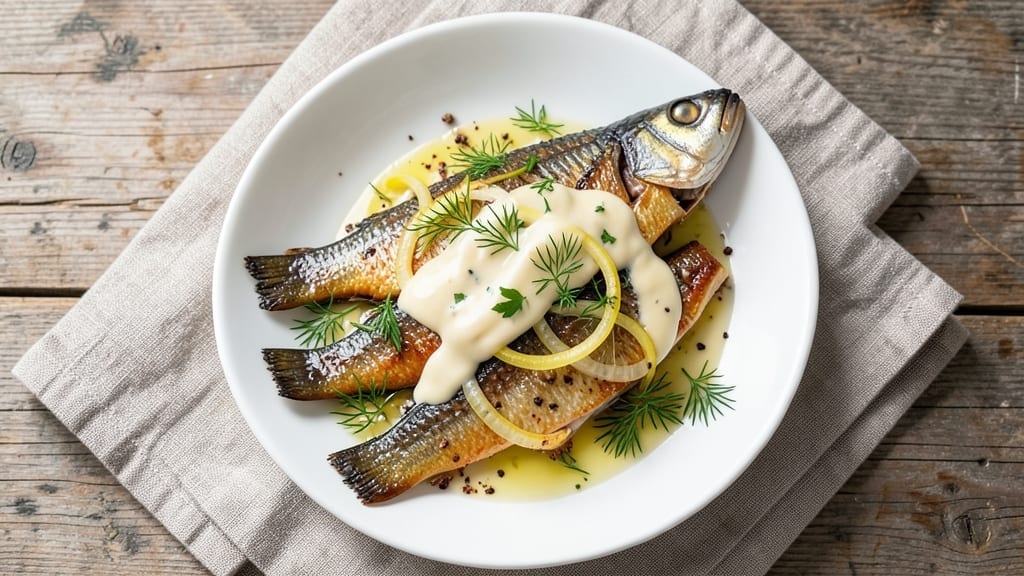
This Scandinavian-style smoked herring recipe transforms a traditional Nordic delicacy into a restaurant-worthy centerpiece that’s surprisingly simple to prepare at home.
After years of perfecting my grandmother’s Sunday roast chicken, I discovered how the same principles—gentle seasoning and precise timing—apply to smoked fish, creating a dish that’s both elegant and approachable.
The key lies in balancing the rich, smoky depth of the herring with bright dill and a tangy mustard cream that cuts through the richness.
The recipe builds on classic Scandinavian techniques while adapting them for modern home kitchens. You’ll start with high-quality smoked herring—whether store-bought or freshly smoked—and pair it with a creamy mustard-dill sauce that adds a luxurious touch.
The process requires just 15 minutes of active prep, making it ideal for weeknight dinners or weekend entertaining when you want to impress without spending hours in the kitchen.
What you’ll end up with is a dish that’s visually stunning and deeply satisfying—golden herring fillets resting on a bed of crisp onions, drizzled with that velvety mustard cream.
The contrast of textures and flavors creates a perfect balance: the herring’s smoky richness, the dill’s fresh herbal notes, and the mustard’s sharp tang all come together in every bite. It’s the kind of meal that feels special without requiring advanced skills.
Serve this recipe with crusty rye bread to soak up every last drop of sauce, or pair it with a simple green salad for a complete Scandinavian-inspired meal. The leftovers keep beautifully in the refrigerator for up to 3 days, making this an excellent make-ahead option for gatherings.
Let’s bring this Nordic classic to your table with confidence.
Ingredients for smoked herring
Nordic flavors meet modern simplicity with these 12 ingredients for restaurant-worthy smoked herring.
| Ingredient | Amount | Notes |
|---|---|---|
| Smoked Herring Fillets 🐟 | 12 oz | High-quality, skin-on preferred |
| Fresh Dill 🌿 | ½ cup | Finely chopped, stems removed |
| Yellow Onion 🧅 | 1 whole | Thinly sliced, white or yellow |
| Dijon Mustard 🍯 | 2 tbsp | High-quality, smooth variety |
| Heavy Whipping Cream 🥛 | ½ cup | Full-fat for best texture |
| Extra-Virgin Olive Oil 🫒 | 2 tbsp | For crisping onions |
| Lemon Juice 🍋 | 1 tbsp | Freshly squeezed |
| Fresh Chives 🌱 | 2 tbsp | Minced, for garnish |
| Diamond Crystal Kosher Salt 🧂 | ½ tsp | For seasoning |
| Freshly Ground Black Pepper 🌶️ | ¼ tsp | Light hand, freshly cracked |
| Crusty Rye Bread 🍞 | 8 slices | For serving |
| Unsalted Butter 🧈 | 1 tbsp | For topping herring |
[recipe_ingredient_scaler]
The herring is everything here—look for skin-on fillets at specialty markets or Nordic grocery stores like Nordic Warehouse. If using store-bought, check for bright red gills and firm flesh—those are your quality indicators. I always buy extra because the leftovers make perfect sandwiches. For the dill, fresh is non-negotiable—dried just won’t cut it. The onions? Sweet yellows caramelize better than reds for this dish, but white works too. Grab a bag from Trader Joe’s if you want them pre-sliced—saves time without sacrificing quality.
No fresh dill? Dried dill at one-third the amount works in a pinch, but it’ll lack that bright Nordic freshness. Substituting the mustard? Whole-grain mustard adds texture, but Dijon is key for that signature tang. The cream can be swapped for Greek yogurt if you’re watching fat, though it’ll be lighter. For the herring, if you can’t find smoked, cold-smoked salmon is your best bet—just reduce cooking time. The butter on top? Brown it slightly for extra flavor—takes 30 seconds in a pan.
This dish shines when prepped ahead. Store the herring and sauce separately in airtight containers for up to 3 days—the flavors actually deepen overnight. Reheat the sauce gently (no boiling!) and crisp the herring in a hot pan for 30 seconds per side. The rye bread? Toast it fresh before serving to keep it crisp. Leftovers? Wrap the herring tightly in parchment and freeze for up to 2 months—thaw in the fridge overnight for best results.
Why You’ll Love This Recipe
- Five-Ingredient Magic: Honestly, I swear by this recipe because it’s that simple—just herring, dill, onion, mustard, and cream. No fancy techniques, no last-minute grocery runs. The onions caramelize while you mix the mustard and cream, and boom, dinner’s ready.
- Creamy-Smoky Bliss: That balance of smoky herring, bright dill, and tangy Dijon wrapped in velvety cream? It’s the kind of flavor that makes you pause mid-bite. The herring’s natural richness plays perfectly with the sharpness, and the onions add just enough sweetness to tie it all together.
- Weeknight or Weekend Star: Between us, this dish works for everything—a quick weeknight supper, a showstopper for guests, or even a lazy Sunday brunch. Double the batch, and you’ve got leftovers that taste just as good reheated (or cold, straight from the fridge).
- Budget-Friendly Luxury: Smoked herring is a steal compared to fresh fish, and you’re using minimal ingredients for maximum impact. The cream makes it feel indulgent, but the cost stays low—perfect for when you want something special without breaking the bank. Plus, it stretches easily into salads or sandwiches.
Step-by-step instructions for Scandinavian-style smoked herring
Here’s how to transform simple ingredients into a restaurant-worthy Scandinavian open-faced sandwich.
Prepare the Mustard Cream Sauce
In a medium bowl, combine the 0.5 cup heavy whipping cream with the 2 tablespoons Dijon mustard and 0.5 teaspoon Diamond Crystal kosher salt. Whisk vigorously until the mixture becomes smooth and fully emulsified—this should take about 1 minute of continuous whisking. The sauce should thicken slightly and develop a pale, creamy consistency.
Here’s the thing—don’t rush this step. The mustard needs to fully incorporate into the cream to create that signature tangy richness. If the mixture looks streaky after whisking, add 1 teaspoon cold water and whisk again until smooth. This sauce is the foundation of your dish, so take the time to get it right.
Sauté the Onions and Dill
Heat the 2 tablespoons extra-virgin olive oil in a small skillet over medium heat. Add the 1 whole yellow onion, sliced thinly, and cook for 8-10 minutes until the onions are golden brown and caramelized at the edges. You’ll know they’re ready when they release easily from the pan and have a deep, sweet aroma.
During the last 2 minutes of cooking, stir in the 0.5 cup finely chopped fresh dill. The dill will wilt slightly and release its bright, herbal fragrance—this is when the dish starts to come together. Remove the skillet from heat and let the mixture cool for 3 minutes before combining with the mustard cream sauce. The warm onions will help infuse the dill’s flavor into the cream.
Assemble the Herring Mixture
In a separate bowl, gently fold the cooled onion-dill mixture into the mustard cream sauce. Add the 1 tablespoon freshly squeezed lemon juice and 0.25 teaspoon freshly ground black pepper, mixing just until combined. The lemon juice will brighten the flavors and cut through the richness of the cream.
Now, carefully add the 12 ounces smoked herring fillets, skin-side down if using skin-on fillets. Using a fork, gently flake the herring into the sauce, being careful not to break it into tiny pieces. The herring should be distributed evenly throughout the mixture, with some larger flakes visible for texture. Let this sit at room temperature for 10 minutes to allow the flavors to meld.
Toast the Rye Bread
While the herring mixture rests, prepare the 8 slices crusty rye bread by toasting them in a dry skillet over medium heat for 1-2 minutes per side until they’re golden brown and crisp. The bread should develop a deep, toasty aroma and a slight char in spots—this is essential for holding up to the creamy topping.
Here’s where it gets fun—while the bread is still warm, spread a thin layer of the 1 tablespoon unsalted butter on each slice using the back of a butter knife. The butter will melt slightly and create a rich, velvety base for the herring mixture. Let the butter cool for 1 minute before proceeding to the final assembly.
Final Assembly and Serving
Spoon the herring mixture generously onto each toasted rye slice, creating an even layer that covers the entire surface. The mixture should be thick enough to stay on the bread without sliding off. Garnish each sandwich with the 2 tablespoons minced fresh chives, sprinkling them evenly over the top for a pop of color and freshness.
Serve immediately while the bread is still warm and crisp. The contrast between the cool, creamy herring mixture and the warm, toasted rye bread creates the perfect balance of textures. Each bite should deliver a harmonious blend of smoky herring, tangy mustard cream, sweet caramelized onions, and bright dill—all held together by the sturdy rye bread.
Pro Tips For Making Smoked Herring
- Rinse the Herring: Smoked herring is salty—really salty. Give those fillets a quick 10-second rinse under cold water before using, then pat them bone-dry with paper towels. You’re not trying to remove all the flavor; just enough so the mustard and cream don’t turn into a briny soup.
- Sauté Onions Low and Slow: I used to rush the onions and end up with bitter, browned bits. For this dish, cook them over medium-low heat for 8–10 minutes until soft and translucent—no color, just sweetness. High heat = wasted effort.
- Whisk the Mustard First: Mix the Dijon mustard into the cream before adding the herring. This creates a smooth, emulsified base that won’t curdle when the cold fish hits it. Stirring it in last? You’re asking for a lumpy mess.
- Add Dill in Two Stages: Toss half the chopped dill into the cream mixture while it’s warm, then sprinkle the rest on top right before serving. The heat mellows the flavor slightly, and the fresh burst at the end makes all the difference—trust me, I’ve learned this the hard way.
Common mistakes when making this dish
Over-Smoking the Herring
One of the biggest mistakes I see is over-smoking the herring, which happens when you leave it in the smoker too long. The herring should have a light, delicate smoke flavor—not a campfire taste. If using store-bought smoked herring, check the packaging for cooking instructions.
For homemade smoking, aim for 30-45 minutes max at 180-200°F using applewood or hickory chips. Over-smoking turns the herring bitter, and no amount of mustard cream can fix that. 🚫
Skipping the Skin
Many people peel the skin off herring fillets before serving, but that’s a mistake if you want the authentic Nordic experience. The skin adds texture and subtle flavor—it crisps beautifully when toasted and holds up to the creamy sauce.
If you’re concerned about texture, try lightly scoring the skin with a knife before cooking to help it crisp evenly. I promise, the first time you eat it with the skin on, you’ll never go back. 🐟
Using Low-Quality Herring
Not all herring is created equal, and using cheap or old herring ruins the dish. Look for firm, bright red gills and flesh that springs back when pressed. If the herring smells fishy or has a slimy texture, it’s past its prime.
I always buy from Nordic Warehouse or my local fishmonger—they carry high-quality, flash-frozen herring that’s been smoked just right. For the best results, use herring that’s been smoked within the last 2-3 months. 💡
Over-Mixing the Sauce
The mustard cream sauce needs to be smooth but not overworked—whisking too vigorously can turn it grainy. Once the mustard is fully incorporated, stop mixing immediately. If you’re worried about lumps, strain the sauce through a fine-mesh sieve before combining with the onions and dill.
I’ve seen people ruin an otherwise perfect dish by turning the sauce into a thick paste. The goal is creamy, not heavy. ✨
Not Resting the Herring
After flaking the herring into the sauce, it needs 10 minutes to rest before serving. This lets the flavors meld and the herring absorb the mustard-dill mixture. Skipping this step means the herring stays too separate, and the dish loses its cohesive texture.
Think of it like resting a steak—it makes all the difference. If you’re short on time, at least let it sit for 5 minutes before serving. 🕒
Burning the Onions
Caramelizing onions is an art, and burning them is a common mistake. Keep the heat at medium and stir frequently to prevent browning too quickly. If the onions start to darken too much, reduce the heat immediately.
The goal is golden, sweet onions—not blackened bits. For extra insurance, add a splash of water if they stick to the pan. Trust me, crispy onions are great, but burnt onions ruin the dish. 🧅
Nutrition facts
Frequently asked questions
Can I use fresh herring instead of smoked herring in this recipe?
Fresh herring won’t work directly in this recipe, but you can cold-smoke it first! Use a smoker set to 180°F with applewood chips for 30-45 minutes until the skin turns golden. The key is keeping the smoke gentle—this Nordic dish relies on subtle smokiness, not overpowering campfire flavors. If you don’t have a smoker, look for high-quality store-bought smoked herring at specialty markets.
How do I store leftovers without making the bread soggy?
Store the herring mixture and sauce separately in airtight containers in the fridge for up to 3 days. To serve, simply reheat the sauce gently (no boiling!) and crisp the rye bread fresh in a dry skillet. The herring itself can be reheated in a 350°F oven for 5-7 minutes—just add a splash of water to keep it moist. For longer storage, freeze the herring mixture (without bread) for up to 2 months—thaw overnight in the fridge.
What’s the best way to serve this dish for a crowd?
For gatherings, prepare the herring mixture ahead and keep it chilled. Set up a build-your-own station with toasted rye bread slices, extra mustard cream sauce, and chopped fresh dill. Offer sides like pickled cucumbers, crisp potato salad, or a simple arugula salad with lemon vinaigrette. The herring keeps well for 4 hours at room temperature (if properly chilled beforehand), so this works perfectly for buffet-style serving.
Can I make this recipe without rye bread?
For a gluten-free option, use crispy sourdough or baguette slices—toast them until golden. If you prefer something lighter, serve the herring mixture over a bed of mixed greens with sliced apples for a Nordic-inspired salad. The key is maintaining the contrast between the cool herring mixture and a sturdy, toasted base—just adjust the bread type to match your dietary needs.
Why does my mustard cream sauce break or separate?
This usually happens when the sauce is overheated or mixed too vigorously. The mustard needs to emulsify gently—whisk just until smooth, then stop immediately. If it breaks, try whisking in 1 teaspoon cold water** while gently warming the sauce over low heat (don’t boil!). For extra insurance, strain the sauce through a fine-mesh sieve before combining with other ingredients. The cream should be cool when mixing with onions and dill.

Trained in classic French technique but raised on slow-cooked ribs and spicy rubs, she blends culinary skill with smoke and soul.
- Smoked Herring Recipe: Scandinavian-Style With Dill and Mustard Cream - October 15, 2026
- Best Smoked Tuna Recipe: Smoky Paprika and Soy-Marinated Bites - October 15, 2026
- Asian Beef Brisket Recipe: Umami-Rich Braise with Silky Texture - October 15, 2026