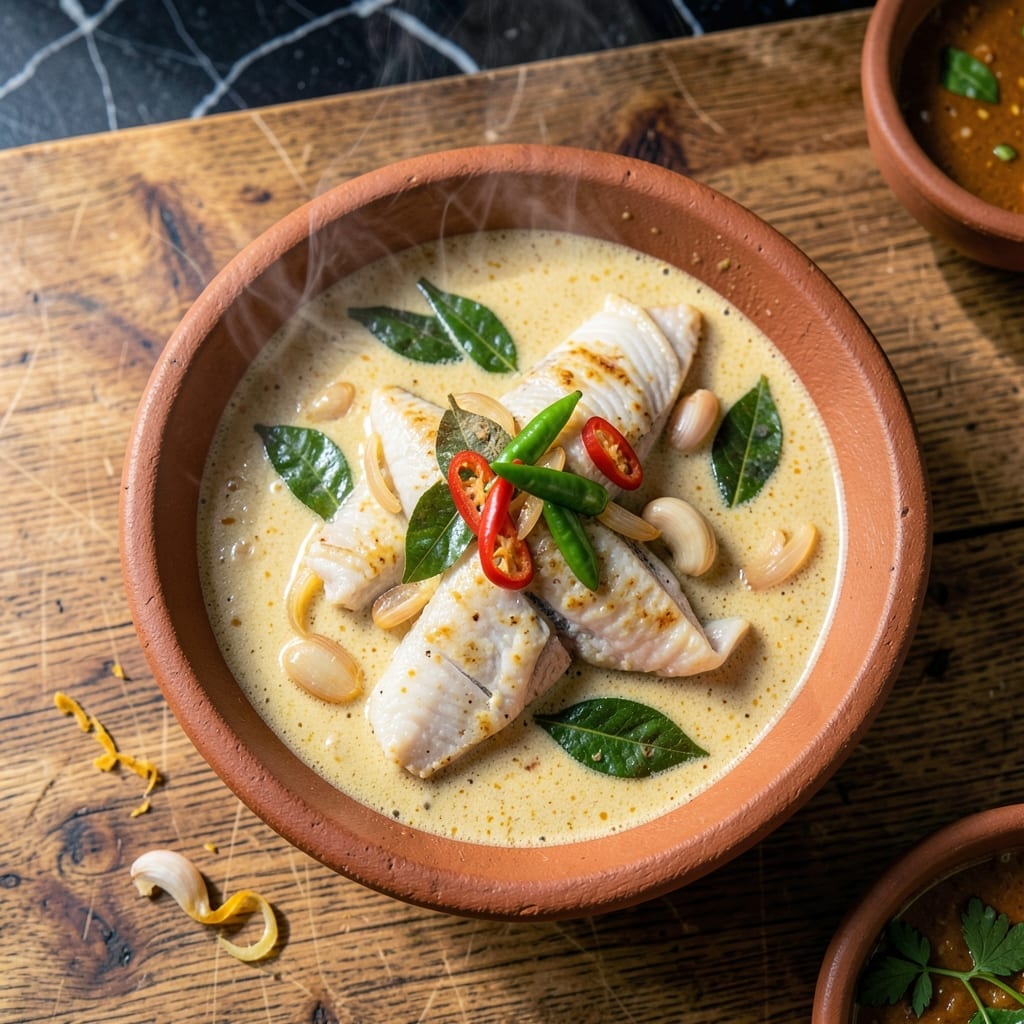
This authentic Kerala fish stew brings the vibrant flavors of coastal India to your kitchen. I’ve adapted traditional Malayalam techniques to create a dish that stays true to its roots while working in home kitchens.
The secret lies in layering spices—mustard seeds, curry leaves, and turmeric—with fresh coconut milk and tamarind. These elements combine to build the complex, aromatic base that defines this regional specialty.
You’ll end up with tender fish pieces swimming in a golden, fragrant broth that’s rich with coconut and bright with tangy notes. The result is a restaurant-quality curry that tastes like it simmered all day.
Serve with steamed rice to soak up every drop of this traditional stew. Here’s how to make it at home.
Ingredients for Meen Curry Recipe in Malayalam
Firm white fish meets coconut milk and spices for this golden Kerala stew.
| Ingredient | Amount | Notes |
|---|---|---|
| White Fish Fillets 🐟 | 1 ½ lb | Firm white fish like cod or halibut |
| Coconut Milk 🥥 | 2 cups | Full-fat, canned preferred |
| Shallots 🧅 | 4 whole | Thinly sliced for base flavor |
| Garlic Cloves 🧄 | 6 cloves | Minced for aromatic depth |
| Fresh Ginger 🌿 | 1 tbsp | Grated or minced finely |
| Green Chilies 🌶️ | 3 whole | Slit lengthwise, seeds removed |
| Mustard Seeds 🌿 | 1 tsp | Black or yellow variety |
| Curry Leaves 🍃 | 12 pieces | Fresh for authentic aroma |
| Ground Turmeric 🌶️ | 1 tsp | For golden color and earthiness |
| Ground Coriander 🌿 | 1 tbsp | Toasted for extra warmth |
| Tamarind Paste 🍋 | 2 tbsp | For tangy brightness |
| Coconut Oil 🫒 | 2 tbsp | For authentic Kerala flavor |
| Fresh Cilantro 🌿 | ¼ cup | Chopped for garnish |
| Salt 🧂 | 1 tsp | Adjust to taste preference |
| Water 💧 | 1 cup | For adjusting broth consistency |
[recipe_ingredient_scaler]
The fish is key here. Cod or halibut hold up best to the cooking time without falling apart. Indian grocery stores often carry fresh curry leaves and tamarind paste, which are non-negotiable for the authentic flavor. I get mine from Patel Brothers—they always have the good stuff. Look for coconut milk with no additives (just coconut and water), as the richness is what makes this stew special.
No fresh curry leaves? Dried curry leaves at half the amount work in a pinch, but the flavor won’t be as bright. Short on tamarind? Lime juice with a pinch of sugar mimics the tang. For the fish, any mild white variety like tilapia or mahi-mahi can substitute. The coconut milk can be light, but full-fat is ideal (trust me on this one).
The stew tastes even better the next day as the flavors meld. Keeps in the fridge for 3-4 days and freezes well for up to 2 months. Store leftover curry leaves in the freezer—they keep their aroma for months.
Why You’ll Love This Recipe
- Minimal Chopping Required: I just toss in whole shallots and crushed ginger-garlic—no fancy knife work.
- Creamy Coconut Bliss: The coconut milk mellows the heat so the fish stays tender and the curry tastes ridiculously good.
- Weeknight Lifesaver: Honestly, I start the base while rice cooks and dinner’s ready before the kids argue.
- Stretches Easily: One batch serves us twice—leftovers taste even better the next day over dosa or rice.
Step-by-Step Instructions for Authentic Kerala Fish Stew
This traditional method brings out the rich, tangy flavors that define this classic dish.
Step 1: Temper the Spices in Coconut Oil
Heat the 2 tablespoons coconut oil in a deep pot over medium heat. Add the 1 teaspoon mustard seeds and let them sizzle for 30 seconds until they pop like tiny firecrackers. This is your signal to add the 12 pieces curry leaves—they’ll release their citrusy aroma instantly.
Next, stir in the 4 whole shallots (thinly sliced) and cook for 3-4 minutes until they turn translucent and lightly golden. Watch closely; you want them soft but not browned. The shallots create the sweet, aromatic base that balances the tangy and spicy elements to come.
Step 2: Build the Aromatic Base
Add the 1 tablespoon fresh ginger (grated), 6 cloves garlic cloves (minced), and 3 whole green chilies (slit lengthwise) to the pot. Sauté for 2 minutes until the raw smell of ginger and garlic mellows into a warm, inviting fragrance. The chilies will soften slightly but retain a bit of bite.
Sprinkle in the 1 teaspoon ground turmeric and 1 tablespoon ground coriander, stirring constantly for 1 minute to toast the spices. You’ll notice the color deepen slightly—that’s the turmeric blooming. This step ensures the spices release their full potential, creating a rich, earthy foundation for the stew.
Step 3: Add Liquids and Fish
Pour in the 1 cup water and 2 tablespoons tamarind paste, stirring to dissolve the tamarind completely. Let the mixture simmer for 3-4 minutes until it reduces slightly and the liquid turns a light golden color. This is where the tangy depth of the stew begins to develop.
Gently add the 1.5 lb white fish fillets to the pot, ensuring they’re submerged in the liquid. Cook on medium-low heat for 8-10 minutes until the fish is opaque and flakes easily with a fork. Avoid stirring too vigorously to keep the fillets intact. The fish will absorb all the bold flavors while staying tender.
Step 4: Finish with Coconut Milk and Cilantro
Reduce the heat to low and pour in the 2 cups coconut milk, stirring gently to combine. Simmer for 5 minutes—just enough time for the flavors to meld without overcooking the fish. The coconut milk will turn a creamy, pale yellow as it blends with the turmeric and tamarind.
Taste and adjust the 1 teaspoon salt if needed. Finally, stir in the 0.25 cup fresh cilantro and remove from heat. The cilantro adds a bright, fresh finish that ties all the flavors together. Let the stew rest for 5 minutes before serving to allow the flavors to deepen.
Pro Tips For Making Meen Curry Recipe In Malayalam
- Poach, Don’t Boil: Gently simmer the fish in coconut milk on medium-low heat—high heat will break the fillets apart and turn the curry oily. I learned this the hard way after ending up with mushy fish in a separated sauce.
- Toast the Shallots: Cook the shallots in oil until golden before adding ginger and garlic. This builds a deep flavor base that raw shallots just can’t match.
- Pat Fish Dry: Always blot the fish fillets with a paper towel before adding them to the curry. Wet fish releases too much moisture and dilutes the rich coconut gravy.
- Use Fresh Coconut Milk: Canned coconut milk works, but fresh-pressed gives the curry a lighter, sweeter taste that’s hard to beat. My grandmother swore by this, and she was right.
Creative Variations of This Recipe
North Kerala Style
In northern Kerala, they often use kokum instead of tamarind for a more complex tang. Soak 4-5 pieces dried kokum in ½ cup warm water for 15 minutes, then use the extract in place of tamarind. The flavor is subtler but deeply aromatic. 💡
Coconut-Centric Variation
For an ultra-rich version, add ½ cup freshly grated coconut along with the coconut milk. Toast the grated coconut in a dry pan for 2-3 minutes first to deepen its flavor. This creates a thicker, more luxurious stew that’s popular in central Kerala.
Spicy Coastal Version
Coastal communities often amp up the heat. Add 1 tsp red chili powder with the turmeric and coriander, and include 2 additional green chilies. For extra depth, stir in 1 tsp garam masala at the end. This version packs serious punch while keeping the coconut balance.
Quick Weeknight Adaptation
Short on time? Use 1 can diced tomatoes instead of tamarind for acidity and body. Add it with the water and skip the simmering time. The tomatoes add sweetness that pairs beautifully with the coconut milk. This cuts prep time by nearly 10 minutes. ⚡
Vegetable-Enhanced Stew
Add 1 cup diced eggplant or 1 cup sliced okra with the fish. These vegetables soak up the flavors wonderfully and make the dish heartier. Eggplant becomes silky in the coconut broth, while okra adds a subtle earthiness that complements the fish.
Dried Spice Blend
No fresh ingredients? Use 1 tsp fish curry powder (available at Indian stores) instead of individual spices. Add it with the turmeric and coriander. While not as vibrant as fresh, it delivers authentic flavor with minimal effort. Perfect for pantry cooking.
Nutrition Facts
Frequently Asked Questions
Can I use a different type of fish?
Yes! Firm white fish like tilapia or mahi-mahi work well. Avoid delicate fish like sole, as they may break apart during cooking.
How do I adjust the spice level?
Reduce or omit green chilies for a milder version. For extra heat, add ½ teaspoon red chili powder with the turmeric. Balance with a pinch of sugar if needed.
Can I make this without fresh curry leaves?
Dried curry leaves work in a pinch—use ½ the amount. Soak them in warm water for 10 minutes to rehydrate before adding. The flavor won’t be as bright but still delicious.
How long does this keep in the fridge?
Store leftovers in an airtight container for up to 3-4 days. Reheat gently on the stove—microwaving can overcook the fish.

Trained in classic French technique but raised on slow-cooked ribs and spicy rubs, she blends culinary skill with smoke and soul.
- Recipe for Boneless Pork Chops in Cast Iron Skillet: Sear and Baste to Juicy Perfection - October 3, 2026
- Recipe for Boneless Cross Rib Roast: Slow-Roasted Beef with Herb Crust - October 3, 2026
- Hamburgers in Sauce Recipe Crock Pot: Slow-Cooked Savory Delight - October 3, 2026