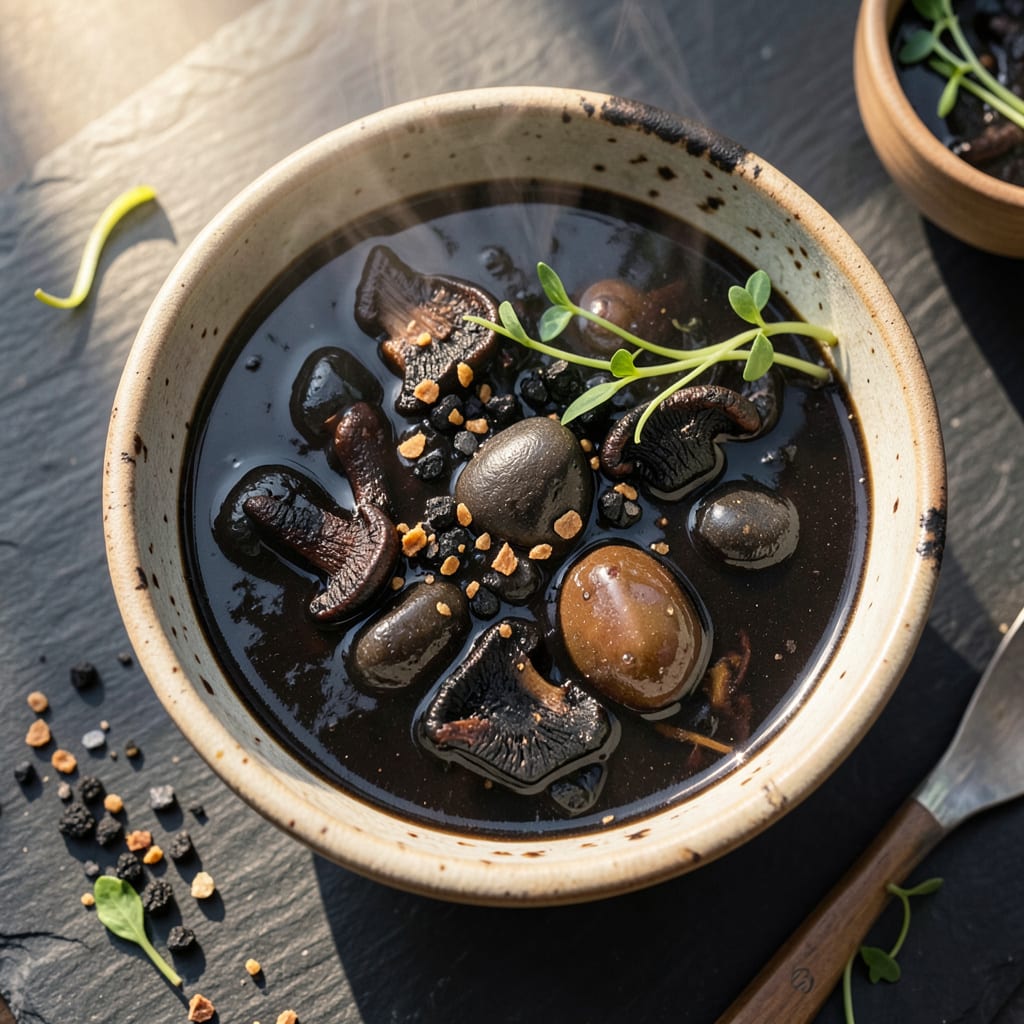
Mud soup is a traditional West African dish, particularly from Ghana, made with blended vegetables, fish or meat, and thickened with clay or cassava dough for a distinctive earthy texture and rich flavor profile.
This dish carries deep cultural significance, often prepared for special occasions and family gatherings in Ghanaian communities. 🔥 The unique thickening agent—whether clay or cassava—does more than just create texture; it binds the flavors together while adding a subtle mineral richness that’s hard to replicate with other ingredients. What fascinates me most is how the preparation methods have been passed down through generations, with each family adding their own twist to the base recipe. The balance of smoky proteins, leafy greens like kontomire, and that signature earthy finish makes it a true celebration of West African culinary tradition.
💡 In This Article
- Cultural Roots and Ingredients of Traditional Mud Soup
- Step-by-Step Guide to Cooking Authentic Mud Soup
Cultural Roots and Ingredients of Traditional Mud Soup
This dish traces back to Ghana’s Fante people, where it emerged as a resourceful way to stretch ingredients during lean times. The base typically features kontomire (cocoyam leaves), which provide a slightly bitter, spinach-like foundation balanced by tomatoes and peppers.
What truly sets it apart is the thickening agent—either white clay (kaolin) or fermented cassava dough, both of which create that signature velvety texture while adding minerals like calcium and iron.
The clay version, called “abunabun” in Fante, uses edible kaolin that’s been purified and dried. When rehydrated and cooked, it transforms into a smooth paste that binds the soup without overpowering flavors. Cassava dough alternatives offer a gluten-free option with similar thickening power but a slightly sweeter finish.
Both methods reflect the region’s ingenuity in using local, accessible ingredients to create nourishing meals.
Protein choices vary by region and occasion. Coastal areas favor smoked fish or crab for a briny depth, while inland versions often include beef or goat. The cooking process itself is communal—traditionally prepared in large clay pots over wood fires, which imparts a subtle smokiness.
This method isn’t just practical; it’s ceremonial, with preparation often involving multiple family members sharing stories as they stir.
Nutritionally, this soup delivers a powerhouse combination. The clay version provides 20-30% of daily iron needs per serving, while cassava-based versions offer resistant starch for gut health. The leafy greens contribute vitamins A and C, making it a complete meal in a bowl.
What fascinates me most is how the dish adapts—some modern versions use cornstarch for thickening, but purists argue nothing replicates the mineral-rich complexity of traditional methods.
Culturally, mud soup appears at life milestones—births, weddings, and funerals—where its preparation becomes a collective act of love. The earthy flavor profile, often described as “grounded” or “connected to the land,” reflects the Fante belief in food as both sustenance and spiritual nourishment.
It’s a dish that tells a story with every spoonful, carrying generations of tradition in its rich, velvety texture. 🔥
For those new to West African flavors, the taste might surprise you. The initial earthiness gives way to layers of smokiness from the proteins, brightness from tomatoes, and a lingering mineral finish. It’s a perfect example of how necessity breeds culinary innovation—transforming simple ingredients into something deeply satisfying and culturally significant.

Trained in classic French technique but raised on slow-cooked ribs and spicy rubs, she blends culinary skill with smoke and soul.
- Recipe for Boneless Pork Chops in Cast Iron Skillet: Sear and Baste to Juicy Perfection - October 3, 2026
- Recipe for Boneless Cross Rib Roast: Slow-Roasted Beef with Herb Crust - October 3, 2026
- Hamburgers in Sauce Recipe Crock Pot: Slow-Cooked Savory Delight - October 3, 2026