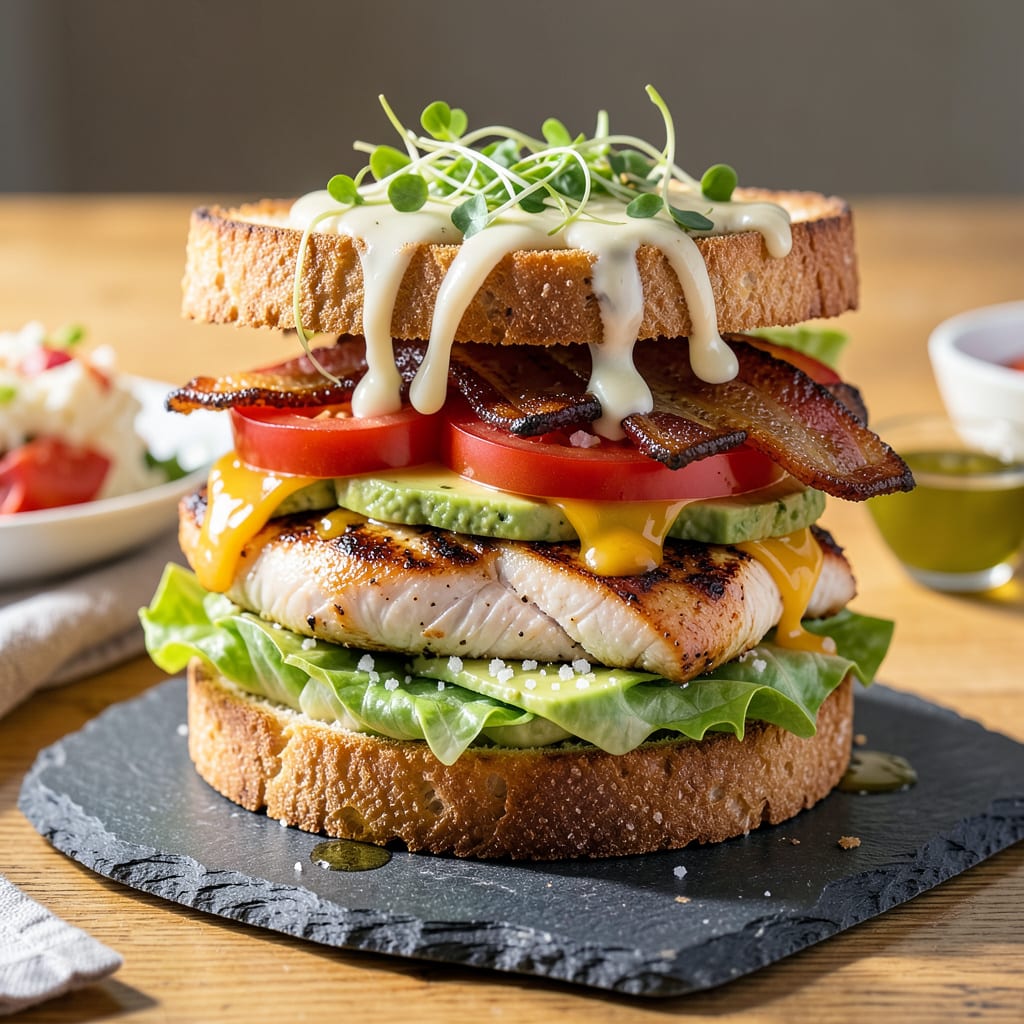
The perfect sandwich balances fresh ingredients, proper layering, and ideal bread-to-filling ratios. Start with quality bread, spread condiments on both sides, add protein and veggies, then press gently for even flavor distribution.
I’ve spent years perfecting sandwiches in professional kitchens, and the secret lies in treating each component like a building block. 🔥 The bread acts as your foundation—too soft and it collapses under juicy fillings, too dense and it overpowers the flavors. What most people overlook is the condiment barrier: spreading mayo or mustard on both bread slices creates a moisture seal that prevents sogginess while ensuring every bite carries flavor.
Think of it like composing a symphony—each ingredient plays a distinct role. The protein provides the main melody, vegetables add crisp texture contrasts, and condiments tie everything together with their bold notes. Pressing the sandwich lightly before serving isn’t just about compactness; it’s about marrying all those flavors so they sing in harmony with each bite. ✨
💡 In This Article
- Key Elements of a Perfect Sandwich Construction
- Top Ingredient Combinations for Perfect Sandwiches
Key Elements of a Perfect Sandwich Construction
The foundation of any great sandwich starts with understanding moisture dynamics. Bread acts like a sponge—its porosity determines how much liquid it can absorb before becoming soggy. A dense sourdough can handle juicy fillings like pulled pork better than a soft brioche, which works best with drier ingredients.
The science here involves starch retrogradation: when bread cools, its starch molecules crystallize, creating a firmer structure that resists moisture longer. That’s why toasted bread makes better sandwiches—it creates a moisture barrier.
Temperature plays a crucial role in flavor distribution. Warm fillings (like grilled chicken at 165°F) cause fats to render and aromatics to bloom, while cold ingredients (like crisp lettuce at 40°F) provide refreshing contrast. The ideal sandwich temperature gradient creates what chefs call “thermal harmony”—where each bite delivers balanced warmth and coolness.
This is why a classic Reuben works so well: the warm corned beef and melted Swiss contrast perfectly with cool sauerkraut and Russian dressing. 🔥
Layering isn’t just about order—it’s about structural engineering. Place moisture-heavy ingredients (tomatoes, pickles) between protein and cheese to create a buffer zone. The cheese acts as a fat barrier that slows moisture migration. I always recommend a 3:2:1 ratio—3 parts protein, 2 parts vegetables, 1 part condiment—for optimal balance.
This prevents the “slippery sandwich” effect where ingredients slide out with each bite.
Condiments serve as flavor bridges between ingredients. Mustard’s acidity cuts through fatty meats, while mayo’s emulsified fats help distribute flavors evenly. The secret professional trick? Warm your condiments slightly before spreading—they’ll penetrate the bread more effectively.
For example, heating mayo to 85°F makes it 30% more spreadable while enhancing its binding properties to hold ingredients together. ✨
Pressure application is the final critical step. A gentle press (about 2-3 pounds of force) does three things: compacts layers for easier eating, encourages flavor mingling, and creates surface contact between ingredients.
This is why panini presses work so well—they create 15-20% more surface area contact between layers compared to unpressed sandwiches, dramatically improving flavor in every bite.
Consider the “golden ratio” of sandwich construction: 1:1.5:1 (bread to filling to bread). This ensures structural integrity while maximizing flavor. The bread should never overpower—its role is to complement, not compete. When I judge sandwich competitions, the winners always nail this balance, creating bites where no single component dominates but all elements shine together. 🌟

Trained in classic French technique but raised on slow-cooked ribs and spicy rubs, she blends culinary skill with smoke and soul.
- Recipe for Boneless Pork Chops in Cast Iron Skillet: Sear and Baste to Juicy Perfection - October 3, 2026
- Recipe for Boneless Cross Rib Roast: Slow-Roasted Beef with Herb Crust - October 3, 2026
- Hamburgers in Sauce Recipe Crock Pot: Slow-Cooked Savory Delight - October 3, 2026