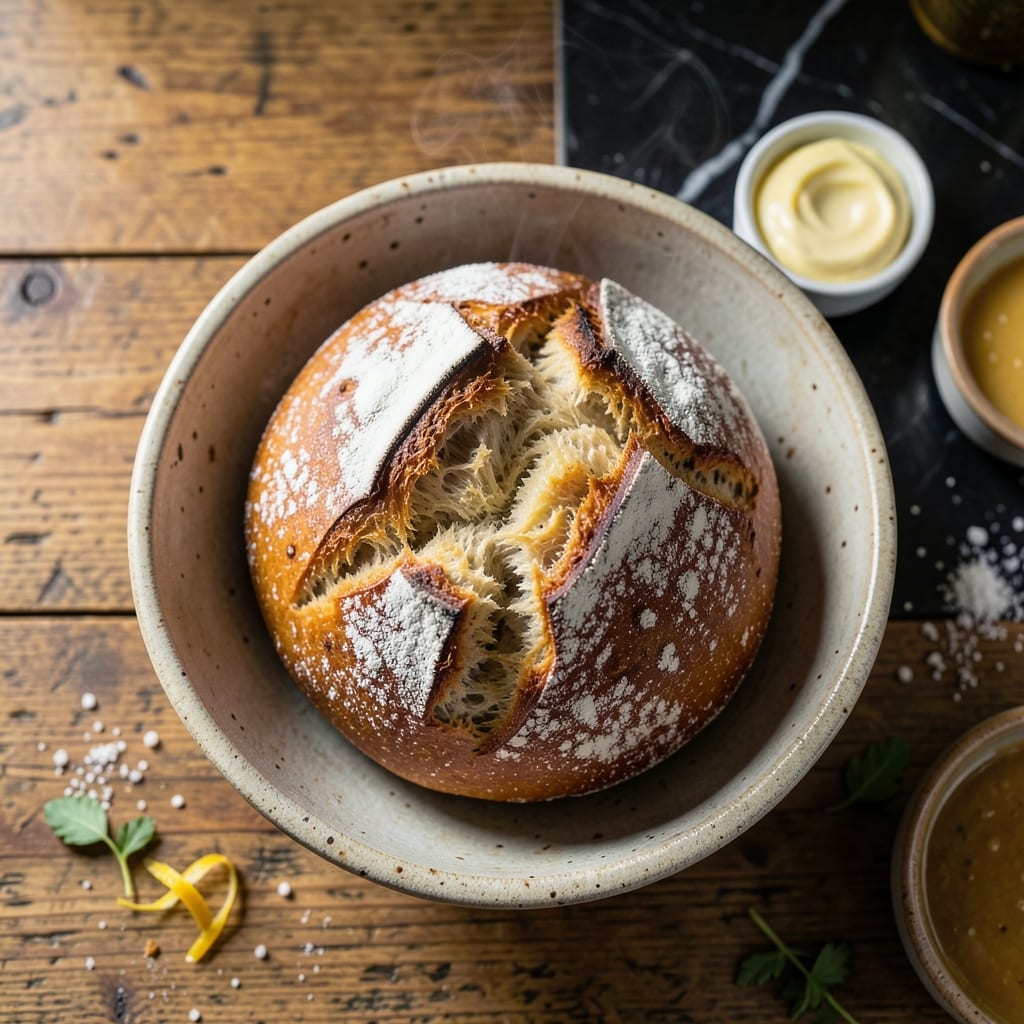
There’s something deeply satisfying about pulling a golden loaf of bread from the oven, knowing you’ve created it from scratch. This recipe delivers a perfectly soft interior with a crisp golden crust, using just a few pantry staples and active dry yeast.
I developed this method after testing countless variations in my kitchen, refining the kneading and rising times to ensure consistent results. The key is patience—allowing the dough to rise fully creates that signature airy texture and rich yeast flavor.
The process is straightforward: mix, knead, let it rise, then bake. Even beginners will achieve bakery-quality bread with this foolproof approach. David, my unofficial taste-tester, requests this loaf weekly.
Serve warm with butter or use for sandwiches that hold up beautifully. Here’s how to make it.
Ingredients for One Loaf Bread Recipe with Yeast
Pantry staples plus yeast create this golden, bakery-quality loaf at home.
| Ingredient | Amount | Notes |
|---|---|---|
| Active Dry Yeast 🍞 | 2 ¼ tsp | One packet for reliable rise |
| Warm Water 💧 | 1.125 cup | 110°F for yeast activation |
| Granulated Sugar 🍚 | 1 tbsp | Feeds the yeast for growth |
| All-Purpose Flour 🌾 | 4 ½ cups | Plus extra for dusting |
| Kosher Salt 🧂 | 1 ½ tsp | Diamond Crystal preferred |
| Unsalted Butter 🧈 | 2 tbsp | Melted for dough enrichment |
| Vegetable Oil 🫒 | 1 tbsp | For greasing the bowl |
| Large Egg 🥚 | 1 whole | For brushing the crust |
| Milk 🥛 | ¼ cup | Warm, for tender crumb |
| Honey 🍯 | 1 tbsp | Optional for extra sweetness |
[recipe_ingredient_scaler]
The flour is the foundation here. King Arthur all-purpose is my go-to—consistent protein content, reliable every time. Yeast matters too: check the expiration date (old yeast won’t rise). I grab mine from Whole Foods bulk section or Saf-Instant packets at the grocery store. Sugar and salt are simple, but use fine grain for even distribution in the dough.
No bread flour? All-purpose works perfectly (the intro promises simplicity). Short on milk? Warm water plus a splash of melted butter mimics the richness. Honey can be skipped or swapped for maple syrup. For the egg wash, milk or cream gives a similar sheen if you’re out. The key is temperature—110°F liquids wake up the yeast without killing it.
Dough rises best in a warm spot—turn your oven light on for a cozy proofing environment. Baked loaves stay fresh wrapped in a towel for 2 days, or slice and freeze for 1 month. Leftovers? Perfect for French toast or croutons.
Why You’ll Love This Recipe
- No-Fuss Mixing: I just dump yeast, warm water, sugar, flour, and salt in a bowl—no fancy steps, no stand mixer required.
- Warm, Toasty Flavor: The yeast gives it that classic bakery taste, with a soft crumb and a golden crust that cracks just right.
- Sandwich Savior: Honestly, it’s my go-to for lunchbox staples, dinner rolls, or even garlic bread when I’m in a pinch.
- Budget Baking: Five pantry basics, one loaf, endless meals. I’ll be real: it costs pennies compared to store-bought.
Step-by-Step Instructions for One Loaf Homemade Bread
Here’s the method I’ve refined over years of baking—straightforward and foolproof for perfect results.
Step 1: Activate the Yeast and Prepare Wet Ingredients
In a large mixing bowl, combine the 2.25 tsp Active Dry Yeast with the 1.125 cup Warm Water at exactly 110°F. Stir in the 1 tbsp Granulated Sugar and let it sit for 5-7 minutes until the mixture becomes foamy and cloudy.
This foaming action confirms the yeast is alive and active. While waiting, melt the 2 tbsp Unsalted Butter and warm the 0.25 cup Milk to the same 110°F temperature. I always use a thermometer for precision—too hot and you’ll kill the yeast, too cold and it won’t activate properly.
Step 2: Mix and Knead the Dough
Add the melted butter, warm milk, and 1 tbsp Honey to the yeast mixture. In a separate bowl, whisk together the 4.5 cups All-Purpose Flour and 1.5 tsp Kosher Salt. Gradually incorporate the dry ingredients into the wet, mixing until a shaggy dough forms.
Turn the dough out onto a lightly floured surface and knead for 8-10 minutes by hand until it’s smooth and elastic. You’ll know it’s ready when you can stretch a small piece thin enough to see light through it without tearing. This windowpane test ensures proper gluten development for that perfect soft texture.
Step 3: First Rise Until Doubled
Lightly grease a clean bowl with the 1 tbsp Vegetable Oil, place the dough inside, and turn to coat all sides. Cover with a damp towel and let rise in a warm, draft-free spot for 1-1.5 hours or until doubled in size.
I like to preheat my oven to 200°F then turn it off before placing the bowl inside—this creates an ideal proofing environment. The dough should spring back slowly when poked with a finger. If it springs back quickly, it needs more time.
Step 4: Shape, Second Rise, and Bake
Punch down the risen dough and shape it into a loaf. Place it in a greased 9×5-inch loaf pan, cover, and let rise again for 30-45 minutes until it crests about 1 inch above the pan rim.
Preheat the oven to 375°F. Brush the top with the 1 whole Large Egg beaten with a teaspoon of water for a beautiful golden crust. Bake for 25-30 minutes until the loaf sounds hollow when tapped and the internal temperature reaches 190-200°F.
Step 5: Cool Properly Before Slicing
Remove the bread from the pan immediately and let it cool on a wire rack for at least 1 hour before slicing. This cooling period is crucial—it allows the crumb structure to set and prevents a gummy texture.
Resist the temptation to slice into that warm, fragrant loaf. When done properly, you’ll be rewarded with a perfect golden crust and that coveted soft, airy center that makes homemade bread so special. The honey adds just a touch of sweetness that complements any meal.
Pro Tips For Making One Loaf Bread Recipe With Yeast
- Proof the Yeast: Always bloom your active dry yeast in warm water with a pinch of sugar first—I learned this the hard way after a few loaves that refused to rise.
- Use Room-Temp Ingredients: Cold flour or water can shock the yeast, so pull your ingredients out 30 minutes before mixing for consistent results.
- Don’t Over-Flour: Resist the urge to dump extra flour when kneading; sticky dough now means light, airy bread later (yes, even if it’s messy).
- Let It Double: Give your dough a full 1-2 hours for the first rise—rushing this step leaves you with a dense, sad loaf.
Perfect Pairings for one loaf bread recipe with yeast
Breakfast Pairings
Fresh from the oven, slice this loaf thick and serve with salted butter and local honey from Austin farmers markets. David swears by this combo for weekend breakfasts. The honey’s floral notes complement the bread’s subtle sweetness beautifully. 💛
Soup Companions
This bread is a natural for dipping into tomato basil soup or hearty chicken noodle. I love the contrast of the crisp crust with creamy soups. For extra flavor, toast slices with garlic butter before serving.
Sandwich Stars
Use for BLTs with thick-cut bacon from local butchers or grilled cheese with sharp cheddar. The sturdy structure holds up to fillings without getting soggy. I pack these for Emma and Jack’s school lunches.
Cheese Board
Add to charcuterie with aged gouda and brie from Central Market. The mild sweetness balances salty meats and sharp cheeses. Warm the bread slightly before serving for maximum aroma.
Dessert Twist
Transform leftovers into bread pudding with vanilla custard or French toast with cinnamon. The honey in the recipe makes these desserts extra special. I often make this for Sunday brunch.
Nutrition Facts
Frequently Asked Questions
How do I know when the dough has risen enough?
It should double in size and spring back slowly when poked. If it springs back quickly, give it more time in a warm spot like an oven with the light on.
Can I use instant yeast instead of active dry?
Yes! Use the same amount but skip the foaming step. Mix it directly with dry ingredients since instant yeast activates faster.
Why did my bread turn out dense?
This usually happens from underproofing or not kneading enough. Ensure the dough passes the windowpane test and rises fully before baking.
How long will homemade bread stay fresh?
Wrap the cooled loaf in a towel and it’ll stay fresh for 2 days. For longer storage, slice and freeze for up to 1 month.

Trained in classic French technique but raised on slow-cooked ribs and spicy rubs, she blends culinary skill with smoke and soul.
- Best Smoked Oxtail Recipe: Deep-Rich Flavor After Low-and-Slow Cooking - October 14, 2026
- Pit Boss Smoked Prime Rib Roast Recipe: Bark-to-Bone Crispness in 4 Hours - October 14, 2026
- Smoked Tuna Steak Recipe: Seared Crust Meets Silky Centers - October 14, 2026