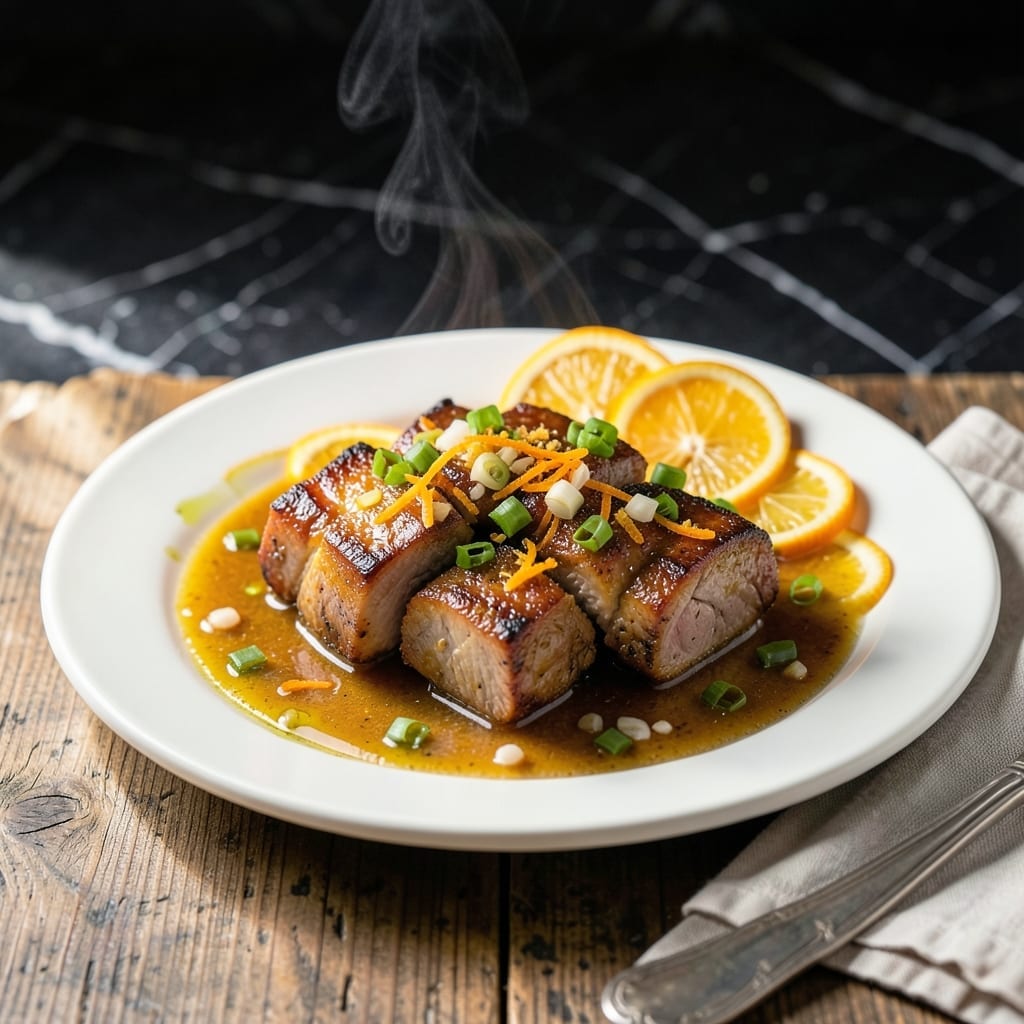
This Filipino-style orange pork recipe brings a perfect balance of sweet and savory to your dinner table.
I developed this dish after studying my grandmother’s intuitive cooking style, adapting it for modern home kitchens. The citrusy orange sauce complements the tender pork beautifully, creating a restaurant-quality meal at home.
The secret lies in the marinade, which infuses the meat with bright, aromatic flavors before cooking. A simple pan-sear locks in juices, while the sauce thickens into a glossy, rich glaze.
Serve over steamed rice to soak up every last drop of the sweet-tangy sauce. It’s a dish that feels special without demanding heroic effort.
Ingredients for Orange Pork Recipe Panlasang Pinoy
Bright citrus and tender pork come together for a dish that feels special but stays simple.
| Ingredient | Amount | Notes |
|---|---|---|
| Pork Shoulder 🥩 | 1 ½ lb | Cut into 1-inch cubes, trimmed of fat |
| Orange Juice 🍊 | 1 cup | Freshly squeezed for best flavor |
| Orange Zest 🍊 | 1 tbsp | From 1 large orange, finely grated |
| Soy Sauce 🫒 | ½ cup | Use low-sodium for balance |
| Brown Sugar 🍚 | ⅓ cup | Packed, light or dark |
| Garlic Cloves 🧄 | 6 cloves | Minced finely for marinade |
| Fresh Ginger 🌿 | 1 tbsp | Peeled and grated |
| Rice Vinegar 💧 | 2 tbsp | Or substitute apple cider vinegar |
| Cornstarch 🌾 | 1 tbsp | For thickening the sauce |
| Water 💧 | ¼ cup | To adjust sauce consistency |
| Green Onions 🧅 | 3 whole | Thinly sliced for garnish |
| Vegetable Oil 🫒 | 2 tbsp | For searing pork |
| Salt 🧂 | ½ tsp | Adjust to taste |
| Black Pepper 🌶️ | ½ tsp | Freshly ground preferred |
| Sesame Seeds 🌰 | 1 tsp | Toasted, for garnish |
[recipe_ingredient_scaler]
The pork is the star here. Pork shoulder (sometimes labeled as pork butt) gives that melt-in-your-mouth texture after marinating and cooking. Costco has great pre-cut options, but any supermarket will do—just ask the butcher to trim excess fat. The orange juice should be fresh-squeezed (those cartons taste flat in comparison). For the soy sauce, Silver Swan or Datu Puti are Filipino brands that add authentic depth.
No fresh oranges? Bottled orange juice in a pinch, but add an extra teaspoon of zest for brightness. Brown sugar can be swapped for coconut sugar (1:1 ratio) for a deeper caramel note. Out of rice vinegar? White vinegar plus a pinch of sugar mimics the tang. The cornstarch slurry is key for that glossy glaze—don’t skip it (or use arrowroot powder at the same amount).
This keeps beautifully—actually tastes better the next day as flavors meld. Store in the fridge for up to 4 days or freeze for 3 months. Pro tip: make extra sauce and drizzle it over rice or noodles later.
Why You’ll Love This Recipe
- One Pan Magic: I just toss the pork shoulder with orange juice, zest, soy sauce, and brown sugar—no fancy steps, just simmer and serve.
- Sweet-Tangy Crave: The brown sugar caramelizes while the orange zest cuts through, giving that sticky, bright flavor I can’t resist.
- Feeds the Crew: I’ve made this for weeknight dinners and potlucks—always disappears fast. Between us, even picky eaters go back for seconds.
- Budget Stretcher: Pork shoulder stays affordable, and the orange juice does double duty as marinade and sauce. I’ll be real: it’s my go-to when I need to impress without overspending.
Step-by-Step Instructions for Orange Pork Panlasang Pinoy
This method balances sweet and savory with a technique that locks in flavor every time.
Step 1: Sear and Brown the Pork Shoulder
Heat the 2 tablespoons vegetable oil in a large skillet over medium-high heat until it shimmers. Add the 1.5 lb pork shoulder cubes in a single layer, being careful not to overcrowd the pan. You want each piece to have direct contact with the hot surface.
Sear the pork for 5-6 minutes until golden brown on all sides, turning occasionally with tongs. The browning creates a flavorful fond that will deepen the sauce later. Season with the 0.5 tsp salt and 0.5 tsp black pepper during the last minute of searing.
Transfer the seared pork to a plate and set aside. Don’t wipe out the skillet—those browned bits are essential for building the sauce.
Step 2: Create the Aromatic Orange Sauce Base
In the same skillet, reduce heat to medium. Add the minced 6 cloves garlic cloves and grated 1 tablespoon fresh ginger, stirring constantly for 30 seconds until fragrant but not browned. Garlic burns easily, so keep it moving.
Pour in the 1 cup orange juice, 0.5 cup soy sauce, 0.33 cup brown sugar, and 2 tablespoons rice vinegar. Stir well, scraping up all the browned bits from the bottom of the pan. This deglazing step is where the magic happens—those bits dissolve into the liquid, creating layers of flavor.
Let the mixture simmer for 3-4 minutes until the brown sugar fully dissolves and the liquid reduces slightly, becoming slightly syrupy.
Step 3: Simmer the Pork in the Sauce
Return the seared pork to the skillet, along with any accumulated juices. Add the 1 tablespoon orange zest, which will infuse the sauce with bright citrus notes. Stir to coat the pork evenly with the sauce.
Reduce heat to medium-low, cover the skillet, and let the pork simmer for 25-30 minutes. Stir occasionally to prevent sticking. The pork is done when it’s tender and the sauce has thickened enough to coat the back of a spoon.
If the sauce reduces too much before the pork is tender, add the 0.25 cup water and continue cooking.
Step 4: Thicken and Finish the Dish
In a small bowl, mix the 1 tablespoon cornstarch with 1 tablespoon water to create a slurry. Stir the slurry into the skillet and cook for an additional 2-3 minutes until the sauce thickens to a glossy, syrupy consistency that clings to the pork.
Taste and adjust seasoning if needed, though the soy sauce and brown sugar should provide a well-balanced sweet-savory profile. The sauce should be rich and slightly sticky, perfectly coating each piece of pork.
Remove from heat and let the dish rest for 5 minutes to allow the flavors to meld together.
Step 5: Garnish and Serve
Thinly slice the 3 whole green onions and sprinkle them over the top along with the 1 tsp sesame seeds. The green onions add a fresh, slightly sharp contrast to the rich sauce, while the sesame seeds provide a nutty crunch.
Serve hot with steamed rice to soak up the incredible sauce. The pork should be tender and juicy, with every bite delivering the perfect balance of citrus brightness, savory depth, and sweet richness.
Pro Tips For Making Orange Pork Recipe Panlasang Pinoy
- Sear the Pork First: Brown the pork shoulder in small batches over medium-high heat until deeply caramelized—I learned this the hard way after my first few attempts turned out pale and watery.
- Zest Before Juicing: Always grate the orange zest before halving the fruit for juice, or you’ll be left with a slippery, hard-to-hold mess and half the flavor on the cutting board.
- Simmer, Don’t Boil: Keep the sauce at a gentle simmer after adding the orange juice and soy sauce, or the sugar will separate and leave you with a greasy, broken sauce.
- Use Fresh Oranges: Bottled juice lacks the bright acidity this dish needs—fresh oranges give that sharp, citrusy punch that balances the brown sugar’s sweetness.
Common Mistakes When Making Perfect Results
Overcrowding the Pan
I learned the hard way that searing 1.5 lb pork shoulder in batches is essential. Crowding the pan steams the pork instead of browning it, leaving you with pale, soggy meat. Use a large skillet and give each cube space to develop that golden crust. 🔥
Skipping the Deglaze
Those browned bits in the pan after searing aren’t burnt—they’re packed with flavor. Always deglaze with your liquid ingredients, scraping up every last bit. Skipping this step means missing out on the deep, complex base that makes this dish special.
Rushing the Simmer
Pork shoulder needs time to become tender. I’ve tried cutting the 25-30 minute simmer short, and the meat came out tough. Keep the heat at medium-low and let the sauce work its magic. Patience transforms chewy pork into melt-in-your-mouth perfection.
Forgetting the Cornstarch
The cornstarch slurry is what gives that signature glossy finish. Without it, your sauce will stay thin and watery, sliding right off the pork. Mix 1 tablespoon with cold water before stirring in—that prevents clumping.
Using Bottled Juice
Fresh-squeezed orange juice makes a huge difference here. Bottled juice lacks the bright, vibrant flavor that balances the savory soy sauce. If you must use bottled, add extra zest to compensate for the flatness.
Overcooking the Garlic
Burnt garlic turns bitter and ruins the sauce. When sautéing 6 cloves, keep the heat at medium and stir constantly. It should turn fragrant in 30 seconds—just enough to mellow the raw bite without browning. I’ve ruined batches by walking away for “just a second.”
Nutrition Facts
Frequently Asked Questions
Can I use a different cut of pork?
Yes, pork tenderloin works well as a leaner alternative. Reduce cooking time to 15-20 minutes since it cooks faster than shoulder.
What if I don’t have rice vinegar?
Substitute apple cider vinegar or white vinegar plus 1/2 teaspoon sugar. The slight sweetness mimics rice vinegar’s balance.
How do I make the sauce thicker?
Mix 1 tablespoon cornstarch with cold water, then stir into simmering sauce. Cook for 2-3 minutes until glossy.
Can I prepare this ahead?
The flavors deepen overnight. Store in an airtight container for up to 4 days or freeze for 3 months.

Trained in classic French technique but raised on slow-cooked ribs and spicy rubs, she blends culinary skill with smoke and soul.
- Best Smoked Oxtail Recipe: Deep-Rich Flavor After Low-and-Slow Cooking - October 14, 2026
- Pit Boss Smoked Prime Rib Roast Recipe: Bark-to-Bone Crispness in 4 Hours - October 14, 2026
- Smoked Tuna Steak Recipe: Seared Crust Meets Silky Centers - October 14, 2026