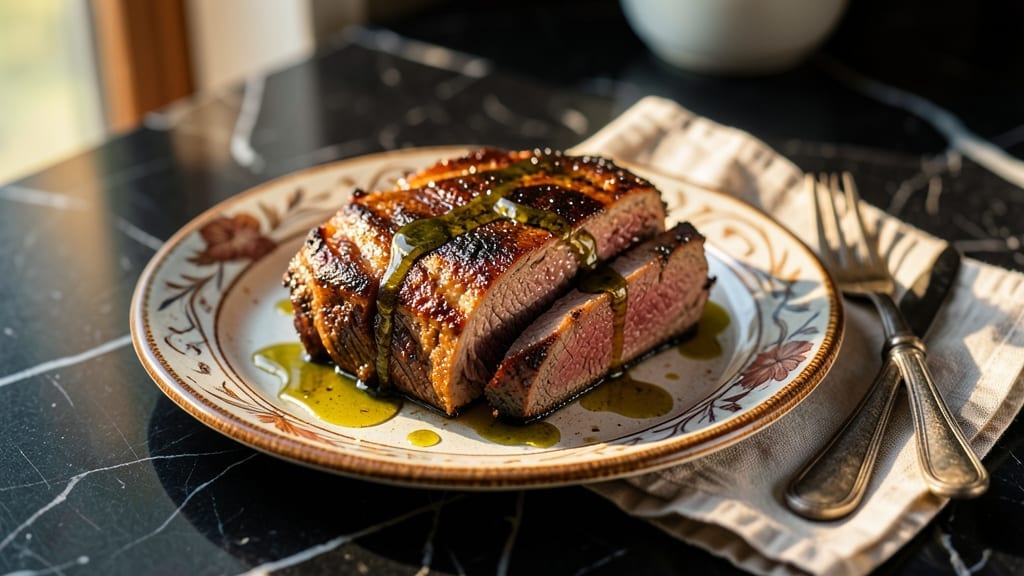
Mastering oven roasted beef brisket delivers that juicy, melt-in-your-mouth texture without needing a smoker. After years of perfecting this method, I’ve developed a technique that transforms tough cuts into tender, caramelized perfection—all in your home oven.
The key lies in precise timing, strategic seasoning, and understanding when to let the beef rest for maximum flavor development.
This recipe starts with a simple yet effective dry rub that penetrates the meat deeply, creating a flavorful crust while keeping the interior moist. Unlike traditional smoking methods, we rely on high-heat roasting to develop that coveted caramelized exterior while maintaining a tender, fork-tender interior.
The process requires patience—about 3 to 4 hours—but the result is worth every minute of wait time.
By the time you’re done, you’ll have a brisket that’s juicy throughout, with a deep, rich crust that’s impossible to resist. The meat will pull apart easily, revealing layers of savory, smoky flavor that’s perfect for sandwiches, tacos, or serving alongside roasted vegetables.
This method ensures restaurant-quality results without the need for specialized equipment.
Whether you’re hosting a dinner party or simply craving a hearty meal, this oven roasted brisket recipe delivers professional-level tenderness and flavor. The best part? You’ll have time to enjoy the process—and the delicious outcome. Let’s get started on creating your perfect brisket.
Ingredients for oven roasted beef brisket
The secret to perfect brisket lies in these bold flavors and precise measurements—no smoker needed.
| Ingredient | Amount | Notes |
|---|---|---|
| Beef Brisket 🥩 | 4 lb | Whole packer cut, 1-inch thick |
| Yellow Onion 🧅 | 1 whole | Yellow, medium size, sliced |
| Garlic Cloves 🧄 | 8 cloves | Fresh, peeled, minced |
| Kosher Salt 🧂 | 2 tbsp | Diamond Crystal preferred |
| Black Peppercorns 🌶️ | 1 ½ tsp | Freshly cracked, coarse |
| Smoked Paprika 🌶️ | 1 tbsp | High quality, not sweet |
| Ground Cumin 🌿 | 1 tbsp | Toasted for depth |
| Brown Sugar 🍯 | 2 tbsp | Light, not dark |
| Apple Cider Vinegar 🍎 | 2 tbsp | Unfiltered preferred |
| Beef Broth 🥛 | 1 cup | Low sodium, homemade best |
| Extra-Virgin Olive Oil 🫒 | 2 tbsp | High quality, fruity |
| Fresh Thyme Leaves 🌿 | ¼ cup | Or 1 tbsp dried thyme |
| Fresh Rosemary 🌿 | ¼ cup | Finely chopped, fresh |
[recipe_ingredient_scaler]
The brisket cut makes all the difference here. Look for a full packer cut at your local butcher shop—it’s more flavorful than pre-cut supermarket pieces. Costco or Whole Foods often carry excellent quality, but ask your butcher to trim excess fat if it’s over 1-inch thick. The fat cap helps with moisture, but too much can make the crust greasy. For a restaurant-quality result, Penzeys Spices is my go-to for smoked paprika and cumin—they toast their spices for extra depth. If you’re short on time, Trader Joe’s has a solid pre-mixed BBQ spice blend that works in a pinch, though I’d still toast the cumin separately for best results.
No smoked paprika? Substitute with 1 tbsp chili powder plus 1 tsp liquid smoke—it won’t be identical, but you’ll still get that deep, smoky profile. Fresh thyme and rosemary are ideal, but dried works at one-third the amount if you’re in a bind. For the beef broth, homemade is best—just simmer beef bones with onions and garlic for 4 hours, then strain. No time? Low-sodium store-bought works fine, just add an extra pinch of salt. The apple cider vinegar adds brightness—if you don’t have it, balsamic vinegar works too, though it’ll be slightly sweeter. And for the love of brisket, don’t skip the olive oil—it helps the rub stick and creates a better crust.
This brisket tastes even better the next day, so plan ahead. Wrap the cooked brisket tightly in butcher paper or foil, then place it in a cooler with ice packs for 2-4 hours—this helps tenderize it further. Store leftovers in the fridge for up to 5 days, or freeze for 3 months. For serving, slice against the grain for maximum tenderness. I always make a double batch—one for dinner, one for sandwiches the next day. The flavors deepen as it sits, so resist the urge to cut into it too soon—let it rest for at least 15 minutes before slicing.
Why You’ll Love This Recipe
- One-Pot Magic: The whole process happens in one Dutch oven—no extra pans, no cleanup chaos. I’ll be real: that means I’m not scrubbing pots at midnight while trying to get the kids to bed. The extra-virgin olive oil caramelizing the yellow onion and garlic at the bottom? That’s pure flavor gold, and it all stays in one spot.
- Flavor Bomb: The dry rub—kosher salt, smoked paprika, and ground cumin—plus the apple cider vinegar and beef broth braising? It’s like a flavor party in your mouth. The crust gets crispy, the inside stays juicy, and that fresh rosemary and thyme? Game-changer. Honestly, the first bite always makes me pause mid-chew.
- Feeds a Crowd (Without the Guilt): Four pounds of beef brisket is enough to feed six hungry people—or three with leftovers. And those leftovers? Store them for up to five days, or freeze for three months. I keep a batch in the freezer for game day, and it’s always a hit. Budget-friendly? Absolutely. Solid meal for when you’ve got guests dropping by unannounced.
- Weeknight Hero: Yes, it’s a slow cook, but the prep is unfussy. Slice the onion, mince the garlic, slather on the rub, and let the oven do the work. I’ve made it on a Tuesday night after a long day, and it still tastes like I spent all afternoon. The black peppercorns and brown sugar in that rub? They make even the toughest cut taste like a weekend meal.
Step-by-step instructions for oven roasted beef brisket
Here’s how to transform a tough cut into melt-in-your-mouth perfection with a caramelized crust.
Create the Dry Rub and Prepare the Brisket
In a small bowl, combine the 2 tablespoons kosher salt, 1½ teaspoons freshly cracked black peppercorns, 1 tablespoon smoked paprika, 1 tablespoon ground cumin, 2 tablespoons brown sugar, ¼ cup finely chopped fresh rosemary, and ¼ cup fresh thyme leaves. This blend creates a perfect balance of smoky, sweet, and herby flavors that will penetrate the meat.
Next, slice the 1 yellow onion into thin strips and mince the 8 garlic cloves finely. These aromatics will form the flavor foundation during cooking. Pat the 4 lb beef brisket completely dry with paper towels—this is critical for developing that coveted caramelized crust. Then generously coat every surface with the dry rub mixture, pressing it into the meat so it adheres well. Let the brisket sit at room temperature for 1 hour while you prepare the oven.
Build Flavor with Aromatics and Sear the Brisket
Preheat your oven to 325°F. Heat a large Dutch oven or heavy oven-safe pot over medium-high heat and add the 2 tablespoons extra-virgin olive oil. Once shimmering, add the sliced yellow onion and cook for 5 minutes until softened. Add the minced garlic cloves and cook for another 30 seconds until fragrant—don’t let it brown or it’ll turn bitter.
Remove the pot from heat and carefully place the brisket on top of the onions and garlic. The residual heat will begin melting the rub into the meat. Pour the 2 tablespoons apple cider vinegar over the brisket, then add the 1 cup beef broth to the pot. The vinegar will help tenderize the meat while the broth creates a flavorful braising liquid.
Roast Low and Slow for Maximum Tenderness
Cover the Dutch oven tightly with a lid and transfer it to the preheated oven. Roast for 3 hours, then carefully flip the brisket and roast for another 3 hours. This slow cooking method breaks down the tough connective tissue, transforming the brisket into fork-tender perfection. Every 45 minutes, spoon the liquid from the pot over the brisket to keep it moist.
After the second 3-hour period, check for doneness by inserting a meat thermometer into the thickest part—it should read 200-205°F. If it’s not there yet, continue roasting in 30-minute increments until it reaches the perfect temperature. The brisket should have a deep caramelized crust and be fork-tender with juices running clear.
Rest and Slice for Juicy Perfection
Remove the brisket from the oven and transfer it to a cutting board. Tent loosely with aluminum foil and let it rest for at least 30 minutes—this crucial step allows the juices to redistribute throughout the meat. If you cut into it too soon, all those precious juices will run out, leaving you with dry slices.
While the brisket rests, skim any excess fat from the cooking liquid in the pot and reduce it over medium-high heat until it thickens slightly. This makes an excellent pan sauce—simply stir in 1 tablespoon of the reserved cooking liquid to loosen it if needed. Slice the brisket against the grain into ¼-inch thick pieces and serve with the pan sauce spooned generously over the top.
Pro Tips For Making Oven Roasted Beef Brisket
- Flip It Early: After the first 3 hours, don’t wait for the brisket to feel “ready”—flip it right on schedule. I used to let it sit too long before turning, and the crust would stick like glue. The onions and garlic underneath need that flip to caramelize properly, and the brisket’s surface stays crispier when you rotate it at the exact 3-hour mark.
- Toast That Cumin: Dry-toast the 1 tbsp ground cumin in a small pan for 30 seconds until fragrant before mixing it into the rub. Sounds weird, but it works: the nutty depth jumps off the page. I skipped this once and the dish tasted flat—like someone forgot to season the spices. (Yes, even if you’re impatient like me.)
- Check the Vinegar: Use unfiltered apple cider vinegar—the cloudy stuff with sediment. The tannins in the sediment cut through the richness of the brisket, but store-bought clear vinegar just tastes like… vinegar. I learned this the hard way after a bland batch where I grabbed the first bottle I saw.
- Slice Against the Grain (Actually): Find the thickest part of the brisket and slice perpendicular to the grain—no diagonal shortcuts. The grain runs like a wave; cutting straight across it guarantees chewy bites. I used to eyeball it and ended up with tough, stringy slices. Grab a flashlight if your kitchen’s dim—trust me.
Wine and beer pairings for this oven roasted beef brisket
Bold Red Wine Pairings
The deep, smoky flavors of this brisket pair perfectly with a bold Cabernet Sauvignon from Napa Valley. Look for wines with notes of black cherry, vanilla, and dark chocolate—these complement the brisket’s caramelized crust beautifully.
I recommend Apothic Red or Ravenswood Cabernet for their accessible yet rich profiles. The tannins in these wines cut through the fat while balancing the sweetness of the brown sugar rub. 🍷
Medium-Bodied Reds
For a slightly lighter option, try a Malbec from Argentina, like Catena Zapata. Malbec’s plum and blackberry notes harmonize with the brisket’s herby rosemary and thyme, while its velvety texture prevents overwhelming the dish.
This wine is versatile enough to stand up to the brisket’s bold flavors without being overpowering.
Beer Complements
A dark amber ale or porter makes an unexpected but fantastic pairing. The malty sweetness of Samuel Smith’s Oatmeal Stout or Guinness Foreign Extra Stout contrasts the brisket’s smoky depth while adding a creamy richness.
For something lighter, a Belgian brown ale like La Fin du Monde offers fruity notes that echo the brisket’s caramelized crust. 🍺
White Wine Surprise
Don’t dismiss white wine—try a bold Chardonnay with oak aging, like Kendall-Jackson Vintner’s Reserve. The buttery texture and citrus notes provide a refreshing contrast to the brisket’s smoky, savory profile. The acidity cuts through the richness, cleansing your palate between bites. It’s a surprising but delicious match.
Avoid These Pairings
Skip light, fruity whites like Sauvignon Blanc or Pinot Grigio—they’ll clash with the brisket’s intensity. Similarly, avoid high-tannin reds like Barolo or Amarone, which can overpower the dish’s delicate balance of sweet, smoky, and herby flavors.
Stick to wines with enough body and structure to complement, not compete with, your brisket. 💡
Nutrition facts
Frequently asked questions
Why does my brisket need to rest after roasting?
Resting is critical because it lets the juices redistribute evenly throughout the meat. If you cut into it too soon, all those delicious juices will spill out, leaving you with dry slices. The 30-minute rest ensures every bite is as tender and flavorful as the first!
Can I use a different cut of beef for this recipe?
A packer cut brisket works best, but you can substitute with a whole chuck roast—just trim excess fat and adjust cooking time. The key is choosing a 1-inch thick cut with good marbling for juiciness. Avoid lean cuts like sirloin, as they won’t stay tender during roasting.
How do I know when the brisket is fully cooked?
Use a meat thermometer to check the thickest part—it should read 200-205°F. The meat will be fork-tender with juices running clear. If it’s not there yet, continue roasting in 30-minute increments until it reaches the perfect temperature. No guessing needed!
Can I make this recipe ahead of time?
Cook the brisket ahead and let it cool, then wrap it tightly in butcher paper or foil. Store it in the fridge for up to 5 days or freeze for 3 months. Reheat gently in the oven at 275°F until warmed through—it tastes even better the next day!
What’s the best way to slice brisket for maximum tenderness?
Always slice against the grain into ¼-inch thick pieces. This shortens the muscle fibers, making each bite melt-in-your-mouth. Use a sharp knife and take your time—it’s worth the effort for the best texture!

Trained in classic French technique but raised on slow-cooked ribs and spicy rubs, she blends culinary skill with smoke and soul.
- Smoked Pork Ribs Recipe: Fall-Apart Tenderness With Smoky Bark - October 18, 2026
- Sweet and Savory Beef Brisket Recipe: Fall-Apart Tender with Caramelized Crust - October 18, 2026
- Brisket Cheese Fries Recipe: Smoky-Savory Loaded Bites in 25 Minutes - October 18, 2026