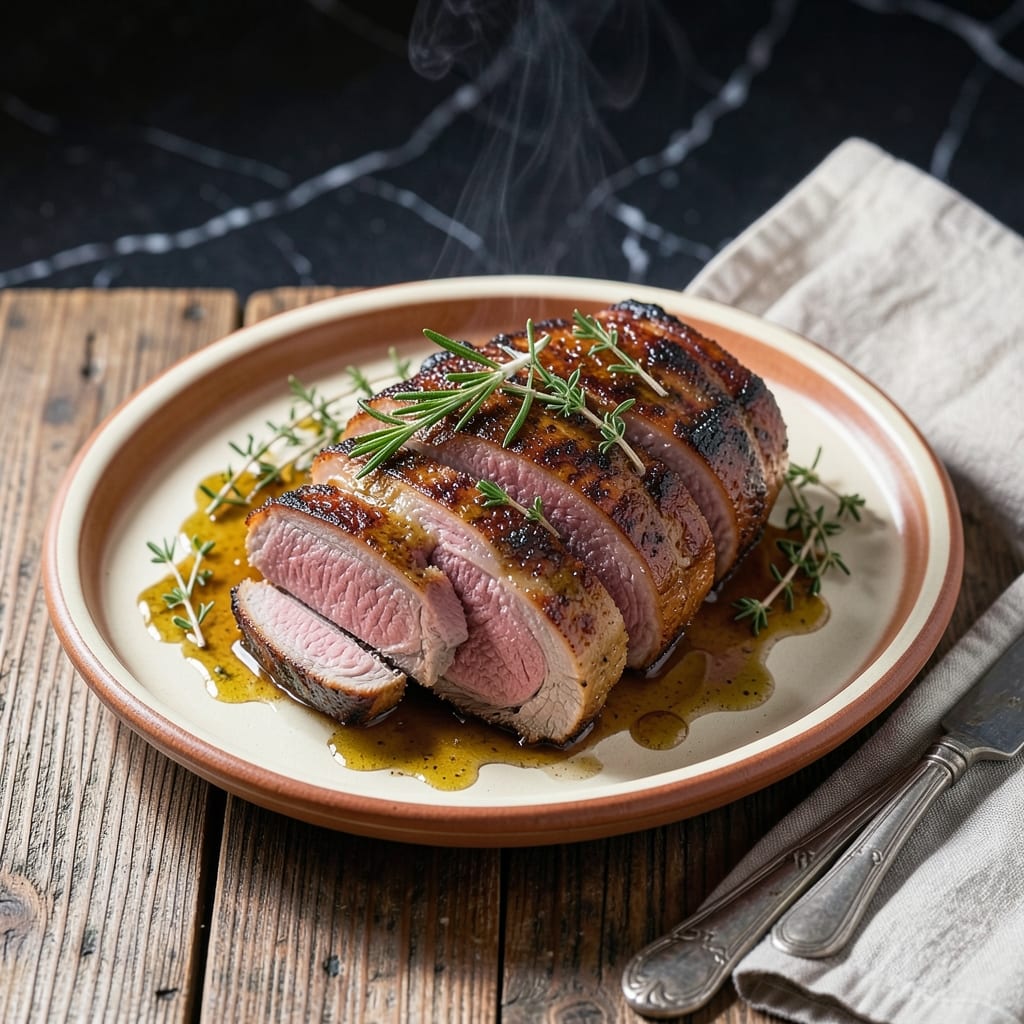
This pan-roasted pork tenderloin delivers tender results with minimal effort and maximum flavor. A simple herb crust transforms an affordable cut into a dish worthy of special occasions.
The key is searing the meat in a hot pan to develop a golden crust, then finishing it in the oven for even cooking. This method locks in juices while creating a perfectly browned exterior.
With just 30 minutes of active time, you can produce a main course that looks and tastes like it came from a fine dining kitchen. The herb crust adds aromatic depth without overpowering the pork’s natural sweetness.
Let the meat rest after cooking to redistribute the juices. This ensures each slice remains moist and flavorful when served.
Ingredients for Pan-roasted Pork Tenderloin
A short list of quality ingredients creates this herb-crusted pork tenderloin with restaurant-worthy results.
| Ingredient | Amount | Notes |
|---|---|---|
| Pork Tenderloin 🥩 | 1 ½ lb | Trimmed of silver skin |
| Olive Oil 🫒 | 2 tbsp | Divided, for searing |
| Kosher Salt 🧂 | 1 tsp | Plus more to taste |
| Black Pepper 🌶️ | ½ tsp | Freshly ground preferred |
| Fresh Rosemary 🌿 | 2 tbsp | Finely chopped, stems discarded |
| Fresh Thyme 🍃 | 2 tbsp | Leaves stripped from stems |
| Garlic Cloves 🧄 | 4 cloves | Minced for herb crust |
| Dijon Mustard 🟡 | 2 tbsp | For crust adhesion |
| Dry White Wine 🍷 | ¼ cup | For deglazing pan |
| Chicken Stock 🥣 | ½ cup | Low-sodium preferred |
| Unsalted Butter 🧈 | 2 tbsp | For finishing sauce |
| All-Purpose Flour 🌾 | 1 tsp | Optional, for thickening |
[recipe_ingredient_scaler]
The pork tenderloin is the star here. Choose 1.5 lb trimmed pieces from a reputable butcher or the meat counter at Whole Foods. Look for even color and minimal fat—this cut is naturally lean. The herb crust relies on fresh rosemary and thyme, so grab these from the produce section (avoid dried for this recipe). A good Dijon mustard like Grey Poupon adds the perfect tang to bind everything together.
No white wine? Chicken broth with a squeeze of lemon works in a pinch. Fresh herbs can be swapped for dried at one-third the amount, but the flavor won’t be as bright. For the stock, low-sodium is key—you control the salt. If you’re avoiding gluten, skip the flour or use cornstarch instead. The butter can be omitted, but it adds a silky finish to the pan sauce.
Store the tenderloin in its original packaging for up to 3 days in the fridge, or freeze for 6 months. Fresh herbs keep 1 week wrapped in damp paper towels. The finished dish reheats well—just slice and warm gently in the pan sauce to keep it moist.
Why You’ll Love This Recipe
- One Pan Wonder: I love that everything cooks in a single skillet—just sear, roast, and serve.
- Herb Crust Magic: The rosemary and black pepper create this ridiculous crust that’s crispy outside, tender inside.
- Weeknight Hero: Honestly, it’s my go-to when I need dinner ready before the kids start asking for snacks.
- Budget-Friendly Feast: A pork tenderloin feeds four for the price of two steaks, and leftovers make killer sandwiches.
Step-by-Step Instructions for Pan-Roasted Pork Tenderloin
Here’s the method that guarantees tender, herb-crusted pork with a perfect sear every time.
Step 1: Prepare and Season the Pork Tenderloin
Pat the 1.5 lb pork tenderloin dry with paper towels—this ensures a proper sear. Trim any remaining silver skin if needed. Season all sides generously with 1 tsp kosher salt and 0.5 tsp black pepper. This step is crucial for flavor penetration and even browning.
In a small bowl, mix 2 tbsp Dijon mustard, 2 tbsp fresh rosemary, 2 tbsp fresh thyme, and 4 cloves garlic cloves. Spread this mixture evenly over the pork, pressing gently to adhere. The mustard acts as a binder for the herb crust, creating a flavorful barrier that locks in moisture.
Step 2: Sear the Pork for a Golden Crust
Heat 1 tbsp olive oil in a large oven-safe skillet over medium-high heat until it shimmers. Add the pork tenderloin and sear for 3-4 minutes per side until golden brown. You’ll know it’s ready to flip when it releases easily from the pan.
Use tongs to turn the pork—avoid piercing it with a fork, which releases precious juices. After searing all sides, transfer the pork to a plate and set aside. The skillet should have a good layer of browned bits (fond) that will be used for the pan sauce.
Step 3: Deglaze and Create the Pan Sauce
Reduce heat to medium and add 0.25 cup dry white wine to the skillet. Use a wooden spoon to scrape up all the browned bits from the bottom of the pan. Let the wine simmer for 2-3 minutes until reduced by half—this concentrates the flavors.
Pour in 0.5 cup chicken stock and bring to a gentle simmer. If you prefer a thicker sauce, sprinkle in 1 tsp all-purpose flour and whisk until smooth. Let the sauce cook for 3-4 minutes until it begins to thicken slightly, then whisk in 2 tbsp unsalted butter for a glossy, rich finish.
Step 4: Finish Cooking the Pork and Serve
Return the pork tenderloin to the skillet, spooning the pan sauce over the top. Transfer the skillet to a preheated 400°F oven and roast for 10-12 minutes until the internal temperature reaches 145°F. Use a meat thermometer for accuracy—this ensures the pork stays juicy and tender.
Remove the skillet from the oven and let the pork rest in the sauce for 5 minutes before slicing. This resting period allows the juices to redistribute, so each slice remains moist. Drizzle any remaining sauce over the top and serve immediately.
Pro Tips For Making Pan-Roasted Pork Tenderloin
- Pat It Dry: Use paper towels to thoroughly dry the tenderloin before seasoning—moisture is the enemy of a good sear, and I learned this the hard way after too many pale, steamed-looking cuts.
- Start Hot, Finish Low: Sear the pork over medium-high heat for 2-3 minutes per side to get that crust, then drop to medium-low to cook through without burning the rosemary.
- Skip Cold Meat: Let the tenderloin sit at room temperature for 20-30 minutes before cooking—cold pork seizes up in the pan and cooks unevenly, no matter how hot your oil is.
- Rest Under Foil: Tent the pork with foil after cooking and let it rest for 10 minutes; it keeps the juices inside where they belong instead of all over your cutting board.
Regional Styles of This Recipe
French Herb Crust
In Provence, they use herbes de Provence instead of rosemary and thyme. Mix 2 tbsp dried herbes de Provence with 2 tbsp Dijon mustard and 1 tbsp chopped tarragon. The lavender notes add a floral touch that’s distinctly French. 🌿
German Mustard Style
For a Bavarian twist, replace the Dijon with whole-grain mustard and add 1 tbsp caraway seeds to the herb crust. Serve with sauerkraut and boiled potatoes. I love how the caraway complements the pork’s natural sweetness.
Asian Five-Spice
Swap the herbs for 1 tbsp five-spice powder mixed with 1 tbsp soy sauce and 1 tbsp honey. Sear as usual, then deglaze with rice wine instead of white wine. This Chinese-inspired version pairs well with steamed jasmine rice.
Cajun Blackened
Create a blackening spice mix with 1 tbsp paprika, 1 tsp cayenne, 1 tsp garlic powder, and 1 tsp onion powder. Press this onto the pork before searing in a screaming hot cast-iron skillet. 🔥
Mediterranean Citrus
Add zest from 1 lemon and 1 orange to your herb crust. Use olive oil for searing and deglaze with ouzo or dry vermouth. Finish with a squeeze of fresh lemon juice before serving.
Southwest Chipotle
Mix 1 tbsp chipotle powder with 1 tbsp adobo sauce from canned chipotles. The smoky heat works beautifully with pork. Deglaze with beer instead of wine, and garnish with fresh cilantro.
Nutrition Facts
Frequently Asked Questions
How do I know when the pork is done?
Use a meat thermometer to check for 145°F internally. The pork will continue cooking while resting, so remove it just below this temp. Overcooking makes it dry.
Can I use a regular pan instead of oven-safe?
You can sear in a regular pan, but finish in the oven using a baking sheet. Transfer carefully to avoid losing the herb crust. An oven-safe skillet is ideal.
What if my herb crust falls off during cooking?
Press the crust firmly onto the pork before searing. If some falls off, it’s fine—it’ll still flavor the pan sauce. Avoid over-handling the meat.
Can I make this without wine?
Substitute 0.25 cup chicken broth with 1 tsp lemon juice for acidity. The sauce will still be delicious, just milder in flavor.

Trained in classic French technique but raised on slow-cooked ribs and spicy rubs, she blends culinary skill with smoke and soul.
- Recipe for Boneless Pork Chops in Cast Iron Skillet: Sear and Baste to Juicy Perfection - October 3, 2026
- Recipe for Boneless Cross Rib Roast: Slow-Roasted Beef with Herb Crust - October 3, 2026
- Hamburgers in Sauce Recipe Crock Pot: Slow-Cooked Savory Delight - October 3, 2026