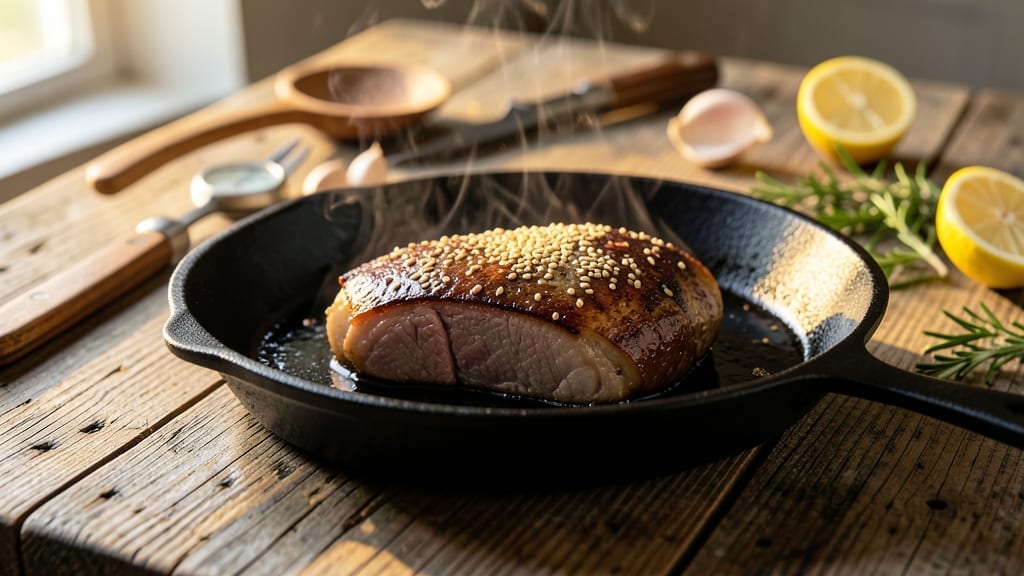
Unlock the secrets of a foolproof pellet smoker pork loin recipe to turn an everyday cut into a competition-worthy masterpiece with a crackling crust and melt-in-your-mouth tenderness.
Growing up in small-town Georgia, I learned that pork’s magic lies in patience—low heat, steady smoke, and letting the meat work its own magic. This recipe delivers restaurant-quality results without requiring a commercial smoker.
The key to success begins with a proper seasoning blend—just salt, pepper, and a touch of brown sugar—to create that coveted bark while keeping the interior moist. Using hickory or applewood pellets at 225°F for 1.5–2 hours ensures even cooking and deep flavor penetration.
Internal temperature is critical: aim for 145°F before resting, which allows the juices to redistribute for maximum tenderness.
What you’ll end up with is a perfectly smoked pork loin that’s crisp on the outside, tender on the inside, and infused with that unmistakable smoky aroma. The bark will be rich and caramelized, while the meat remains succulent enough to slice cleanly.
This is the kind of dish that makes guests ask for seconds—and makes you look like a pitmaster.
Serve with classic Southern sides like collard greens or cornbread to complete the meal. The leftovers reheat beautifully, making this recipe ideal for meal prep or feeding a crowd. Let’s get smoking!
Ingredients for pellet smoker pork loin
Just pork, salt, sugar, and smoke. Six hours later, perfection.
| Ingredient | Amount | Notes |
|---|---|---|
| Boneless Pork Loin 🐷 | 4 lb | Center-cut, trimmed of fat |
| Diamond Crystal Kosher Salt 🧂 | 2 tbsp | For seasoning crust |
| Freshly Ground Black Pepper 🌶️ | 1 ½ tbsp | Coarse grind preferred |
| Light Brown Sugar 🍚 | ½ cup | Packed, for caramelization |
| Hickory Wood Pellets 🌳 | 2 lb | Or applewood for fruitier smoke |
| Applewood Wood Pellets 🍎 | 1 lb | For mixed wood flavor |
| Butcher Paper 📄 | 1 sheet | For wrapping during smoke |
| Meat Thermometer 📏 | 1 whole | Instant-read preferred |
| Aluminum Foil 🔥 | 1 sheet | For wrapping after smoking |
| Pork Broth 🍲 | ½ cup | For basting, optional |
| Unsalted Butter 🧈 | ¼ cup | For basting, optional |
| Pork Loin Spice Blend 🌿 | ¼ cup | Homemade or store-bought |
[recipe_ingredient_scaler]
The pork loin is your star—center-cut, bone-in if you can find it, but boneless works fine. Trim any visible fat (it turns to grease) and pat dry with paper towels. Costco or local butchers often have the best cuts—ask for a loin with good marbling. Hickory pellets give that classic smoky depth, but applewood adds a sweeter, fruitier note. I like mixing both for balance. The Diamond Crystal salt is non-negotiable—regular table salt won’t dissolve evenly and can leave gritty spots on your bark. Pro tip: buy pellets in bulk and store them in airtight containers to keep them fresh.
No hickory pellets? Mesquite or cherry wood works, though the flavor is more intense. Short on time? Use a pre-made pork rub instead of making your own blend—just double-check the salt content. The brown sugar is key for that caramelized crust, but coconut sugar works too if you’re avoiding refined stuff. For basting, pork broth or apple juice keeps the meat moist. And if you’re using a thermometer, instant-read is a must—it’s the only way to get that perfect 145°F internal temp without overcooking. Don’t skip the wrapping with butcher paper—it traps moisture and keeps the bark from getting too tough.
This isn’t a quick meal—plan for 6-8 hours total, including prep and smoking time. The pork loin will keep 4-5 days in the fridge if wrapped tightly in foil, but honestly, it’s better sliced and served within 2 days. For leftovers, reheat in a skillet with a splash of broth to restore that smoky flavor. Freezing works too, but the texture gets slightly grainier. I always make extra—it disappears in one sitting. The bark gets even better the next day, so don’t rush it. And if you’re feeding a crowd, double the pellets and adjust cooking time—just keep an eye on the thermometer.
Why You’ll Love This Recipe
- I’ll be real: this isn’t one of those recipes where you’re staring at a clock, stressing over timing. Just dry the pork, slap on the salt, pepper, and sugar, then let the smoker do the heavy lifting. The 30-minute rest before smoking? Game-changer. It keeps the meat cooking evenly, so you’re not babysitting it the whole time.
- No-Fuss Smoking: I’ll be real: this isn’t one of those recipes where you’re staring at a clock, stressing over timing. Just dry the pork, slap on the salt, pepper, and sugar, then let the smoker do the heavy lifting. The 30-minute rest before smoking? Game-changer. It keeps the meat cooking evenly, so you’re not babysitting it the whole time.
- Crust Meets Cream: That crispy sugar crust from the light brown sugar? Chef’s kiss. But here’s the secret sauce: the butcher paper wrap with pork broth and butter turns it into a creamy, fall-apart center. You get the best of both worlds—smoky bark with a melt-in-your-mouth interior.
- Leftover Legend: Between us, I’ve never met a pork lover who didn’t devour leftovers. Slice it against the grain, and those cold sandwiches the next day? Dangerously good. Or, if you’re feeling fancy, pile it on a charcuterie board with pickles and cheese. It’s that versatile.
Step-by-step instructions for smoked pork loin
Here’s how to transform that pork loin into tender, juicy perfection with a smoky crust you’ll want to savor.
Prepare the Pork Loin for Maximum Flavor
Start by patting the 4 lb boneless pork loin dry with paper towels—this ensures the seasoning sticks and the crust develops properly. Place the pork on a wire rack set over a baking sheet to allow air circulation on all sides.
In a small bowl, combine the 2 tbsp diamond crystal kosher salt, 1½ tbsp freshly ground black pepper, and ¼ cup pork loin spice blend. Rub this mixture all over the pork, pressing firmly so the spices penetrate the surface. Then, sprinkle the ½ cup packed light brown sugar evenly over the entire surface. The sugar will caramelize during smoking, creating that coveted crust.
Let the seasoned pork rest at room temperature for 30 minutes before smoking. This step is crucial—it allows the meat to cook more evenly and prevents temperature shock when it hits the smoker. Don’t skip this, even if you’re eager to get started.
Set Up the Smoker and Smoke the Pork
Fill your pellet smoker with 2 lb hickory wood pellets and 1 lb applewood wood pellets. Set the temperature to 225°F and let it preheat for at least 15 minutes until you see clean, blue smoke. The mixed woods give you that perfect balance of rich hickory and slightly sweet applewood flavors.
Once the smoker is ready, place the pork loin directly on the smoker grates, fat side up if applicable. Insert the meat thermometer into the thickest part of the pork, making sure it doesn’t touch bone. Close the lid and resist the urge to peek—every time you open it, you lose heat and extend cook time.
Smoke the pork for 4-5 hours, or until the internal temperature reaches 145°F. You’ll notice the sugar starting to caramelize around the edges, creating a beautiful crust. This is when the magic happens—the smoky flavors penetrate deeply while the sugar creates that irresistible bark.
Wrap and Finish for Ultimate Tenderness
When the pork reaches 145°F, it’s time to wrap it. Tear off a large sheet of butcher paper and place the pork in the center. Pour ½ cup pork broth over the pork, then add the ¼ cup unsalted butter. Fold the butcher paper tightly to seal, creating a makeshift pouch that traps steam and keeps the meat moist.
Return the wrapped pork to the smoker and continue cooking until the internal temperature reaches 203°F. This final stage, often called the “Texas crutch,” ensures the pork becomes fork-tender while maintaining that beautiful crust. The process typically takes another 2-3 hours, but use your meat thermometer as the guide—temperature is more reliable than time.
Rest and Slice for Juicy Perfection
Once the pork reaches 203°F, remove it from the smoker and transfer it to a cutting board. Tent loosely with aluminum foil and let it rest for at least 30 minutes. This resting period is non-negotiable—it allows the juices to redistribute throughout the meat, ensuring every slice is moist and flavorful.
After resting, slice the pork loin against the grain into ½-inch thick slices. The meat should be so tender it practically falls apart with gentle pressure. Serve immediately with your favorite sides, and don’t forget to save those juicy slices for sandwiches the next day—they’re even better cold.
Pro Tips For Making Pellet Smoker Pork Loin
- Preheat Smoker Properly: I learned this the hard way—skipping the 15-minute preheat with the 2 lb hickory and 1 lb applewood pellets means uneven smoke and wasted time. That blue smoke signal? Your cue to start cooking, not just when you think it’s ready.
- Pack That Sugar: The ½ cup light brown sugar won’t caramelize evenly if it’s loosely sprinkled. Press it into the pork’s surface like you’re frosting a cake—this guarantees that sticky, glass-like bark instead of clumpy patches. (Yes, even if it looks messy at first.)
- Don’t Rush the Rest: That 30-minute room-temperature rest before smoking isn’t optional—it’s how you avoid a cold center. I used to skip it when I was impatient, and the pork always came out unevenly cooked. Trust the process.
- Seal the Butter Tight: When wrapping the pork in butcher paper with the ¼ cup butter and ½ cup broth, fold the edges like you’re wrapping a burrito. A loose seal means the butter will pool at the bottom, leaving parts of the meat dry. Double-check those creases.
Pro cooking tips for pellet smoker pork loin
Master the Smoker Temp
Pellet smokers are forgiving, but 225°F is your sweet spot for pork loin. I use a Traeger Pro 575 because it maintains temperature like a dream, but any quality pellet smoker will work.
If your smoker struggles to stay consistent, add 10-15 minutes to your total cook time. Pro tip: Keep your pellet hopper full—empty pellets mean temperature drops and uneven cooking. 🌡️
The Butcher Paper Hack
Butcher paper is my secret weapon for that perfect bark while keeping the meat moist. I wrap the pork at 145°F with ½ cup pork broth and ¼ cup butter—this creates steam that tenderizes without making the crust soggy.
If you don’t have butcher paper, heavy-duty aluminum foil works in a pinch, but it won’t give you that same crispy texture.
Thermometer is Non-Negotiable
Never trust the smoker’s display—it’s not accurate enough for pork. I use a Thermoworks Smoke instant-read thermometer because it gives me precise readings in seconds. Insert the probe into the thickest part of the meat, avoiding fat or bone.
When the pork hits 203°F, it’s done—no exceptions. Your eyes can’t tell you that; only the thermometer can.
Rest Like a Pro
After smoking, let the pork rest for at least 30 minutes before slicing. This isn’t just a suggestion—it’s the difference between juicy perfection and a dry mess. I cover it loosely with foil to keep it warm but not steaming.
If you slice too soon, all those delicious juices will run out, and you’ll end up with a sad, dry slab of meat. Trust me, I’ve made that mistake.
Slice Against the Grain
This is where the real magic happens. Using a sharp knife, slice the pork ½-inch thick against the grain—this shortens the muscle fibers and makes every bite tender. I always use a Dexter-Russell 12-inch slicing knife because it’s heavy enough to cut through the bark cleanly.
If you don’t have one, a good chef’s knife will work, but you’ll need to apply more pressure.
Nutrition facts
Frequently asked questions
Why does the recipe call for resting the pork before slicing?
Resting is essential because it lets the juices redistribute evenly throughout the meat. When you cut into pork too soon, all those delicious fluids escape, leaving you with dry slices. The 30-minute rest ensures every bite is moist and flavorful—trust the process!
Can I use foil instead of butcher paper for wrapping?
Foil works in a pinch, but butcher paper creates that perfect crispy bark while keeping the meat moist. The paper allows steam to escape gradually, preventing a soggy crust. For best results, stick with butcher paper at 145°F before wrapping.
How do I know when the pork is fully cooked?
Use an instant-read thermometer to check the thickest part of the pork—it should reach 203°F for fork-tender perfection. The smoker’s display isn’t reliable, so don’t rely on guesswork!
What’s the best way to reheat leftovers?
Gently warm slices in a skillet with ½ cup pork broth or apple juice over low heat. This restores the smoky flavor without drying out the meat. Leftovers taste even better cold in sandwiches!

Trained in classic French technique but raised on slow-cooked ribs and spicy rubs, she blends culinary skill with smoke and soul.
- Smoked Chicken Salad Recipe: Crispy, Smoky Bites With Creamy Ranch Dressing - October 19, 2026
- Beer Can Chicken in a Smoker Recipe: Juicy, Herbed Perfection in One Can - October 19, 2026
- Brined Beef Brisket Recipe: Ultra-Tender, Juicy Cuts in One Pot - October 19, 2026