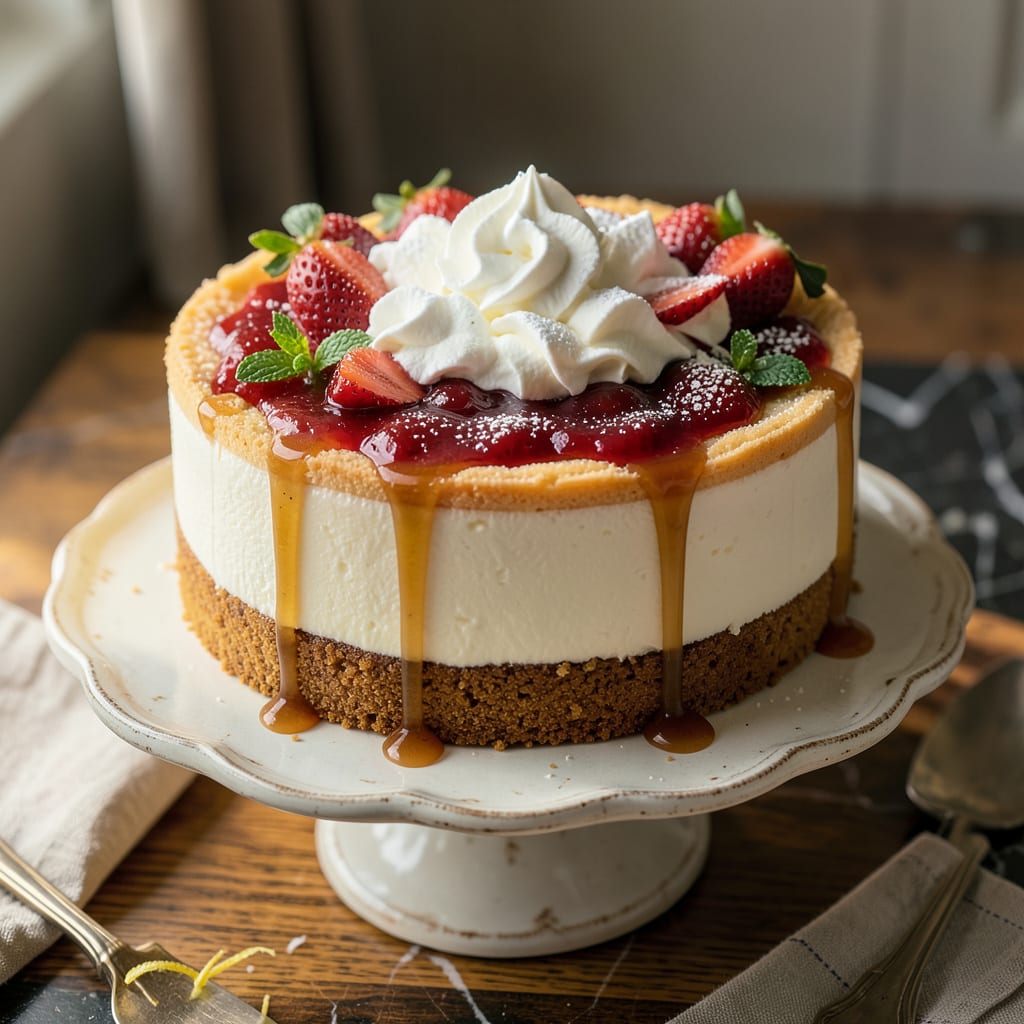
The classic Philadelphia Cream Cheese box recipe makes a rich, creamy cheesecake with a graham cracker crust. It requires 5 blocks of cream cheese, sugar, vanilla, eggs, and a simple water bath for baking at 325°F.
This timeless recipe has been perfected over decades to deliver that iconic velvety texture we all crave. 🔥 The secret lies in the full-fat cream cheese blocks—they provide the ideal fat-to-protein ratio for a dense yet smooth filling. I’ve found that the water bath technique (baking the pan in a larger tray of hot water) creates a gentle, even heat that prevents unsightly cracks on the surface. What most home bakers don’t realize is how crucial the room-temperature ingredients are—cold cream cheese or eggs can create lumps that ruin the silky finish.
That 325°F baking temperature isn’t arbitrary either—it’s the sweet spot where the eggs set gradually without scrambling, while the sugar caramelizes just enough to add depth without browning. ✨ The graham crust acts as the perfect textural contrast, its buttery crunch balancing the luscious filling. This recipe’s brilliance is in its simplicity: no fancy equipment, just precise technique and quality ingredients.
💡 In This Article
- Why the Original Philadelphia Cheesecake Recipe Works Perfectly
- Step-by-Step Tips for Flawless Box Recipe Cheesecake
Why the Original Philadelphia Cheesecake Recipe Works Perfectly
The magic starts with the full-fat cream cheese blocks—each contains about 33% milkfat, which creates that signature dense yet velvety texture. The fat molecules coat the proteins, preventing them from over-tightening during baking. This is why low-fat versions often turn out grainy or rubbery.
The recipe calls for 5 blocks (40 oz total) to achieve the perfect balance between richness and structure, with just enough protein from the eggs to hold everything together without becoming cakey.
Here’s where the science gets fascinating: the 4 large eggs provide both structure and moisture. When heated, egg proteins unfold and link together, forming a delicate network that traps air and liquid. The 1 cup sugar does more than sweeten—it interferes with protein bonding just enough to keep the texture tender rather than tough.
Sugar also lowers the freezing point, which is why this cheesecake stays scoopably soft even when chilled. The 1 tsp vanilla isn’t just for flavor; its alcohol content helps distribute fat molecules more evenly throughout the batter.
The water bath (baking the pan in 1 inch of hot water) creates a humid environment that prevents the surface from drying out too quickly. This gentle, even heat allows the center to cook at the same rate as the edges, eliminating that dreaded “cheesecake canyon” crack.
🔥 The 325°F oven temperature is critical—too hot and the eggs scramble, too cool and the filling won’t set properly. This moderate heat gives the proteins time to coagulate gradually while the sugar caramelizes just slightly for depth of flavor.
What most bakers overlook is how the graham cracker crust contributes to the final texture. The 1½ cups crumbs mixed with ⅓ cup sugar and 6 tbsp melted butter creates a stable base that absorbs moisture from the filling during baking. This prevents a soggy bottom while adding that essential buttery crunch.
The crust’s slight sweetness also balances the tangy cream cheese, creating that perfect sweet-tart harmony we associate with classic cheesecake.
The 1-hour bake time followed by 1-hour oven cooling with the door cracked isn’t just tradition—it’s physics. This gradual temperature drop prevents sudden contraction that causes cracks. The final 4-hour chill (minimum!) allows the filling to fully set as the fats solidify.
✨ What emerges is a cheesecake with the ideal 6:1 ratio of filling to crust, where every bite delivers that perfect contrast of creamy and crunchy.
Even the mixing method matters: creaming the cheese first incorporates air that expands during baking, creating tiny pockets that make the texture feel lighter. The recipe’s instruction to “add eggs one at a time” prevents overmixing, which would develop too much gluten from the flour in the graham crumbs.
This attention to detail at every step—from ingredient ratios to baking environment—is why this recipe has stood the test of time since it first appeared on Philadelphia Cream Cheese boxes in the 1920s.

Trained in classic French technique but raised on slow-cooked ribs and spicy rubs, she blends culinary skill with smoke and soul.
- Octopus Recipe Pan Fried: Crispy Edges With Tender Bites - October 3, 2026
- Recipe For Fried Pork Chops In An Iron Skillet: Crispy Crust With Juicy Centers - October 3, 2026
- Recipe for Fully Cooked Spiral Ham: Sweet Glaze and Effortless Elegance - October 3, 2026