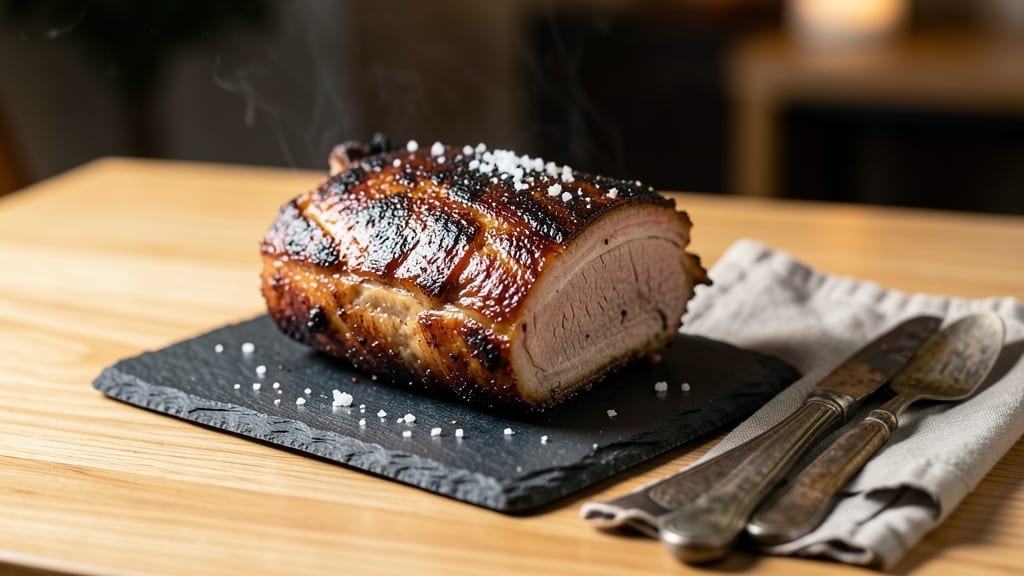
Mastering a Pit Boss smoked pork roast transforms weeknight dinners into showstopping meals that taste like they came from a pitmaster’s competition table.
Growing up in small-town Georgia, I learned that pork roast isn’t just dinner—it’s the centerpiece that brings people together, and this method delivers restaurant-quality results at home with precision and care.
The secret to juicy, smoky perfection lies in two key techniques: low-and-slow smoking followed by a precise internal temperature check. Using your Pit Boss smoker, we’ll maintain a steady 225°F with hickory or applewood for that classic balance of smokiness and sweetness.
A simple salt-and-pepper rub lets the natural flavors shine while the reverse sear at the end ensures a crisp exterior without drying out the meat.
What you’ll end up with is a pork roast that’s fork-tender, deeply flavorful, and packed with that unmistakable smoky aroma that fills your kitchen. The crust will be golden and crackling, while the inside remains moist and rich—a perfect harmony of textures and tastes.
This is the kind of dish that makes your table the place to be, whether it’s Sunday dinner or a special gathering.
Pair it with classic sides like creamy mashed potatoes, tangy apple sauce, or a fresh garden salad to complete the meal. The beauty of this recipe is its versatility—easy to prepare ahead, reheats beautifully, and always delivers that crowd-pleasing satisfaction. Let’s get started on creating your perfect smoked pork roast.
Ingredients for pit boss smoked pork roast
Pantry staples meet smoker magic for restaurant-quality pork roast that’s juicy and smoky.
| Ingredient | Amount | Notes |
|---|---|---|
| Boneless Pork Shoulder Roast 🥩 | 4 lb | Well-marbled, bone-in preferred |
| Yellow Mustard 🍯 | ¼ cup | For base of rub |
| Coarse Kosher Salt 🧂 | ½ cup | Diamond Crystal preferred |
| Freshly Ground Black Pepper 🌶️ | 2 tbsp | Coarse grind for texture |
| Smoked Paprika 🌶️ | 1 tbsp | For deep smoky flavor |
| Garlic Powder 🧄 | 1 tbsp | Fresh ground preferred |
| Onion Powder 🧅 | 1 tbsp | For sweet depth |
| Hickory Wood Chips 🌳 | 2 cups | Or applewood for fruitier smoke |
| Apple Cider Vinegar 🍎 | 2 tbsp | For tenderizing soak |
| Unsalted Butter 🧈 | ¼ cup | Cold, for reverse sear |
| Fresh Rosemary 🌿 | ¼ cup | Chopped, for aromatic finish |
| Fresh Thyme 🌿 | ⅛ cup | Leaves only, for brightness |
| Yellow Onion 🧅 | 1 whole | Quartered, for smoke box |
| Apple Wood Chips 🍎 | 1 cup | Optional for fruitier smoke |
[recipe_ingredient_scaler]
The pork shoulder is the star—look for well-marbled cuts at your butcher or Costco. Bone-in stays juicier, but boneless works too. For the rub, Diamond Crystal kosher salt dissolves better than table salt. I always grab my wood chips from Traeger’s online store—consistent quality. Fresh herbs make a difference here, so grab them last at the grocery store. The mustard in the rub isn’t just flavor—it helps the rub stick better during smoking.
No hickory? Applewood chips work beautifully for a fruitier profile. Running low on fresh rosemary? Dried at half the amount gets you close. The apple cider vinegar soak is optional but worth it—15 minutes max to tenderize without over-acidifying. For the smoke box, yellow onion quarters add sweetness to the smoke. If you’re using a water pan, add a splash of apple juice for extra moisture. The butter for reverse searing should be cold and cubed—don’t skip this step for that perfect crust.
This roast reheats beautifully—350°F for 15 minutes wrapped in foil. Keeps 4-5 days in the fridge, freezes for 3 months wrapped tightly. I always slice it against the grain for perfect texture. For leftovers, slow-cook on low with extra apple cider vinegar to keep it moist. The rub makes extra—store it in an airtight container for up to 6 months.
Why You’ll Love This Recipe
- No-Fuss Rub Magic: I mix ¼ cup yellow mustard with ½ cup kosher salt, smoked paprika, and garlic powder—it’s like a flavor superglue that sticks to the pork overnight. No fancy prep, just slather, refrigerate, and forget about it.
- Smoky, Buttery Perfection: The reverse sear with cold butter and fresh herbs at the end? Chef’s kiss. You get that crispy bark with the creamiest, most tender center—like a cross between pulled pork and a juicy steak.
- Leftovers That Shine: This roast keeps for 4-5 days in the fridge, and honestly, the second day is even better. Slice it thin for tacos, sandwiches, or just pile it on mashed potatoes—it’s that versatile.
- Budget-Friendly Feast: A 4 lb pork shoulder feeds a crowd without breaking the bank, and the extra rub? I save it for ribs or chicken. My secret weapon for big gatherings or lazy weeknights.
Step-by-step instructions for smoked pork shoulder roast
Here’s the foolproof method I use to achieve melt-in-your-mouth tenderness with a perfect bark every time.
Prepare the Pork with the Mustard Base Rub
Start by placing the 4 lb boneless pork shoulder roast on a cutting board. In a small bowl, combine the ¼ cup yellow mustard, ½ cup coarse kosher salt, 2 tbsp freshly ground black pepper, 1 tbsp smoked paprika, 1 tbsp garlic powder, and 1 tbsp onion powder. Mix thoroughly until you have a thick, paste-like consistency.
Spread this mixture evenly over the entire surface of the pork, pressing it into the meat so it adheres well. This mustard base creates a perfect bark while keeping the meat juicy. Wrap the pork tightly in plastic wrap and refrigerate for at least 4 hours or overnight. The longer it rests, the deeper the flavor penetration.
Set Up the Pit Boss for Low and Slow Cooking
Soak the 2 cups hickory wood chips and 1 cup apple wood chips in water for 30 minutes before using. This prevents them from burning too quickly and creates better smoke. Fill the Pit Boss wood chip tray with the soaked chips and set the temperature to 225°F.
Place the 1 yellow onion, quartered, in the smoke box to add sweetness to the smoke. Let the smoker preheat for 15-20 minutes until you see steady, blue smoke with no white puffs. Meanwhile, prepare a large aluminum pan and fill it with 2 tbsp apple cider vinegar. This will be used later for the tenderizing soak.
Smoke the Pork and Handle the Stall
Once the smoker reaches 225°F, place the pork shoulder directly on the grill grates, fat side up. Smoke undisturbed for 6 hours, maintaining a consistent temperature. Every hour, spritz the pork with a mixture of equal parts water and 1 tbsp apple cider vinegar (about 2 tbsp total) using a spray bottle. This keeps the surface moist and prevents a hard bark from forming too early.
Around the 6-hour mark, check the internal temperature using a meat thermometer. When it hits 165°F, you’ll enter “the stall”—the temperature will stop rising as moisture evaporates. This is when you’ll need to act. Wrap the pork tightly in butcher paper (not foil) and return it to the smoker. This technique, called the “Texas crutch,” helps push through the stall while maintaining that perfect bark.
Finish with the Reverse Sear
Continue smoking the wrapped pork until the internal temperature reaches 200-203°F, which should take another 3-4 hours. The meat should be fork-tender, with a probe sliding in like butter. Remove the pork from the smoker and let it rest for 15 minutes before unwrapping.
Heat a cast-iron skillet over high heat and add the ¼ cup unsalted butter. Once the butter is foaming, carefully sear the pork on all sides for 2-3 minutes per side until a deep golden-brown crust forms. This reverse sear locks in the juices while creating a beautiful, crispy exterior. Sprinkle the ¼ cup fresh rosemary and ⅛ cup fresh thyme over the top just before serving.
Pro Tips For Making Pit Boss Smoked Pork Roast
- Soak Wood Chips Properly: I learned this the hard way—dry wood chips turn into bitter ash fast. Soak the 2 cups hickory and 1 cup apple chips in water for the full 30 minutes before loading them into the Pit Boss. This keeps the smoke steady and flavorful, not acrid. Trust me, the difference is night and day.
- Spritz Like a Pro: That apple cider vinegar spray isn’t just for show—use it every hour, about 2 tbsp total, to keep the surface moist. I used to skimp, and my bark ended up dry and tough. The acid also breaks down proteins just enough to help tenderness. Don’t wing it; measure it.
- Butcher Paper Only: Wrapping the pork in foil during the stall is a rookie mistake. Use butcher paper instead—it lets moisture escape while keeping the bark intact. I switched after my first burn, and now the crust stays crispy, not soggy. (Yes, even if you’re impatient like me.)
- Cold Butter for Sear: Grab that ¼ cup unsalted butter straight from the fridge—cold butter creates a better crust when it foams in the cast-iron. I used to melt it first, and the sear never got that golden snap. High heat + cold butter = magic. No shortcuts here.
Creative variations of this dish
Heritage Gloucestershire Style
If you’re raising heritage Gloucestershire Old Spots pigs like me, you’ll love this variation—I add 1 tbsp Worcestershire sauce to the mustard rub for that classic British pork depth. The sauce enhances the natural sweetness of the pork while keeping the smoky profile intact.
I also swap half the hickory wood chips for 1 cup cherry wood chips to add a subtle fruity note that pairs beautifully with the Worcestershire. This version became a favorite at our farm gatherings, especially when paired with crispy roasted potatoes and pickled red onions. 🌟
BBQ Glaze Twist
For a Southern-inspired twist, I replace the apple cider vinegar spritzes with 1 cup store-bought BBQ sauce (like Sweet Baby Ray’s Original) mixed with 1 tbsp apple cider vinegar for acidity.
After the stall, I wrap the pork in butcher paper and continue smoking until it reaches 200°F, then apply a final glaze of ½ cup BBQ sauce before the reverse sear. This creates a caramelized crust with that perfect balance of sweet and smoky.
I often serve this with cornbread and collard greens for a full Southern feast.
Pulled Pork Adaptation
Want to shred it instead of slicing? After the reverse sear, let the pork rest for 30 minutes before unwrapping, then use two forks to pull it apart. For extra moisture, I add ½ cup chicken broth to the butcher paper wrap during the stall phase.
The result is tender, fall-apart pork perfect for sandwiches. I like to serve it on toasted brioche buns with coleslaw and a drizzle of spicy mayo. This version is a crowd-pleaser at tailgates and potlucks.
Spicy Carolina Heat
If you love heat, I add 1 tbsp cayenne pepper and 1 tbsp honey to the mustard rub for a Carolina-style kick. During the stall, I wrap the pork in butcher paper with 2 tbsp hot honey (like Penzeys) mixed into the apple cider vinegar spritz.
The honey caramelizes during the reverse sear, creating a sticky, spicy-sweet crust. This version pairs perfectly with white bread and pickle spears for that classic Carolina BBQ experience. 🔥
Apple Butter & Sage Finish
For a cozy autumn twist, I replace the thyme with 2 tbsp fresh sage during the reverse sear and finish with ¼ cup homemade apple butter spread over the top before serving. The apple butter adds a rich, fruity contrast to the smoky pork.
I also use applewood chips exclusively for a sweeter smoke profile. This version is ideal for Thanksgiving gatherings or any chilly fall night. Serve it with mashed sweet potatoes and crispy bacon for a complete meal.
Nutrition facts
Frequently asked questions
Why does the recipe use mustard in the rub?
The mustard creates a perfect balance—it helps the rub adhere to the meat while preventing a tough exterior. It also adds subtle tanginess that enhances the smoky flavors during cooking. The mustard base ensures a crispy bark without drying out the pork’s interior.
What if my Pit Boss smoker doesn’t reach 225°F consistently?
If your smoker struggles to maintain 225°F, try closing the lid slightly or reducing airflow. Adding a water pan with 2 tbsp apple cider vinegar can also help stabilize the temperature. Just monitor closely and adjust as needed to avoid burning the wood chips.
Can I skip the Texas crutch (wrapping during the stall)?
While you can try, wrapping during the stall is essential for juicy results. Without it, the pork may dry out at 165°F. The butcher paper traps steam while allowing the bark to form. If you skip it, expect a drier texture despite the low-and-slow method.
How do I tell when the pork is done without a thermometer?
Press the thickest part of the meat—it should feel very soft and yield like butter. Also, the juices should run clear when you pierce it. If unsure, use a thermometer to confirm 200-203°F internally. This method ensures perfect doneness every time.

Trained in classic French technique but raised on slow-cooked ribs and spicy rubs, she blends culinary skill with smoke and soul.
- Smoked Brisket Recipe: Low and Slow to Fall-Apart Tenderness - November 2, 2026
- Smoked Turkey Breast Recipe: Juicy Pink Center With Crispy Skin Every Time - November 2, 2026
- Leftover Smoked Pulled Pork Chili Recipe: Rustic Flavor Revival in One Pot - November 2, 2026