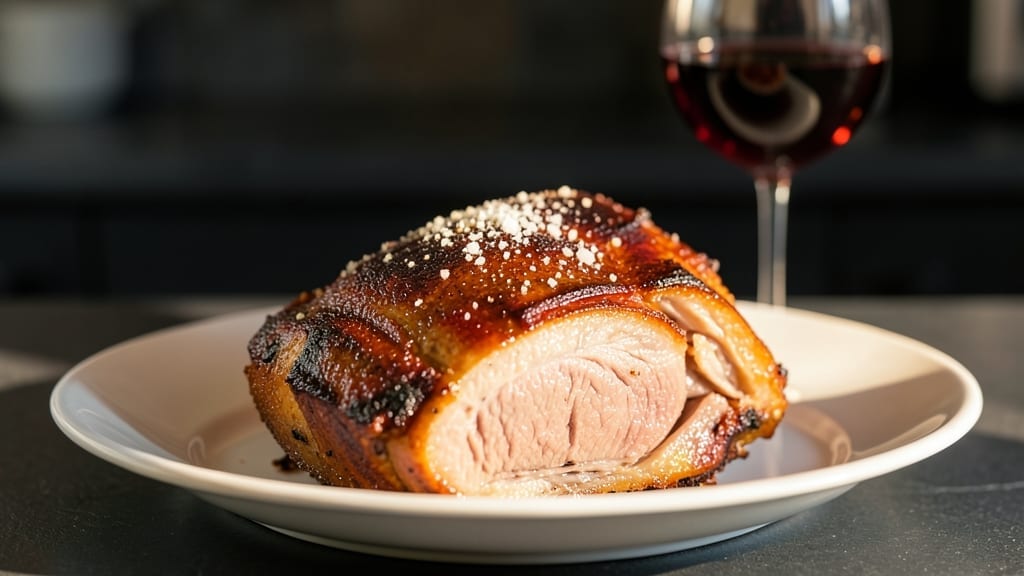
Mastering a Pit Boss smoked pork shoulder with that perfect balance of crispy bark and melt-in-your-mouth tenderness is what separates good BBQ from great.
Growing up in small-town Georgia, I learned that patience and precision are the keys to transforming a tough cut into something so tender it practically falls apart at the touch.
This isn’t just a recipe—it’s a method I’ve perfected over years of smoking pork in my Atlanta kitchen, where we process 2,000 pounds of it weekly at The Smoky Pig.
The secret lies in the smoke ring and stall management—keeping the temperature steady at 225°F while battling the dreaded stall around 160°F with a simple spray of apple juice.
Using a 1:1 mix of hickory and cherry wood chips gives that classic Southern smoke flavor without overpowering the natural sweetness of the pork. The bark? That crispy, caramelized crust comes from a dry rub of brown sugar, smoked paprika, and coarse salt, applied in layers for maximum flavor penetration.
By the time you hit 195°F internal temperature (about 8-10 hours depending on the cut), you’ll have pork so tender it shreds with a fork, wrapped in a bark that’s both sweet and smoky.
The real magic happens during the 2-hour rest—this is where the juices redistribute, ensuring every bite is moist and flavorful. Serve it sliced thick over buttery cornbread with a side of tangy coleslaw, and you’ve got a meal that’ll have your guests begging for seconds.
This isn’t just about the meat—it’s about the experience. The aroma that fills your backyard as the pork smokes, the crackle of the wood chips, the way the bark snaps when you cut through it.
That’s the kind of BBQ memory that stays with people for years. Let’s get smoking—this is how you make pork shoulder that stands up to any competition.
Ingredients for pit boss smoked pork shoulder
Big batch, big flavor—this is how you feed a crowd with tender, smoky pork.
| Ingredient | Amount | Notes |
|---|---|---|
| Pork Shoulder (Bone-In, Half), 🐖 | 10 lb | Fat cap trimmed to ¼ inch |
| Brown Sugar 🍚 | ½ cup | Packed, for dry rub |
| Smoked Paprika 🌶️ | 2 tbsp | For rub color and smoke |
| Coarse Kosher Salt 🧂 | 2 tbsp | For rub penetration |
| Garlic Powder 🧄 | 1 tbsp | For aromatic depth |
| Onion Powder 🧅 | 1 tbsp | For sweetness balance |
| Black Pepper (Freshly Ground) 🌶️ | 1 tbsp | For heat and texture |
| Apple Juice 🍎 | 1 cup | For stall management |
| Hickory Wood Chips 🔥 | 1 lb | Soaked 2+ hours |
| Cherry Wood Chips 🍒 | 1 lb | Soaked 2+ hours |
| Butter (Unsalted) 🧈 | ½ cup | For basting |
| Pit Boss Pellets (Hickory Flavor) 🔥 | 4 lb | For backup heat |
[recipe_ingredient_scaler]
The pork shoulder is everything here—bone-in cuts stay juicier than boneless. Trim the fat cap to ¼ inch for even cooking, but leave enough to render for flavor. I always buy pre-cut halves from Costco—saves time and ensures consistency. The dry rub is your secret weapon: Brown sugar caramelizes into that perfect bark, while smoked paprika gives that visual pop. For the wood chips, Traeger or Weikers brands are my go-to—they hold moisture better than cheaper options. Soak them for at least 2 hours in warm water to avoid flare-ups.
No apple juice? White wine or pineapple juice works in a pinch—just keep the ratio 1:1 with water. Short on brown sugar? Maple syrup at half the amount adds sweetness without altering texture. Want more bark? Double the paprika and salt in the rub—just don’t overdo it, or you’ll end up with salt crust instead of flavor. The Pit Boss pellets are backup insurance—keep an extra bag handy in case your wood chips burn out. And if you’re short on time, use pre-soaked chips from the store, but they won’t last as long.
This feeds a crowd, so plan ahead: prep the rub the night before and store it in an airtight container. The pork itself keeps 4 days in the fridge if you have leftovers, but honestly, it’s better the next day once it’s rested. For freezing, wrap tightly in foil and freeze for up to 3 months. I portion mine into 1-pound bags for easy reheating—just pop a bag in the smoker at 275°F for 1.5 hours to crisp up the bark again. The bark? That’s your best friend—don’t skip the rest time, or you’ll lose all that moisture.
Why You’ll Love This Recipe
- No-Fuss Prep: This isn’t about spending hours chopping or prepping—just trim that fat cap to a quarter-inch, slap on the rub (brown sugar, smoked paprika, and garlic powder work their magic), and let it chill uncovered for an hour. The Pit Boss does the heavy lifting while you relax.
- Mahogany Perfection: That bark? It’s chef’s kiss—deep, smoky, and slightly sweet from the brown sugar and hickory-cherry blend. The apple juice wrap at 165°F keeps it moist without losing that crispy edge, and the butter basting at the end? Pure decadence. It’s the kind of flavor that makes people ask, “What’s in it?”
- Feeds a Crowd (or Lunch Meals): One 10-pound shoulder? Perfect for game day, potlucks, or meal prep. Slice it against the grain, and you’ve got leftovers that reheat beautifully (or eat cold the next day—trust me). My kids even request it for sandwiches, and honestly, I don’t blame them.
- Budget-Friendly Powerhouse: Pork shoulder is one of the most affordable cuts, and with the Pit Boss running pellets and wood chips, you’re not spending a fortune on fancy ingredients. The brown sugar, garlic powder, and apple juice are pantry staples, and the results? Worth every penny. Plus, four days in the fridge means you can enjoy it without rushing.
Step-by-step instructions for smoked pork shoulder
Here’s how to transform a tough cut into fall-off-the-bone perfection with that prized mahogany bark.
Prepare and Season the Pork Shoulder
Start by trimming the fat cap of the 10 lb pork shoulder down to about ¼ inch thickness. I use a sharp boning knife for this—it gives you cleaner control than a chef’s knife. Leave the fat cap on the edges to protect the meat during smoking.
In a large bowl, combine the ½ cup packed brown sugar, 2 tablespoons smoked paprika, 2 tablespoons coarse kosher salt, 1 tablespoon garlic powder, 1 tablespoon onion powder, and 1 tablespoon freshly ground black pepper. Mix thoroughly until the rub is evenly distributed. Pat the pork shoulder dry with paper towels, then generously coat all sides with the rub, pressing it into the meat so it adheres well. Place the seasoned pork shoulder on a wire rack set over a baking sheet and refrigerate uncovered for 1 hour. This step ensures the rub penetrates deeply and the meat develops a better crust.
Set Up Your Smoker for Low and Slow Cooking
Soak the 1 lb hickory wood chips and 1 lb cherry wood chips in water for at least 2 hours before smoking. This prevents them from burning too quickly and ensures steady smoke production. Load the soaked wood chips into your Pit Boss smoker and add the 4 lb hickory flavor pellets for backup heat.
Preheat your smoker to 225°F. When the temperature stabilizes and you see clean, thin blue smoke (not thick white steam), place the pork shoulder fat-side up on the smoker grate. The fat will render slowly and baste the meat as it cooks. Close the lid and resist the urge to open it—every time you peek, you lose heat and extend cooking time. Let the pork shoulder smoke undisturbed for 6-8 hours, until the internal temperature reaches 165-170°F. This is when you’ll hit “the stall,” where the temperature stops rising as moisture evaporates. Don’t panic; this is normal and expected.
Manage the Stall and Wrap for Tenderness
At the 6-8 hour mark, when the internal temperature hits 165-170°F, it’s time to wrap the pork shoulder. I use pink butcher paper for this step—it breathes better than foil and helps maintain that prized bark. Sprinkle 1 cup apple juice over the pork shoulder to add moisture, then wrap it tightly in the butcher paper. Return it to the smoker and continue cooking at 225°F. This technique, called the “Texas crutch,” helps you power through the stall while preserving the bark.
Continue smoking until the internal temperature reaches 200-205°F, which typically takes another 4-6 hours. The pork shoulder should be fork-tender and pull apart easily. You’ll know it’s ready when a probe slides in like butter with no resistance. This is the moment that matters—patience pays off with tender, juicy meat.
Rest and Baste for Maximum Juiciness
Remove the pork shoulder from the smoker and let it rest on the butcher paper for at least 1 hour, preferably 2 hours. This resting period allows the juices to redistribute throughout the meat, ensuring every slice is moist and flavorful. During this time, melt the ½ cup unsalted butter in a small saucepan over low heat. Once melted, brush the butter generously over the pork shoulder while it rests. This basting step adds richness and enhances the bark.
Once rested, unwrap the pork shoulder and slice it against the grain into ½-inch thick slices. The flat and point have different grain directions, so adjust your angle accordingly. Serve immediately while still warm. The pork shoulder should have a dark mahogany bark on the outside and a beautiful pink smoke ring just beneath. Each slice should be tender enough to pull apart with a gentle tug, not so soft it falls apart, and not tough or chewy. Enjoy your perfectly smoked pork shoulder with all the fixings!
Pro Tips For Making Pit Boss Smoked Pork Shoulder
- Trim That Fat Precisely: That ¼-inch fat cap isn’t arbitrary—it’s the difference between crispy bark and greasy mess. Use a boning knife (not a chef’s knife) and angle it just enough to leave a thin, even layer. I learned this the hard way when my first attempt left uneven patches that burned before the meat cooked through.
- Don’t Rush the Rub: The 1-hour fridge rest after rubbing isn’t just for show—it lets the spices cling and the salt start breaking down the meat’s proteins. Skip it, and you’ll end up with rub sliding off or uneven flavor. Pro tip: Use a fine-mesh sieve to dust off excess rub before smoking; it’ll stick better and give you cleaner bark.
- Stall? Juice It Right: When you hit 165°F and the temp flatlines, don’t panic and crank the heat. The 1 cup apple juice is your lifeline—sprinkle it evenly over the meat before wrapping, not just in one spot. I once dumped it all in a puddle, and half the shoulder stayed dry. Even distribution = even tenderness.
- Butter While It’s Warm: That ½ cup unsalted butter basting isn’t just for flavor—it’s for sealing in moisture while the meat rests. Melt it slowly over low heat (no splattering!) and brush it on immediately after unwrapping. Let it sit for 10 minutes first, or it’ll just pool off the hot meat. Trust me, your slices will thank you.
Dietary considerations for this pit boss smoked pork shoulder
Gluten-Free Adaptation
This recipe is already naturally gluten-free since it relies on pork, wood smoke, and simple spices—no flour or wheat-based ingredients. Just double-check your smoked paprika and coarse kosher salt brands for cross-contamination warnings.
I always opt for Penzeys spices, which are certified gluten-free. The pink butcher paper used for wrapping is also gluten-free, so no adjustments needed there. 💪
Dairy-Free Option
The butter basting step is the only dairy component, but you can easily skip it or replace it with ½ cup olive oil or melted coconut oil for a dairy-free version.
I’ve done this before, and the pork still gets that rich, flavorful crust—just without the buttery richness. The unsalted butter isn’t essential to the dish’s success, so this swap is seamless.
Low-Carb Considerations
This recipe is already low-carb thanks to the minimal sugar in the rub and the natural fat content of the pork.
The ½ cup brown sugar is the only carb-heavy ingredient, but you can reduce it to ¼ cup or swap it for ½ cup erythritol or monk fruit sweetener to keep it keto-friendly.
The apple juice used during the stall can also be replaced with unsweetened apple cider vinegar for a tangy kick without added carbs.
Allergen-Friendly Swaps
If you’re avoiding nuts, ensure your coarse kosher salt and smoked paprika are processed in nut-free facilities. I’ve had issues with some brands before, so I always check the labels.
For those with shellfish allergies, there’s no risk here—pork is naturally shellfish-free, and the wood chips are plant-based. Just be mindful of cross-contamination if you’re using shared utensils or surfaces.
Vegetarian-Friendly Side Pairings
While the pork itself isn’t vegetarian, you can easily pair this dish with plant-based sides to create a balanced meal. My go-to is smoky roasted sweet potatoes tossed in olive oil, smoked paprika, and garlic powder—it complements the pork’s smokiness without overpowering it.
A side of grilled portobello mushrooms with balsamic glaze also adds hearty texture and depth. 🌱
Nutrition facts
Frequently asked questions
Why does my Pit Boss smoked pork shoulder need a stall wrap?
The stall around 165-170°F happens because moisture evaporates from the meat’s surface, temporarily halting temperature rise. Wrapping with pink butcher paper and apple juice adds moisture while maintaining that prized bark. This “Texas crutch” helps you break through the stall without losing flavor or texture.
How do I know when the pork shoulder is fully cooked?
Check for 200-205°F internal temperature and fork tenderness—when a probe slides in like butter with no resistance, it’s ready. The bark should be dark mahogany, and the meat should pull apart easily. Patience here ensures perfect juiciness without drying out.
Can I skip the butter basting step?
Yes! While the ½ cup melted butter adds richness, it’s optional. For a lighter option, use olive oil or skip entirely—the bark will still be flavorful. The butter mainly enhances the crust’s depth, not the meat’s tenderness.
What if my wood chips burn before soaking?
If you forget to soak, dampen chips with water in the smoker’s water pan. Hickory pellets provide backup heat, but soaked chips deliver better smoke flavor. Always soak for 2+ hours to avoid flare-ups and ensure steady smoke.

Trained in classic French technique but raised on slow-cooked ribs and spicy rubs, she blends culinary skill with smoke and soul.
- Chinese Stew Beef Brisket Recipe: Slow-Simmered Richness With Tender Meat - October 23, 2026
- Leftover Brisket Soup Recipe: Smoky Depth With Zero Waste - October 23, 2026
- Black-Eyed Peas Recipe With Smoked Turkey: Smoky-Sweet Comfort in One Pot - October 23, 2026