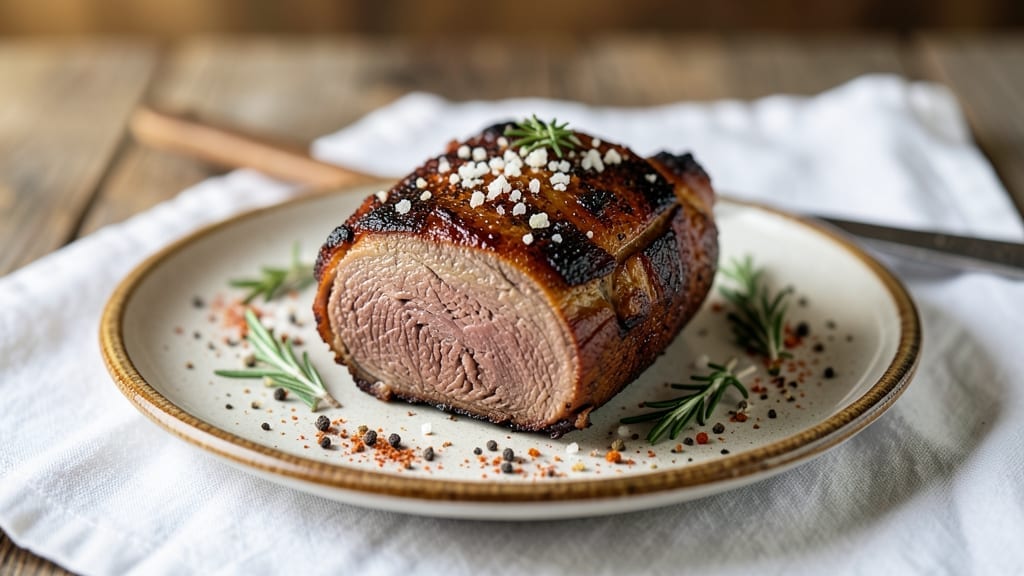
This Pit Boss smoker beef roast recipe turns tough cuts into melt-in-your-mouth perfection that falls apart at the touch of a fork. The secret lies in low-and-slow precision—where time, temperature, and wood choice work together to create restaurant-quality results at home.
I developed this method after years of experimenting with different rubs and smoking techniques, and it never fails to impress.
This recipe starts with a simple yet powerful dry rub that clings to the beef while it smokes, creating a flavorful bark that seals in juices.
Using your Pit Boss smoker, we’ll maintain a steady 225°F temperature for hours, allowing the collagen to break down and transform into gelatin—this is what makes the meat so irresistibly tender. The key is patience; rushing the process will leave you with tough, dry beef.
By the time you pull that roast from the smoker, you’ll have a center cut that practically dissolves with every bite, surrounded by a dark, flavorful crust. The aroma alone will have everyone gathering around the table, and the first slice will reveal juices running freely—a true sign of success.
This isn’t just dinner; it’s an experience that turns a simple meal into a centerpiece.
Whether you’re feeding a crowd or treating yourself to a special meal, this method delivers consistent, foolproof results every time. The Pit Boss smoker ensures precise temperature control, while the low-and-slow approach guarantees tenderness that’s hard to resist.
Let’s get started on creating a roast that will have everyone asking for seconds.
Ingredients for pit boss smoker beef roast
A few simple ingredients. One smoker. Unforgettable beef that melts like butter.
| Ingredient | Amount | Notes |
|---|---|---|
| Beef Chuck Roast 🥩 | 4 lb | Center-cut, well-marbled |
| Coarse Kosher Salt 🧂 | 2 tbsp | Diamond Crystal preferred |
| Freshly Ground Black Pepper 🌶️ | 1 ½ tbsp | Freshly cracked preferred |
| Smoked Paprika 🌶️ | 1 ½ tbsp | For deep smoky flavor |
| Garlic Powder 🧄 | 1 tbsp | Freshly ground preferred |
| Onion Powder 🧅 | 1 tbsp | Not onion salt |
| Ground Cumin 🌿 | 1 tsp | Toasted for warmth |
| Dried Thyme 🍃 | 1 tsp | Or fresh thyme, doubled |
| Hickory Wood Chips 🌳 | 1 package | Unsoaked, for smoker |
| Apple Wood Chips 🍎 | ½ package | For subtle sweetness |
| Beef Broth 💧 | 1 cup | Low-sodium preferred |
| Olive Oil 🫒 | 2 tbsp | For basting |
| Yellow Onion 🧅 | 1 whole | For basting liquid |
| Fresh Rosemary 🌿 | 4 sprigs | For aroma and flavor |
[recipe_ingredient_scaler]
The beef is everything here—chuck roast is your best bet for that fall-apart texture. Look for a cut with good marbling (that white fat streaked through the meat). Costco or local butchers usually have the best quality, but any well-stocked grocery store will carry it. If you’re buying a whole roast, ask for it to be trimmed of excess fat—you want flavor, not grease. The rub ingredients are all pantry staples, but Penzeys or the spice aisle at Whole Foods will have the freshest, most flavorful options. That said, don’t stress if your spices are older—they’ll still work, just toast them in a dry pan for 30 seconds to wake up the flavors.
No smoked paprika? Regular paprika plus a pinch of liquid smoke gets you close. Fresh thyme instead of dried? Use twice the amount. The wood chips can be swapped—mesquite for boldness or cherry for sweetness. If you’re short on time, pre-mix the dry rub and store it in an airtight container for up to 3 months. The beef broth? Low-sodium is key—you don’t want to over-salt your roast. And if you’re feeling fancy, add a splash of red wine to the basting liquid for extra depth. The onions for basting can be any kind—yellow, red, even shallots—but yellow is the most accessible and forgiving.
This roast tastes even better the next day once the flavors meld. Store it wrapped tightly in the fridge for up to 5 days or freeze portions for 3 months. I like to slice it against the grain and portion it into meal prep containers—perfect for sandwiches or tacos later in the week. The leftovers reheat beautifully in the oven at 300°F for 20 minutes, covered with foil. And trust me, the aroma alone will have everyone in the house gathering around the table before you even finish reheating.
Why You’ll Love This Recipe
- Smoker’s Secret Shortcut: Honestly, this is the kind of recipe that makes me feel like a pit master without the hours of prep. Just pat the beef dry, slather it with that smoky-spiced rub (smoked paprika + garlic powder = flavor gold), and let the Pit Boss do the heavy lifting. No fancy prep—just good ingredients and patience.
- Crispy Bark, Creamy Center: That crispy edge from the smoked paprika and hickory chips? It’s like a flavor bomb every time you take a bite. The beef chuck roast becomes so tender it practically dissolves, but the bark holds up—it’s the perfect balance of textures. Trust me, your taste buds will thank you.
- Leftovers That Outshine Takeout: I always make extra because this roast is that good. Slice it up for sandwiches the next day, toss it into tacos, or even chop it into a hearty soup. The flavors deepen after resting, so you’re basically getting two meals for the price of one. Budget win.
- Weeknight Hero: Between work and errands, I don’t have time for complicated meals—but this? It’s foolproof. Smoke it while you’re at the grocery store, then come home to a restaurant-quality roast. Plus, the dry rub mixes in minutes and stores for months, so you’re always ready. Zero stress, maximum payoff.
Step-by-step instructions for Pit Boss smoker beef roast
Here’s the foolproof method for melt-in-your-mouth beef that practically falls apart.
Season and Prep the Beef Chuck Roast
Start by patting the 4 lb beef chuck roast dry with paper towels—this helps the seasoning stick and creates better bark later. In a small bowl, mix together the 2 tbsp coarse kosher salt, 1½ tbsp freshly ground black pepper, 1½ tbsp smoked paprika, 1 tbsp garlic powder, 1 tbsp onion powder, 1 tsp ground cumin, and 1 tsp dried thyme. Rub this mixture all over the roast, pressing firmly so it adheres to every surface. Don’t skip this step—proper seasoning is what makes the flavor pop.
Let the seasoned roast sit at room temperature for 30 minutes before smoking. This ensures even cooking from edge to center. While it rests, prepare your Pit Boss smoker by filling the wood chip tray with 1 package hickory wood chips and ½ package apple wood chips. The apple adds subtle sweetness that pairs beautifully with the smoky hickory.
Smoke the Roast Low and Slow
Set your Pit Boss smoker to 225°F and let it preheat with the wood chips for 15-20 minutes until you see clean, steady smoke. Place the seasoned roast fat-side up on the smoker grate—this allows the rendered fat to baste the meat as it cooks. Close the lid and resist the urge to peek, as every time you open it, you lose heat and extend cooking time.
Smoke the roast for 8-10 hours, maintaining the 225°F temperature. You’ll know it’s ready when the internal temperature reaches 195-203°F using a meat thermometer inserted into the thickest part of the roast. The meat should be fork-tender and pull apart easily. If the temperature stalls around 170°F, this is normal—just give it time. The low-and-slow process breaks down the connective tissue, creating that signature tender texture.
Add Flavor with Basting and Aromatics
About 2 hours into the cook, prepare the basting liquid by finely chopping 1 yellow onion and adding it to 1 cup beef broth in a small saucepan. Simmer for 10 minutes until the onion softens, then strain out the solids. Stir in 2 tbsp olive oil and 4 sprigs fresh rosemary, crushing the rosemary slightly to release its aroma.
Once the roast reaches 195°F, brush it generously with the basting liquid every 30 minutes for the remaining cook time. This adds moisture and deepens the flavor. The rosemary infuses beautifully with the smoky beef, creating a complex aroma that’s hard to resist. Keep the smoker lid closed between basting sessions to maintain temperature.
Rest and Slice for Maximum Tenderness
When the roast reaches the target internal temperature, remove it from the smoker and transfer it to a cutting board. Tent loosely with foil and let it rest for 30-45 minutes. This resting period allows the juices to redistribute throughout the meat, ensuring every slice is moist and flavorful. Patience here is key—don’t skip it, even if it’s tempting to dive in right away.
Slice the roast against the grain into ¼-inch thick pieces. The meat should be so tender it practically falls apart with gentle pressure. Serve immediately with the remaining basting liquid drizzled over the top. Each bite should deliver rich, smoky flavor with a perfect balance of seasoning and natural beefy goodness.
Pro Tips For Making Pit Boss Smoker Beef Roast
- Preheat the Smoker Right: I learned this the hard way—don’t just toss in the wood chips and assume it’ll work. Let the Pit Boss hit 225°F with the hickory and apple wood chips burning for 15-20 minutes first. That steady, blue smoke is your cue the temperature’s stable, and the roast won’t waste time playing catch-up.
- Press That Rub Hard: The smoked paprika and garlic powder won’t cling if you’re half-hearted. Rub the seasoning into every crevice of the beef chuck roast—especially the thickest parts—until it looks like you’ve coated it in dust. (Yes, even if it feels like overkill.)
- Don’t Rush the Stall: When the internal temp hits 170°F and seems stuck, it’s not failing—it’s doing its job. The beef chuck roast needs that time to transform, so resist the urge to crank the heat. Patience here turns tough meat into melt-in-your-mouth perfection.
- Strain the Onion Well: After simmering the yellow onion in beef broth, strain out every last bit of pulp. I skipped this once, and the basting liquid turned grainy—ruined the smooth texture of the finished dish. A fine-mesh sieve makes all the difference.
Creative variations of this pit boss smoker beef roast
Texas-Style BBQ Roast
I love taking this classic Pit Boss roast and giving it a Texas BBQ twist. After my first local competition where I served this version, I got so many compliments on the bold, tangy kick.
Swap out the 1 tsp dried thyme for 1 tsp chili powder and add 1 tsp brown sugar to the rub. The result? A smoky-sweet bark that’s perfect for sandwiches or tacos. This version keeps all the low-and-slow tenderness but adds that signature Texas flavor. 🔥
Herb-Infused Mediterranean
For a lighter, herb-forward take, I like to replace the 1 tsp ground cumin with 1 tsp dried oregano and add 1 tsp lemon zest to the rub. The 4 sprigs fresh rosemary in the basting liquid becomes 6 sprigs of rosemary plus 2 sprigs thyme for extra Mediterranean flair.
Finish with a drizzle of olive oil and flaky sea salt—this version pairs beautifully with crusty bread and a Greek salad. I often make this when I’m craving something fresh and bright after a long ride along the coast.
Spicy Korean-Inspired
If you love heat, this Korean-inspired variation is a game-changer. After smoking, brush the roast with a mix of 2 tbsp gochujang (Korean chili paste) and 1 tbsp honey during the last 30 minutes of cooking.
The sweet-spicy glaze caramelizes beautifully on the smoky bark. Serve with kimchi and steamed rice for an unforgettable flavor combo. I first tried this at a pitmaster festival and it became an instant crowd-pleaser. 🌶️
Applewood-Smoked with Maple Glaze
Swap the ½ package apple wood chips for 1 package applewood chips and add a maple twist to the basting liquid. Simmer 1 cup beef broth with 2 tbsp maple syrup and 1 minced garlic clove instead of plain broth.
Brush this sweet glaze on the roast during the last hour of cooking. The result? A perfect balance of smoky and sweet that’s perfect for holiday gatherings. I always make this version when I want to impress guests with a touch of elegance.
Reverse-Smoked for Crispy Bark
For a different texture, try reverse-smoking this roast. Start by searing the roast in a hot cast-iron skillet until it develops a dark crust, then transfer it to the Pit Boss smoker at 225°F for 6-8 hours. This method creates an extra-crispy bark while keeping the inside tender.
I use this technique when I want that restaurant-quality finish without spending hours at the smoker. The contrast between the crispy exterior and juicy interior is always a hit. 💡
Nutrition facts
Frequently asked questions
Why does the Pit Boss smoker beef roast need to rest after cooking?
The 30-45 minute rest lets the meat’s juices redistribute evenly after the intense heat. Skipping this step means you’ll get dry slices instead of juicy, melt-in-your-mouth bites. Think of it like resting dough—it makes all the difference!
Can I use different wood chips for my Pit Boss smoker beef roast?
While hickory and apple wood chips work beautifully together, experiment with mesquite for boldness or cherry for sweetness. Just remember that different woods impart distinct flavors—stick to what you love! The key is to maintain that 225°F temperature for consistent tenderness.
What if my roast stalls at 170°F during smoking?
A stall around 170°F is normal—it’s when collagen breaks down into gelatin. Just keep smoking at 225°F and check the temperature every 30 minutes. Patience pays off; the meat will eventually reach 195-203°F and become fork-tender. Don’t rush it!
How do I store leftovers from this Pit Boss smoker beef roast?
Wrap the sliced roast tightly in foil or plastic wrap and refrigerate for up to 5 days. For longer storage, freeze portions for 3 months. Reheat in the oven at 300°F for 20 minutes with foil to keep it moist. Leftovers make amazing sandwiches or tacos!

Trained in classic French technique but raised on slow-cooked ribs and spicy rubs, she blends culinary skill with smoke and soul.
- Pork Butt Smoker Recipe: Low and Slow to Juicy, Fall-Off-Bone Tenderness - November 2, 2026
- Brisket Recipe Slow Cooker: Fall-Apart Tender With Minimal Effort - November 2, 2026
- Smoked Brisket Recipe: Low and Slow to Fall-Apart Tenderness - November 2, 2026