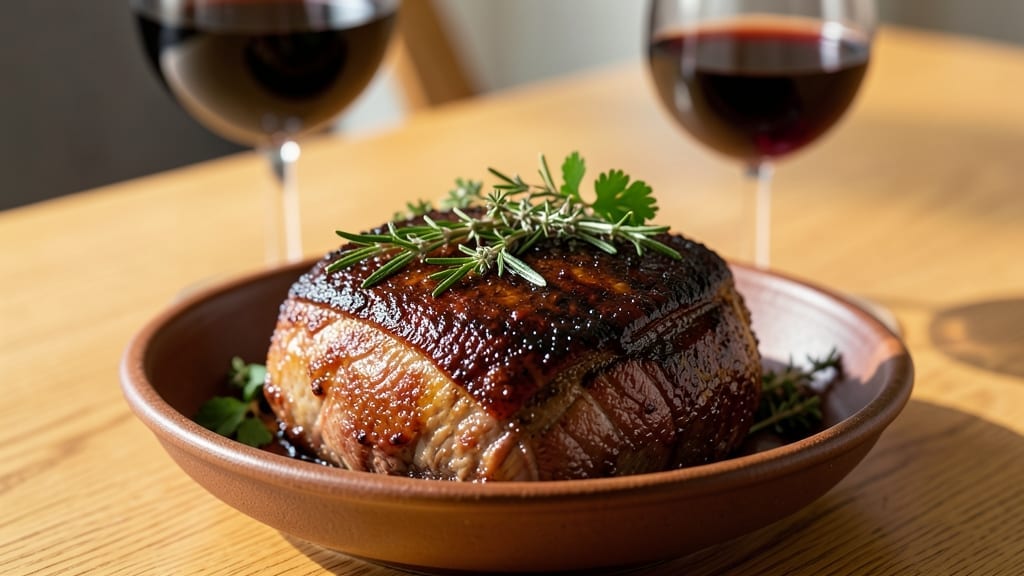
This top round roast smoker recipe transforms tough, lean beef into melt-in-your-mouth perfection through low-and-slow smoking. The key lies in patience—letting the smoke work its magic while keeping the meat juicy despite its lean nature.
I remember the first time I nailed this technique at my family cookout, when the aroma of oak smoke filled the backyard and every slice fell apart with just a touch of resistance.
The process starts with a simple dry rub—just salt, pepper, and a touch of garlic powder—to let the smoky flavors shine. Using hickory or oak wood creates that classic BBQ taste, while maintaining a steady 225°F ensures tender results without drying out the meat.
The goal is 145°F internal temperature for medium-rare, where the beef remains juicy yet develops that signature smoky crust.
What you’ll end up with is a perfectly smoked roast that carves into thick, tender slices with just enough snap. The exterior boasts deep bark from the smoke, while the interior stays moist and flavorful.
This isn’t just a cut of beef—it’s a centerpiece dish that turns any meal into a smoker’s masterpiece.
Serve with smoked buns for sandwiches, a rich au jus for dipping, or alongside roasted root vegetables to round out the plate. The leftovers? Even better the next day, reheated gently to preserve that smoky tenderness. Let’s get smoking!
Ingredients for top round roast smoker
Thirteen ingredients create the perfect smoked roast—just patience and a smoker.
| Ingredient | Amount | Notes |
|---|---|---|
| Top Round Roast 🥩 | 4 lb | Trimmed of excess fat |
| Kosher Salt 🧂 | 2 tbsp | Diamond Crystal preferred |
| Freshly Ground Black Pepper 🌶️ | 1 ½ tbsp | Freshly ground for best flavor |
| Garlic Powder 🧄 | 1 tbsp | Not garlic salt |
| Hickory Wood Chips 🪵 | 1 lb | Soaked in water 2+ hours |
| Oak Wood Chips 🪵 | 1 lb | Alternative to hickory |
| Apple Cider Vinegar 🍎 | 2 tbsp | For wood chip soaking |
| Butter 🧈 | ½ cup | Full-fat for richness |
| Beef Broth 🥣 | 2 cups | Low-sodium preferred |
| Fresh Rosemary 🌿 | 4 sprigs | For au jus infusion |
| Fresh Thyme 🌿 | 4 sprigs | For au jus infusion |
| Onion 🧅 | 1 whole | Sliced for au jus |
| Carrots 🥕 | 2 whole | Sliced for au jus |
[recipe_ingredient_scaler]
The top round roast is lean but transforms beautifully with smoke. Costco sells it pre-trimmed, saving time, but any butcher will do—just ask for it trimmed of excess fat. The wood chips? Hickory for bold smoke, oak for a milder touch. Soak them in apple cider vinegar for 2+ hours—it keeps them moist and prevents flare-ups. I always grab Traeger brand chips when I can, but generic brands work fine if you’re on a budget.
No hickory chips? Mesquite adds a deep, earthy flavor—just watch the smoke intensity. Short on herbs? Dried rosemary and thyme at half the amount work, but fresh is always better. The beef broth should be low-sodium—you don’t want the au jus to be too salty. And if you’re in a pinch, beef bouillon cubes dissolved in water will do in a pinch. The butter in the au jus? Full-fat only—cutting corners here ruins the richness.
This roast keeps 4-5 days in the fridge if wrapped tightly in foil, but honestly, it’s best within 3 days. For leftovers, reheat gently in the oven at 300°F until warmed through—microwaving dries it out. The au jus? Freezes beautifully for up to 6 months—just thaw overnight in the fridge. I always make extra because it’s the best way to use up the scraps. The roast itself? Freezes for 3 months if sliced and vacuum-sealed—just thaw overnight before reheating.
Why You’ll Love This Recipe
- No Fuss Flavor Bomb: That 30-minute seasoning prep while the wood chips soak? Game-changer. The kosher salt and freshly ground black pepper cling to the meat like glue, and the garlic powder adds that subtle kick that makes you want seconds. Honestly, the only real work is waiting for the smoker to do its magic.
- Smoke Ring Magic: The 190-195°F target isn’t just a number—it’s where the top round transforms from tough to fall-apart-in-your-mouth. That deep smoke ring from the hickory and oak chips? It’s not just pretty—it’s the secret sauce that makes this roast taste like it belongs on a restaurant menu, not your smoker.
- Leftovers That Shine: Four pounds of meat doesn’t disappear in one sitting. The au jus (made with butter, rosemary, and thyme) turns cold slices into a sandwich or grain bowl the next day. Wrap it tightly in foil, and it’ll keep for days—though I’ll be real, my family clears the plate before I even think about storage.
- Budget-Friendly Crowd Pleaser: Top round is one of the most affordable cuts, and with just 13 ingredients (most of which you already have), this roast feels luxurious without breaking the bank. Serve it for game day, a family dinner, or even a quiet night in—it’s the kind of dish that makes everyone say, “How did you do this?” without realizing it’s foolproof.
Step-by-step instructions for smoky, tender top round roast
Here’s the method that transforms tough top round into melt-in-your-mouth perfection with deep smoky flavor.
Prepare the Wood Chips and Season the Roast
Soak the 1 lb hickory wood chips and 1 lb oak wood chips in a bowl with the 2 tbsp apple cider vinegar for at least 2 hours before smoking. This prevents them from burning too quickly and adds subtle tang to the smoke. While they soak, trim any excess fat from the 4 lb top round roast—leave about ¼-inch fat cap for moisture during cooking.
In a small bowl, combine the 2 tbsp kosher salt, 1½ tbsp freshly ground black pepper, and 1 tbsp garlic powder. Rub this mixture all over the roast, pressing firmly so the spices adhere. Let it sit at room temperature for 30 minutes while you prepare your smoker. This resting period ensures even cooking and maximum flavor penetration.
Smoke the Roast Low and Slow
Set up your smoker for 225°F using the soaked wood chips. Place the roast fat-side up on the smoker grate—this allows the rendering fat to baste the meat as it cooks. Smoke for 6 hours, maintaining the 225°F temperature. Resist the urge to open the lid; every time you do, you lose heat and extend cook time.
After 6 hours, check the internal temperature with a meat thermometer. It should read 190-195°F—this is where the collagen breaks down, transforming tough muscle into tender, fork-tender meat. If it hasn’t reached this temperature, continue smoking until it does. The roast will look dark and glossy, with a beautiful smoke ring just beneath the surface.
Create the Au Jus and Rest the Roast
While the roast smokes, prepare the au jus by slicing the 1 onion and 2 carrots into ¼-inch rounds. In a large skillet, melt the ½ cup butter over medium heat, then add the sliced vegetables. Cook for 8-10 minutes until softened but not browned. Add the 2 cups beef broth, 4 sprigs fresh rosemary, and 4 sprigs fresh thyme, then simmer for 15 minutes to infuse flavors.
Once the roast reaches 190-195°F, remove it from the smoker and transfer it to a cutting board. Tent loosely with foil and let it rest for 30 minutes. This resting period allows the juices to redistribute, ensuring every slice stays moist. Pour the simmered vegetable broth through a fine-mesh strainer into the skillet, discarding the solids. Skim off any excess fat from the surface of the broth.
Slice and Serve with Homemade Au Jus
Slice the roast against the grain into ¼-inch thick pieces for maximum tenderness. Arrange the slices on a platter and keep warm. Return the strained au jus to the skillet and bring to a gentle simmer. Taste and adjust seasoning with additional kosher salt or freshly ground black pepper if needed.
Ladle the warm au jus over the sliced roast and serve immediately. The combination of smoky, tender meat and rich, herb-infused au jus makes this dish unforgettable. The roast should be so tender it nearly falls apart, with a deep, smoky flavor that lingers. This is the perfect centerpiece for any meal—simple yet impressive.
Pro Tips For Making Top Round Roast Smoker
- Trim That Fat: DESCRIPTION: Leave that ¼-inch fat cap on the roast—it’s not about looks, it’s about moisture. I used to trim it all off, and the meat came out dry as a bone. That little layer renders just enough to keep the roast juicy during the long smoke.
- Don’t Rush the Soak: DESCRIPTION: Those wood chips need that full 2+ hours in vinegar—no cutting corners. I tried skipping it once, and the smoke turned bitter fast. The vinegar keeps them moist and adds a subtle tang that makes the whole dish sing.
- Check the Temp, Not the Clock: DESCRIPTION: The roast won’t be done at exactly 6 hours—check the internal temp at 190-195°F. I’ve pulled it early thinking it was ready, only to have it turn out tough. That smoke ring is your friend, but the thermometer is your boss.
- Rest It Like Your Life Depends On It: DESCRIPTION: That 30-minute rest isn’t optional—it’s when the juices stop leaking out and redistribute. I know you’re hungry, but slicing early means dry slices. Cover it loosely and let it chill while you finish the au jus.
Dietary considerations for this recipe
Gluten-Free Adaptation
This recipe already works beautifully for gluten-free diets since it relies on the top round roast and simple seasonings. The key is ensuring your kosher salt and garlic powder are certified gluten-free—brands like Bob’s Red Mill are reliable choices.
The hickory and oak wood chips add natural flavor without gluten, and the beef broth should be labeled gluten-free to avoid cross-contamination. I always double-check labels, especially for store-bought spices. 💪
Low-Carb Considerations
For a lower-carb version, skip the au jus vegetables entirely or use cauliflower slices instead of onions and carrots. The butter in the au jus adds richness without carbs, and the roast itself is naturally low-carb.
If you want extra flavor, add garlic-infused olive oil to the skillet before simmering. This keeps the dish satisfying while staying keto-friendly.
Dairy-Free Options
To make this dish dairy-free, simply omit the ½ cup butter in the au jus and replace it with olive oil or avocado oil. The beef broth and herbs will still create a rich, flavorful sauce.
I’ve also used nutritional yeast for a cheesy flavor in the past—just sprinkle a tablespoon over the sliced roast before serving. The meat stays delicious without dairy! 🥑
Low-Sodium Adjustments
Since the recipe already calls for low-sodium beef broth, you can enhance flavor without extra salt by using extra herbs like rosemary and thyme. I also like adding a splash of apple cider vinegar to the au jus for brightness.
For the roast itself, rely on the garlic powder and freshly ground black pepper to build depth—no need for added salt. Taste as you go!
Allergen-Free Tips
This recipe is naturally nut-free, egg-free, and soy-free, making it safe for most allergies. Just ensure your kosher salt and garlic powder are processed in allergen-free facilities. For cross-contamination concerns, use a dedicated cutting board and knife for prep.
If someone has a mustard allergy, avoid any pre-made rubs or seasonings that might contain it—stick to the simple spices listed here. 🌟
Nutrition facts
Frequently asked questions
Why does this recipe call for smoking at 190-195°F
instead of the usual 145°F for medium-rare?
The higher temperature transforms tough top round into melt-in-your-mouth perfection. At 190-195°F, collagen breaks down completely, making the lean cut incredibly tender. This low-and-slow method ensures juiciness while developing that signature smoky bark—perfect for a cut that can dry out easily.
Can I use a different wood type for smoking?
While hickory delivers bold flavor and oak offers a milder taste, mesquite adds deep earthiness or applewood brings subtle sweetness. Just adjust smoke intensity—mesquite burns faster, so monitor closely. The key is balancing wood choice with your smoker’s airflow.
What if my smoker runs out of wood chips halfway through cooking?
No problem! Prepare an extra batch of soaked chips (using 2 tbsp apple cider vinegar per 1 lb chips) and store them in a sealed container in the fridge. Add them to the smoker’s chip tray as needed. The vinegar-soaked method prevents burning, so you can top off without flare-ups.
How do I tell when the roast is done without cutting into it?
Use a meat thermometer to check the thickest part of the roast—it should reach 190-195°F. The exterior will look dark and glossy with a visible smoke ring beneath the surface. If unsure, wait until you hit that temp range; the internal temp is more reliable than visual cues alone.
Can I make the au jus ahead of time?
Yes! Strain and refrigerate the au jus for up to 3 days. When ready to serve, reheat gently on the stove until simmering. For longer storage, freeze in airtight containers for up to 6 months. Just thaw overnight in the fridge before reheating. The flavors deepen over time!

Trained in classic French technique but raised on slow-cooked ribs and spicy rubs, she blends culinary skill with smoke and soul.
- Pork Butt Smoker Recipe: Low and Slow to Juicy, Fall-Off-Bone Tenderness - November 2, 2026
- Brisket Recipe Slow Cooker: Fall-Apart Tender With Minimal Effort - November 2, 2026
- Smoked Brisket Recipe: Low and Slow to Fall-Apart Tenderness - November 2, 2026