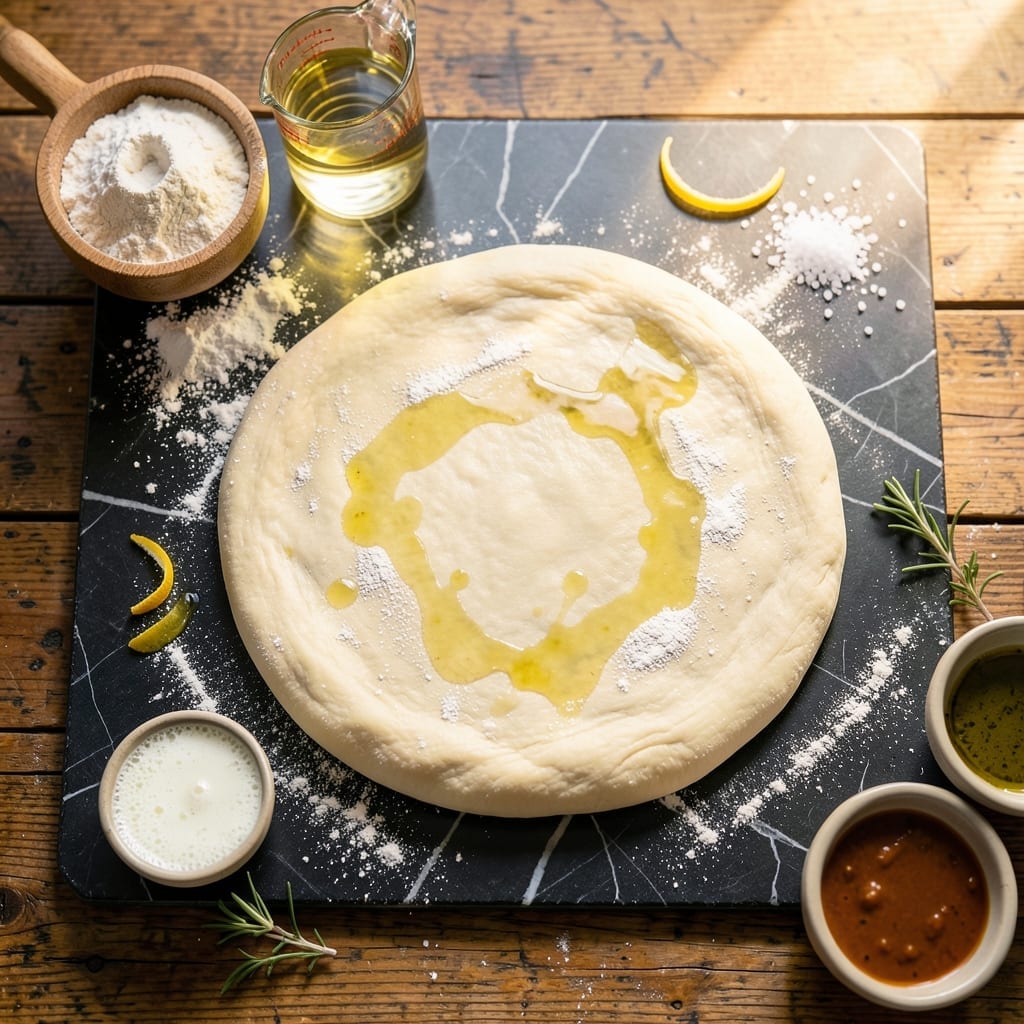
This pizza dough recipe delivers perfect results every time with a crispy exterior and chewy interior. The secret lies in the slow fermentation process that develops complex flavors.
I’ve refined this method through years of testing, focusing on precise hydration and resting times. The dough comes together with just a few simple ingredients but requires patience for optimal texture and taste.
When baked in a hot pizza oven, it transforms into a golden, airy crust with those coveted leopard-spotted bubbles. The structure holds up to generous toppings while maintaining that signature crispy bite.
This foundation ensures restaurant-quality pizza at home with professional results you’ll be proud to serve.
Ingredients for Pizza Oven Pizza Dough
Just eight ingredients for a crust that bakes up golden and crisp with chewy perfection.
| Ingredient | Amount | Notes |
|---|---|---|
| Bread Flour 🌾 | 3 ½ cups | High-protein for chewy texture |
| Active Dry Yeast 🍞 | 1 tsp | Instant yeast works too |
| Fine Sea Salt 🧂 | 2 tsp | Diamond Crystal preferred |
| Extra-Virgin Olive Oil 🫒 | 2 tbsp | Cold-pressed for best flavor |
| Warm Water 💧 | 1 ½ cups | 110°F to 115°F for yeast activation |
| Granulated Sugar 🍚 | 1 tsp | Feeds the yeast for fermentation |
| Semolina Flour 🌾 | ¼ cup | For dusting and crispiness |
| All-Purpose Flour 🌾 | ½ cup | Optional for dusting surface |
[recipe_ingredient_scaler]
The flour is critical here. King Arthur Bread Flour is my go-to for its consistent 12.7% protein content, which delivers that ideal chewy bite. Bob’s Red Mill makes a great alternative if you can’t find King Arthur. The yeast should be fresh—check the expiration date, as old yeast loses potency. Instant yeast can be used interchangeably with active dry, just skip the proofing step.
No bread flour? All-purpose flour with 1 tbsp vital wheat gluten per cup mimics the protein content. For a whole-grain twist, substitute white whole wheat flour for up to 25% of the bread flour. The olive oil can be swapped for avocado oil if that’s what you have. Sugar can be replaced with honey or maple syrup at a 1:1 ratio, but keep the quantity small to avoid over-sweetening.
The dough ferments best in a cool, dark place for up to 24 hours. Store unused dough in the fridge for 2-3 days or freeze for 1 month. Bring to room temperature before shaping for optimal texture and rise.
Why You’ll Love This Recipe
- 5-Minute Mix: I toss the flour, yeast, salt, and warm water in a bowl, and the dough comes together faster than I can preheat the oven.
- That Crust Though: The olive oil gives it a golden, crisp edge while the center stays airy and soft—exactly what you need for a proper pizza.
- Feeds the Gang: I stretch it thin for a crowd or keep it thick for a cozy night in, and it works every time.
- Budget Winner: A bag of bread flour and a few pantry staples make enough dough for multiple pizzas at a fraction of delivery prices.
Step-by-Step Instructions for Pizza Oven Pizza Dough
Master the technique for crispy-chewy dough that holds up to high heat.
Step 1: Activate the Yeast and Bloom
In a large mixing bowl, combine the 1.5 cups Warm Water, 1 tsp Granulated Sugar, and 1 tsp Active Dry Yeast. Stir gently and let sit for 5-7 minutes until the mixture becomes foamy and cloudy. This bloom confirms the yeast is active and ready to ferment.
If the mixture doesn’t bubble, your yeast may be expired—start over with fresh yeast. The water temperature should be between 110°F to 115°F; anything hotter kills the yeast, anything cooler slows activation.
Step 2: Form and Knead the Dough
Add the 3.5 cups Bread Flour and 2 tsp Fine Sea Salt to the yeast mixture. Stir with a wooden spoon until a shaggy dough forms. Drizzle in the 2 tbsp Extra-Virgin Olive Oil and continue mixing until the oil is fully incorporated.
Turn the dough onto a clean work surface and knead for 8-10 minutes by hand until smooth and elastic. The dough should spring back slowly when pressed with a finger. Bread flour’s high protein content develops the gluten needed for that perfect chewy texture.
Step 3: First Rise to Double Volume
Lightly oil a large bowl, place the dough inside, and cover with a damp kitchen towel. Let it rise in a warm, draft-free spot for 1.5 to 2 hours, or until doubled in size. I use the turned-off oven with the light on for consistent warmth.
Press the dough gently with a finger—if the indent remains, it’s ready. If it springs back, give it more time. This rise develops flavor and structure, ensuring your crust has the right air pockets for crispiness.
Step 4: Divide, Shape, and Second Rise
Punch down the dough to release air and divide it into 4 equal portions (about 250g each). Shape each into a tight ball by tucking the edges under and rolling on the work surface. Place the balls on a Semolina Flour-dusted tray, spacing them 2 inches apart.
Cover with a towel and let rest for 30-45 minutes until slightly puffed. Semolina prevents sticking and adds a subtle crunch to the crust. For extra insurance against sticking, dust with 0.5 cup All-Purpose Flour if your surface feels tacky.
Step 5: Stretch and Prepare for the Oven
On a surface dusted with Semolina Flour, stretch one dough ball into a 12-inch round by pressing from the center outward. Avoid rolling with a pin—this compresses the air bubbles you worked so hard to create.
Transfer to a pizza peel dusted with more Semolina Flour. The dough should be thin enough to see slight translucency when held to light but thick enough to hold toppings without tearing. This is the foundation for achieving that crispy yet chewy perfection promised.
Pro Tips For Making Pizza Oven Pizza Dough
- Proof Overnight: Let the dough rise in the fridge for 24-48 hours—it develops deeper flavor and a chewier texture. I learned this the hard way after rushing my first few batches.
- Use Bread Flour: Skip all-purpose; bread flour’s higher protein content gives that perfect elastic, crisp-yet-chewy crust. My grandmother swore by this, and she was right.
- Warm the Water Right: Aim for 105-110°F—too hot kills the yeast, too cold slows activation. After burning three batches, I finally figured out a thermometer is non-negotiable.
- Oil the Bowl: Coat the rising bowl with about 1 tablespoon of olive oil to prevent sticking and make shaping easier. Sounds weird, but it works.
Dietary Considerations for This pizza oven pizza dough
Gluten-Free Option
Swap bread flour for a 1:1 gluten-free baking blend. I recommend King Arthur Measure for Measure for its consistent results. Add 1 tsp xanthan gum to improve elasticity and structure in the dough. 🌾
Vegan Adaptation
This recipe is naturally vegan as written. For extra richness, replace 2 tbsp olive oil with melted coconut oil. The coconut adds a subtle sweetness that complements tomato-based sauces beautifully.
Low-Carb Alternative
Use 1.5 cups almond flour plus 1 cup mozzarella cheese for a keto-friendly crust. Mix with 1 egg and 1 tsp baking powder for lift. Press into a thin round and pre-bake at 375°F for 10 minutes before adding toppings.
Nut Allergy Note
Ensure your semolina flour and bread flour are processed in nut-free facilities. Bob’s Red Mill clearly labels their allergen-free products. For dusting, use all-purpose flour instead of semolina if cross-contamination is a concern.
Dairy-Free Considerations
This dough contains no dairy, but watch toppings. Use olive oil instead of butter on the crust edge for brushing. For cheese alternatives, Miyoko’s or Violife melt beautifully in pizza ovens. 💛
Sodium Reduction
Cut the sea salt to 1 tsp or use a low-sodium version. Boost flavor with 1 tsp garlic powder or dried oregano in the dough. The fermentation process will still develop plenty of natural flavor.
Nutrition Facts
Frequently Asked Questions
Can I use all-purpose flour instead of bread flour?
Yes, but add 1 tbsp vital wheat gluten per cup to match bread flour’s protein content. This ensures the dough maintains its chewy texture and structure.
How long should I let the dough rise at room temperature?
Allow 1.5 to 2 hours for the first rise until doubled in size. For deeper flavor, refrigerate the dough for up to 24 hours after the initial rise.
What’s the best temperature for a pizza oven?
Preheat your oven to 700°F to 800°F for optimal results. This high heat creates a crispy crust with leopard-spotted bubbles in just 2-4 minutes.
Why did my dough tear when stretching?
This usually happens if the dough is too cold or over-kneaded. Let it rest at room temperature for 30 minutes before shaping, and handle it gently.

Trained in classic French technique but raised on slow-cooked ribs and spicy rubs, she blends culinary skill with smoke and soul.
- Recipe for Boneless Pork Chops in Cast Iron Skillet: Sear and Baste to Juicy Perfection - October 3, 2026
- Recipe for Boneless Cross Rib Roast: Slow-Roasted Beef with Herb Crust - October 3, 2026
- Hamburgers in Sauce Recipe Crock Pot: Slow-Cooked Savory Delight - October 3, 2026