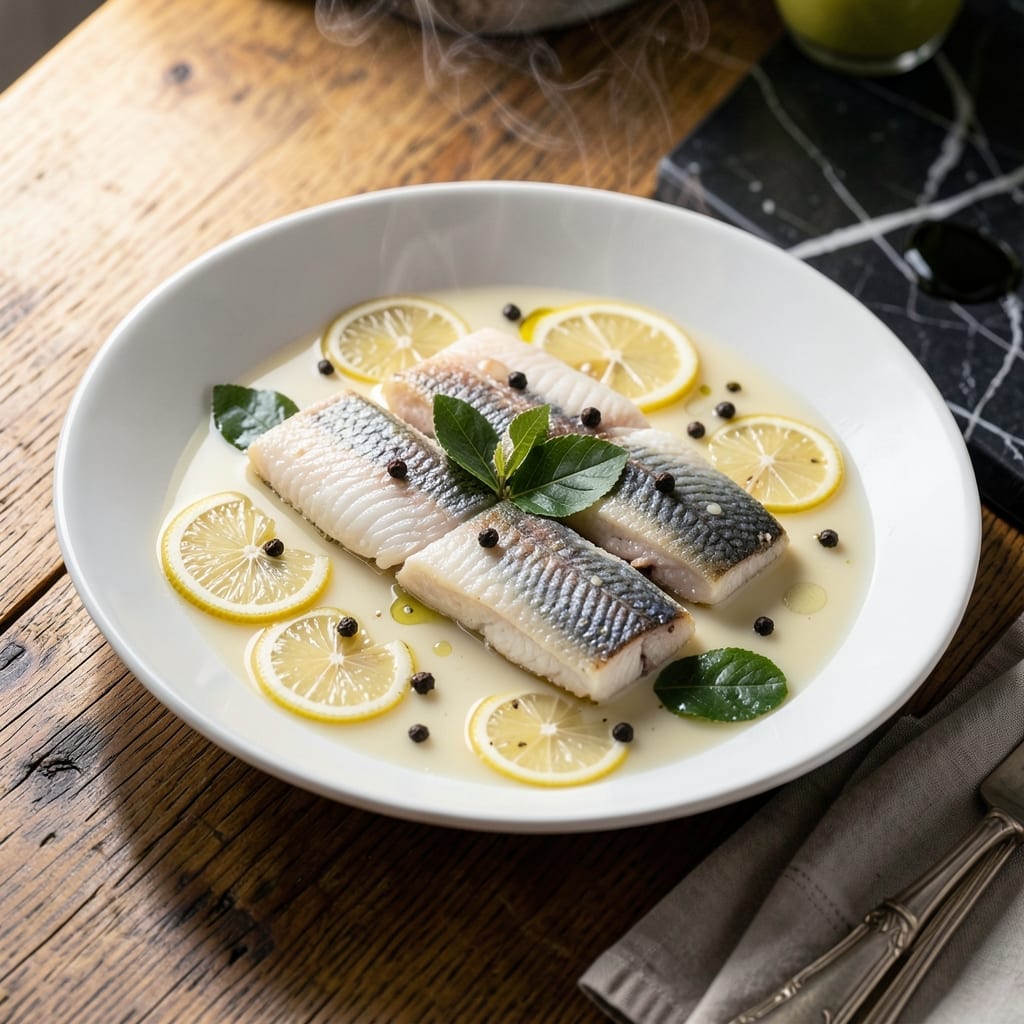
This poaching method transforms haddock into a silky, tender masterpiece with minimal effort. The gentle cooking preserves the fish’s natural delicacy while infusing subtle flavor from the aromatic liquor.
I developed this technique after years of perfecting both smoke and French methods, finding that precise temperature control is key. The liquor should barely simmer, creating an environment where the fish cooks evenly without falling apart.
What emerges is perfectly cooked haddock with a texture that melts in your mouth, ready to be paired with simple sauces or fresh herbs. The beauty lies in its simplicity—no fancy equipment, just proper technique.
Serve with lemon wedges and steamed vegetables for a light yet satisfying meal that highlights the fish’s natural elegance.
Ingredients for Poached Haddock
A select array of fresh ingredients yields perfectly poached haddock with delicate, melt-in-your-mouth texture.
| Ingredient | Amount | Notes |
|---|---|---|
| Haddock Fillets 🐟 | 1 ½ lb | Skinless, boneless, even thickness |
| White Wine 🍷 | 2 cups | Dry variety like Sauvignon Blanc |
| Water 💧 | 2 cups | Filtered for best flavor |
| Lemon Slices 🍋 | 4 slices | Thin, with peel on |
| Fresh Bay Leaves 🌿 | 2 whole | Dried acceptable if needed |
| Black Peppercorns 🌶️ | 1 tsp | Lightly crushed for infusion |
| Kosher Salt 🧂 | 1 tsp | Diamond Crystal preferred |
| Fresh Dill Sprigs 🌿 | 4 whole | Plus extra for garnish |
| Shallot 🧅 | 1 whole | Thinly sliced for aroma |
| Whole Milk 🥛 | ½ cup | Optional for creamier liquor |
| Extra-Virgin Olive Oil 🫒 | 1 tbsp | For finishing drizzle |
| Fresh Parsley 🌿 | ¼ cup | Chopped, for serving |
| Lemon Wedges 🍋 | 4 pieces | For serving alongside |
[recipe_ingredient_scaler]
The haddock quality cannot be overstated. Wild-caught from a trusted fishmonger ensures optimal texture and flavor. Look for fillets with a firm, translucent appearance and minimal odor. The white wine should be a dry variety—avoid anything oaky or overly sweet. Whole Foods or local seafood markets typically carry suitable options. Fresh herbs, particularly dill, are essential; dried simply won’t deliver the same aromatic impact.
No white wine? Dry vermouth or a light chicken stock works in a pinch. For the bay leaves, dried can substitute at half the quantity, though fresh is preferred. If milk isn’t on hand, skip it—the fish will still poach beautifully. Shallots can be replaced with a small onion, thinly sliced. The key is maintaining the liquid volume for even cooking.
Poached haddock keeps remarkably well. Store in its cooking liquid in the fridge for up to 2 days. Reheat gently in the same liquid to preserve moisture. For longer storage, freeze the fillets (without liquid) for up to 1 month. Always bring fish to room temperature before reheating.
Why You’ll Love This Recipe
- One Pot Wonder: I just simmer the haddock in white wine, water, and lemon—no flipping, no fuss.
- Bright & Zesty: The lemon slices and bay leaves infuse the fish with this fresh, citrusy depth that’s ridiculously good.
- Dinner in 15: Honestly, it’s ready before the rice finishes cooking.
- Budget Friendly: Haddock fillets are affordable, and a little wine goes a long way for flavor.
Step-by-Step Instructions for Poached Haddock
Master the technique that transforms delicate fish into a tender, elegant dish with minimal effort.
Step 1: Prepare the Poaching Liquor with Aromatics
In a wide, deep skillet or sauté pan, combine the 2 cups White Wine, 2 cups Water, 4 slices Lemon Slices, 2 whole Fresh Bay Leaves, 1 tsp Black Peppercorns, and 1 tsp Kosher Salt. Thinly slice the 1 whole Shallot and add it to the pan.
Bring the mixture to a gentle simmer over medium heat, then reduce to medium-low heat. The liquid should shimmer with tiny bubbles, never reach a rolling boil—this ensures the haddock stays tender. Let the aromatics infuse for 5 minutes before adding the fish.
Step 2: Add Milk for a Creamier Liquor
After the aromatics have steeped, stir in the 0.5 cup Whole Milk. This step mellows the acidity of the wine and adds a subtle richness to the poaching liquid. The mixture should maintain its gentle simmer, with the surface barely trembling.
I always check the temperature with an instant-read thermometer—it should hover between 160-180°F. If it climbs higher, briefly remove the pan from heat to cool slightly. This temperature range is critical for preserving the haddock’s delicate texture.
Step 3: Poach the Haddock Fillets
Gently lower the 1.5 lb Haddock Fillets into the simmering liquid. Ensure they’re fully submerged; if necessary, add a splash of hot water. Add the 4 whole Fresh Dill Sprigs to the pan, tucking them around the fish.
Poach the fillets for 8-10 minutes, depending on thickness. You’ll know they’re done when the flesh turns opaque white and flakes easily with a fork. Avoid overcooking—the haddock should still glisten with moisture and offer slight resistance when pressed.
Step 4: Rest and Serve with Garnishes
Using a slotted spatula, carefully transfer the haddock to a warm platter. Drizzle with the 1 tbsp Extra-Virgin Olive Oil and sprinkle with the 0.25 cup Fresh Parsley. The residual heat will continue cooking the fish slightly, so serve immediately.
Accompany each portion with the 4 pieces Lemon Wedges on the side. The poaching liquor can be strained and reduced for a light sauce or served as-is in shallow bowls for dipping. The haddock should be silky, with a clean, bright flavor from the wine and citrus.
Pro Tips For Making Poached Haddock
- Simmer, Don’t Boil: Keep the liquid at a gentle simmer—tiny bubbles, not a rolling boil. I learned this the hard way after turning my first batch of haddock into rubber.
- Pat Fillets Dry: Blot the haddock with a paper towel before poaching. It helps the fish absorb the wine and lemon flavors instead of just steaming in its own moisture.
- Skip the Old Wine: Use a white wine you’d actually drink—cooking with that dusty bottle at the back of the cabinet adds bitterness, not depth.
- Add Lemon Last: Toss the lemon slices in during the last 2-3 minutes of poaching. This keeps the citrus bright and fresh instead of bitter from overcooking.
Regional Styles of This Recipe
New England Style
In coastal Maine, I learned to poach haddock with local seaweed and kelp added to the liquor for a briny depth. The fishmongers at Port Clyde Fresh Catch swear by this method, using 1 tbsp dried seaweed per 2 cups liquid. It’s a taste of the Atlantic in every bite. 🌊
French Court Bouillon
My French training taught me the classic court bouillon—a flavorful broth with carrots, celery, and leeks added to the poaching liquid. I use ½ cup each of diced vegetables for a 4-cup liquor, simmered for 20 minutes before adding the fish.
Mediterranean Twist
For a sun-kissed variation, I infuse the liquor with saffron threads and orange zest. A pinch of saffron (about 10 threads) and the zest of 1 orange adds a golden hue and citrusy aroma. Serve with a drizzle of extra-virgin olive oil and Kalamata olives.
Asian-Inspired
Swap the white wine for rice wine and add ginger slices and star anise. I use 2 cups rice wine, 3 slices ginger, and 1 star anise pod for a fragrant poaching liquid. Garnish with thinly sliced scallions and a drizzle of sesame oil. ✨
Scandinavian Approach
In Norway, haddock is often poached in milk with dill and white pepper. I use 3 cups whole milk, 5 dill sprigs, and ½ tsp white pepper for a creamy, aromatic result. The milk creates a velvety texture that’s pure comfort.
Southern Comfort
A Louisiana twist adds Cajun seasoning and hot sauce to the liquor. I stir in 1 tsp Cajun seasoning and ½ tsp hot sauce for a subtle kick. Serve with buttery grits to soak up the spiced poaching liquid.
Nutrition Facts
Frequently Asked Questions
Can I use a different type of fish?
Yes, cod or pollock work well as substitutes. They have a similar mild flavor and firm texture that holds up to poaching for 8-10 minutes.
What if I don’t have white wine?
Use a light chicken stock or dry vermouth as alternatives. Maintain the 4 cups total liquid volume for even cooking. Avoid heavily flavored substitutes.
How do I know when it’s done?
The flesh turns opaque and flakes easily with a fork. Internal temperature should reach 145°F. Overcooking makes it dry, so check at 8 minutes.
Can I make this ahead of time?
Store poached fish in its liquid in the fridge for up to 2 days. Reheat gently in the same liquid to preserve moisture and texture.

Trained in classic French technique but raised on slow-cooked ribs and spicy rubs, she blends culinary skill with smoke and soul.
- Recipe for Boneless Pork Chops in Cast Iron Skillet: Sear and Baste to Juicy Perfection - October 3, 2026
- Recipe for Boneless Cross Rib Roast: Slow-Roasted Beef with Herb Crust - October 3, 2026
- Hamburgers in Sauce Recipe Crock Pot: Slow-Cooked Savory Delight - October 3, 2026