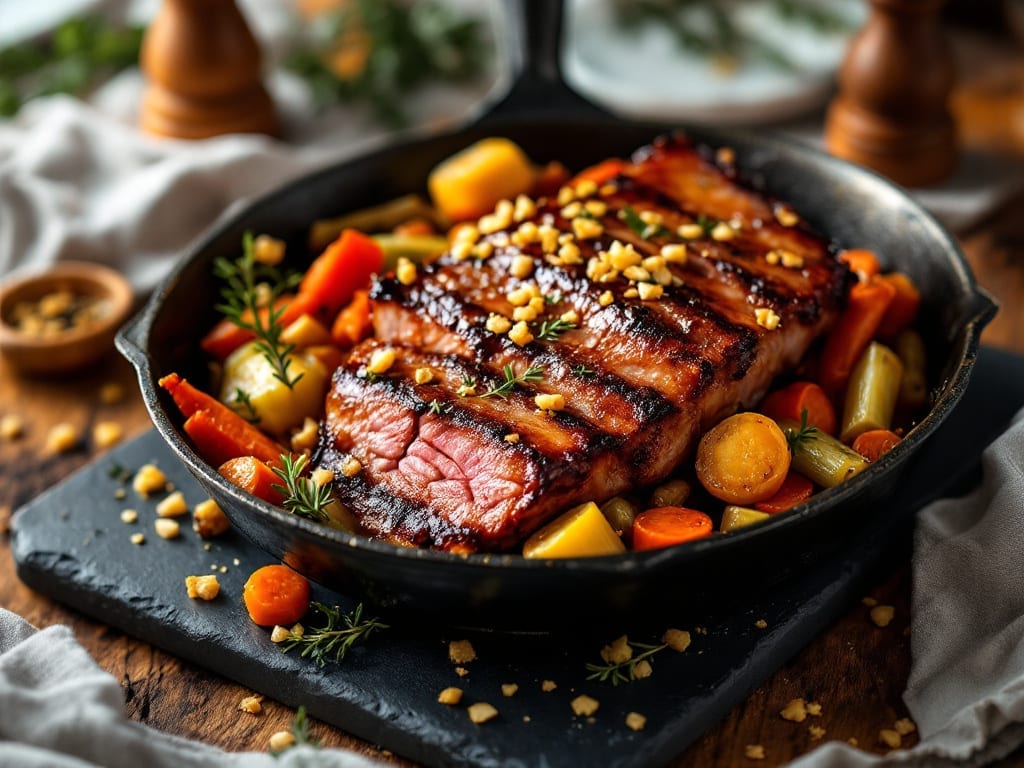
Mastering pork belly burnt ends on a pellet smoker transforms tough cuts into melt-in-your-mouth perfection—smoky-sweet char magic that rivals any competition BBQ. Growing up in small-town Georgia, I learned that patience and precision turn simple ingredients into legendary flavors, and this recipe delivers exactly that.
The key lies in the slow smoke, where fruitwood pellets create that signature caramelized crust while keeping the interior tender.
This 6-hour process begins with a high-heat sear to develop deep Maillard reactions, followed by a controlled smoke at 225°F using cherry or apple pellets for balanced sweetness. The result? Burnt ends so tender they practically fall apart, with a glossy caramelized bark that crackles with every bite.
My heritage pigs from the farm provide the ideal fat cap for that coveted texture, but even store-bought belly delivers impressive results with the right technique.
By the final hour, you’ll have restaurant-quality burnt ends ready to slice against the grain for maximum tenderness. The aroma alone will have guests gathering at your table, while the rich, smoky-sweet flavor pairs perfectly with tangy pickles or a crisp slaw.
This isn’t just BBQ—it’s a showstopper that proves great food starts with patience and the right wood.
Whether you’re feeding a crowd or treating yourself to a special meal, these burnt ends deliver foolproof results every time. The pellet smoker ensures perfect temperature control, while the slow cook transforms tough meat into something extraordinary. Let’s get smoking—your taste buds will thank you.
Ingredients for pork belly burnt ends pellet smoker
Six ingredients transform tough pork belly into smoky-sweet burnt ends that’ll have guests begging for seconds.
| Ingredient | Amount | Notes |
|---|---|---|
| Pork Belly 🥓 | 4 lb | Thick-cut with fat cap, heritage preferred |
| Yellow Onions 🧅 | 2 whole | Yellow or red, sliced thick |
| Carrots 🥕 | 1 ½ lb | Whole, peeled and cut into chunks |
| Celery Stalks 🌿 | 4 whole | Trimmed and cut into 2-inch pieces |
| Garlic Cloves 🧄 | 6 cloves | Peeled, smashed slightly |
| Apple Cider Vinegar 🍎 | ½ cup | Unfiltered for depth of flavor |
| Brown Sugar 🍚 | ½ cup | Light or dark, packed |
| Smoked Paprika 🌶️ | 2 tbsp | High-quality for smoky depth |
| Ground Black Pepper 🌶️ | 1 tbsp | Freshly cracked for heat |
| Diamond Crystal Kosher Salt 🧂 | 2 tbsp | For seasoning and curing |
| Apple Wood Pellets 🌳 | 4 lb | For balanced sweetness |
| Cherry Wood Pellets 🍒 | 2 lb | For fruity undertones |
| Vegetable Oil 🫒 | ½ cup | For high-heat searing |
[recipe_ingredient_scaler]
The pork belly is non-negotiable—thick-cut with that fat cap is what gives you the coveted texture. Local butchers or specialty grocers like Whole Foods carry the best cuts, but don’t overlook your regular butcher—they’ll often save you money for bulk purchases. If you’re using heritage pigs, the marbling is already perfect, but even store-bought belly works if it has a good layer of fat. Look for pieces that are at least 1.5 inches thick to prevent drying out during the long smoke. The onions, carrots, and celery form the base of the mirepoix—Trader Joe’s sells pre-chopped versions if you’re short on time, but fresh is always better.
No apple wood pellets? Cherry or pecan work just as well, but avoid hickory—it can overpower the delicate sweetness. Running out of brown sugar? White sugar plus 1 tsp molasses mimics the depth. The vinegar needs to be raw, unfiltered apple cider—Bragg or Mott’s are solid choices. If you’re using pre-cut vegetables, make sure they’re fresh and not wilted. The garlic should be fresh—jarred minced won’t give you that same punch. For a deeper smoky flavor, add 1 tbsp liquid smoke to the marinade, but use sparingly.
Store prepped pork belly in an airtight container in the fridge for up to 2 days before smoking. The mirepoix vegetables can be prepped ahead and kept in the fridge for 5 days or frozen for 3 months. Leftover burnt ends reheat beautifully—wrap them in foil and warm in a 350°F oven for 15 minutes. They also freeze wonderfully for up to 3 months, making them perfect for meal prep. The pellet smoker keeps the temperature so consistent that you can walk away and come back to perfectly smoked meat every time.
Why You’ll Love This Recipe
- Smoker Magic: I swear, the pellet smoker does all the work for you. Toss in the pork belly with onions, carrots, and celery—no fancy prep—just set it and forget it while you sip coffee or watch a show.
- Crispy-Caramel Bliss: That burnt end magic? The pork belly turns into tender, crispy edges with a caramelized glaze from the onions and garlic. Honestly, it’s the kind of dish that makes people ask, “What’s in it?”
- Weeknight or Party: Same recipe, different vibes. Weeknights? Serve it over rice with a side salad. Party? Pile it on buns with pickles and sriracha mayo. It’s that easy to adapt.
- Leftovers? Better Than New: Between us, the second day is even better. The pork gets more tender, and the flavors meld into something dangerously addictive. Plus, it reheats like a dream—just slap it in the oven for 10 minutes.
Step-by-step instructions for pork belly burnt ends
Here’s the method that transforms tough pork belly into melt-in-your-mouth burnt ends with perfect bark and tender meat.
Prepare and Season the Pork Belly
Start by scoring the fat cap of the 4 lb pork belly in a diamond pattern, cutting about ¼-inch deep. This creates channels for the rub to penetrate and helps render the fat more evenly. Pat the meat dry with paper towels—this step is non-negotiable for crispy skin.
In a small bowl, combine the 2 tbsp smoked paprika, 1 tbsp ground black pepper, and 2 tbsp diamond crystal kosher salt. Rub this mixture generously over every inch of the pork belly, pressing it into the meat and fat. Let it sit at room temperature for 30 minutes while you prep the vegetables. This resting period allows the seasoning to adhere and the meat to come closer to room temperature for more even cooking.
Build the Vegetable Base for Braising
Peel and cut the 1.5 lb carrots into 2-inch chunks, then slice the 2 whole yellow onions into ½-inch thick rounds. Trim the 4 whole celery stalks and cut them into 2-inch pieces. Peel and smash the 6 cloves garlic slightly to release their aroma. In a large, heavy pot, combine all the vegetables along with the 0.5 cup apple cider vinegar and 0.5 cup brown sugar.
Bring this mixture to a boil over medium-high heat, then reduce to a simmer for 15 minutes. This pre-cooking softens the vegetables and builds a flavorful liquid that will braise the pork belly. The vinegar and brown sugar create a sweet-tangy base that infuses the meat during the long cook.
Sear the Pork Belly Before Smoking
Heat a cast-iron skillet over medium-high heat until it’s smoking hot. Add the 0.5 cup vegetable oil and swirl to coat the pan. Place the seasoned pork belly fat-side down and sear for 5 minutes without moving it. Press down gently on the meat with a spatula during the first minute—this prevents it from curling and ensures even contact with the pan.
Flip the pork belly and sear the other side for another 5 minutes until it develops a deep golden-brown crust. Transfer the seared pork belly to the pot with the vegetables and pour any rendered fat from the skillet over the top. The sear creates a flavorful crust that will become the signature bark of your burnt ends.
Smoke and Braise for Deep Flavor
Preheat your pellet smoker to 225°F using a 3:1 ratio of apple wood pellets to cherry wood pellets (3 lb apple to 1 lb cherry). Place the pork belly in the smoker along with the pot of vegetables, covering everything tightly with foil. Smoke for 4 hours, maintaining the temperature between 225-250°F. The wood pellets will infuse the meat with a perfect balance of sweet apple and fruity cherry notes.
After 4 hours, check the internal temperature of the pork belly—it should be around 160°F. If it’s not there yet, continue smoking for another 30-60 minutes. The long, slow cook breaks down the connective tissue, transforming the tough pork belly into tender, shreddable meat. The vegetables will absorb all the smoky flavors and become part of the braising liquid.
Finish and Shred the Burnt Ends
Once the pork belly reaches an internal temperature of 195-203°F and is fork-tender, remove it from the smoker and let it rest for 15 minutes. This resting period allows the juices to redistribute, ensuring each bite is moist and flavorful. While it rests, shred the pork belly by pulling it apart with two forks or your hands—you should be able to separate it easily into bite-sized pieces.
Return the shredded pork belly to the pot with the vegetables and simmer for an additional 10 minutes. This final step ensures every piece is coated in the sweet, smoky braising liquid. Serve immediately with the vegetables and their flavorful juices spooned over the top. The result is a dish where every bite delivers perfect texture and layers of smoky-sweet flavor.
Pro Tips For Making Pork Belly Burnt Ends Pellet Smoker
- Trim the Fat First: Cut the pork belly into 1.5-inch cubes before you even think about seasoning—this is the only way to get those crispy, caramelized edges. I used to leave the fat on thick, and it’d either burn or turn greasy; now I trim it down to about ¼-inch and let the smoke work its magic on the leaner meat.
- Char the Veggies Separately: Don’t toss onions, carrots, and celery into the smoker with the pork—blister them in a hot skillet first. This jump-starts their flavor and cuts down on smoker time. I learned this after my first batch tasted bland; now I sear them until they’re dark at the edges before adding them to the pellet grill.
- Wrap at 160°F: Once the pork belly hits 160°F internally, wrap it in butcher paper or foil with a splash of apple cider vinegar and a pat of butter. This traps steam and renders the fat without drying out the meat—my early attempts at unwrapping too soon left me with tough, stringy burnt ends.
- Use Pellet Mix, Not Just Wood: Skip the plain oak or hickory pellets—mix in 20% cherry or pecan for a sweeter, deeper smoke. I was skeptical until I tried it; the burnt ends now have a complexity that plain hardwood just can’t match. Just don’t overdo it, or you’ll end up with a dessert instead of dinner.
Dietary considerations for this pork belly burnt ends pellet smoker
Gluten-Free Adaptation
This recipe is naturally gluten-free, but I always double-check the ingredients to ensure no cross-contamination. The key components like pork belly, vegetables, and apple cider vinegar are all gluten-free, but the smoked paprika and brown sugar should be certified gluten-free if you’re sensitive.
I use Bob’s Red Mill gluten-free smoked paprika and Wholesome! organic brown sugar to be safe. The only potential risk is the pellet smoker itself—make sure it hasn’t been used with gluten-containing marinades or rubs previously. 🌾
Low-Carb Options
For a low-carb version, skip the brown sugar and apple cider vinegar in the braising liquid. Instead, use 1 cup beef broth and 1 tbsp Worcestershire sauce (check for gluten-free certification).
The pork belly is already naturally low-carb, and the vegetables can be reduced to just 1 onion and 2 carrots if you’re strict about carb counting. This keeps the dish rich and flavorful while cutting unnecessary carbs. The result is still tender and packed with smoky flavor.
Dairy-Free Considerations
This recipe is already dairy-free, but if you’re serving it with sides that contain cheese (like coleslaw or cornbread), opt for dairy-free alternatives. I love using Miyoko’s cultured cashew cheese or Violife shredded cheddar for tangy, creamy toppings that won’t overpower the pork.
The burnt ends themselves are pure protein and fat, so they pair beautifully with dairy-free options without any adjustments needed. The smoky-sweet profile stands up perfectly on its own.
Allergen-Friendly Substitutions
For nut allergies, avoid any added nut-based ingredients—this recipe is naturally nut-free. If you’re accommodating shellfish allergies in your group, ensure the apple cider vinegar and smoked paprika are processed in a facility free from shellfish cross-contamination.
For soy allergies, double-check the pellet smoker’s wood pellets—some brands may process their products in facilities that handle soy. I always use Traeger or Camp Chef pellets, which are typically safe for common allergens.
The pork belly itself is a simple, clean protein that works well for most dietary restrictions. 💡
High-Protein Focus
This recipe is already a high-protein powerhouse, with the 4 lb pork belly providing roughly 120 grams of protein after cooking. To boost protein further, serve with hard-boiled eggs or a side of grilled chicken breast.
The burnt ends pair beautifully with lean proteins, balancing the richness of the pork. For a complete meal, add a side of quinoa or lentils to round out the protein content while keeping the dish light. The smoky flavors complement these additions perfectly without overpowering them.
Nutrition facts
Frequently asked questions
Can I use regular wood chunks instead of pellets for this recipe?
While pellets offer precise temperature control, you can use wood chunks—but you’ll need to monitor the smoker more closely. For a similar flavor profile, use a mix of apple and cherry wood chunks. Keep the smoker temperature steady between 225-250°F by adding wood as needed, and expect slightly more variation in smoke intensity. The key is maintaining consistent heat to achieve that perfect tender texture.
How do I prevent the pork belly from drying out during the long smoke?
Keep the pork belly wrapped tightly in foil with the vegetables during smoking to trap moisture. The foil also helps maintain even heat distribution. If you notice the internal temperature rising too quickly, add more wood pellets or chunks to stabilize the temperature. The 225°F setting is ideal—it’s low enough to render fat slowly while keeping the meat juicy.
What’s the best way to reheat leftover burnt ends?
Warm leftovers in a 350°F oven for 15-20 minutes, wrapped in foil with a splash of beef broth or apple cider to keep them moist. Avoid microwaving—it can turn the texture rubbery. For extra crispiness, broil for the last 2-3 minutes to restore the caramelized bark.
Can I make burnt ends without a pellet smoker?
Use an oven set to 250°F with a water pan for moisture. Place the pork belly on a rack over a tray of water, cover with foil, and smoke with wood chunks in a foil packet nearby. The process takes 6-8 hours but yields the same tender results. For extra smokiness, add a few drops of liquid smoke to the braising liquid.
How do I know when the burnt ends are perfectly tender?
Use a meat thermometer—when the internal temperature reaches 195-203°F, the pork belly should pull apart effortlessly with two forks. If it’s not there yet, continue cooking until it reaches this range. The meat should be fork-tender, not just warm through, for that signature melt-in-your-mouth texture.

Trained in classic French technique but raised on slow-cooked ribs and spicy rubs, she blends culinary skill with smoke and soul.
- Best Smoked Oxtail Recipe: Deep-Rich Flavor After Low-and-Slow Cooking - October 14, 2026
- Pit Boss Smoked Prime Rib Roast Recipe: Bark-to-Bone Crispness in 4 Hours - October 14, 2026
- Smoked Tuna Steak Recipe: Seared Crust Meets Silky Centers - October 14, 2026