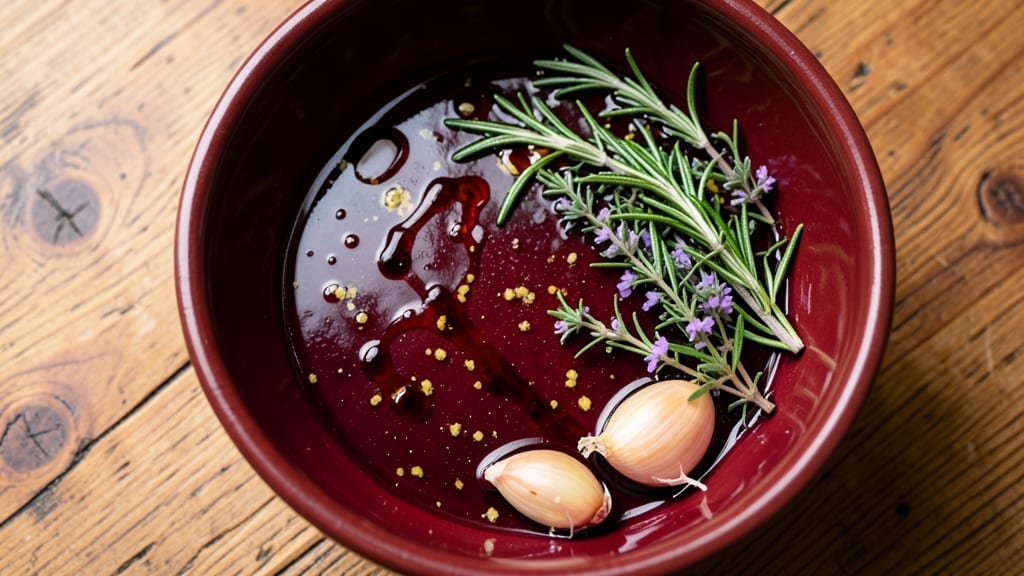
A red wine brisket marinade transforms tough cuts into melt-in-your-mouth perfection with just a few hours of soaking. I developed this marinade after years of experimenting with wine-based techniques, and the results speak for themselves—deep umami, tender texture, and a complexity that rivals hours of slow cooking.
The key lies in balancing acidity, fat, and aromatic spices to break down fibers while infusing rich flavor.
This marinade works best when applied to brisket at least 4 hours before cooking, though overnight yields even more dramatic results. The red wine base adds both acidity for tenderization and depth of flavor, while olive oil helps carry those compounds into the meat.
Fresh herbs and garlic round out the profile, creating a marinade that’s as versatile as it is effective—perfect for grilling, smoking, or braising.
What sets this marinade apart is its ability to elevate even the simplest cooking method. The wine reduces slightly during marinating, concentrating its flavors while the spices mellow into a cohesive blend.
When you’re ready to cook, you’ll notice the brisket develops a beautiful crust while remaining impossibly tender inside—a testament to how well this marinade works its magic.
Store any unused marinade in an airtight container in the refrigerator for up to 5 days, or freeze for longer storage. The flavors actually improve with time, making this an ideal make-ahead solution for your next brisket project. Let’s get started!
Ingredients for red wine brisket marinade
Six aromatic herbs, bold wine, and just the right touch of sweetness.
| Ingredient | Amount | Notes |
|---|---|---|
| Dry Red Wine 🍷 | 1 cup | Bold, dry variety like Cabernet Sauvignon |
| Extra-Virgin Olive Oil 🫒 | ½ cup | High-quality, fruity flavor preferred |
| Balsamic Vinegar 🍶 | 2 tbsp | For depth and acidity balance |
| Garlic Cloves 🧄 | 6 cloves | Freshly minced for maximum flavor |
| Fresh Rosemary 🌿 | ¼ cup | Chopped finely, stems removed |
| Fresh Thyme 🌿 | ¼ cup | Leaves only, finely chopped |
| Dijon Mustard 🍯 | 1 tbsp | For emulsification and tang |
| Brown Sugar 🍬 | 2 tbsp | Light or dark, for caramelization |
| Salt 🧂 | 1 ½ tsp | Kosher or sea salt preferred |
| Black Pepper 🌶️ | 1 tsp | Freshly ground for best flavor |
[recipe_ingredient_scaler]
The red wine is non-negotiable—Cabernet Sauvignon or Merlot work best, but anything bold and dry does the trick. Trader Joe’s or Total Wine often have great affordable options, or just grab whatever’s open in your fridge. Fresh herbs make all the difference here: rosemary and thyme should smell vibrant, not wilted. If you’re using dried, cut the amount in half, but fresh is worth the extra minute. The olive oil? Use the good stuff—none of that cheap canola oil nonsense. A fruity, extra-virgin oil will carry those wine flavors beautifully.
No red wine? Substitute beef broth with a splash of balsamic vinegar—it won’t be identical, but it’ll work in a pinch. Fresh herbs missing? Dried rosemary and thyme at half the amount get you close, though nothing beats the real thing. The Dijon mustard can be swapped for regular yellow mustard, but it won’t emulsify as well. Brown sugar out of stock? Honey or maple syrup work in a bind, though the flavor will shift slightly. For a smokier profile, add a dash of smoked paprika—just don’t tell anyone I suggested it.
This marinade keeps like a dream—5 days in the fridge or 3 months in the freezer. I always double the batch because it’s perfect for brisket, pork shoulder, or even tough steaks. Store it in a glass jar with a tight seal—the flavors actually deepen over time. When using, let it come to room temperature before applying to meat. Trust me, the wait is worth it for that first bite of perfectly tender brisket.
Why You’ll Love This Recipe
- No Chopping Needed: The garlic just needs a quick smash—no mincing, no mess. I’ll be real: I’ve burned my fingers peeling cloves before, but this marinade lets me skip that step entirely while still packing in that rich, garlicky punch.
- Deep, Winey Richness: That dry red wine? It’s not just for drinking—it tenderizes the brisket and leaves it with layers of savory depth. The balsamic vinegar cuts through the richness like a whisper of sweetness, balancing everything perfectly.
- Weeknight or Weekend: Slather it on a brisket for Sunday dinner, or toss it with chicken thighs for a Tuesday night win. Honestly, I’ve even used the leftover marinade as a quick pan sauce—because why waste good flavor?
- Budget-Friendly Luxury: A bottle of red wine and a sprig of rosemary might sound fancy, but they stretch far beyond one meal. The olive oil and vinegar I already had, so this marinade cost me pennies—yet it feels like a restaurant-worthy upgrade.
Step-by-step instructions for red wine brisket marinade
Here’s how to blend this rich marinade that transforms tough brisket into melt-in-your-mouth perfection.
Combine the Base Ingredients
In a large mixing bowl, pour in the 1 cup dry red wine and 0.5 cup extra-virgin olive oil. I like to use a whisk for this part—it helps emulsify the wine and oil right from the start. Add the 2 tablespoons balsamic vinegar and 1 tablespoon Dijon mustard, then whisk everything together until fully combined. The mixture should look smooth with no visible streaks.
This is where the magic begins—the wine and vinegar work together to tenderize the meat while the olive oil carries the flavors deep into the fibers. Let it sit for 5 minutes while you prepare the remaining ingredients. You’ll notice the mixture darkens slightly as the acidity starts breaking down the wine’s tannins, creating a deeper umami profile.
Add Herbs, Sugar, and Seasonings
Finely chop the 6 cloves garlic and add them to the bowl. Then measure out the 0.25 cup fresh rosemary and 0.25 cup fresh thyme, making sure to remove any woody stems. Stir these in thoroughly, then add the 2 tablespoons brown sugar, 1.5 teaspoons salt, and 1 teaspoon black pepper. Mix well until all the herbs are evenly distributed and the sugar dissolves completely.
Here’s the thing—don’t skip the sugar. It might seem counterintuitive for a savory marinade, but the brown sugar helps caramelize during cooking, adding a subtle depth that complements the wine’s acidity. The herbs should be finely chopped so they infuse completely rather than sit as chunks on the surface of the meat.
Blend Until Smooth and Emulsified
Transfer the mixture to a blender or food processor and blend until completely smooth. This step is crucial—it ensures every bite of your brisket gets an even coating of flavor. If you don’t have a blender, you can use an immersion blender right in the mixing bowl. The marinade should have a velvety texture with no visible particles.
Taste the marinade before using it. It should be rich with wine flavor, slightly tangy from the vinegar, and well-balanced with sweetness and herbs. If it needs more salt, add it gradually—you can always adjust later, but you can’t take salt out. Once you’re happy with the flavor, transfer the marinade to a bowl large enough to fully submerge your brisket.
Marinate the Brisket Properly
Place your brisket in the bowl and pour the marinade over it, making sure it’s completely covered. If needed, use a spoon or spatula to press the brisket down so it’s fully submerged. Cover the bowl with plastic wrap and refrigerate for at least 4 hours, but I recommend marinating overnight for maximum tenderness and flavor penetration.
Real talk: Don’t rush this step. The acidity in the wine and vinegar needs time to work its magic on the meat fibers. If you’re short on time, at least 2 hours will help, but overnight gives you that restaurant-quality result. Turn the brisket occasionally during marinating so all sides get equal exposure to the flavorful liquid.
Pro Tips For Making Red Wine Brisket Marinade
- Reduce the Wine: Simmer your dry red wine down by half before using it—this concentrates the flavor and cuts the acidity that can overpower the brisket. I learned this the hard way after a batch tasted more like vinegar than wine, and now it’s non-negotiable.
- Smash That Garlic: Don’t just mince your garlic—smash those cloves with the flat side of your knife first, then chop. This releases more flavor into the marinade, and trust me, your brisket will taste it. (Yes, even if you’re impatient like me.)
- Strain the Rosemary: After infusing the marinade, strain out the rosemary sprigs unless you’re okay with chewing on them later. The needles add depth, but I’ve had too many guests ask, “What’s this in my meat?”—save yourself the explanation.
- Marinate Overnight: Give the brisket at least 12 hours in the fridge, but don’t skip the flip halfway. I used to think more time = better, but turning it once ensures even penetration. (Your future self will thank you.)
Wine and beer pairings for this red wine brisket marinade
Red Wine Harmony
The bold flavors in this marinade practically beg for a glass of wine—so why not pair it with the same red you used? I always reach for a Cabernet Sauvignon from Napa Valley like Caymus Vineyards or a Syrah from the Rhône Valley.
The tannins in these wines mirror the brisket’s richness, creating a perfect flavor bridge. Serve slightly chilled to let the wine’s acidity cut through the dish’s richness. 🍷
Beer Pairings
For beer lovers, a dark ale or porter works beautifully with the wine’s depth. I love Deschutes Brewery’s The Abyss—its roasted malt notes complement the brisket’s caramelized crust.
Alternatively, a Belgian dubbel with its fruity esters and spice adds an unexpected but delightful contrast to the wine’s earthiness. Keep the beer at 50°F to preserve its flavors.
Unexpected Twist
Here’s a fun idea: serve your brisket with a red wine reduction sauce made from the leftover marinade. Simmer ½ cup of the used marinade in a saucepan until reduced by half, then finish with 1 tablespoon butter and a pinch of salt.
Drizzle over sliced brisket for an extra layer of flavor that ties everything together beautifully.
Portland Market Finds
If you’re shopping at Portland’s New Seasons Market, grab a bottle of Oregon Pinot Noir for pairing—local wines always feel like the right choice. For beer, check out Breakside Brewery’s seasonal offerings, which often feature malty profiles that work perfectly with wine-marinated meats.
The local craft scene here makes pairing easy and delicious.
Sweet Contrast
Balance the richness with a dry sparkling wine like La Crema Cuvee from Sonoma. The bubbles cleanse your palate between bites, while the acidity enhances the brisket’s umami.
For a non-alcoholic option, try San Pellegrino Aranciata**—its bitter orange notes provide a refreshing contrast that makes each bite taste even better. ✨
Nutrition facts
Frequently asked questions
Can I use any red wine for this brisket marinade?
For best results, choose a bold, dry red wine like Cabernet Sauvignon or Merlot. These varieties have enough tannins and acidity to tenderize the meat while adding rich flavor. Avoid sweet or fruity wines—they won’t cut through the brisket’s richness as well. If you only have a lighter wine like Pinot Noir, pair it with an extra 1 tablespoon of balsamic vinegar to balance the acidity.
How long should I marinate brisket for maximum tenderness?
For best results, marinate for at least 4 hours, but overnight (12-16 hours) yields the most dramatic tenderness and flavor infusion. The acidity in the wine needs time to break down the meat fibers. Pro tip: Turn the brisket every 2 hours during marinating to ensure even flavor distribution. If you’re short on time, 2 hours will still help, though results won’t be as impressive.
What if I don’t have fresh herbs?
Use dried rosemary and thyme instead, but reduce the amount to 1 teaspoon each (half the fresh measurement). For extra flavor, add ½ teaspoon of dried oregano or a pinch of smoked paprika. The marinade will still work, though the texture won’t be as vibrant. If you’re missing garlic, 1 teaspoon garlic powder is a decent substitute, though fresh garlic adds a depth you can’t replicate.
Can I reuse leftover marinade?
Yes! After marinating, you can reduce the leftover marinade into a sauce by simmering ½ cup in a saucepan until thickened (about 10 minutes). Finish with 1 tablespoon butter and a pinch of salt. This sauce is perfect for drizzling over sliced brisket or using as a glaze. Just remember: never reuse marinade that has touched raw meat unless you boil it first to kill bacteria.
Why does my marinade look separated?
Separation happens when the wine and oil don’t fully emulsify. Fix it by whisking vigorously or blending the marinade until smooth. To prevent this, always whisk the wine and oil together first, then add other ingredients. If it separates again, stir well before using—it won’t affect flavor. For extra insurance, add ½ teaspoon of xanthan gum (a pinch) to stabilize the mixture if you’re storing it long-term.

Trained in classic French technique but raised on slow-cooked ribs and spicy rubs, she blends culinary skill with smoke and soul.
- Best Smoked Oxtail Recipe: Deep-Rich Flavor After Low-and-Slow Cooking - October 14, 2026
- Pit Boss Smoked Prime Rib Roast Recipe: Bark-to-Bone Crispness in 4 Hours - October 14, 2026
- Smoked Tuna Steak Recipe: Seared Crust Meets Silky Centers - October 14, 2026