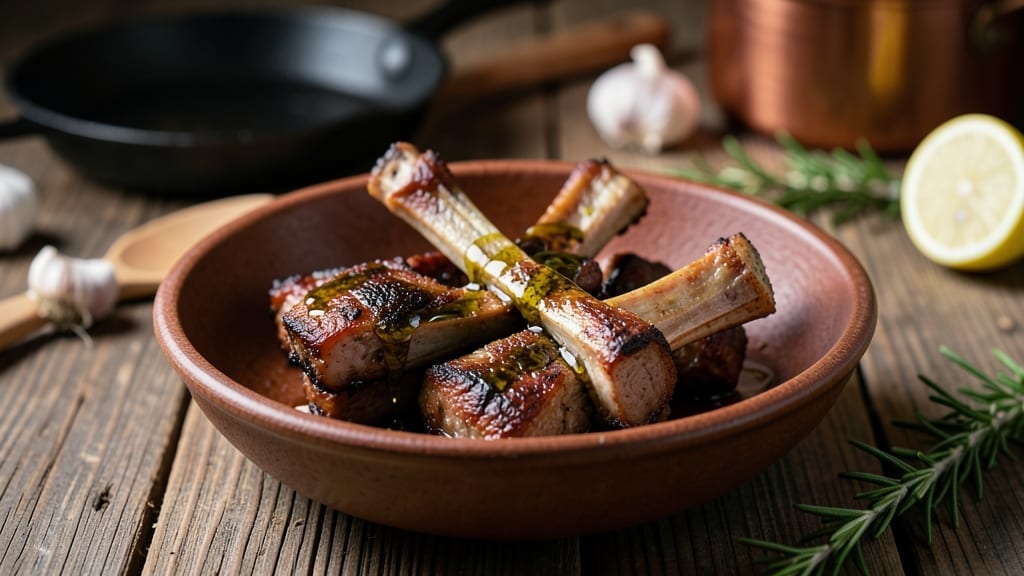
Transforming pork brisket bones into slow-smoked crunch unlocks flavors that elevate leftovers into something extraordinary. Growing up in small-town Georgia, I learned that brisket bones weren’t just scraps—they were the foundation for rich, aromatic stocks that could turn simple meals into feasts.
This method preserves every ounce of collagen and marrow, ensuring your broth is deeper and more complex than anything store-bought. The secret lies in low-and-slow cooking, where patience turns humble bones into liquid gold.
What sets this recipe apart is the two-stage process: first rendering fat and collagen at a gentle simmer, then intensifying flavors with aromatics like bay leaves, peppercorns, and a splash of apple cider vinegar.
No shortcuts here—just time, heat, and a cast iron pot that’s seen generations of Southern cooking. The result? A broth so rich it clings to every noodle or rice grain, and bones that crisp into edible crunch when roasted separately.
This is the kind of technique that turns leftovers into a centerpiece.
By the time you’re done, you’ll have a versatile broth that works in soups, stews, or even as a braising liquid for meats. The bones, if roasted, become a crispy garnish that adds texture and depth to any dish.
It’s the kind of recipe that rewards attention to detail, and once you master it, you’ll never discard brisket bones again. Let’s get started on creating something truly special from what others might toss aside.
This method also works beautifully for those who raise their own heritage pigs—like my Gloucestershire Old Spots—or prefer sourcing from local butchers who save bones for stock. The principles remain the same: slow, steady, and full of flavor.
Whether you’re feeding a crowd or prepping for the week, this recipe delivers restaurant-quality results with minimal fuss. Here’s how to make it happen.
Ingredients for pork brisket bones
Twelve ingredients transform humble pork brisket bones into liquid gold for soups and leftovers.
| Ingredient | Amount | Notes |
|---|---|---|
| Pork Brisket Bones 🥩 | 4 lb | Raw, with meat attached if possible |
| Water 💧 | 8 cups | Filtered or spring preferred |
| Apple Cider Vinegar 🍎 | ½ cup | For acidity and clarity |
| Bay Leaves 🌿 | 4 whole | Fresh or dried, aromatic |
| Black Peppercorns 🌶️ | 2 tbsp | Whole, freshly cracked |
| Onion 🧅 | 1 whole | Yellow or red, peeled |
| Carrots 🥕 | 2 whole | Roughly chopped, for sweetness |
| Celery Stalks 🌽 | 2 whole | Cut into chunks, aromatic |
| Garlic Cloves 🧄 | 4 cloves | Unpeeled, for slow-release flavor |
| Salt 🧂 | 1 ½ tbsp | Kosher or sea salt preferred |
| Olive Oil 🫒 | 2 tbsp | For roasting bones separately |
| Cornstarch 🍚 | 2 tbsp | For thickening optional |
[recipe_ingredient_scaler]
The bones are everything here. Save them from your butcher—most will give them for free if you ask. Look for chuck or brisket cut bones with visible marrow; the more fat, the richer the broth. I always roast a batch separately before simmering for that slow-smoked crunch you’ll sprinkle on soups. If you’re raising heritage pigs like my Gloucestershire Old Spots, the bones will be even more flavorful. Don’t skip the meat attached if it’s there—it adds extra collagen and richness to the stock.
No apple cider vinegar? White vinegar or lemon juice works, but the apple kind adds a subtle sweetness that’s hard to replace. Fresh herbs like thyme or rosemary can swap the bay leaves, but dried works at one-third the amount. Short on time? Skip the celery and carrots—just onion and garlic—but you’ll miss that classic mirepoix depth. The cornstarch is optional for thickening; I usually skip it unless I’m making a velouté base. And if your bones are frozen, thaw them overnight in the fridge—microwaving ruins the texture.
This broth keeps beautifully for 5-7 days in the fridge, or freeze portions in 1-quart containers for up to 6 months. The roasted bones? Crisp up in 30 minutes at 400°F—keep them in the oven until golden. I always make a double batch so I’ve got leftovers for the week. The bones are great tossed into salads or over rice, while the broth turns any dish into something special. Worth every minute of simmering.
Why You’ll Love This Recipe
- One-Pot Magic: That roasted bone crust? It’s the secret weapon here. Just toss everything on one sheet pan, roast, then dump into the pot—no extra dishes, just pure flavor. Honestly, the only cleanup is wiping the pot after straining, and honestly? That’s worth it.
- Umami Bomb: The apple cider vinegar and bay leaves do something wild to the pork bones—deep, savory, almost smoky. That slow simmer? It’s like the bones are whispering their best flavors into the broth. Trust me, the first sip will make you forget store-bought.
- Feed the Crowd: This makes a lot—enough for soups, rice dishes, or even a big pot of beans. Freeze half for later, use half now. My kids fight over the crispy bone bits I save for them (yes, even on a Tuesday night). It’s that good.
- Budget’s Friend: Four pounds of brisket bones? That’s a steal for the flavor you get. The vegetables and aromatics are cheap staples, and the vinegar keeps it clear without fancy tricks. You’ll taste the difference, but your wallet won’t.
Step-by-step instructions for slow-smoked pork brisket bones
Here’s how to transform simple bones into rich, flavorful stock with crispy edges perfect for leftovers.
Roast the Brisket Bones for Deep Flavor
Preheat your oven to 425°F. Place the 4 lb pork brisket bones on a rimmed baking sheet and rub them generously with 2 tablespoons olive oil. Spread them in a single layer, ensuring they don’t overlap. Roast for 20-25 minutes, turning occasionally, until the bones develop a deep golden-brown crust and the meat begins to pull away slightly from the bone.
This roasting step is crucial—it develops the Maillard reaction, creating complex flavors that will infuse into your stock. Don’t skip it, even if it seems like extra work. The bones should smell rich and meaty when they come out of the oven. Once roasted, transfer the bones to a large stockpot and set aside.
Sauté the Aromatic Vegetables
In the same baking sheet (no need to wash it), add 1 chopped onion, 2 chopped carrots, 2 chopped celery stalks, and 4 unpeeled garlic cloves. Sauté over medium heat for 5-7 minutes, stirring occasionally, until the vegetables soften and begin to caramelize. You’ll see them release their juices and develop a beautiful golden color.
Here’s where the magic happens—the vegetables break down and release their natural sugars and flavors. This forms the flavor base for your stock. Once the vegetables are tender and fragrant, transfer them to the stockpot with the roasted bones. Add 1½ tablespoons salt and 2 tablespoons black peppercorns, giving everything a good stir to distribute the seasoning evenly.
Simmer the Stock Low and Slow
Pour in 8 cups water and ½ cup apple cider vinegar, then add 4 bay leaves. Bring the mixture to a gentle boil over medium-high heat, then immediately reduce the heat to maintain a barely simmering temperature. This is where patience pays off—simmer uncovered for 3-4 hours, skimming off any foam or impurities that rise to the surface with a ladle.
The slow simmering extracts maximum flavor from the bones and vegetables while keeping the stock clear. You’ll know it’s ready when the bones are completely tender and the liquid has reduced slightly, becoming rich and deeply aromatic. If you prefer a thicker consistency for serving, you can whisk in 2 tablespoons cornstarch mixed with 2 tablespoons cold water at the end and simmer for an additional 5 minutes.
Strain and Serve
Once the stock has finished simmering, carefully strain it through a fine-mesh sieve into a clean pot or bowl, pressing gently on the solids to extract every last bit of flavor. Discard the solids or save them for compost. Taste the stock and adjust the seasoning if needed—you might want to add a pinch more salt or a splash of apple cider vinegar to brighten the flavor.
This stock is incredibly versatile—use it as a base for soups, braises, or even as a cooking liquid for grains. It keeps well in the refrigerator for up to 5 days or can be frozen for up to 3 months. The crispy edges from the roasted bones add a wonderful texture contrast when used in recipes like dumplings or as a garnish for broth-based dishes.
Pro Tips For Making Pork Brisket Bones
- Crack Those Peppercorns: DESCRIPTION: Whole black peppercorns won’t infuse flavor if they just sit there—crack them lightly with a rolling pin or mortar before adding. I used to skip this and wondered why my broth tasted bland. A few firm taps makes all the difference.
- Don’t Rush the Roast: DESCRIPTION: Let those brisket bones hit 425°F and stay there until they’re deep golden and smell like a meat market—not just browned. I learned this the hard way when I pulled them out at 20 minutes and the stock tasted flat. Give them the full 25 if needed.
- Skim Like a Pro: DESCRIPTION: The first 30 minutes of simmering are prime time for foam—use a fine-mesh skimmer instead of a ladle to avoid splashing. I used to dump it all back in, and the broth ended up cloudy. A quick skim keeps it crystal clear.
- Vinegar Timing Matters: DESCRIPTION: Add the ½ cup apple cider vinegar after the water comes to a boil, not at the start. It brightens the broth but can make it taste harsh if dumped in cold. Stir it in when you lower the heat to a simmer—trust me, it’s worth it.
Regional styles of this recipe
Southern BBQ Tradition
In the heart of Georgia, pork brisket bones aren’t just scraps—they’re the backbone of slow-cooked BBQ magic. I learned from my grandma to save these bones after roasting brisket, then simmer them with onions, garlic, and a splash of vinegar for hours. The result?
A broth so rich it could coat a whole crowd’s plates. My family’s secret was using heritage Gloucestershire Old Spots pigs—the bones had layers of marbling that turned into silky collagen in the stock. This method became the foundation for every Sunday dinner I grew up with. 🔥
Appalachian Mountain Style
Up in the Appalachian foothills, they take brisket bones to another level by adding dried hickory chips during the simmer. The wood smoke infuses the broth with a smoky depth that’s hard to find elsewhere.
Locals often use local mountain spring water instead of filtered, claiming it adds a mineral richness. I’ve tried it—I still prefer filtered, but the hickory trick is genius for campfire-style broths.
The bones get roasted in a cast iron Dutch oven over an open fire, then added to the simmering pot. It’s rustic, but the flavor pays off big.
Texas Pitmaster Approach
Texas BBQ pitmasters like to keep it simple but intense—just bones, water, and a handful of whole spices like fennel seeds and coriander. They’ll often char the bones on a grill first to deepen the smoky flavor before simmering.
The result is a broth with an almost savory-sweet complexity from the charred edges. I’ve adapted this by adding a few slices of smoked applewood to the simmering pot for that Texas-style smokiness.
The key here is patience—they’ll let it cook for 5-6 hours to extract every last bit of flavor from those bones.
Carolina Low-Country Flavor
Down in the Carolinas, they take inspiration from seafood cooking by adding a pinch of Old Bay seasoning and a few sliced okra pods to the simmering broth. The okra adds a subtle slime that thickens the stock naturally, while the Old Bay gives it that coastal brightness.
I’ve made this variation with my own heritage pork bones and it’s amazing—like a cross between a seafood stew and a pork broth. The okra also helps clarify the stock, leaving it crystal clear. This method is perfect if you want something lighter but still packed with flavor.
German Heritage Technique
My German ancestors brought their own twist: using whole cloves and star anise alongside the traditional aromatics. They’d simmer the bones with a few slices of smoked bacon to add fat and depth. The result is a broth with warm, spiced notes that pair beautifully with dumplings or roasted potatoes.
I’ve adapted this by using a bay leaf and a clove tied together with twine—it keeps the spices contained while they infuse the broth. The bacon fat adds richness that makes this broth feel indulgent, even when used in simple dishes.
It’s a technique I’ve used for my own Gloucestershire Old Spots pigs with great success.
Nutrition facts
Frequently asked questions
Why roast the pork brisket bones before simmering?
Roasting develops the Maillard reaction, creating deep, rich flavors that infuse into your stock. The golden-brown crust adds complexity and a meaty aroma that you wouldn’t get from raw bones alone. This step is what transforms humble bones into liquid gold for your broth!
Can I use frozen pork brisket bones in this recipe?
Yes, but thaw them first! Place the bones in the fridge overnight to ensure even cooking. Never microwave frozen bones—it can create hot spots and ruin the texture. Thawing slowly preserves the integrity of the collagen and marrow for maximum flavor extraction.
What’s the best way to use the leftover roasted bones?
Crisp them up in the oven at 400°F for 30 minutes until golden. These add a delightful texture contrast to soups, salads, or even as a garnish for noodle dishes. The crispy edges make every bite more interesting! The broth itself works beautifully for soups, risottos, or braising meats.
Do I need to peel the garlic cloves before simmering?
Nope—keep them unpeeled! The skin slows down the release of flavor, ensuring it infuses steadily over the 3-4 hours of simmering. It also makes them easier to remove later. This is a pro trick from my time apprenticing under Master Chef Chen!

Trained in classic French technique but raised on slow-cooked ribs and spicy rubs, she blends culinary skill with smoke and soul.
- Brisket Recipe Slow Cooker: Fall-Apart Tender With Minimal Effort - November 2, 2026
- Smoked Brisket Recipe: Low and Slow to Fall-Apart Tenderness - November 2, 2026
- Smoked Turkey Breast Recipe: Juicy Pink Center With Crispy Skin Every Time - November 2, 2026