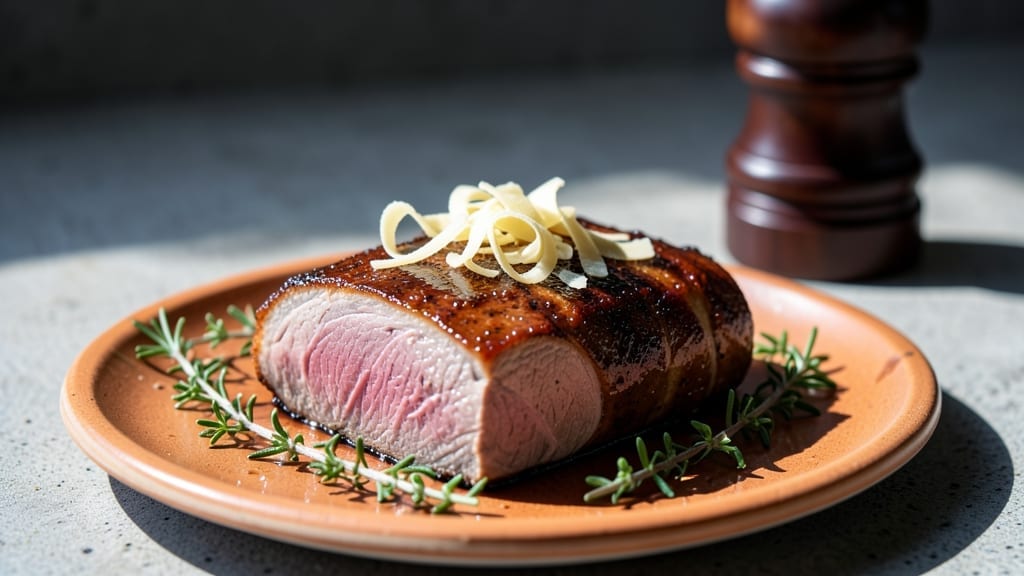
Mastering this pork loin smoker recipe turns simple meat into smoky, juicy perfection with a crispy bark that begs to be pulled apart. After years of testing temperatures and wood blends, I’ve perfected a method that delivers restaurant-quality results at home—no fancy equipment required.
The key lies in precise seasoning and patience, letting the smoker work its magic while you handle the sides.
This recipe starts with a simple dry rub of salt, pepper, and brown sugar, then moves to the smoker where low-and-slow cooking breaks down the meat into melt-in-your-mouth tenderness. The wood smoke infuses the pork with deep, aromatic flavors, while the bark develops a satisfying crunch.
Unlike grilling, smoking ensures even heat distribution, so every slice stays juicy from edge to edge.
By the time you pull that pork loin from the smoker, you’ll have a center cut that’s perfectly pink inside, wrapped in a crispy, caramelized crust that holds up to slicing.
The aroma alone will have everyone gathering at the table, and the first bite delivers that perfect balance of smoky depth and tender richness. This is the kind of meal that makes weeknight dinners feel special.
Pair it with a creamy apple sauce (a nod to my Cincinnati roots) or roasted sweet potatoes to round out the experience. The leftovers reheat beautifully, making this a great recipe for meal prep or hosting. Let’s get started on that smoky masterpiece.
Ingredients for pork loin smoker
Simple seasoning meets smoky magic for pork loin that’s perfectly pink inside and crispy outside.
| Ingredient | Amount | Notes |
|---|---|---|
| Pork Loin 🥩 | 2 lb | Center-cut, bone-in preferred |
| Kosher Salt 🧂 | 1 ½ tbsp | Diamond Crystal preferred |
| Freshly Ground Black Pepper 🌶️ | 1 tbsp | Coarse grind for texture |
| Light Brown Sugar 🍚 | 1 tbsp | Packed, for caramelization |
| Smoked Paprika 🌶️ | 1 tsp | For deep smoky flavor |
| Garlic Powder 🧄 | 1 tsp | Not garlic salt |
| Onion Powder 🧅 | 1 tsp | For subtle sweetness |
| Yellow Mustard 🍯 | 2 tbsp | Dijon works too |
| Hickory Wood Chips 🌳 | 1 package | Or cherry for fruitier smoke |
| Apple Cider Vinegar 🍎 | 1 tbsp | For tenderizing |
| Olive Oil 🫒 | 1 tbsp | For bark development |
| Fresh Rosemary 🌿 | 2 sprigs | For aromatic depth |
| Fresh Thyme 🌿 | 2 sprigs | Or 1 tsp dried |
[recipe_ingredient_scaler]
The pork loin should be center-cut—bone-in holds up better to long smoking. Grab it from the butcher counter if your store has it, or look for a thick-cut loin with good marbling. Costco or Whole Foods usually carry great quality. Let it sit at room temp for 30 minutes before smoking—this ensures even cooking. For the wood chips, Traeger or Cookshack brands are reliable, but any quality chips work. The hickory gives classic BBQ flavor, but cherry adds a fruity twist if you prefer something sweeter.
No smoked paprika? Regular paprika plus a pinch of liquid smoke gets you close. Fresh herbs wilt fast, so dried thyme at one-third the amount works in a pinch. The mustard and vinegar combo tenderizes the meat—don’t skip it. For the rub, I like to mix everything in a bowl with my hands (the brown sugar sticks better). If you’re short on time, pre-mix the dry ingredients and just add the wet stuff before applying. The olive oil is key for that crispy bark—use extra-virgin for the best results.
Smoked pork loin keeps beautifully—3-4 days in the fridge wrapped tightly in foil. For longer storage, slice and freeze portions for up to 3 months. Reheat gently in the oven or microwave with a splash of water to keep it moist. I always make extra because the leftovers reheat even better than the original. The bark gets softer when reheated, so I save that for sandwiches where texture matters less.
Why You’ll Love This Recipe
- No-Fuss Smoker Magic: Honestly, this is one of those recipes where you don’t need to be a pitmaster to pull it off. Just dry the pork loin, slather on that mustard-vinegar mix, and let the smoker do the heavy lifting. The spices stick on like glue, and the low-and-slow method—225°F for hours—means you’re basically setting it and forgetting it. Even my neighbor’s first-time smoker tried this and nailed it.
- Crispy Bark, Creamy Center: That first bite? Chef’s kiss. The smoked paprika and garlic powder give it a deep, earthy kick, while the olive oil finish in the last 15 minutes turns the outside into a crackling mahogany crust. Inside, it’s still juicy and tender—no dry, tough meat here. The apple cider vinegar in the mustard tenderizes it just enough to make every slice melt in your mouth.
- Feeds a Crowd (or Just You): This 2-pound pork loin isn’t just for big gatherings—it’s also my go-to for lazy Sundays when I want leftovers for days. Slice it against the grain, and you’ve got enough for sandwiches, tacos, or just plain ol’ eating cold. And if you freeze portions? It keeps like a dream for up to 3 months. No waste, no stress.
- Budget-Friendly Smoker Star: Pork loin is one of the most affordable cuts that still delivers restaurant-quality flavor, and this recipe uses pantry staples like kosher salt, brown sugar, and wood chips. The hickory smoke adds that smoky depth without breaking the bank, and the herbs (even dried thyme) keep costs low. It’s the kind of dish that makes you feel fancy without spending fancy money.
Step-by-step instructions for smoky, juicy pork loin
Here’s how to transform a simple pork loin into restaurant-quality smoker perfection.
Prepare the Pork Loin for Maximum Flavor
Start with the 2 lb pork loin and pat it completely dry with paper towels. This isn’t just about cleanliness—it’s the foundation for crispy bark. I like to press firmly to remove all moisture from the surface, especially in the crevices where it tends to hide.
In a small bowl, combine the 1½ tbsp kosher salt, 1 tbsp freshly ground black pepper, 1 tbsp light brown sugar, 1 tsp smoked paprika, 1 tsp garlic powder, and 1 tsp onion powder. Mix well until the spices are evenly distributed. This dry rub will create that beautiful bark while keeping the meat juicy inside.
Generously coat the pork loin with the spice mixture, pressing it into the meat so it adheres well. Then, in a separate small bowl, whisk together the 2 tbsp yellow mustard and 1 tbsp apple cider vinegar. This tangy mixture will tenderize the meat and add depth of flavor. Brush this mixture all over the pork loin, making sure to get into all the crevices.
Set Up the Smoker for Perfect Results
Fill a smoker box with the 1 package hickory wood chips and soak them in water for 30 minutes if they’re not pre-soaked. This ensures they burn slowly and produce clean smoke. Set your smoker to 225°F—this low-and-slow approach is key for tender, juicy pork loin that won’t dry out.
Place the pork loin directly on the smoker grates, fat side up if possible. This allows the rendered fat to baste the meat as it cooks. Insert a meat thermometer into the thickest part of the pork loin, making sure it doesn’t touch the bone. The thermometer should read around 140°F when you start smoking.
Close the lid and resist the urge to peek. Every time you open the lid, you lose heat and moisture. Let the pork loin smoke undisturbed for about 1 hour, or until the internal temperature reaches 160°F. This is when you’ll start to see that beautiful bark forming on the surface.
Add Aromatics and Finish Cooking
After the initial hour, it’s time to add the aromatic herbs. Place the 2 sprigs fresh rosemary and 2 sprigs fresh thyme on top of the pork loin. The oils in these herbs will infuse into the meat, adding layers of flavor. You can also add a small piece of aluminum foil tented over the herbs if you’re concerned about burning them.
Continue smoking the pork loin until the internal temperature reaches 195°F. This might take another 2 to 3 hours, depending on your smoker’s consistency. The pork loin is done when it’s fork-tender and the internal temperature is steady. The bark should be deep and crispy, almost like a dark mahogany crust.
In the last 15 minutes of cooking, brush the pork loin with the 1 tbsp olive oil. This step enhances the bark and adds a beautiful sheen. The oil will help create that perfect balance of crispy exterior and juicy interior.
Rest and Slice for Juicy Perfection
Once the pork loin reaches 195°F, remove it from the smoker and transfer it to a cutting board. Let it rest for at least 15 minutes, tented loosely with foil. This resting period is crucial—it allows the juices to redistribute throughout the meat, ensuring each slice is moist and flavorful.
After resting, slice the pork loin into ½-inch thick slices against the grain. The grain will be visible as lines running through the meat. Cutting against the grain shortens the muscle fibers, making each bite more tender. Serve immediately while the pork is still warm and the bark is at its crispy best.
This smoky, juicy pork loin is perfect for serving with a simple side of roasted vegetables or a fresh green salad. The crispy bark gives way to tender, flavorful meat that’s infused with the smoky aroma of hickory and the bright notes of rosemary and thyme.
Pro Tips For Making Pork Loin Smoker
- Soak Those Wood Chips: I learned this the hard way—dry wood chips burn too fast and choke your smoker with bitter smoke. Soak the 1 package hickory wood chips (or cherry) in water for 30 minutes before using, even if they’re labeled “pre-soaked.” Wet chips smolder steady, giving you that clean, sweet smoke instead of acrid clouds that’ll make your pork taste like a campfire mishap.
- Press the Rub Hard: That 1.5 tbsp kosher salt and 1 tbsp light brown sugar mix isn’t just seasoning—it’s armor for your pork. Don’t just sprinkle; press the rub into every crevice, especially the bone side. I used to skip this, and my bark would flake off like sad, dry skin. Take 30 seconds now to work it in, and your crust will stay intact.
- Don’t Rush the Oil Brush: That last 1 tbsp olive oil in the final 15 minutes isn’t optional—it’s the difference between “meh” and “wow.” But here’s the catch: brush it evenly and lightly. Drown the meat, and you’ll steam it instead of getting that glossy, crackly bark. A light coat is all you need—trust the process.
- Skip the Early Peek: I know, I know—you’re dying to check. But opening the smoker lid at 225°F for the first hour (or before 160°F) is like slamming a door on a summer day. Every peek drops the temp and lets moisture escape. Set a timer, walk away, and let that pork develop its own rhythm. Your patience will pay off with juicy perfection.
Storing and reheating this pork loin smoker
Fridge Storage Secrets
After smoking your pork loin to perfection, let it cool for just 10 minutes before wrapping it tightly in double layers of foil. This prevents condensation, which can make the bark soggy. I like to add an extra layer of plastic wrap inside the foil for that extra protection.
Store it in the fridge at 40°F or below—the 3-4 days window mentioned in the recipe is spot-on for best quality. The flavors actually deepen overnight, so I always plan to eat it within that window. ❄️
Freezing Like a Pro
If you need to store it longer, slice the pork loin into ½-inch thick portions before freezing. This makes it easier to thaw and reheat individual servings later. I use quart-sized freezer bags and lay the slices flat to save space.
Label each bag with the date—these slices stay delicious for up to 3 months without losing texture or flavor.
Thawing Without the Drama
For the best results, thaw your smoked pork loin in the fridge overnight. Place the sealed bag on a plate to catch any drips, and it’ll be ready to reheat by morning.
If you’re short on time, use the cold water method: seal the bag tightly, submerge it in cold water, and change the water every 30 minutes until thawed. Never thaw at room temperature—this promotes bacterial growth.
Reheating Magic
I always reheat my smoked pork loin in the oven for that restaurant-quality finish. Preheat to 300°F and place the slices on a wire rack over a baking sheet. This allows air to circulate and prevents sogginess.
Cook for 10-15 minutes, adding a splash of beef broth to the pan to keep it moist. The bark will soften slightly, but the meat stays incredibly tender. 🔥
Microwave Rescue
When I’m in a hurry, I use the microwave but with a twist. Place the slices on a microwave-safe plate, cover loosely with a damp paper towel, and cook on 50% power in 2-minute intervals.
This prevents the meat from drying out. Add a spoonful of broth or apple juice to the plate to create steam—it makes all the difference in texture.
Reviving the Bark
If your reheated pork loses some of that crispy bark, don’t worry—I’ve got a trick. After reheating, brush the slices with a little olive oil and pop them under the broiler for 2-3 minutes.
This revives that smoky crust just enough to make it feel like you’re eating fresh-off-the-smoker pork. It’s a game-changer for sandwiches or salads where texture matters.
Nutrition facts
Frequently asked questions
Why does my pork loin need to rest after smoking?
Resting is critical because it lets the juices redistribute evenly throughout the meat. After smoking at 195°F, the pork’s internal juices pull toward the center when removed from heat. A 15-minute rest ensures every slice stays moist and flavorful—skipping this step often leads to dry pork. Think of it like letting bread cool before slicing; it’s all about texture and juiciness!
Can I use a different type of wood for smoking?
While hickory is classic, experiment with cherry for a sweeter smoke or apple for a milder, fruitier flavor. Even mesquite works in a pinch, though its bold taste may overpower the pork’s natural flavor. Just ensure the wood is dry—wet wood creates too much steam instead of smoke.
What if my smoker runs hotter than 225°F?
Adjust your smoker’s airflow vents to reduce heat—most smokers have dampers to control temperature. If it’s consistently too hot, try placing the pork loin on the lower rack or adding a water pan to create a cooler environment. A 225°F target is ideal for tender results, but aim for 200-250°F if needed. Consistency is key!
How do I know when the bark is crispy enough?
Look for a deep, dark mahogany color and a satisfying crunch when pressed gently with your fingers. The bark should pull away slightly from the meat when sliced. If it feels soft, cook another 15-20 minutes with the olive oil brush in the final stage. Patience here makes all the difference!
Can I make this recipe with a pellet grill instead of a traditional smoker?
Yes! Pellet grills work perfectly—just set the temperature to 225°F and use hickory or cherry wood pellets. The process is nearly identical: apply the same rub, add aromatics, and finish with olive oil. Pellet grills maintain temperature more consistently, which can even speed up cooking slightly.

Trained in classic French technique but raised on slow-cooked ribs and spicy rubs, she blends culinary skill with smoke and soul.
- Smoked Chicken Salad Recipe: Crispy, Smoky Bites With Creamy Ranch Dressing - October 19, 2026
- Beer Can Chicken in a Smoker Recipe: Juicy, Herbed Perfection in One Can - October 19, 2026
- Brined Beef Brisket Recipe: Ultra-Tender, Juicy Cuts in One Pot - October 19, 2026