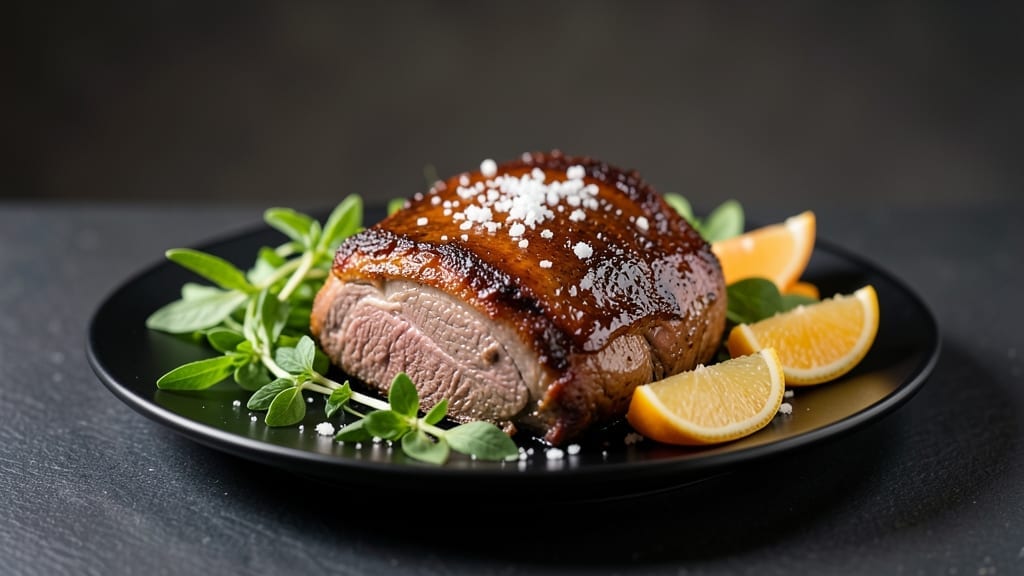
A perfectly slow-roasted beef brisket delivers fall-apart tenderness and a smoky bark that transforms tough cuts into melt-in-your-mouth perfection. This method—using just salt, pepper, and aromatics—builds deep flavor while breaking down connective tissue over hours.
The secret lies in patience: low heat, long cooking, and letting the internal temperature climb to 203°F for maximum tenderness.
What sets this recipe apart is the two-stage approach: a high-heat sear to lock in juices, followed by slow roasting that renders fat into flavorful drippings. No fancy equipment needed—just time, a reliable thermometer, and a steady oven.
The result? A brisket so tender it practically dissolves at the touch, with a crusty exterior that adds texture and depth.
This brisket shines as the centerpiece of a hearty meal, pairing beautifully with creamy mashed potatoes, roasted root vegetables, or a crisp slaw. The smoky aroma alone will have everyone gathered at the table, and the leftovers—if there are any—make sandwiches that taste even better the next day.
Ready to master this foolproof technique? The key is precision: timing, temperature, and resting. Let’s break it down step by step for restaurant-quality results at home.
Ingredients for beef brisket slow roast
The cornerstone of brisket mastery: a carefully selected beef cut and aromatic blend.
| Ingredient | Amount | Notes |
|---|---|---|
| Beef Brisket 🥩 | 4 lb | Packer cut, good marbling |
| Kosher Salt 🧂 | 1 ½ tbsp | Diamond Crystal preferred |
| Freshly Ground Black Pepper 🌶️ | 1 tbsp | Coarse grind for texture |
| Yellow Onion 🧅 | 1 whole | Yellow or red, sliced |
| Garlic Cloves 🧄 | 6 cloves | Peeled, smashed |
| Fresh Thyme Sprigs 🌿 | 4 whole | Stems removed |
| Fresh Rosemary Sprigs 🌿 | 4 whole | Needles only |
| Apple Cider Vinegar 🍎 | ¼ cup | For tenderizing |
| Unsalted Butter 🧈 | ½ cup | Cold, cubed |
| Beef Broth 🥫 | 1 cup | Low-sodium preferred |
| Brown Sugar 🍚 | 2 tbsp | Light or dark |
| Smoked Paprika 🌶️ | 1 tbsp | For smoky depth |
| Wooden Spoon 🍴 | 1 whole | For basting |
[recipe_ingredient_scaler]
The beef brisket is non-negotiable—look for a packer cut with ample marbling, typically weighing 4-5 pounds for optimal tenderness. Whole Foods or local butcher shops often carry the best quality, though major grocery chains like Kroger or Walmart stock reliable options. Avoid pre-trimmed briskets; the fat cap is essential for moisture and flavor. If shopping online, Snake River Farms or US Wellness Meats deliver premium cuts. The apple cider vinegar serves a dual purpose: tenderizing the meat and establishing the foundation for deep, complex flavors during the slow roast. Fresh herbs like thyme and rosemary should be vibrant and fragrant—Costco or Trader Joe’s often carry high-quality bundles. For the smoked paprika, Penzeys or McCormick brands offer consistent quality, though any reputable brand will suffice.
No apple cider vinegar? Red wine vinegar or balsamic vinegar work as substitutes, though the flavor profile will differ slightly. Fresh herbs unavailable? Dried thyme and rosemary can be used at one-third the amount, but fresh is ideal for that aromatic punch. Brown sugar can be omitted entirely if you prefer a less sweet profile, though it contributes to the bark formation. Beef broth substitutes include chicken broth or even water, though the depth of flavor will diminish. For the butter, European-style or grass-fed options add richness, but standard unsalted butter works perfectly. Smoked paprika can be swapped for liquid smoke in a pinch (start with ½ teaspoon and adjust to taste), though the smoky flavor will be more pronounced.
The brisket should be stored in the refrigerator, uncovered on a wire rack, for up to 2 days before roasting to enhance the bark formation. Fresh herbs last 3-4 days in the fridge, wrapped in damp paper towels. Butter and brown sugar can be stored at room temperature for up to 6 months, while beef broth freezes well for up to 3 months. Wooden spoons should be hand-washed and air-dried to maintain their integrity. Leftover brisket reheats beautifully—wrap tightly in foil and warm in a 350°F oven for 10-15 minutes or until heated through. For long-term storage, portion and freeze for up to 3 months.
Why You’ll Love This Recipe
- No-Fuss Tenderizer: The apple cider vinegar marinade? Game-changer. I’ll be honest—I used to skip it, but after one overnight soak, my brisket went from tough to melt-in-your-mouth. That 4-hour (or better, overnight) marinade does the heavy lifting while I sleep, so when I wake up, I’m just searing and roasting. No stress, just results.
- Smoky Sweet Crust: That smoked paprika and brown sugar combo? It’s the reason this isn’t just any brisket—it’s the kind of dish that makes people lean in for seconds. The sear locks in a caramelized crust while the slow roast keeps the inside tender. I’ll never go back to bland brisket again.
- Feeds a Crowd, No Guilt: Four pounds of brisket? Perfect for game days, potlucks, or when my family shows up unannounced (it happens). The leftovers? Even better the next day, especially if you slice it thick and reheat it low and slow. Budget-friendly too—this is one of those meals where you get more bang for your buck.
- Weeknight Hack: Yes, even on a Tuesday night. The Dutch oven does all the work while I’m at the table with a glass of wine. Just sear it, toss it in the oven for 4 hours, and let it rest. The wooden spoon basting step is the only fiddly part, but honestly? Worth it. My kids don’t even notice it’s “slow-cooked”—they just know it’s delicious.
Step-by-step instructions for beef brisket slow-roast recipe
Here’s the method for achieving fall-apart tenderness with rich, smoky depth in every bite.
Prepare the Brisket with Vinegar Marinade
In a large bowl, combine the 4 lb beef brisket, ¼ cup apple cider vinegar, 1 tbsp smoked paprika, 1 tbsp freshly ground black pepper, and 1½ tbsp kosher salt. Massage the marinade into all surfaces of the meat, including the fat cap, using your hands. The vinegar acts as a tenderizer while the spices penetrate the surface. Place the brisket in a resealable plastic bag and refrigerate for at least 4 hours, or preferably overnight. This step ensures maximum flavor absorption and tenderness.
Real talk: Don’t skip this marinating time. The acid in the vinegar breaks down muscle fibers, while the spices create a flavorful crust. If you’re short on time, a minimum of 4 hours still delivers noticeable results, but overnight yields the best texture.
Sear and Build the Flavor Base
Preheat your oven to 300°F. Remove the brisket from the refrigerator and let it sit at room temperature for 30 minutes. Heat a Dutch oven over medium-high heat and add the ½ cup unsalted butter. Once the butter melts and begins to foam, add the 1 yellow onion (sliced) and 6 garlic cloves (smashed). Cook for 5 minutes until the onions soften and become translucent.
Add the brisket to the Dutch oven, fat-side down, and sear for 5 minutes until a deep golden-brown crust forms. Flip the brisket and sear the other side for another 5 minutes. Remove the brisket and set it aside. Here’s the thing—this searing step creates a flavorful crust that locks in juices during the long roast, while the aromatics infuse the fat with additional depth.
Slow-Roast with Aromatics and Broth
In the same Dutch oven, add the 4 fresh thyme sprigs, 4 fresh rosemary sprigs (needles only), 2 tbsp brown sugar, and 1 cup beef broth. Using the 1 wooden spoon, scrape up any browned bits from the bottom of the pan. Return the brisket to the Dutch oven, fat-side up, and cover tightly with a lid or foil. Place in the preheated 300°F oven.
Roast for 4 hours, then check the internal temperature using a meat thermometer. You’re aiming for 170°F in the thickest part of the meat. If it hasn’t reached this temperature, continue roasting, adding more broth if the pan appears dry. The brown sugar caramelizes during this time, adding sweetness that balances the smoky depth. Don’t be tempted to peek—each time you open the lid, you lose valuable heat and moisture.
Rest and Slice for Maximum Juiciness
Once the brisket reaches 170°F, remove it from the oven and transfer it to a cutting board. Tent loosely with aluminum foil and let it rest for at least 1 hour. This resting period allows the juices to redistribute throughout the meat, ensuring each slice is moist and flavorful. The brisket should be fork-tender, with the fat cap crisped and the meat pulling apart easily.
After resting, slice the brisket against the grain into ¼-inch thick slices. Serve immediately with the pan juices strained and reduced if desired. The result should be a brisket with a perfect balance of smoky, sweet, and savory flavors, where each bite offers that coveted fall-apart tenderness. The spices and aromatics you infused during the roast create layers of complexity that elevate this classic dish.
Pro Tips For Making Beef Brisket Slow Roast
- Don’t Rush the Vinegar: I learned this the hard way—skipping the full 4 hours with the apple cider vinegar marinade leaves the brisket tougher than it needs to be. If you’re short on time, at least let it sit for 2 hours, but overnight is where the magic happens. That acid works its way into the meat, breaking down fibers and letting the smoked paprika cling like a second skin.
- Sear Fat-Side First: The fat cap isn’t just for looks—it’s your flavor insurance. When you sear the brisket fat-side down first, that rendered fat bastes the meat as it cooks, keeping it moist and adding richness. Flip too soon, and you’ll miss out on that golden crust that locks in all those caramelized onions and garlic you worked so hard to build.
- Scrape the Pan Like It’s 1985: After searing the brisket, don’t just dump the aromatics in—use that wooden spoon to scrape up every browned bit clinging to the Dutch oven. That’s where the flavor lives, and letting it sit in the pan juices during the roast means your brisket gets a deeper, meatier taste. (Yes, even if it looks like you’re cleaning as you go.)
- Resist the Peek: I know, I know—you want to check on it. But every time you lift that lid at 300°F, you’re stealing heat and moisture, turning your slow roast into a slow evaporation. Trust the thermometer: 170°F in the thickest part is your target. The brisket will pull apart like butter if you just let it be.
Perfect pairings for beef brisket slow roast
Smoky Beer Pairings
For a true Texas-style pairing, reach for a amber ale like Shiner Bock or Lone Star Salt Lick. The malt sweetness complements the brisket’s smoky depth while cutting through the richness. I always keep a cold one nearby during the final resting phase—it’s the perfect palate cleanser. 🍺
Creamy Mashed Potatoes
No brisket meal is complete without creamy mashed potatoes—I swear by them! Use 2 lbs Yukon Gold potatoes, boiled until fork-tender, then mashed with ½ cup whole milk, ¼ cup unsalted butter, and 1 tsp kosher salt.
The buttery texture soaks up every last bit of brisket juices. 🥔
Pineapple Slaw
For a refreshing contrast, try a pineapple slaw with 2 cups shredded cabbage, 1 cup diced pineapple, 2 tbsp lime juice, and 1 tbsp olive oil. The sweet-tart balance cuts through the brisket’s richness and adds a bright finish. I always serve it chilled. 🍍
Whiskey Reduction Sauce
Elevate your brisket with a whiskey reduction made from ½ cup bourbon, ½ cup beef broth, and 1 tbsp brown sugar. Simmer until reduced by half, then drizzle over sliced brisket.
The caramelized whiskey adds a luxurious depth. I use Buffalo Trace for its smooth, vanilla notes. 🥃
Roasted Garlic Cornbread
A slightly sweet roasted garlic cornbread makes the perfect side. Mix 1 cup cornmeal, 1 cup all-purpose flour, 2 tbsp roasted garlic, and 1 tsp baking powder with 1 cup buttermilk.
Bake until golden and crispy. The garlicky crunch pairs beautifully with the brisket’s smoky bark. 🌽
Nutrition facts
Frequently asked questions
Why does my brisket need to rest after roasting?
Resting the brisket for at least 1 hour after roasting is critical—it allows the juices redistributed during cooking to settle back into the meat. Without resting, you’ll end up with dry slices because all the moisture pools at the bottom. This step ensures every bite is juicy and tender, just like a professional BBQ joint!
How do I know when the brisket is done?
Use a meat thermometer to check the thickest part of the brisket—it should reach 170°F. The internal temperature is more reliable than visual cues alone, especially for tough cuts like brisket. Pro tip: If the fat cap is crispy and the meat pulls apart easily when prodded, it’s ready!
Can I skip the searing step?
While you can skip searing, it’s not recommended. The high-heat sear creates a flavorful crust that locks in juices during the long roast. Without it, your brisket may dry out or lack depth. Think of it as the foundation for that perfect smoky bark!
What if my oven runs hot or cold?
If your oven runs hotter than 300°F, reduce the heat by 25°F to maintain consistent cooking. For colder ovens, add a baking sheet with boiling water to the lower rack to help regulate temperature. Always use an oven thermometer to confirm accuracy!

Trained in classic French technique but raised on slow-cooked ribs and spicy rubs, she blends culinary skill with smoke and soul.
- Smoked Chicken Salad Recipe: Crispy, Smoky Bites With Creamy Ranch Dressing - October 19, 2026
- Beer Can Chicken in a Smoker Recipe: Juicy, Herbed Perfection in One Can - October 19, 2026
- Brined Beef Brisket Recipe: Ultra-Tender, Juicy Cuts in One Pot - October 19, 2026