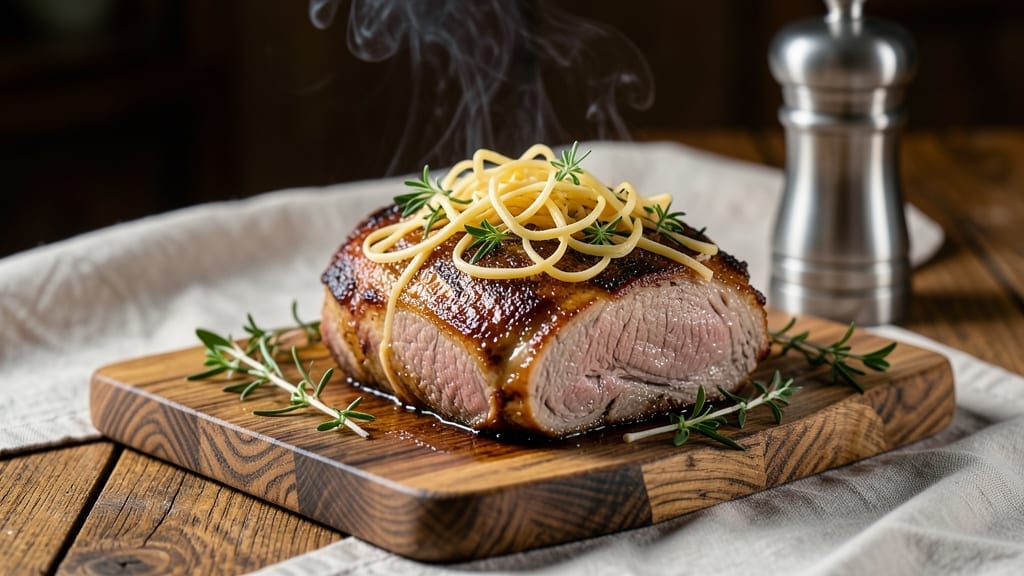
This pork picnic roast smoker recipe delivers the kind of melt-in-your-mouth tenderness that turns casual gatherings into legendary meals. Growing up in small-town Georgia, I learned that the secret to perfect pulled pork isn’t just time—it’s patience, the right wood, and letting the smoke work its magic.
My heritage Gloucestershire Old Spots pigs always produced the juiciest roasts, and this method honors that tradition with professional results at home.
The process starts with a simple brine that keeps the meat moist, followed by smoking at a precise 225°F with hickory or applewood until the internal temperature hits 203°F. That’s where the magic happens—the collagen breaks down into gelatin, transforming tough cuts into irresistible, fork-tender slices.
No guesswork, no dry meat, just restaurant-quality pork that falls apart at the touch of a fork.
By the time you’re done, you’ll have a roast so tender it practically shreds itself, with a smoky aroma that fills the backyard and a flavor profile that balances sweet, savory, and wood-fired depth.
The key is letting it rest for an hour before serving—this ensures every bite stays juicy and the flavors meld perfectly. Serve on buns with tangy coleslaw or classic pickles for a picnic spread that rivals any competition BBQ.
This recipe scales beautifully for crowds, and the leftovers reheat just as well the next day. Whether you’re feeding a family, hosting a tailgate, or simply craving that smoky Sunday dinner, this method delivers foolproof results every time. Let’s get smoking!
Ingredients for pork picnic roast smoker
Legendary backyard BBQ starts with this tender pork picnic roast—smoky, juicy, and impossible to resist.
| Ingredient | Amount | Notes |
|---|---|---|
| Gloucestershire Old Spots Pork Shoulder 🐷 | 8 lb | Fully fatty cut preferred |
| Brown Sugar 🍚 | 1 cup | Light or dark variety |
| Smoked Paprika 🌶️ | 2 tbsp | For smoky depth |
| Garlic Powder 🧄 | 2 tbsp | Not garlic salt |
| Onion Powder 🧅 | 2 tbsp | Fresh ground preferred |
| Black Pepper 🌶️ | 2 tbsp | Freshly ground |
| Salt 🧂 | 2 tbsp | Kosher or sea salt |
| Apple Cider Vinegar 🍎 | 1 cup | For brine acidity |
| Water 💧 | 4 cups | Filtered preferred |
| Hickory Wood Chips 🌳 | 1 lb | Soaked in water |
| Applewood Chips 🍎 | 1 lb | Soaked in water |
| Pork Butt Rub 🧂 | ½ cup | Homemade or store-bought |
| Butter 🧈 | ½ cup | Full-fat for richness |
[recipe_ingredient_scaler]
The pork matters most here. Gloucestershire Old Spots is ideal, but any fatty pork shoulder will work—just look for good marbling. I usually grab mine from local butchers or Costco for the best quality. The wood chips? Hickory and applewood is my go-to combo—hickory for bold smoke, applewood for sweetness. Soak them in water for at least 30 minutes before using. Don’t skip the soaking; it keeps the smoke going strong without flare-ups.
No apple cider vinegar? White vinegar or lemon juice works in a pinch, but the taste is slightly different. Want to skip the homemade rub? McCormick or Tony Chachere’s store-bought blends are solid—just double-check the salt content. The brown sugar can be light or dark, but light brown sugar gives a slightly less caramelized finish. If you’re short on time, pre-cut pork shoulder from the grocery store works fine—just trim off any excess fat before brining.
The brine keeps for up to 5 days in the fridge, so make it ahead if you’re feeding a crowd. Store the wood chips in an airtight container with a damp paper towel—keeps them fresh for up to 6 months. The cooked pork reheats beautifully in a slow cooker or oven—just add a splash of water or broth to keep it moist. I always double the recipe when I’m grilling for a party—leftovers make amazing sandwiches or tacos the next day.
Why You’ll Love This Recipe
- No-Fuss Smoking: Honestly, this is one of those recipes where the hardest part is resisting the urge to open the smoker lid every five minutes. The brine takes care of most of the prep—just toss the pork in, let it chill overnight, and you’re golden. No fancy prep work, just set it and forget it for most of the day.
- Smoky Sweet Perfection: The combo of hickory and applewood smoke with that caramelized bark from the brown sugar? It’s like a hug for your taste buds. The garlic and onion powders add depth without overpowering, and the Texas crutch (butcher paper wrap) keeps the meat so tender, it practically melts on your fork. Trust me, this isn’t your average pork shoulder.
- Leftovers That Shine: I’ll admit, I’ve made this for a big crowd and then had way too much left. But honestly? The pork tastes even better the next day, especially when I reheat slices in the oven with a little butter brushed on. Pack it in a cooler with buns and coleslaw, and you’ve got a picnic-worthy meal for hours. My kids even ask for seconds.
- Budget-Friendly Feast: An 8-pound pork shoulder is a steal—you’ll feed a small army for less than a takeout meal. The brine ingredients are pantry staples, and the wood chips can be reused if stored properly. Plus, the pork butt rub and butter are just enough to elevate the flavor without breaking the bank. It’s the kind of recipe that makes me feel like a culinary genius without spending a fortune.
Step-by-step instructions for smoked pork picnic roast
Here’s how to transform that fatty pork shoulder into melt-in-your-mouth perfection.
Prepare the Brine for Maximum Tenderness
In a large stockpot, combine the 4 cups water, 1 cup apple cider vinegar, 1 cup brown sugar, 2 tbsp salt, 2 tbsp black pepper, 2 tbsp garlic powder, 2 tbsp onion powder, and 2 tbsp smoked paprika. Bring to a simmer over medium heat until the sugar dissolves completely.
Remove from heat and let the brine cool to room temperature. Once cooled, place the 8 lb Gloucestershire Old Spots pork shoulder in a large zip-top bag and pour the brine over it, ensuring the meat is fully submerged. Seal the bag and refrigerate for 12-24 hours. This step guarantees the pork stays moist through the long cook and develops incredible depth of flavor.
Build the Smoker and Prep the Wood Chips
While the pork brines, soak the 1 lb hickory wood chips and 1 lb applewood chips in water for at least 30 minutes. This prevents them from burning and creates cleaner smoke. Set up your smoker and preheat to 225°F. I like to use a two-zone fire method—place the wood chips on one side and the charcoal on the other to maintain consistent temperature.
Once the smoker reaches temperature and you see thin blue smoke (not thick white), you’re ready. Remove the pork from the brine, pat it dry with paper towels, and apply the ½ cup pork butt rub all over, pressing it into the meat. This creates that perfect bark while keeping the interior juicy and flavorful.
Smoke Low and Slow for Unmatched Texture
Place the pork shoulder fat-side up on the smoker grates. Close the lid and resist the urge to peek—every time you open it, you lose heat and add time to the cook. Smoke for 6-8 hours until the internal temperature reaches 165-170°F. This is when you’ll hit “the stall,” where the temperature plateaus as moisture evaporates.
Here’s the thing—don’t panic when this happens. It’s completely normal. The pork needs this time to break down collagen and become fork-tender. When you notice the internal temperature starting to rise again after the stall, that’s your cue to wrap it tightly in butcher paper (not foil) and return it to the smoker. This technique, called the “Texas crutch,” helps push through the stall while preserving that beautiful bark.
Finish and Rest for Perfect Slicing
Continue smoking until the internal temperature reaches 200-205°F and a probe slides in like butter with no resistance. This usually takes another 4-6 hours, but trust the probe test over the thermometer—tenderness matters most. Once done, remove the pork from the smoker and let it rest in the butcher paper for at least 1 hour (I prefer 2 hours wrapped in towels in a cooler).
During this rest, the juices redistribute throughout the meat, ensuring every slice is moist and flavorful. While it rests, melt the ½ cup butter in a small saucepan over low heat and brush it over the pork just before serving. This adds richness and helps create a beautiful sheen on the bark.
Slice and Serve with Confidence
Unwrap the pork and locate the grain direction—you’ll see lines running through the meat. Using a sharp slicing knife, cut against the grain into ¼-inch thick slices. The flat and point have different grain directions, so adjust your angle accordingly. Serve immediately while still warm, and you’ll be rewarded with ultra-tender, smoky perfection in every bite.
Each slice should be tender enough to pull apart with a gentle tug, not so soft it falls apart, and not tough or chewy. The bark should be dark mahogany with a crispy texture, and the smoke flavor should be rich and balanced—not overpowering. This is the moment you’ve been waiting for, and it’s worth every minute of the slow cook.
Pro Tips For Making Pork Picnic Roast Smoker
- Soak Wood Chips Properly: I learned this the hard way—skipping the 30-minute soak turns your smoker into a fire hazard. The wood chips need that time to soften, or they’ll burn and choke your smoker with thick white smoke instead of that clean, flavorful blue haze. Trust me, your pork will thank you.
- Don’t Rush the Stall: When the internal temp hits 165°F and flatlines, resist the urge to crank the heat. That’s the stall, and fighting it with higher temps ruins the texture. Let it ride—this is where the collagen breaks down, turning tough meat into melt-in-your-mouth perfection. Patience here makes all the difference.
- Use Butcher Paper, Not Foil: Foil traps steam and turns your bark into sad, soggy skin. Butcher paper lets moisture escape while keeping the crust intact—just like the pros do. Wrap it snugly after the stall, and you’ll get that dark, crispy mahogany bark without sacrificing tenderness.
- Brine Overnight for Best Results: The recipe says 12-24 hours, but I’ve never regretted pushing it to 24. The extra time lets the pork shoulder absorb more flavor and stay juicier during the long smoke. Just make sure the bag is sealed tight—no one wants a waterlogged fridge.
Creative variations of this recipe
Southern-Style BBQ Sandwiches
Turn this pork into legendary sandwiches by using Texas toast or potato buns toasted until golden. I like to layer the pork with sharp cheddar and a drizzle of spicy brown mustard from Penzeys for that classic Carolina BBQ vibe.
For extra richness, add a slice of American cheese that melts into the meat during serving. 🍞
Smoky Mac and Cheese
Shred ¼ of the cooked pork and mix it into a creamy three-cheese mac and cheese (cheddar, gouda, and parmesan). Add ½ cup smoked paprika to the cheese sauce for extra smokiness.
Top with crispy bacon bits and serve alongside the remaining pork for a crowd-pleasing side. This dish became a staple at my farm gatherings.
Pulled Pork Poutine
For a Canadian-inspired twist, serve the pork over fries smothered in cheese curds and gravy. I use homemade beef gravy with a splash of apple cider vinegar to complement the pork’s smoky notes. This version feels like a backyard cookout meets a diner classic—guests always ask for seconds. ❄️
Honey-Glazed Pork Sliders
Slice the pork into ¼-inch thick pieces and pan-fry them in a mix of 1 tbsp honey and 1 tbsp apple cider vinegar until caramelized. Serve on mini potato buns with a side of sharp coleslaw. The sweet-tangy glaze balances the smoky depth perfectly—ideal for tailgates or picnic spreads.
Pork and Apple Stuffing
Shred ½ of the pork and mix it into a classic sausage and apple stuffing (using heritage pork sausage from my farm). Add diced Granny Smith apples and a pinch of nutmeg for warmth. This dish feels like Thanksgiving on the grill—perfect for fall picnics or holiday gatherings.
Nutrition facts
Frequently asked questions
Why does my pork picnic roast need to rest after smoking?
Resting is non-negotiable—it lets the juices redistribute evenly throughout the meat. After smoking to 200-205°F, wrap it in butcher paper and rest for 1-2 hours. This step ensures every slice stays moist and flavorful, not just the surface. Trust me, it’s worth the wait!
Can I use regular foil instead of butcher paper for the Texas crutch?
Butcher paper is your best friend here—it allows steam to escape while keeping the bark intact. Foil traps moisture and can make the outside soggy. Wrap tightly in butcher paper after hitting the stall, then return it to the smoker. The result? Perfect bark and juicy meat!
How do I know when the pork is done if I don’t have a meat thermometer?
Test tenderness by probing with a fork or knife—it should slide in like butter with no resistance. Also, look for dark mahogany bark and a 200-205°F internal temp. If you’re unsure, err on the side of higher heat—overcooking is easier to fix than undercooking!
What’s the best way to reheat leftovers without drying them out?
Use a slow cooker on low with a splash of water or broth, or wrap slices in foil and reheat in a 300°F oven for 20-30 minutes. Avoid microwaving—it turns pork into rubber! For sandwiches, toast the buns first to keep everything warm and crisp.

Trained in classic French technique but raised on slow-cooked ribs and spicy rubs, she blends culinary skill with smoke and soul.
- Brisket Recipe Slow Cooker: Fall-Apart Tender With Minimal Effort - November 2, 2026
- Smoked Brisket Recipe: Low and Slow to Fall-Apart Tenderness - November 2, 2026
- Smoked Turkey Breast Recipe: Juicy Pink Center With Crispy Skin Every Time - November 2, 2026