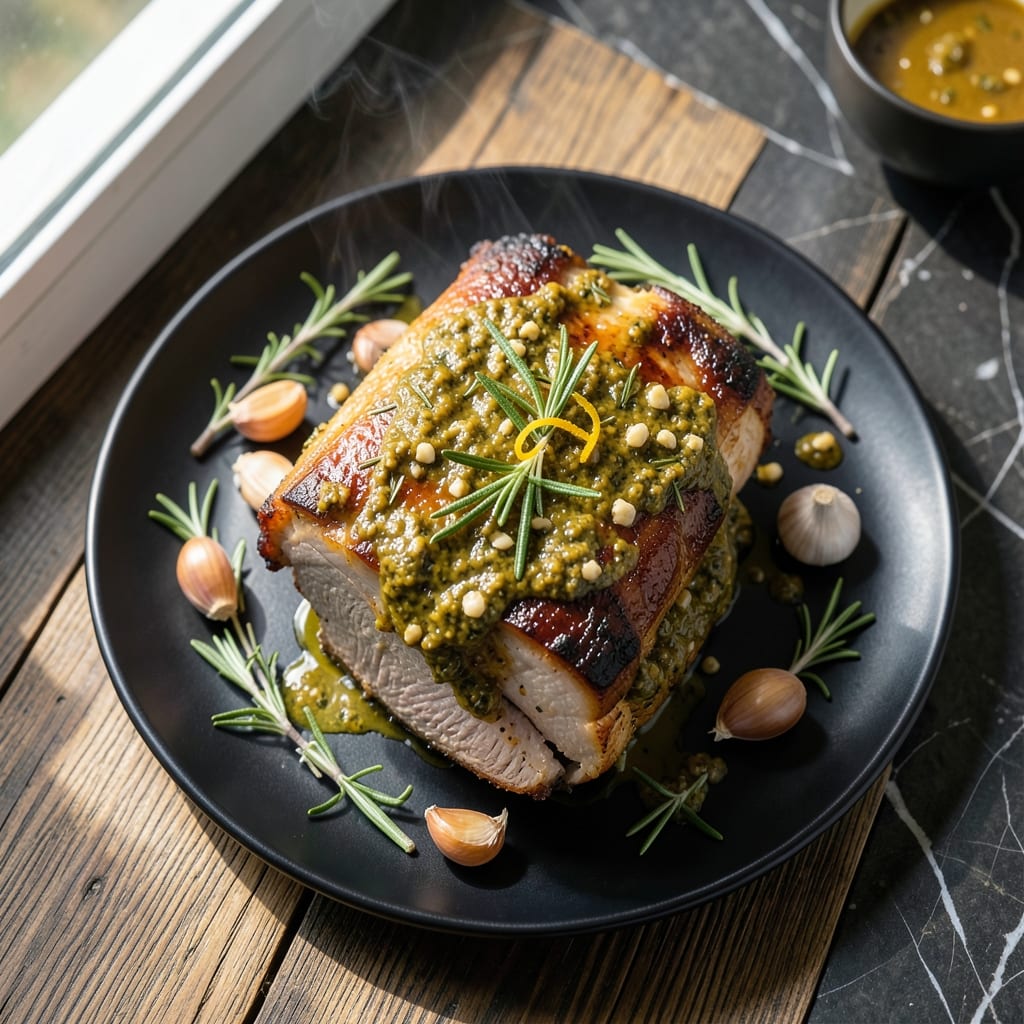
There’s a reason this herb-crusted pork rib roast has become my go-to for Sunday gatherings. The boneless cut cooks evenly, while a fragrant crust of rosemary, thyme, and garlic creates an irresistible aroma that fills the kitchen.
Roasting at a steady 325°F ensures the meat stays impossibly tender, with a golden, crispy exterior. A simple pan sauce made from the drippings adds the perfect finishing touch to this centerpiece dish.
This method delivers a roast that’s juicy, flavorful, and impressive without requiring hours of effort. It’s the kind of meal that turns an ordinary weekend into something special.
Pair it with roasted potatoes and seasonal vegetables for a complete, memorable dinner.
Ingredients for Pork Rib Roast Recipe Boneless
A center-cut roast plus fresh herbs and aromatics create this elegant Sunday dinner centerpiece.
| Ingredient | Amount | Notes |
|---|---|---|
| Boneless Pork Rib Roast 🥩 | 4 lb | Center-cut, trimmed of excess fat |
| Fresh Rosemary 🌿 | 2 tbsp | Finely chopped, stems discarded |
| Fresh Thyme Leaves 🍃 | 2 tbsp | Stripped from stems, roughly chopped |
| Garlic Cloves 🧄 | 6 cloves | Minced to fine paste |
| Dijon Mustard 🟡 | 3 tbsp | Whole grain or smooth variety |
| Extra-Virgin Olive Oil 🫒 | 3 tbsp | Divided for crust and searing |
| Kosher Salt 🧂 | 1 ½ tbsp | Diamond Crystal preferred for even seasoning |
| Freshly Ground Black Pepper 🌶️ | 1 tsp | Coarse grind for texture |
| Dry White Wine 🍷 | ½ cup | For pan sauce deglazing |
| Chicken Stock 🍲 | 1 cup | Low-sodium preferred for control |
| Unsalted Butter 🧈 | 2 tbsp | Cold, cubed for sauce finishing |
| All-Purpose Flour 🌾 | 1 tsp | For optional pan sauce thickening |
| Fresh Parsley 🌿 | ¼ cup | Chopped for garnishing finished dish |
[recipe_ingredient_scaler]
The pork roast quality is non-negotiable for optimal results. Center-cut boneless rib roast from a reputable butcher like Whole Foods or a high-end grocery ensures even cooking and superior marbling. Look for pale pink color with a fine fat cap—avoid anything with a strong odor or grayish tint. The rosemary and thyme should be organic if possible, with vibrant green leaves and no wilting. Freshness in herbs directly impacts the crust’s fragrance.
No fresh herbs? Dried at one-third the amount works in a pinch, though the flavor will be more concentrated. Substitute sage or oregano for thyme if needed. For the wine, any dry white like Sauvignon Blanc or Pinot Grigio is ideal; in a bind, apple cider vinegar diluted with water can mimic acidity. The Dijon mustard can be replaced with whole grain mustard for texture, but avoid yellow mustard—it lacks depth.
The raw roast keeps in the fridge for 3-4 days before cooking, or freeze for up to 6 months. For the herbs, wrap in damp paper towels and store in a sealed container—they’ll last 1 week. The finished dish holds beautifully: refrigerate leftovers for 4-5 days or freeze portions for 3 months.
Why You’ll Love This Recipe
- I’ll be real: the sandwiches I make with the extras might be even better than the original meal.
- One Pan Wonder: I just toss the boneless roast with rosemary, thyme, and garlic, then let the oven do the work.
- Herb-Crusted Bliss: That mix of fresh rosemary, thyme, and Dijon mustard forms this insane crust I could eat by itself.
- Sunday or Tuesday: Honestly, it feels fancy enough for guests but simple enough for a random weeknight.
Step-by-Step Instructions for Herb-Crusted Pork Rib Roast
Master this technique for a perfectly seared roast with a fragrant herb crust every time.
Step 1: Prepare the Herb Crust Mixture
In a small bowl, combine the 2 tbsp Fresh Rosemary, 2 tbsp Fresh Thyme Leaves, 6 cloves Garlic Cloves, 3 tbsp Dijon Mustard, and 1.5 tbsp Kosher Salt. The garlic should already be minced to a fine paste for even distribution throughout the crust.
Add 1 tbsp Extra-Virgin Olive Oil to the herb mixture and stir until it forms a thick, spreadable paste. This paste will adhere beautifully to the pork, creating a flavorful seal that locks in juices while forming a golden crust.
Step 2: Season and Sear the Pork Rib Roast
Pat the 4 lb Boneless Pork Rib Roast completely dry with paper towels. This critical step ensures a proper sear. Season the roast all over with the 1 tsp Freshly Ground Black Pepper and the remaining 2 tbsp Extra-Virgin Olive Oil, rubbing it into the surface.
Heat a large oven-safe skillet or roasting pan over medium-high heat. When the pan is hot, add the roast and sear on all sides for 2-3 minutes per side until deeply browned. The surface should develop a rich, golden-brown crust before moving to the oven.
Step 3: Apply the Herb Crust and Roast
Remove the roast from the pan and place it on a cutting board. Spread the prepared herb paste evenly over the entire surface of the pork, pressing gently to ensure full coverage. This crust will create an aromatic barrier that enhances flavor and moisture retention.
Return the roast to the pan, fat-side up. Transfer to a preheated 375°F oven and roast for 1 hour to 1 hour 15 minutes, or until the internal temperature reaches 145°F in the thickest part. The herb crust should be deeply browned and fragrant when done.
Step 4: Rest and Prepare the Pan Sauce
Transfer the roast to a cutting board and tent loosely with foil. Let it rest for 15 minutes to allow the juices to redistribute. Meanwhile, place the roasting pan on the stovetop over medium heat.
Add the 0.5 cup Dry White Wine to the pan and deglaze, scraping up all the browned bits. Simmer for 2 minutes, then whisk in the 1 cup Chicken Stock, 2 tbsp Unsalted Butter, and 1 tsp All-Purpose Flour. Cook for 5-7 minutes until the sauce thickens slightly.
Step 5: Slice and Garnish for Serving
After resting, slice the roast against the grain into ½-inch thick slices. The meat should be juicy, tender, and perfectly pink in the center. Arrange the slices on a serving platter and spoon the pan sauce over the top.
Garnish with the 0.25 cup Fresh Parsley for a pop of color and freshness. Serve immediately to enjoy the roast at its peak of tenderness and flavor, with the herb crust providing a delightful contrast in every bite.
Pro Tips For Making Pork Rib Roast Recipe Boneless
- Rest Before Slicing: Let the roast rest under foil for at least 15 minutes after cooking—this keeps the juices inside where they belong. I learned this the hard way after carving into a hot roast and watching the juices run all over the cutting board.
- Score the Fat Cap: Make shallow cuts in a diamond pattern across the fat cap before seasoning to help the Dijon mustard and herbs penetrate deeper. It also gives you that crispy, flavorful crust everyone fights over.
- Use Fresh Herbs: Skip the dried rosemary and thyme—fresh sprigs bruised with the side of your knife release way more aroma. Sounds fussy, but it actually changes the outcome.
- Don’t Overcrowd the Pan: If searing the roast first, use a pan big enough to give it space; crowding steams the meat instead of browning it. About 2 tablespoons of oil should be enough to coat the bottom and get that golden crust.
Health Benefits of These Flavors
Lean Protein Boost
A 4 oz serving of this pork rib roast delivers about 25 grams of high-quality protein with all essential amino acids. This lean protein supports muscle maintenance and repair, making it perfect for active lifestyles. I notice it keeps me full for hours after dinner. 💪
B Vitamin Powerhouse
This cut is rich in B vitamins, especially B6 and B12, which aid metabolism and nervous system function. A single serving provides nearly 30% of your daily B6 needs and over 50% of B12. These nutrients help convert food into usable energy.
Iron and Zinc Source
Pork rib roast contains heme iron, which is more easily absorbed than plant-based iron. Each serving offers about 10% of daily iron needs plus 20% of zinc, supporting immune function and wound healing. I appreciate this natural nutrient boost.
Low in Saturated Fat
With only about 3 grams of saturated fat per serving, this is one of the leaner pork cuts. The boneless version reduces visible fat while maintaining rich flavor. It’s a heart-smart choice that doesn’t sacrifice taste.
Selenium and Phosphorus
This roast provides significant amounts of selenium (antioxidant protection) and phosphorus (bone health). A 6 oz portion delivers roughly 40% of daily selenium needs. These minerals work together for cellular health.
No Artificial Additives
When you start with a quality center-cut roast and fresh herbs, you’re avoiding preservatives and artificial flavors. The simple ingredient list means you’re getting pure, natural nutrition in every bite. 🌿
Nutrition Facts
Frequently Asked Questions
Should I tie the boneless roast before cooking?
Yes, tying with kitchen twine every 1-2 inches helps maintain an even shape. This ensures more consistent cooking and a better presentation for carving.
How do I know when it’s done without a thermometer?
Press the thickest part with tongs—it should feel firm yet springy, like the base of your thumb. For medium doneness, juices should run slightly pink. Always rest for 15 minutes before slicing.
Can I make the herb crust ahead of time?
Mix the herb paste up to 24 hours ahead and refrigerate. Spread it on the roast just before cooking for the freshest flavor.

Trained in classic French technique but raised on slow-cooked ribs and spicy rubs, she blends culinary skill with smoke and soul.
- Recipe for Boneless Pork Chops in Cast Iron Skillet: Sear and Baste to Juicy Perfection - October 3, 2026
- Recipe for Boneless Cross Rib Roast: Slow-Roasted Beef with Herb Crust - October 3, 2026
- Hamburgers in Sauce Recipe Crock Pot: Slow-Cooked Savory Delight - October 3, 2026