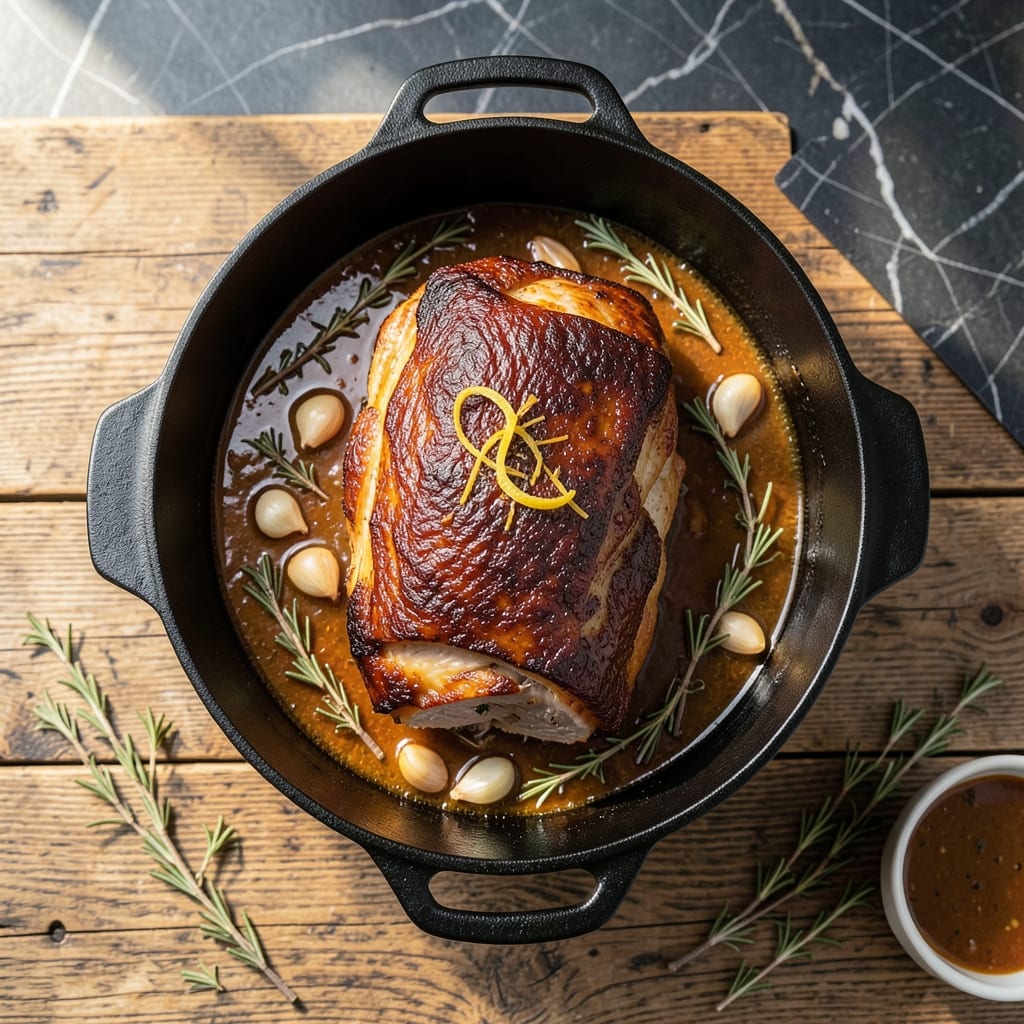
Pork Roast Recipe Oven Slow: Melt-in-Your-Mouth Tenderness All Day

Pork Roast Recipe Oven Slow: Melt-in-Your-Mouth Tenderness All Day

I remember Mrs. Henderson’s Sunday suppers, where the aroma of slow-roasted pork filled her Cincinnati kitchen. This recipe brings that same melt-in-your-mouth magic to your table.

Low and slow is the secret here. A tender pork roast emerges after hours in the oven, its juices basting it to perfection. No fancy techniques—just time and the right temperature.

The result? Fall-apart meat with a golden crust, ready to serve with your favorite sides. Every bite tastes like home, just like those Sunday dinners I still crave.

Simple ingredients, incredible flavor. This is the kind of meal that turns a regular day into something special.

👨‍🍳
Difficulty
Medium
🥩
Diet
Meat
⏱️
Total Time
30 min
🔥
Calories
Med Cal

Ingredients for Pork Roast Recipe Oven Slow

Simple ingredients come together for that slow-roasted magic you remember from Sunday suppers.

Ingredient Amount Notes
Pork Shoulder Roast 🥩 3 lb Bone-in preferred for flavor
Kosher Salt 🧂 1 ½ tbsp Diamond Crystal brand recommended
Freshly Ground Black Pepper 🌶️ 1 tsp Coarse grind preferred
Garlic Cloves 🧄 6 cloves Minced for rub
Dried Rosemary 🌿 1 tbsp Crushed to release oils
Dried Thyme 🍃 1 tbsp French thyme if available
Brown Sugar 🏝️ 2 tbsp Light or dark variety
Olive Oil 🫒 2 tbsp Extra-virgin for richness
Yellow Onion 🧅 1 whole Sliced for bedding
Carrots 🥕 3 whole Peeled, cut into chunks
Celery Stalks 🥬 3 whole Cut into 2-inch pieces
Chicken Broth 🍲 1 cup Low-sodium preferred
Apple Cider Vinegar 🍏 2 tbsp For acidity balance

[recipe_ingredient_scaler]

The pork shoulder is non-negotiable here—bone-in from a butcher or Costco gives you that melt-in-your-mouth texture. Look for good marbling; it’s the fat that bastes the meat as it roasts. I always grab mine from the butcher counter at Kroger (they’ll often have better cuts than the pre-packaged stuff). The rosemary and thyme? Penzeys if you’re feeling fancy, but grocery store brands work just fine.

No pork shoulder? Pork butt is practically the same thing (just a different cut name). Out of fresh garlic? Garlic powder at one-third the amount in a pinch, but fresh is worth the effort. Brown sugar can be swapped for maple syrup or honey—just reduce the liquid elsewhere by a tablespoon. The vinegar can be white wine or even lemon juice if that’s what you’ve got open.

The roast stays good in the fridge for 4-5 days, and honestly tastes better the next day. Freezes beautifully for 3 months—just slice before freezing for easy portions. Leftovers make killer sandwiches (trust me on this one).

❤️

Why You’ll Love This Recipe

  • Set It & Forget: I rub the pork with salt, pepper, garlic and rosemary, pop it in the oven, and walk away for hours.
  • Sunday Dinner Vibes: The slow roast turns the shoulder into fall-apart tender bites with a garlic-rosemary crust that’s pure comfort.
  • Feeds the Week: We eat half for Sunday supper and shred the rest for tacos, sandwiches, and fried rice all week long.
  • Budget Hero: Pork shoulder is cheap, and one roast gives us four solid meals without breaking the bank.

Step-by-Step Instructions for Pork Roast Oven Slow

This method delivers fall-apart tenderness with minimal effort and maximum flavor.

Step 1: Create a Flavorful Rub for the Pork

Pat the 3 lb Pork Shoulder Roast dry with paper towels to ensure the rub adheres properly. In a small bowl, combine the 1.5 tbsp Kosher Salt, 1 tsp Freshly Ground Black Pepper, 1 tbsp Dried Rosemary, 1 tbsp Dried Thyme, and 2 tbsp Brown Sugar.

Rub this mixture all over the pork, pressing it into the meat so it forms a crust. I like to really work it in with my hands—this ensures every bite is packed with flavor. The sugar in the rub will caramelize during cooking, adding depth to the final result.

Step 2: Sear the Pork for a Crispy Exterior

Heat the 2 tbsp Olive Oil in a large Dutch oven over medium-high heat. Once the oil shimmers, add the pork shoulder and sear on all sides for 2-3 minutes per side until deeply browned. You’ll know it’s ready to flip when it releases easily from the pot.

This searing step builds a flavor foundation that can’t be skipped. The browned bits left in the pot will dissolve into the cooking liquid, creating a rich, savory base for the pork to braise in.

Step 3: Add Aromatics and Braising Liquid

Remove the pork from the pot and set it aside. Add the 1 whole Yellow Onion, 3 whole Carrots, and 3 whole Celery Stalks to the pot, stirring to coat them in the rendered fat. Cook for 3-4 minutes until the vegetables begin to soften and brown slightly.

Pour in the 1 cup Chicken Broth and 2 tbsp Apple Cider Vinegar, scraping up any browned bits from the bottom of the pot. Return the pork to the pot, spooning the vegetables and liquid around it. The vinegar adds a subtle tang that balances the richness of the pork.

Step 4: Slow Roast Until Fork-Tender

Cover the pot and transfer it to a preheated 300°F oven. Slow roast for 4-5 hours, turning the pork halfway through the cooking time. The pork is done when it shreds easily with a fork and reaches an internal temperature of 195-200°F.

This low-and-slow method breaks down the connective tissue in the pork shoulder, transforming it into melt-in-your-mouth perfection. If the liquid reduces too much during cooking, add a splash of water or additional chicken broth to keep the pork partially submerged.

Step 5: Rest and Serve

Carefully remove the pork from the pot and place it on a serving platter. Tent it loosely with foil and let it rest for 15-20 minutes. This resting period allows the juices to redistribute, ensuring the meat stays moist when sliced.

Skim any excess fat from the surface of the cooking liquid and serve it alongside the pork as a simple au jus. The vegetables will have softened into a sweet, savory accompaniment that soaks up all the delicious flavors from the roast.

👨‍🍳

Pro Tips For Making Pork Roast Recipe Oven Slow

  • Start Low and Slow: Set your oven to 275°F—any higher and the pork shoulder dries out before it gets tender. I learned this the hard way after pulling a tough roast out at 325°F.
  • Score the Fat Cap: Cut 1/4-inch slits in the fat cap so the kosher salt and rosemary actually penetrate the meat. Sounds weird, but it works.
  • Don’t Skip the Rest: Let the roast rest under foil for at least 20 minutes after cooking—it keeps all those juices from running onto the cutting board. I was skeptical until I tried it.
  • Crush the Garlic: Smash the garlic cloves before stuffing them into the slits so their flavor spreads through the meat. My grandmother swore by this, and she was right.

Troubleshooting This Dish

Dry Roast Problem

If your pork turns out dry, it likely didn’t have enough liquid during cooking. I always add ½ cup extra chicken broth if the pot looks dry. Also, check that your oven temperature stays at a consistent 300°F—too hot and it’ll cook too fast. 🌡️

Tough Meat Issues

Tough pork usually means it didn’t cook long enough. The collagen needs time to break down completely. I’ve found that 195-200°F internal temperature is the sweet spot. If it’s not fork-tender after 4 hours, give it another hour and check again.

Bland Flavor Fix

If your roast lacks depth, boost the seasoning. I add 1 tsp smoked paprika to the rub for extra dimension. Also, don’t skip searing—those browned bits are pure flavor. Taste the cooking liquid and adjust with more Kosher Salt if needed.

Over-Browning Crust

If the crust is burning before the inside cooks, tent the pot with foil. I use heavy-duty foil and crimp it tightly around the lid. Alternatively, reduce oven temperature to 275°F and extend cooking time by 1 hour. 💡

Sauce Too Thin

For a thicker au jus, remove the pork and vegetables, then simmer the liquid on the stovetop. I reduce it by about half for a richer consistency. A cornstarch slurry (1 tbsp cornstarch + 1 tbsp water) works too if you’re in a hurry.

Vegetables Mushy

If your carrots and celery dissolve, add them later. I put vegetables in after the first 2 hours of cooking. This keeps them intact while still soaking up flavor. Choose larger chunks for better texture.

Nutrition Facts

Servings 4
Amount Per Serving
Calories 580kcal
% Daily Value
Total Fat 36g46%
Saturated Fat 12g60%
Cholesterol 145mg48%
Sodium 920mg40%
Total Carbohydrate 12g4%
Dietary Fiber 3g11%
Sugars 6g
Protein 52g104%
Percent Daily Values are based on a 2,000 calorie diet. Your daily values may be higher or lower depending on your calorie needs.

Frequently Asked Questions

1

What’s the ideal internal temperature for tenderness?

Aim for 195-200°F internally. This ensures collagen breaks down completely for that fall-apart texture. Use a meat thermometer to check—it’s the only reliable way.

2

Can I use a different cut of pork?

Yes! Pork butt works identically to shoulder. Avoid lean cuts like tenderloin—they’ll dry out during slow cooking. Stick with well-marbled, tougher cuts for best results.

3

How do I prevent the crust from burning?

Tent the pot with foil if it browns too quickly. Alternatively, lower oven temp to 275°F and add 1 hour to cooking time. This keeps the exterior golden while the inside cooks through.

4

Can I make this in a slow cooker instead?

Sear the pork first, then transfer to a slow cooker with all ingredients. Cook on low for 8-10 hours for the same tender result.

★★★★★4.6(1 review)
Chef Melanie

Pork Roast Recipe Oven Slow: Melt-in-Your-Mouth Tenderness All Day

Pork Roast Recipe Oven Slow: Melt-in-Your-Mouth Tenderness All Day

I remember Mrs. Henderson’s Sunday suppers, where the aroma of slow-roasted pork filled her Cincinnati kitchen. This recipe brings that same melt-in-your-mouth magic to your table.

Low and slow is the secret here. A tender pork roast emerges after hours in the oven, its juices basting it to perfection. No fancy techniques—just time and the right temperature.

The result? Fall-apart meat with a golden crust, ready to serve with your favorite sides. Every bite tastes like home, just like those Sunday dinners I still crave.

Simple ingredients, incredible flavor. This is the kind of meal that turns a regular day into something special.

👨‍🍳
Difficulty
Medium
🥩
Diet
Meat
⏱️
Total Time
30 min
🔥
Calories
Med Cal

Ingredients for Pork Roast Recipe Oven Slow

Simple ingredients come together for that slow-roasted magic you remember from Sunday suppers.

Ingredient Amount Notes
Pork Shoulder Roast 🥩 3 lb Bone-in preferred for flavor
Kosher Salt 🧂 1 ½ tbsp Diamond Crystal brand recommended
Freshly Ground Black Pepper 🌶️ 1 tsp Coarse grind preferred
Garlic Cloves 🧄 6 cloves Minced for rub
Dried Rosemary 🌿 1 tbsp Crushed to release oils
Dried Thyme 🍃 1 tbsp French thyme if available
Brown Sugar 🏝️ 2 tbsp Light or dark variety
Olive Oil 🫒 2 tbsp Extra-virgin for richness
Yellow Onion 🧅 1 whole Sliced for bedding
Carrots 🥕 3 whole Peeled, cut into chunks
Celery Stalks 🥬 3 whole Cut into 2-inch pieces
Chicken Broth 🍲 1 cup Low-sodium preferred
Apple Cider Vinegar 🍏 2 tbsp For acidity balance

[recipe_ingredient_scaler]

The pork shoulder is non-negotiable here—bone-in from a butcher or Costco gives you that melt-in-your-mouth texture. Look for good marbling; it’s the fat that bastes the meat as it roasts. I always grab mine from the butcher counter at Kroger (they’ll often have better cuts than the pre-packaged stuff). The rosemary and thyme? Penzeys if you’re feeling fancy, but grocery store brands work just fine.

No pork shoulder? Pork butt is practically the same thing (just a different cut name). Out of fresh garlic? Garlic powder at one-third the amount in a pinch, but fresh is worth the effort. Brown sugar can be swapped for maple syrup or honey—just reduce the liquid elsewhere by a tablespoon. The vinegar can be white wine or even lemon juice if that’s what you’ve got open.

The roast stays good in the fridge for 4-5 days, and honestly tastes better the next day. Freezes beautifully for 3 months—just slice before freezing for easy portions. Leftovers make killer sandwiches (trust me on this one).

❤️

Why You’ll Love This Recipe

  • Set It & Forget: I rub the pork with salt, pepper, garlic and rosemary, pop it in the oven, and walk away for hours.
  • Sunday Dinner Vibes: The slow roast turns the shoulder into fall-apart tender bites with a garlic-rosemary crust that’s pure comfort.
  • Feeds the Week: We eat half for Sunday supper and shred the rest for tacos, sandwiches, and fried rice all week long.
  • Budget Hero: Pork shoulder is cheap, and one roast gives us four solid meals without breaking the bank.

Step-by-Step Instructions for Pork Roast Oven Slow

This method delivers fall-apart tenderness with minimal effort and maximum flavor.

Step 1: Create a Flavorful Rub for the Pork

Pat the 3 lb Pork Shoulder Roast dry with paper towels to ensure the rub adheres properly. In a small bowl, combine the 1.5 tbsp Kosher Salt, 1 tsp Freshly Ground Black Pepper, 1 tbsp Dried Rosemary, 1 tbsp Dried Thyme, and 2 tbsp Brown Sugar.

Rub this mixture all over the pork, pressing it into the meat so it forms a crust. I like to really work it in with my hands—this ensures every bite is packed with flavor. The sugar in the rub will caramelize during cooking, adding depth to the final result.

Step 2: Sear the Pork for a Crispy Exterior

Heat the 2 tbsp Olive Oil in a large Dutch oven over medium-high heat. Once the oil shimmers, add the pork shoulder and sear on all sides for 2-3 minutes per side until deeply browned. You’ll know it’s ready to flip when it releases easily from the pot.

This searing step builds a flavor foundation that can’t be skipped. The browned bits left in the pot will dissolve into the cooking liquid, creating a rich, savory base for the pork to braise in.

Step 3: Add Aromatics and Braising Liquid

Remove the pork from the pot and set it aside. Add the 1 whole Yellow Onion, 3 whole Carrots, and 3 whole Celery Stalks to the pot, stirring to coat them in the rendered fat. Cook for 3-4 minutes until the vegetables begin to soften and brown slightly.

Pour in the 1 cup Chicken Broth and 2 tbsp Apple Cider Vinegar, scraping up any browned bits from the bottom of the pot. Return the pork to the pot, spooning the vegetables and liquid around it. The vinegar adds a subtle tang that balances the richness of the pork.

Step 4: Slow Roast Until Fork-Tender

Cover the pot and transfer it to a preheated 300°F oven. Slow roast for 4-5 hours, turning the pork halfway through the cooking time. The pork is done when it shreds easily with a fork and reaches an internal temperature of 195-200°F.

This low-and-slow method breaks down the connective tissue in the pork shoulder, transforming it into melt-in-your-mouth perfection. If the liquid reduces too much during cooking, add a splash of water or additional chicken broth to keep the pork partially submerged.

Step 5: Rest and Serve

Carefully remove the pork from the pot and place it on a serving platter. Tent it loosely with foil and let it rest for 15-20 minutes. This resting period allows the juices to redistribute, ensuring the meat stays moist when sliced.

Skim any excess fat from the surface of the cooking liquid and serve it alongside the pork as a simple au jus. The vegetables will have softened into a sweet, savory accompaniment that soaks up all the delicious flavors from the roast.

👨‍🍳

Pro Tips For Making Pork Roast Recipe Oven Slow

  • Start Low and Slow: Set your oven to 275°F—any higher and the pork shoulder dries out before it gets tender. I learned this the hard way after pulling a tough roast out at 325°F.
  • Score the Fat Cap: Cut 1/4-inch slits in the fat cap so the kosher salt and rosemary actually penetrate the meat. Sounds weird, but it works.
  • Don’t Skip the Rest: Let the roast rest under foil for at least 20 minutes after cooking—it keeps all those juices from running onto the cutting board. I was skeptical until I tried it.
  • Crush the Garlic: Smash the garlic cloves before stuffing them into the slits so their flavor spreads through the meat. My grandmother swore by this, and she was right.

Troubleshooting This Dish

Dry Roast Problem

If your pork turns out dry, it likely didn’t have enough liquid during cooking. I always add ½ cup extra chicken broth if the pot looks dry. Also, check that your oven temperature stays at a consistent 300°F—too hot and it’ll cook too fast. 🌡️

Tough Meat Issues

Tough pork usually means it didn’t cook long enough. The collagen needs time to break down completely. I’ve found that 195-200°F internal temperature is the sweet spot. If it’s not fork-tender after 4 hours, give it another hour and check again.

Bland Flavor Fix

If your roast lacks depth, boost the seasoning. I add 1 tsp smoked paprika to the rub for extra dimension. Also, don’t skip searing—those browned bits are pure flavor. Taste the cooking liquid and adjust with more Kosher Salt if needed.

Over-Browning Crust

If the crust is burning before the inside cooks, tent the pot with foil. I use heavy-duty foil and crimp it tightly around the lid. Alternatively, reduce oven temperature to 275°F and extend cooking time by 1 hour. 💡

Sauce Too Thin

For a thicker au jus, remove the pork and vegetables, then simmer the liquid on the stovetop. I reduce it by about half for a richer consistency. A cornstarch slurry (1 tbsp cornstarch + 1 tbsp water) works too if you’re in a hurry.

Vegetables Mushy

If your carrots and celery dissolve, add them later. I put vegetables in after the first 2 hours of cooking. This keeps them intact while still soaking up flavor. Choose larger chunks for better texture.

Nutrition Facts

Servings 4
Amount Per Serving
Calories 580kcal
% Daily Value
Total Fat 36g46%
Saturated Fat 12g60%
Cholesterol 145mg48%
Sodium 920mg40%
Total Carbohydrate 12g4%
Dietary Fiber 3g11%
Sugars 6g
Protein 52g104%
Percent Daily Values are based on a 2,000 calorie diet. Your daily values may be higher or lower depending on your calorie needs.

Frequently Asked Questions

1

What’s the ideal internal temperature for tenderness?

Aim for 195-200°F internally. This ensures collagen breaks down completely for that fall-apart texture. Use a meat thermometer to check—it’s the only reliable way.

2

Can I use a different cut of pork?

Yes! Pork butt works identically to shoulder. Avoid lean cuts like tenderloin—they’ll dry out during slow cooking. Stick with well-marbled, tougher cuts for best results.

3

How do I prevent the crust from burning?

Tent the pot with foil if it browns too quickly. Alternatively, lower oven temp to 275°F and add 1 hour to cooking time. This keeps the exterior golden while the inside cooks through.

4

Can I make this in a slow cooker instead?

Sear the pork first, then transfer to a slow cooker with all ingredients. Cook on low for 8-10 hours for the same tender result.

★★★★★4.6(1 review)
Chef Melanie

More recipe sites